Artwork
Untitled
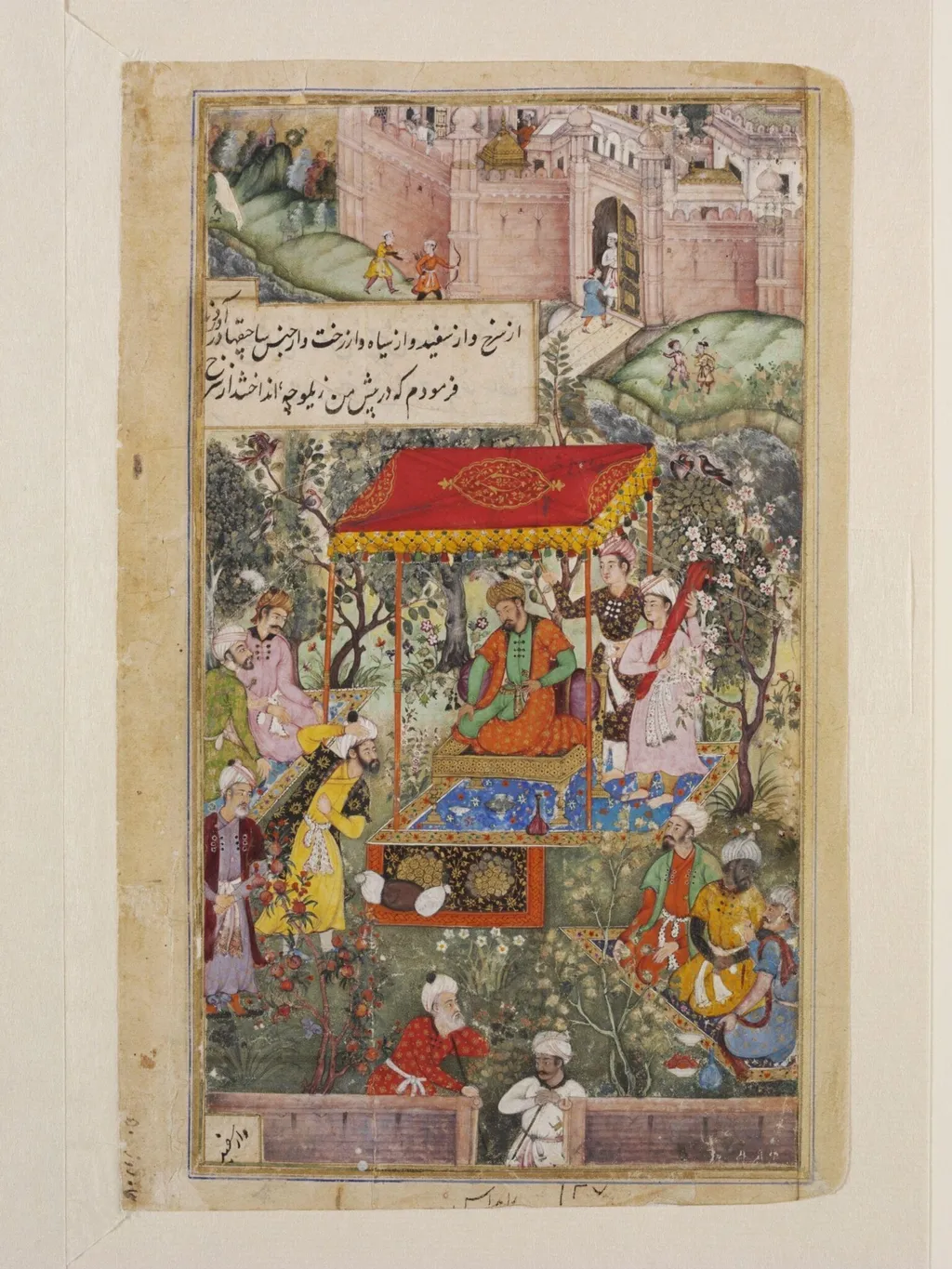
Untitled is a paint painting by the Mughal Painting artist Ram Das. It dates from 1590 and is held in the collection of the Victoria and Albert Museum.
About this work
Overview
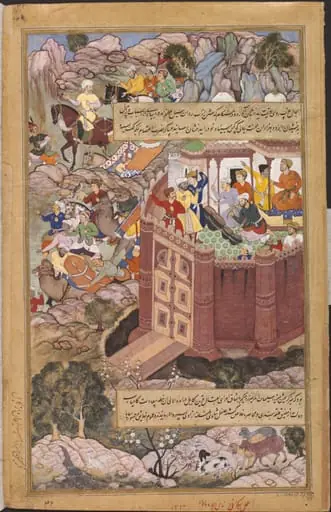
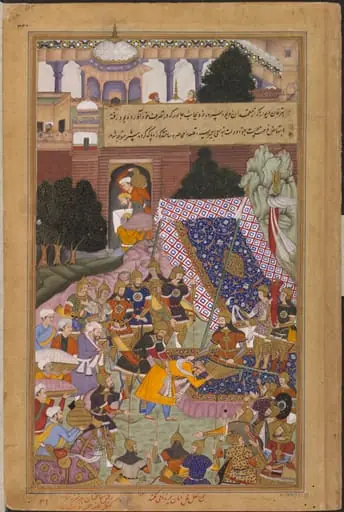
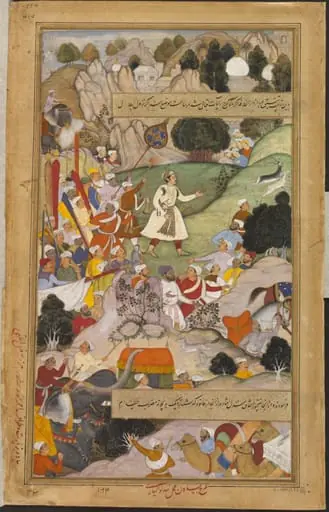
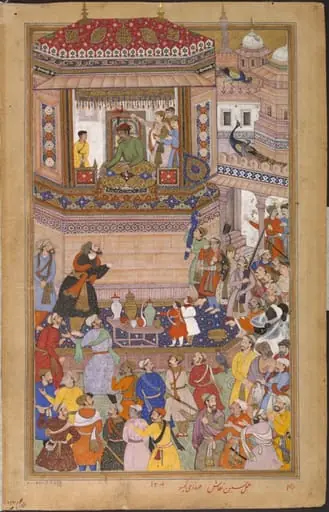
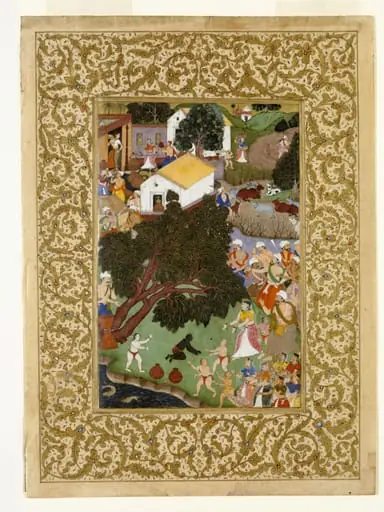
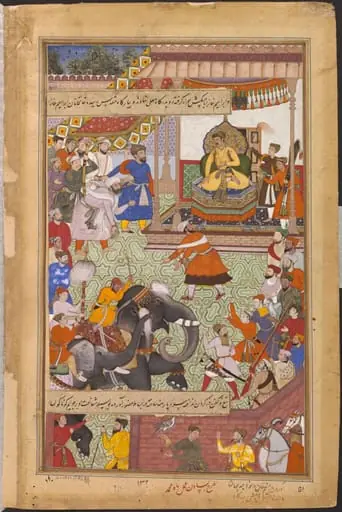
This painting is one of several illustrated pages created around 1590 for a Persian translation of Babur’s memoirs, commissioned by Emperor Akbar.
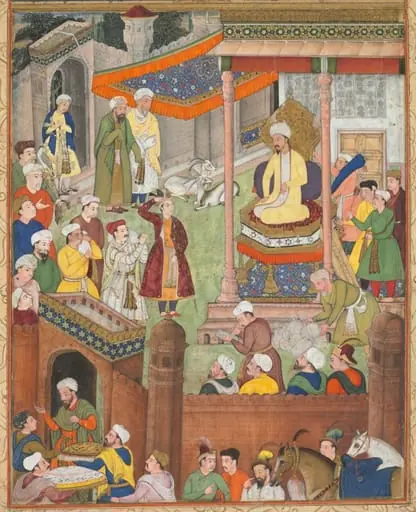
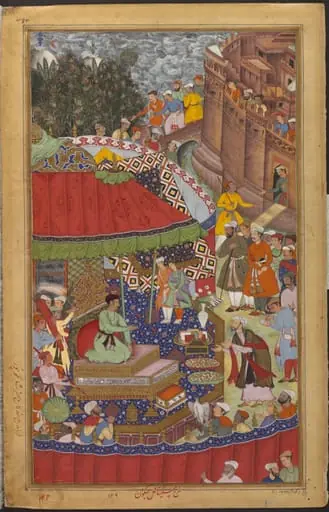
This painting is one of several illustrated pages created around 1590 for a Persian translation of Babur’s memoirs, commissioned by Emperor Akbar. It depicts a specific moment from Babur’s reign—his reception of Uzbek envoys following his victory over Ibrahim Lodi. The scene is rendered with meticulous detail, and the artist Ramdas signed his name alongside a note recording the 50-day completion time, reflecting the labor-intensive nature of imperial manuscript production.
Subject & Meaning
The image captures Babur seated beneath a crimson canopy in a lush garden, accepting tribute from Uzbek envoys. The setting symbolizes both political legitimacy and the cultivated order of Mughal rule. Behind him, the city walls and open gateway suggest controlled access to power, reinforcing the emperor’s authority. The scene is not merely a record of an event but a visual assertion of dynastic continuity, linking Akbar’s reign to his ancestor’s foundational achievements.
Technique & Style
The painting employs fine brushwork and layered pigments to render textures of fabric, foliage, and stone with precision. Figures are arranged in a shallow, tiered space, with architectural elements framing the composition. While influenced by Persian and Central Asian traditions, the style avoids dramatic perspective, favoring flattened planes and rich decorative detail. The use of color is deliberate—deep reds and greens create visual harmony, emphasizing ritual over realism.
History & Provenance
Commissioned by Akbar in 1589, the illustrated manuscript was part of a broader effort to translate Babur’s Chaghatay Turkish memoirs into Persian, the court’s administrative language. Several copies were produced, each meticulously illustrated. This page, attributed to the artist Ramdas, was likely made in the imperial atelier in Fatehpur Sikri. The inclusion of the artist’s name and completion date reflects the elevated status of manuscript production under Akbar’s patronage.
Context
Akbar’s initiative to translate Babur’s memoirs was both cultural and political: it sought to connect his reign to the empire’s origins while making its history accessible to a Persian-speaking elite. The illustrated versions served as tools of imperial memory, blending historical narrative with visual propaganda. This project coincided with Akbar’s broader reforms in administration, religion, and the arts, reinforcing a unified Mughal identity rooted in dynastic legacy.
Legacy
The illustrated Baburnama manuscripts set a precedent for historical illustration in Mughal art, influencing later courtly chronicles. The practice of naming artists and documenting production time elevated the status of painters within imperial workshops. Though the original manuscript is dispersed, surviving pages like this one remain key sources for understanding how Mughal rulers used visual culture to construct and preserve their historical narrative.
Artist & collection

Artist
Guru Ram Das, sometimes spelled as Guru Ramdas, was the fourth of the ten Sikh gurus.