Artwork
The Madonna and Child Enthroned with Saint John the Baptist and Saint Andrew
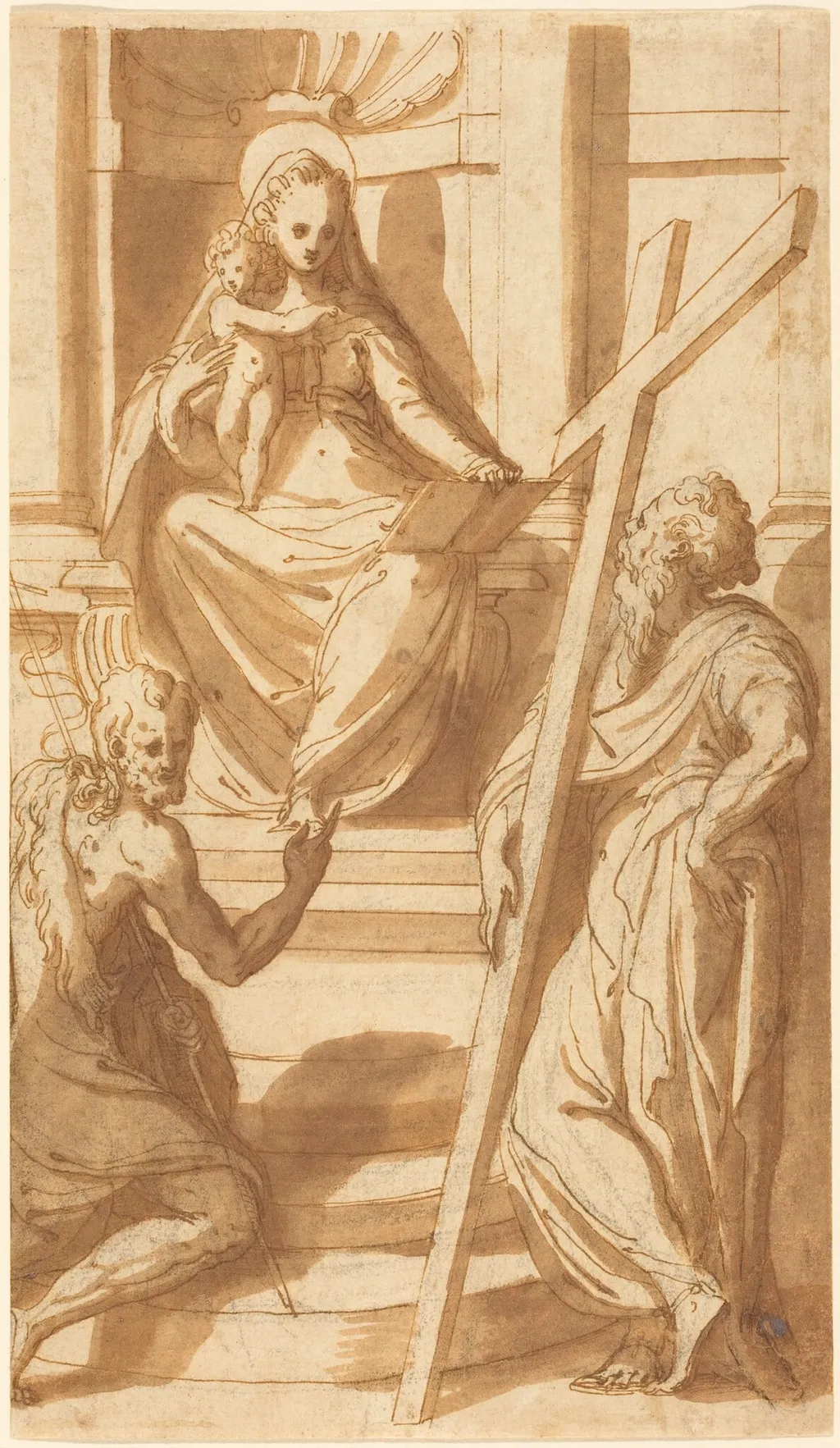
The Madonna and Child Enthroned with Saint John the Baptist and Saint Andrew is a chalk drawing by the Renaissance artist Bernardino India. It dates from 1559 and is held in the collection of the National Gallery of Art.
About this work
Overview
Bernardino India’s 1559 drawing, titled *Madonna and Child Enthroned with Saint John the Baptist and Saint Andrew*, is executed on laid paper with pen, brown ink, brown wash, and black chalk. The work presents a seated Virgin holding the infant Christ, flanked by two male saints, rendered in a compact, devotional grouping.
Subject & Meaning
The central figure is the Virgin Mary, identified by her halo and the infant she cradles, symbolizing the Incarnation. To her right, a bearded figure leans on a staff shaped like a cross, indicating Saint John the Baptist, while a kneeling figure on the left gestures toward the pair, representing Saint Andrew, whose association with a diagonal cross is suggested by the composition.
Technique & Style
India employs swift, fluid lines in brown ink, layered with a subtle brown wash that models the drapery’s folds. Black chalk adds depth to the contours, while the overall sketchy quality captures a sense of immediacy and emotional interaction among the figures, characteristic of mid‑sixteenth‑century Italian devotional drawings.
History & Provenance
Created in 1559, the drawing reflects India’s activity in the Veneto region during the late Renaissance. It survives as a single sheet of laid paper, indicating it was likely a preparatory study or a standalone devotional image, though its later ownership history remains undocumented.
Context
The composition aligns with contemporary iconography that paired the Virgin and Child with saints associated with the patron’s devotion or local cults. By including John the Baptist and Andrew, the work references both the forerunner of Christ and the apostolic tradition, a common thematic pairing in Counter‑Reformation art.
Legacy
While not as widely reproduced as India’s painted works, this drawing offers insight into his drawing practice and the devotional visual language of the period. It continues to serve as a reference for scholars studying the integration of ink and wash techniques in Italian Renaissance draftsmanship.
Artist & collection


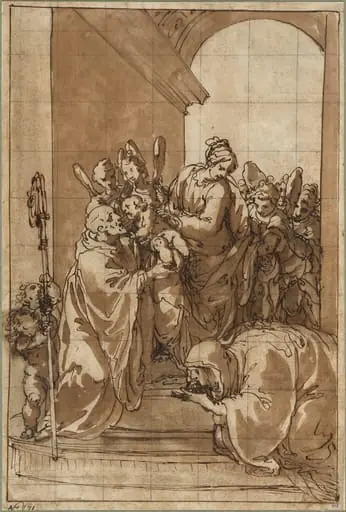 Madonna and Child with Angels, Saint Benedict, and Saint Scholastica
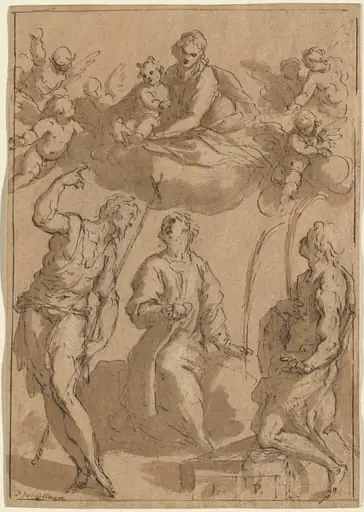 Madonna and Child in Glory with Saints John the Baptist, Stephen, and Lawrence
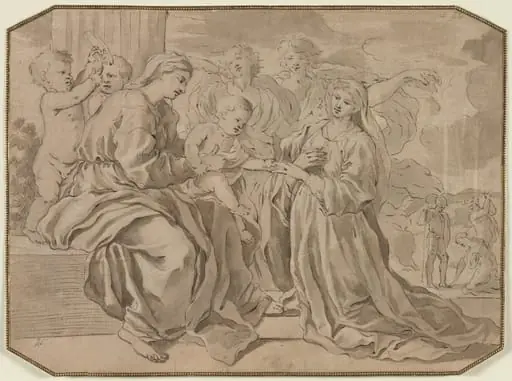 Mystic Marriage of St. Catherine
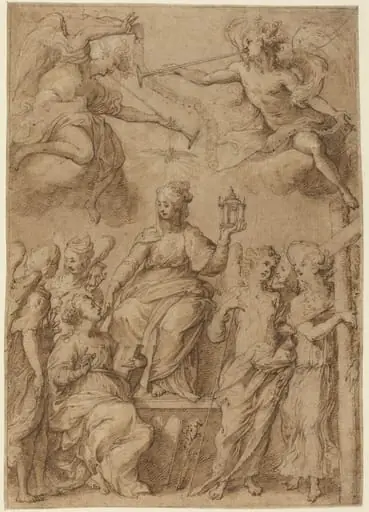 Ecclesia Surrounded by Angels Holding the Instruments of the Passion
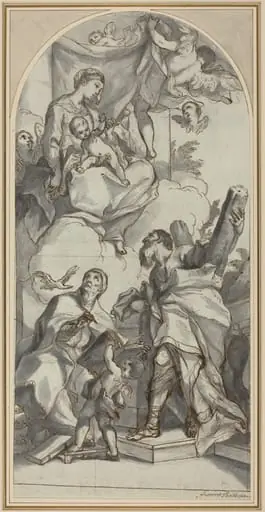 The Madonna and Child in Glory with Saints Gregory the Great and Andrew
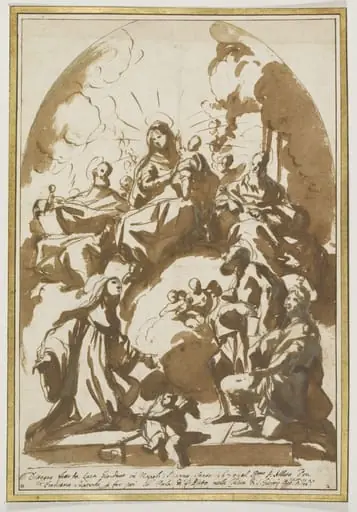 The Virgin and Child
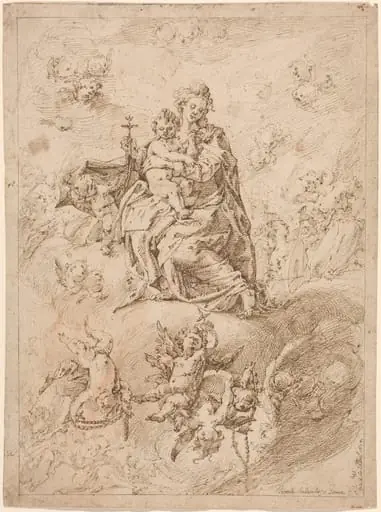 The Madonna of the Rosary
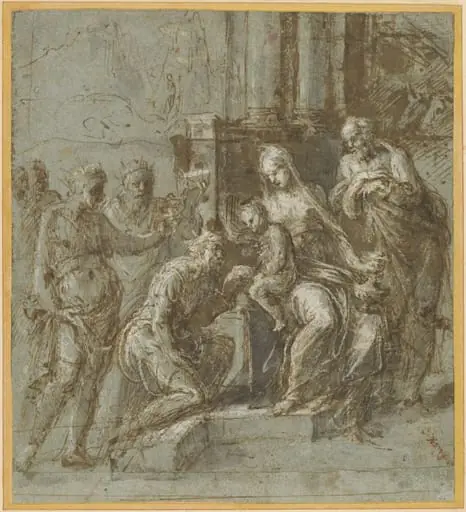 The Adoration of the Magi
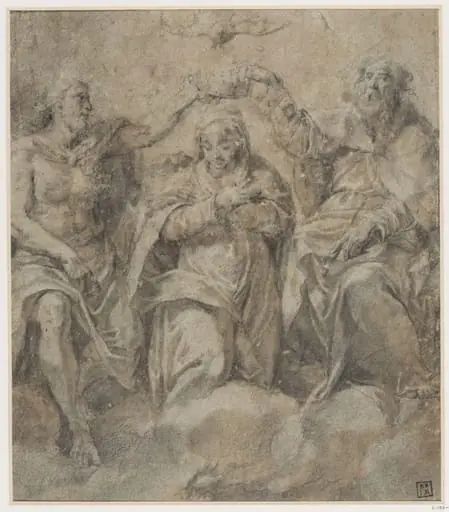 The Coronation of the Virgin
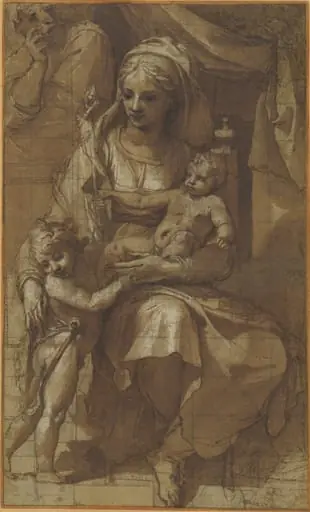 The Holy Family with the Infant John the Baptist
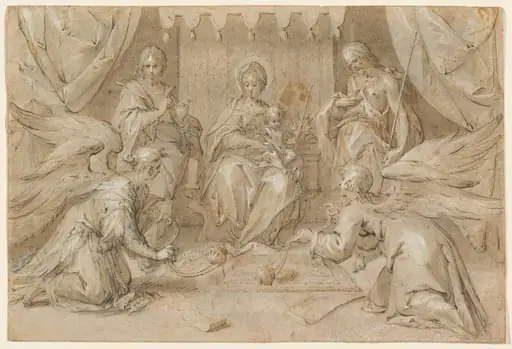 The Madonna Enthroned with Saint John the Baptist and Saint John the Evangelist
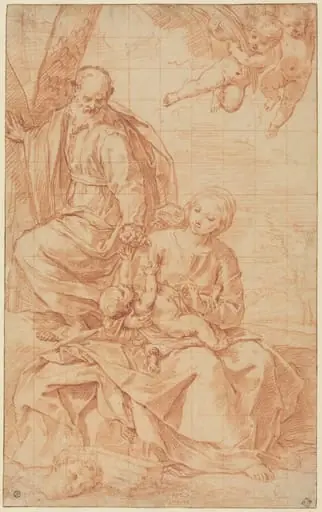 The Rest on the Flight into Egypt, or The Miracle of the Palm Tree