Artwork
Joan of Arc Standing at the Altar at Reims Cathedral
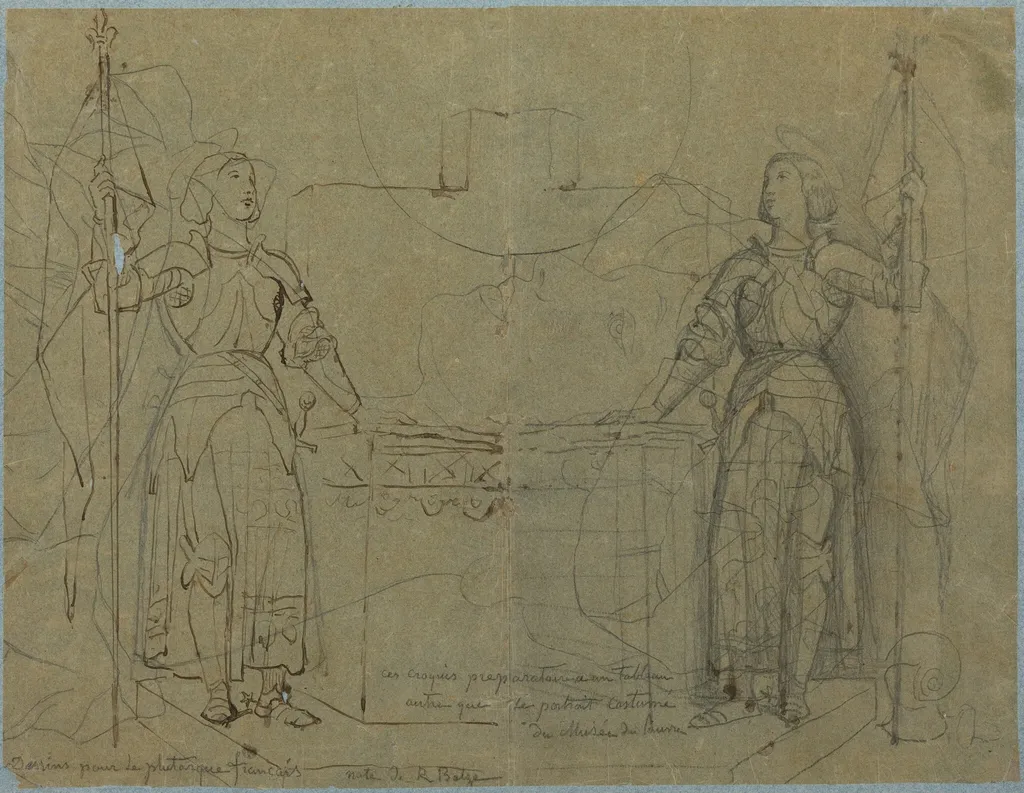
Joan of Arc Standing at the Altar at Reims Cathedral is an ink drawing by the Romanticist artist Jean Auguste Dominique Ingres. It dates from 1844 and is held in the collection of the National Gallery of Art. Created around 1844, this drawing by Jean-Auguste-Dominique Ingres depicts Joan of Arc at Reims Cathedral in a moment of quiet reverence.
About this work
Overview
Executed in pen, brown ink, and graphite on tracing paper mounted on blue paper, it is a study in line and tone rather than a finished painting.
Created around 1844, this drawing by Jean-Auguste-Dominique Ingres depicts Joan of Arc at Reims Cathedral in a moment of quiet reverence. Executed in pen, brown ink, and graphite on tracing paper mounted on blue paper, it is a study in line and tone rather than a finished painting. Ingres, primarily known for his polished historical canvases, used this medium to explore composition and gesture with immediacy, reflecting his deep engagement with historical subjects outside large-scale commissions.
Subject & Meaning
The drawing captures Joan of Arc standing before the altar in Reims Cathedral, where she witnessed the coronation of Charles VII in 1429. Ingres emphasizes her stillness and solemnity, portraying her not as a warrior but as a figure of divine conviction. The setting underscores her role as a conduit between earthly authority and spiritual mandate, aligning with 19th-century French interest in national myth and religious devotion as sources of moral clarity.
Technique & Style
Ingres employed fine pen lines and subtle graphite shading to define form with precision, while the blue paper provided a muted tonal base that enhanced the warmth of the ink. Tracing paper allowed him to refine contours before transferring the composition. His approach prioritizes clarity of outline and restrained modeling, echoing classical ideals even as the subject’s emotional gravity hints at Romantic sensibilities. The work reveals his mastery of draftsmanship over color or texture.
History & Provenance
The drawing was made during Ingres’s mature period, after his return to Paris from Rome and amid his growing reputation as a leading academic artist. It likely served as a preparatory study for a larger, unrealized painting. The work remained in the artist’s possession until his death, later entering a private collection before being acquired by a public institution. Its survival in near-original condition reflects its status as a personal, intimate exercise rather than a public commission.
Context
In the 1840s, France was revisiting its medieval past through literature, theater, and visual art, often to reinforce national identity. Joan of Arc, recently canonized in popular imagination, became a symbol of piety and patriotism. Ingres, though rooted in Neoclassicism, responded to this cultural current by focusing on her spiritual presence rather than her military exploits, aligning his historical vision with contemporary ideals of moral heroism.
Legacy
This drawing exemplifies Ingres’s enduring commitment to line as the foundation of artistic expression. Though less known than his oil paintings, such works influenced later draftsmen who valued precision and emotional restraint. Its survival offers insight into his creative process and the quiet intensity with which he approached historical subjects, bridging academic discipline with the introspective tone of 19th-century romanticism.
Artist & collection

Artist
Jean-Auguste-Dominique Ingres was a French Neoclassical painter. Ingres was profoundly influenced by past artistic traditions and aspired to become the guardian of academic orthodoxy against the ascendant Romantic…

 Design for the Simcoe Monument, Exeter Cathedral
 Rudolf I and Albert I with Pallas
 Two Angels Carrying Torches
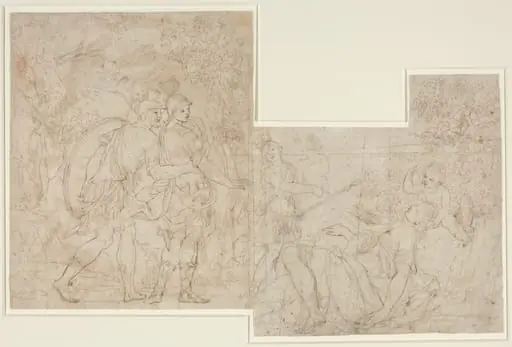 Three Soldiers Discovering a Sleeping Woman
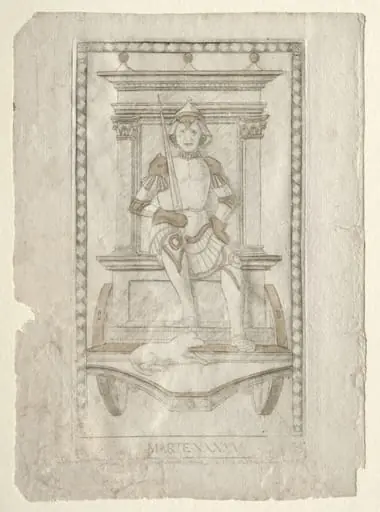 Mars (from the Tarocchi, series A: Firmaments of the Universe, #45)
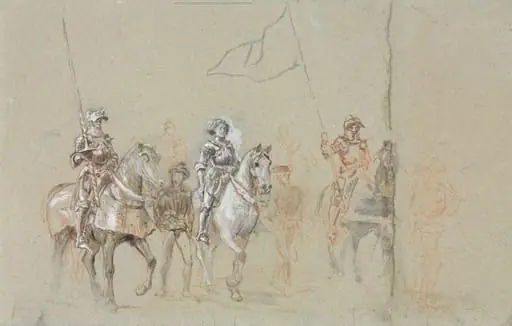 Joan of Arc
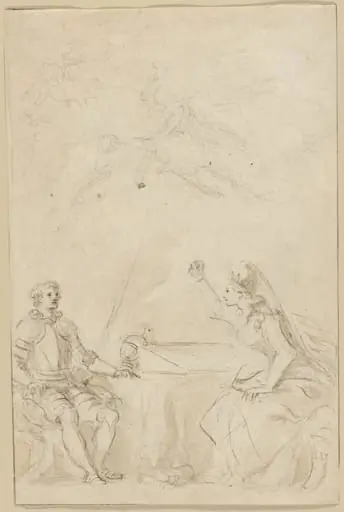 Olympia Tells Roland Her Sad Story
 Two Architectural Studies
 Coriolanus before the Women of Rome
 One Angel Blowing a Trumpet, and Another Holding a Standard
 From "Bizzarie di varie Figure"
 Joan of Arc on Horseback