Artwork
Rudolf I and Albert I with Pallas
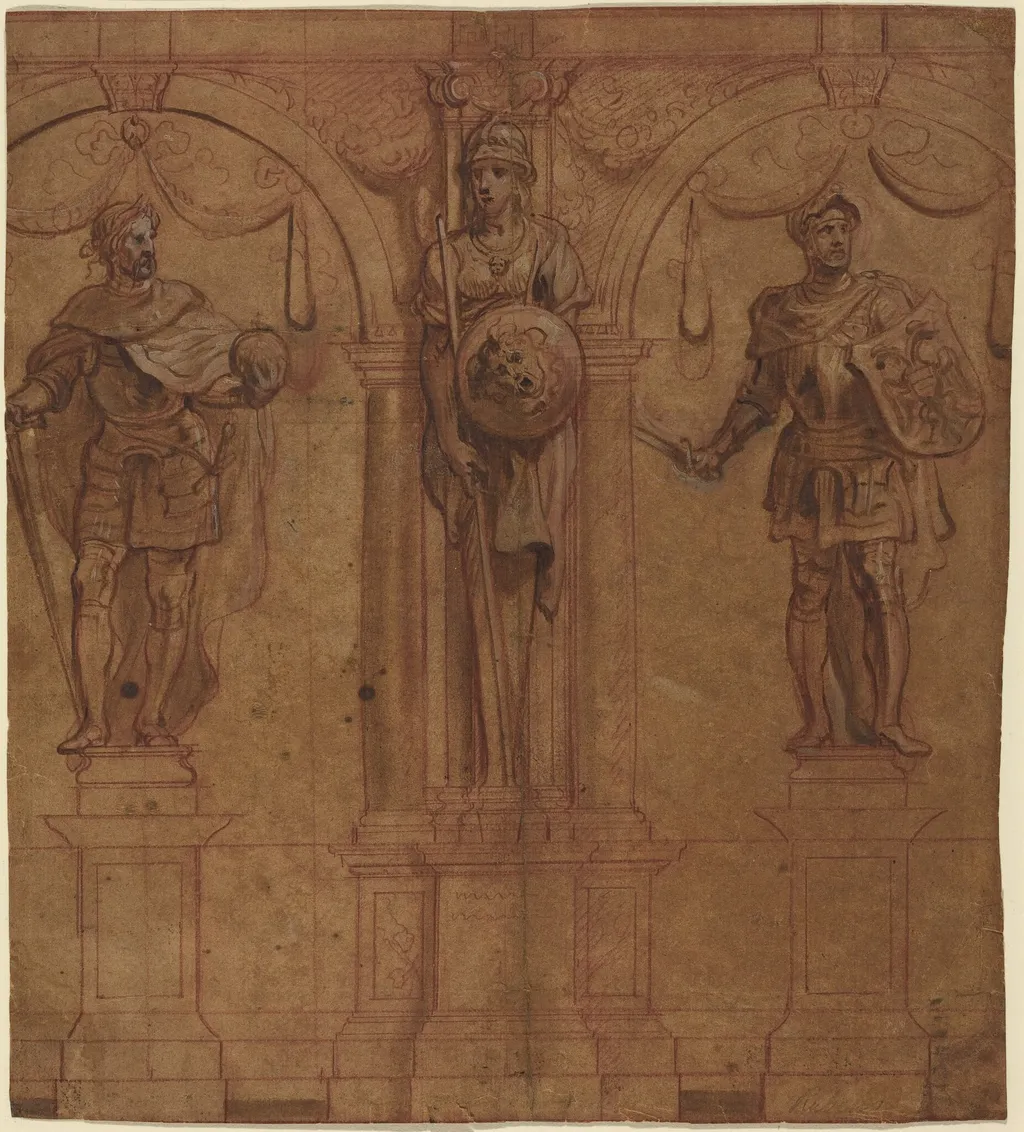
Rudolf I and Albert I with Pallas is an ink drawing by the Baroque artist Peter Paul, Sir Rubens. It dates from 1635 and is held in the collection of the National Gallery of Art.
About this work
Overview
Peter Paul Rubens produced this drawing in 1635, employing brush and brown ink with white oil paint applied over a red‑chalk underdrawing on oiled paper. The sheet bears an incised design on the reverse, indicating it was intended for transfer. The composition presents three standing figures framed by an arched architectural setting.
Subject & Meaning
At the centre stands a heavily armored figure bearing a round shield and a plume‑capped helmet, identified as the Roman goddess Pallas Athena.
At the centre stands a heavily armored figure bearing a round shield and a plume‑capped helmet, identified as the Roman goddess Pallas Athena. Flanking him are two smaller figures on pedestals: one holds a scroll, the other a spear‑like staff. The work juxtaposes historical rulers—Rudolf I and Albert I—with the allegorical presence of the goddess, a typical Baroque strategy for linking earthly authority to classical virtue.
Technique & Style
Rubens combined a red‑chalk sketch with layers of brown ink, using white oil paint to highlight details such as the armor’s gleam and architectural accents. The drawing’s linear clarity and dramatic chiaroscuro reflect the Baroque emphasis on movement and contrast, while the incised verso suggests it served as a template for a larger painted version.
History & Provenance
Created during Rubens’ mature period, the drawing was likely prepared as a preparatory study for a larger commission. Its survival on oiled paper and the transfer marks indicate it was part of Rubens’ workshop practice, though specific ownership records after its creation remain sparse.
Context
The early seventeenth century saw a revival of classical allegory in court portraiture, especially in the Holy Roman Empire, where rulers often aligned themselves with mythic figures to assert legitimacy. Rubens, a court painter to the Habsburgs, frequently employed such iconography to satisfy patron expectations for both historical narrative and moral symbolism.
Legacy
Although not a finished painting, the drawing offers insight into Rubens’ preparatory methods and his integration of allegorical content within political portraiture. It continues to be studied for its illustrative technique and as an example of how Baroque artists merged documentary portraiture with classical myth.
Artist & collection


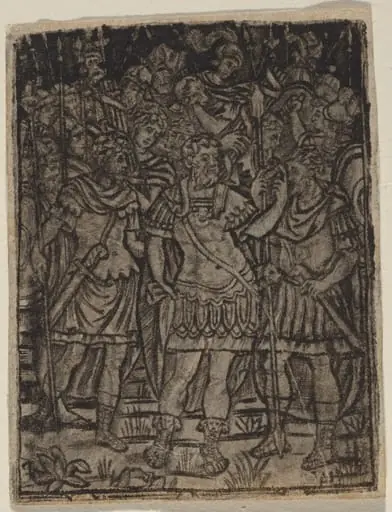 Roman General Addressing His Troops
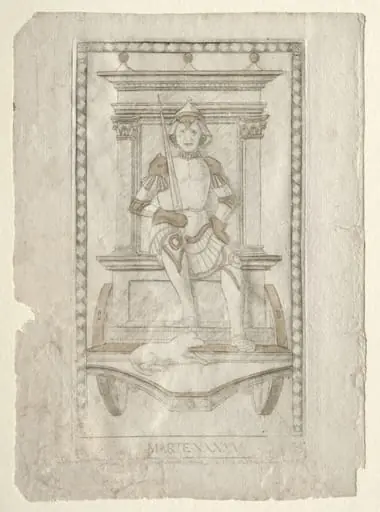 Mars (from the Tarocchi, series A: Firmaments of the Universe, #45)
![The Triumph of Julius Caesar [no.1 and 2 plus 2 columns], by Andrea Andreani](https://artifactworldgallery.com/img/andrea-andreani--the-triumph-of-julius-caesar-no-1-and-2-plus-2-columns--72fc49376c9f9633-w320.webp) The Triumph of Julius Caesar [no.1 and 2 plus 2 columns]
The Triumph of Julius Caesar [no.1 and 2 plus 2 columns]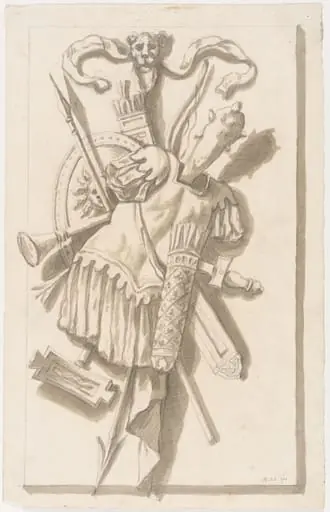 Design for an illusionistic panel in the Great Hall at Blenheim Palace
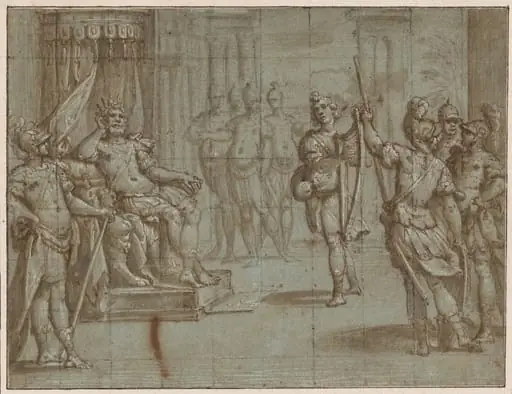 David Playing the Harp Before Saul
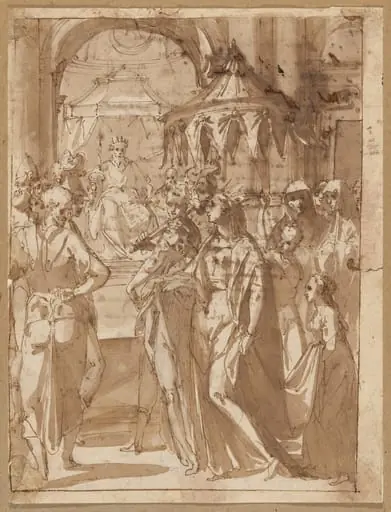 Esther before Ahasuerus
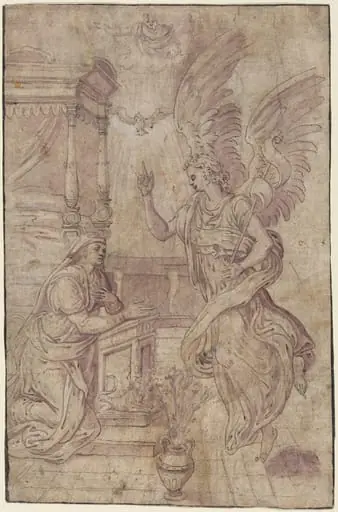 The Annunciation
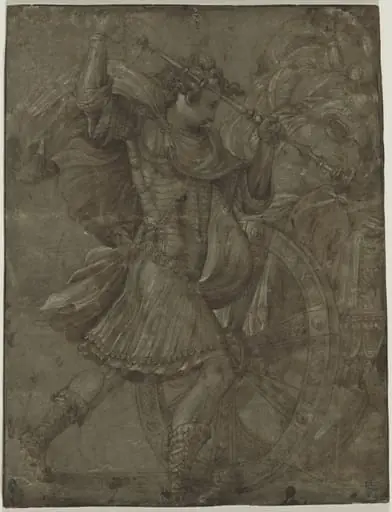 Man in Armor beside a Chariot
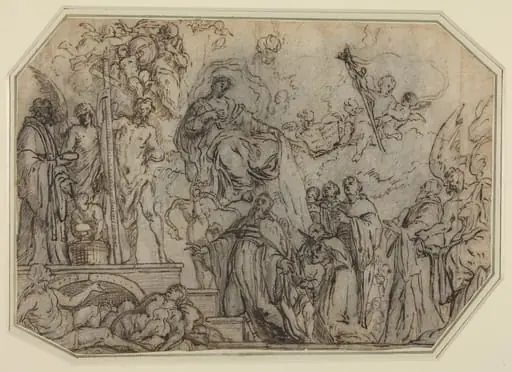 The Trinity and the Virgin Appearing to Ecclesiastics
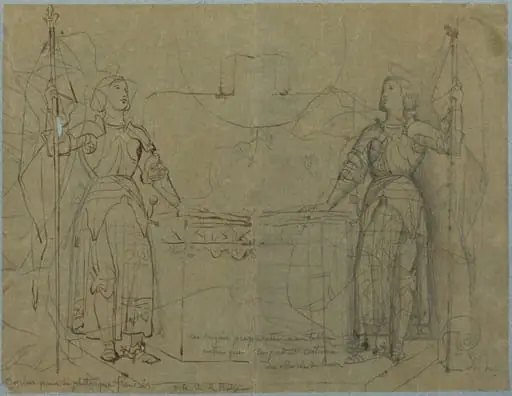 Joan of Arc Standing at the Altar at Reims Cathedral
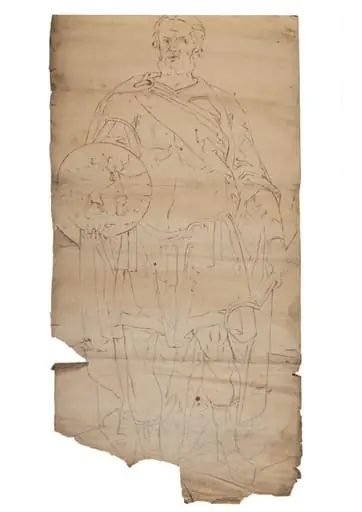 Martirul Eustatiu
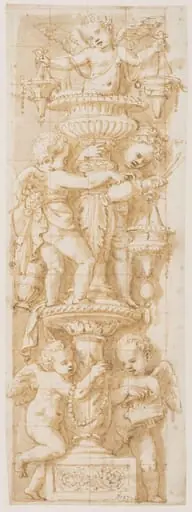 Design for the decoration of a pilaster: infant angels playing round the stem of a candelabrum