Artwork
Untitled
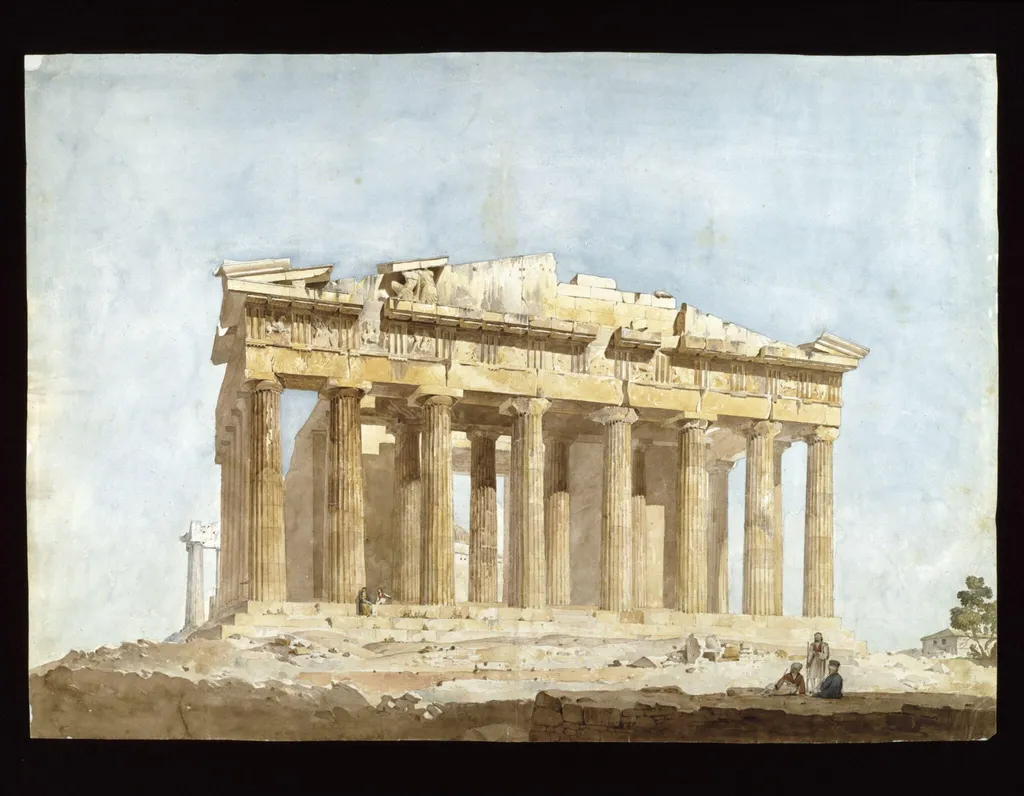
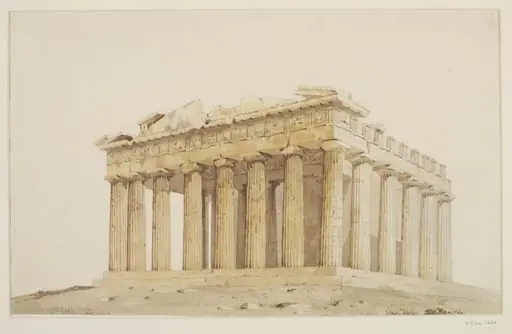
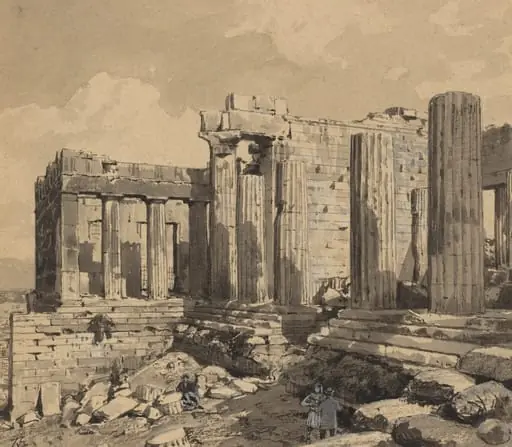
Untitled is a drawing by the Romanticist artist Henry William Inwood. It dates from 10 and is held in the collection of the Victoria and Albert Museum.
About this work
The artist focused on the grand, weathered look of the ruins, making them seem ancient and powerful.
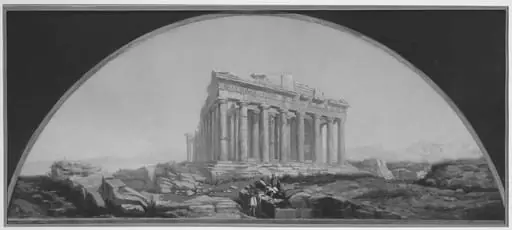
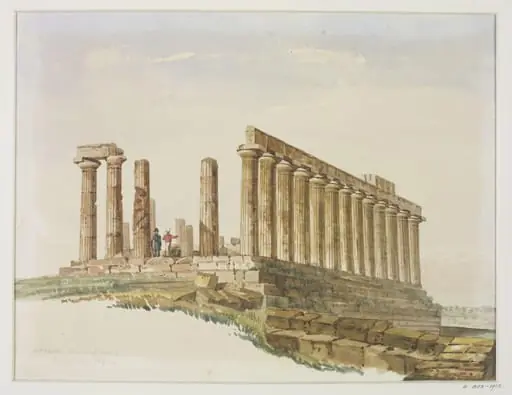
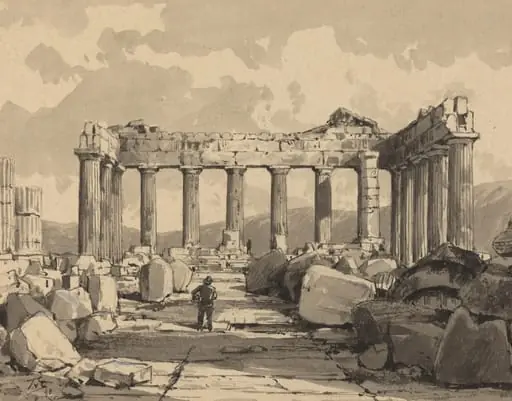
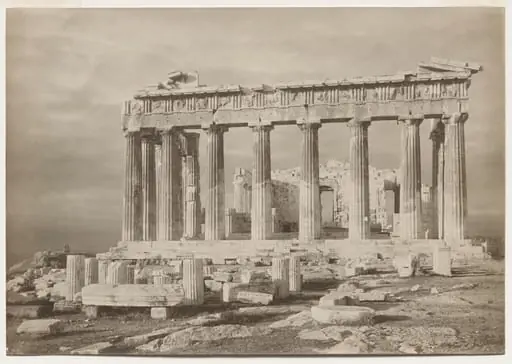
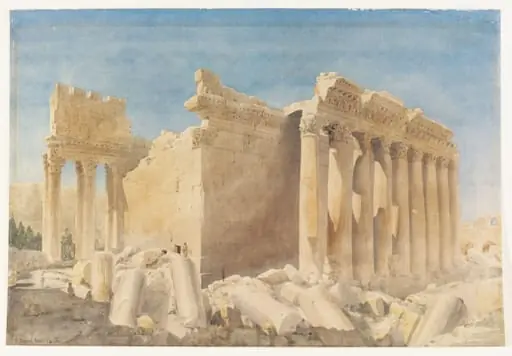
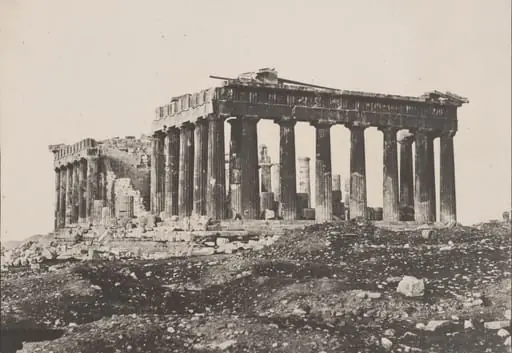
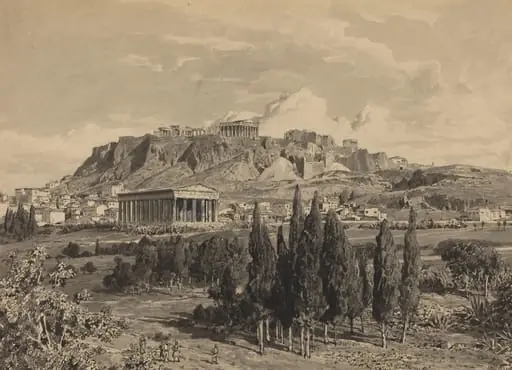
This drawing shows a ruined building with tall columns and a broken roof. A few people stand or sit around it, looking small against the big stones. The sky is light and pale, and the ground is rocky with some scattered debris.
The artist focused on the grand, weathered look of the ruins, making them seem ancient and powerful. This was drawn in 1818 by a British artist who traveled to see real ruins like this.
Next, check out Romanticism to see how artists used ruins to tell stories about history and emotion.
Overview
This 1818 drawing by Henry William Inwood captures the western facade of the Parthenon in a state of partial ruin. Rendered in precise linear detail, the composition emphasizes the scale and decay of the ancient structure, with its remaining columns rising above broken pediments and scattered stonework. Small human figures are placed inconspicuously at the base, underscoring the enduring presence of the ruins against the transience of human life.
Subject & Meaning
The drawing presents the Parthenon not as a monument of classical glory, but as a fragment of time—weathered, silent, and abandoned. The figures scattered around it suggest contemplation rather than celebration, inviting reflection on the passage of centuries and the erosion of empire. The ruin becomes a quiet symbol of historical memory, stripped of narrative and reduced to form.
Technique & Style
Inwood employed fine, controlled pencil lines to delineate architectural details with archaeological accuracy. The pale wash of the sky and the textured ground create a muted tonal range, enhancing the sense of age and stillness. The absence of dramatic lighting or color aligns with topographical drawing traditions, prioritizing observation over emotional embellishment.
History & Provenance
Created during Inwood’s travels in Greece in 1818, the drawing belongs to a wave of British antiquarian sketches made after the country’s increasing access to the Eastern Mediterranean. It reflects the scholarly interest in classical architecture among British architects and antiquarians, who documented ruins before widespread restoration or looting altered their condition.
Context
Inwood’s work emerged amid rising European fascination with ancient Greece, fueled by political upheaval and the rise of Neoclassicism. While many artists idealized classical forms, Inwood’s focus on decay aligned with emerging Romantic sensibilities that found meaning in ruin, impermanence, and the sublime silence of forgotten monuments.
Legacy
The drawing contributes to a broader 19th-century archive of architectural documentation that shaped Western understanding of Greek antiquity. Its restrained approach influenced later archaeological illustration, distinguishing itself from romanticized depictions by prioritizing fidelity to observed detail over imaginative reconstruction.
Artist & collection
Artist
Henry William Inwood was an English architect, archaeologist, classical scholar and writer. He was the joint architect, with his father William Inwood of St Pancras New Church.