Artwork
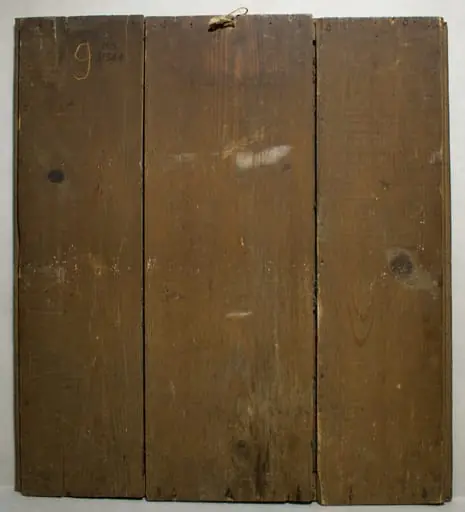
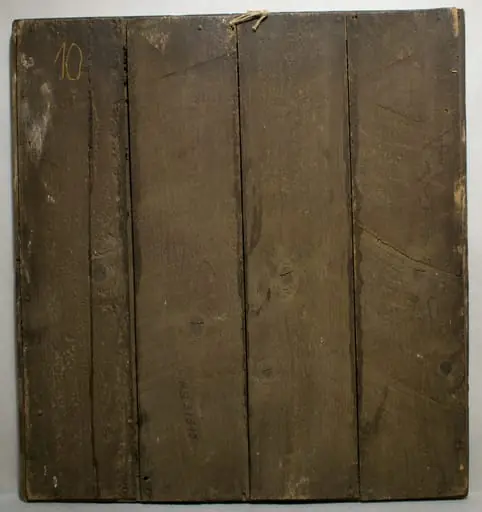
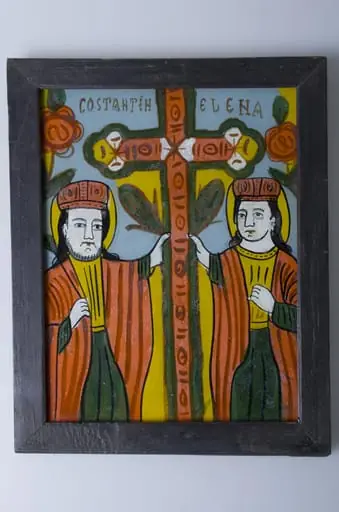
Icoana îi reprezintă pe Sfinții Împărați Constantin și Elena, susținând crucea pe care a fost răstignit Isus, cruce găsită de Împărăteasa Elena la Ierusalim. Crucea, tipul Calvarului, având brațele trilobate este în centrul compoziției pe care o domină.Cei doi sfinți sunt reprezentați cu însemnele împărătești, coroane pe cap și sceptru(împăratul Constantin). Veșmintele sunt simple, decorate doar cu șiruri de ghirlande fitomorfe verticale, în alternanță cromatică. Crucea decorată cu motive fitomorfe Câmpul icoanei, albastru ultramarin, decorat cu motive astrale și florale. În colțurile superioare sunt pictate falduri de draperii iar jumătatea inferioară a icoanei este "umplută" cu un relief vălurit și elemente vegetale. Compoziția foarte încărcată. Rama decorată cu căte trei șiruri de linii vălurite de culoare mai deschisă. Paleta cromatică: roșu, negru, alb, verde-oliv, gri, fond albastru cu decor roșu și alb. Rama - lemn de brad, "dosul" din șipci orizontale fixate de ramă.
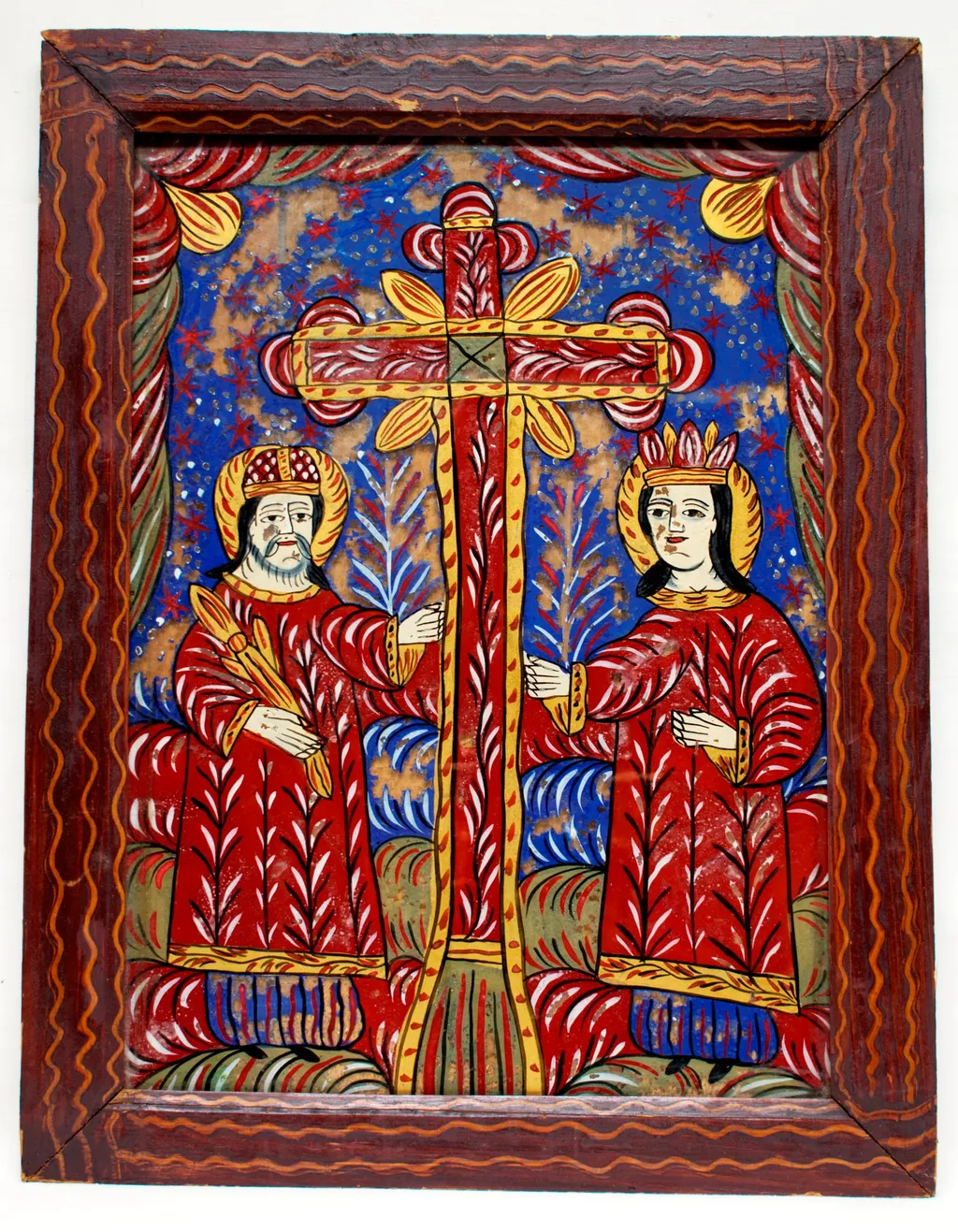
Icoana îi reprezintă pe Sfinții Împărați Constantin și Elena, susținând crucea pe care a fost răstignit Isus, cruce găsită de Împărăteasa Elena la Ierusalim. Crucea, tipul Calvarului, având brațele trilobate este în centrul compoziției pe care o domină.Cei doi sfinți sunt reprezentați cu însemnele împărătești, coroane pe cap și sceptru(împăratul Constantin). Veșmintele sunt simple, decorate doar cu șiruri de ghirlande fitomorfe verticale, în alternanță cromatică. Crucea decorată cu motive fitomorfe Câmpul icoanei, albastru ultramarin, decorat cu motive astrale și florale. În colțurile superioare sunt pictate falduri de draperii iar jumătatea inferioară a icoanei este "umplută" cu un relief vălurit și elemente vegetale. Compoziția foarte încărcată. Rama decorată cu căte trei șiruri de linii vălurite de culoare mai deschisă. Paleta cromatică: roșu, negru, alb, verde-oliv, gri, fond albastru cu decor roșu și alb. Rama - lemn de brad, "dosul" din șipci orizontale fixate de ramă. is a drawing by Ana Deji. It is held in the collection of the "Dimitrie Gusti" National Village Museum.
About this work
Overview
This icon depicts the imperial saints Constantine and Helena, flanking a large cross believed to be the True Cross, discovered by Helena in Jerusalem.
This icon depicts the imperial saints Constantine and Helena, flanking a large cross believed to be the True Cross, discovered by Helena in Jerusalem. The composition is densely packed, with the cross as the central vertical axis. Both figures are rendered in imperial regalia, standing firmly beside the cross, their postures suggesting support and reverence. The background and border are richly adorned, reinforcing the sacred and celestial nature of the scene.
Subject & Meaning
The icon honors Constantine and Helena as pivotal figures in Christian history: Constantine for legalizing Christianity, and Helena for her pilgrimage and discovery of the True Cross. Their presence beside the cross signifies divine sanction and imperial devotion. The cross, with its trilobate arms, represents the Calvary, while the celestial and vegetal motifs suggest the intersection of earthly authority and heavenly grace, framing the event as both historical and theological.
Technique & Style
The figures are painted with simplified drapery, accented by vertical floral garlands in alternating hues. The cross is elaborately decorated with vegetal patterns in gold and red, contrasting with the deep ultramarine background studded with stellar and floral motifs. The lower half of the panel features a textured, undulating relief-like surface with plant forms. The style is hierarchical and symbolic, prioritizing spiritual significance over naturalism, typical of Byzantine-derived iconography.
History & Provenance
The icon is executed on wood, with a frame crafted from spruce and a backing of horizontal planks. The pigments include traditional materials: ultramarine blue, vermilion, ochre, and charcoal black. The decorative border, with its triple wavy lines in lighter tones, reflects regional craftsmanship. While its exact origin is unrecorded, its iconography and materials align with late medieval Orthodox traditions from the Balkans or Eastern Mediterranean.
Context
This icon belongs to a tradition where imperial saints were venerated as protectors and promoters of the faith. The elaborate background, combining celestial and botanical elements, reflects a broader Byzantine tendency to merge the divine with the natural world. Such icons were often used in private devotion or liturgical settings, reinforcing the connection between earthly rulers and divine authority in Orthodox Christian communities.
Legacy
The icon preserves a visual language that endured for centuries in Eastern Christian art, emphasizing symbolic form over spatial realism. Its dense ornamentation and hierarchical composition influenced later regional icon painting, particularly in areas under Byzantine or Slavic ecclesiastical influence. Though not widely known outside specialized circles, it remains a testament to the enduring role of imperial sanctity in Orthodox visual culture.
Artist & collection
Artist
Ana Deji made colorful religious drawings and paintings with bold colors and simple shapes.
Museum
"Dimitrie Gusti" National Village Museum
Continue through works from the same source collection.
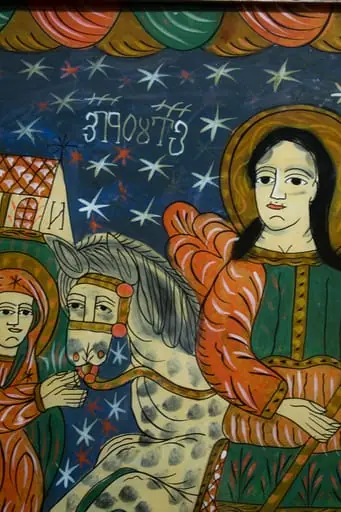
 Zugrăvița a combinat cu inocență două teme iconografice (cea a Bunei Vestiri cu cea a Botezului), fenomen frecvent în icoanele Anei Deji.În prim plan, în picioare, un sfânt cu o ramură verde în mâna dreaptă înălțată binecuvintează un înger. Sfântul tânăr, cu părul lung, negru, barbă scută, mustăți. După poziție și trăsături ar putea fi asimilat Sf. Ioan din scena Botezului. Poartă un chiton roșu, asemănător blănii de cămilă și un himation verde.În jurul capului are o aureolă cu limbi de foc asemănător acelora din Pogorârea Sfântului Duh. Îngerul privește către sfânt, ținînd pe brațul stâng un ștergar cu vrâste verzi și roșii, iarăși asemănare cu scena Botezului. Îngerul are trăsături feminine, ochii mari, negri, aripi strânse, tunică roșie cu poale cafenii.Nu poate fi vorba de Botez deoarece lipsește Isus dintre cele două personaje iar decorul arhitectural din planul doi(o construcție cu mai multe caturi, cu intrări largi, cu portal semicircular, 4 ferestre la ultimul cat și acoperiș rotund de olane) nu se regăsește în scena Botezului. De sus coboară sfântul Duh, sub formă de porumbel roșu cu aripi cafenii, pe un fond verde într-un oval de nori alburii marcați cu linii roșii. În partea de jos,relief ușor vălurit, realizat din benzi late cu margini ondulate de culoare verde, roșie și cafenie.Restul câmpului- albastru ultramarin, decorat cu steluțe albe și roșii. Pe trei laturi este pictat un chenar din semicercuri suprapuse, primul cu roșu alternînd cu verde, al doilea ocru. Icoana ar putea fi asimilată Buneivestiri, dar în acest caz în locul sfântului ar trebui să fie un înger iar în locul îngerului Fecioara Maria. Rama este alcătuită din patru șipci drepte, îmbinate oblic la colțuri. Dosul este realizat din scândurele subțiri de brad, dispuse vertical și fixate în cuie.
 Icoale c
 Icoaastr
 Icoacum
 Temadin
 Icoaotiv
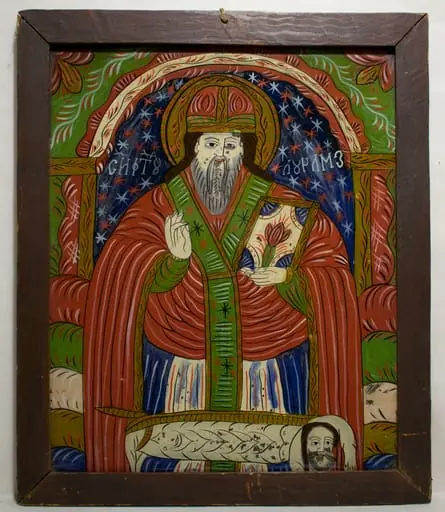
 Icoana este pictată pe dosul unei bucăți de sticlă de formă dreptunghiulară în ax vertical. Sfântul mare Ierarh Nicoale, 3/4, în veșminte de arhierești, redat frontal, cu mitră înaltă, bipartită pe cap, ține Evanghelia în stângă iar cu mâna dreaptă binecuvintează.Barba căruntă, ondulată, scurtă, părul lung, negru, lăsat pe umeri. Ochii, negri, înguști, asimetrici, gura roșie.În jurul capului aureolă galbenă cu motiv fitomorf. Înveșmântat cu un sacos roșu cu linii de fald albe, galon aurit decorat cu motiv fitomorf, stihar alb cu albastru și linii de fald albe, roșii, bleu. Epitrahilul, veșmântul liturgic cel mai important este verde, lung, chenar auriu punctat pe margini, steluțe negre. Relieful - succesiune de benzi late de culoare roșie, bleumarin și verde, brăzdate de linii subțiri, roșii și albe. Sfântul este încadrat de un portal semicircular, cu marginea ondulată, fond bleumarin, jos elemente arhitecturale schematizate. Lateral și superior un chenar dublu din semicercuri în culori alternante roșu, ocru, verde, bleumarin. Restul câmpului este de culoare verde deschis cu elemente fitomorfe. Desenul este îngrijit, dar prezintă asimetrii, stângăcii, disproporții. Paleta cromatică bogată, culorile intense. Țăranii îl țineau pe sfântul Nicolae "aducător de noroc, apărător de boli, apărător de vărsat și de lovituri" Rama îngustă, realizată din patru șipci îmbinate oblic, decorată cu un motiv vălurit, dispus longitudinal. Dos-scânduri de brad, dispuse vertical și fixate în cuie metalice.
 Icoaesiv
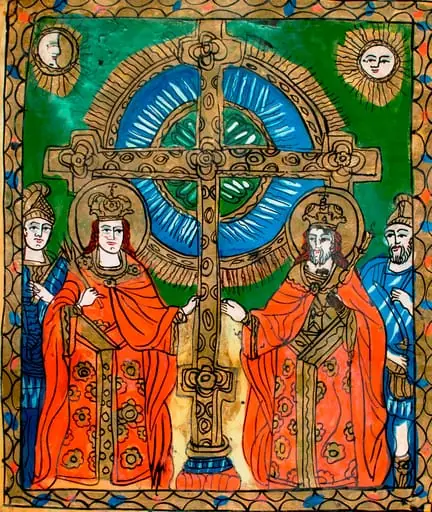 Icoana este pictată "în oglindă", pe un suport de sticlă de formă dreptunghiulară în ax vertical. Sfinții Împărați Constantin și Elena(1/1), susținând crucea pe care a fost răstignit Isus, cruce găsită de Împărăteasa Elena la Ierusalim. Crucea, dreaptă, cu brațele trilobate, aurită, decorată cu cercuri și semicercuri duble și flori la intersecția brațelor,este plasată pe un postament înalt, în centrul compoziției, având lungimea egală cu cea a suprafeței pictate.De la întretăierea brațelor iradiază cercuri concentrice de raze în culori reci, albastru, bleu, cel exterior auriu. Sfânta Elena(stânga) și sfântul Constantin(dreapta), plasați sub brațele crucii, reprezentați cu veșminte împărătești(tunici roșii brodate cu motive florale aurite, mantii lungi roșii, capă aurită pe umeri), coroane pe cap, aurite, la fel cu nimbul. Împăratul Constantin are în mâna stângă un sceptru, împărăteasa ține o ramură în mâna liberă. Amândoi sunt tineri, cu părul lung, roșcat-castaniu revărsat pe umeri. Sf. Constantin are barba scurtă. Cei doi împărați sunt flancați de un soldat roman și unul dac, în vestimentația militară specifică, având săbii în mâini. Acest Amănunt, cromatica și modul de realizare al desenului duc atribuirea către un zugrav cult. În colțurile de sus sunt redate luna și soarele antropomorfizate, într-un cerc aurit aplicat neglijent. Fondul este verde închis, cu degardeuri, la baza crucii zonă de culoare gălbuie. Întreaga compoziție este încadrată de un chenar dublu, cel de la interior aurit, cu două rânduri de semicercuri dispuse longitudinal, cel exterior de culoare roz gălbui. Desenul este dezordonat, cu linii redundante, culoarea aplicată inexact, nerespectând desenul. Compoziția este echilibrată, expresivă. Rama, din lemn de brad, culoare închisă.Îmbinare oblică la colțuri. Dosul - scânduri de brad, dispuse orizonal și fixate în cuie.
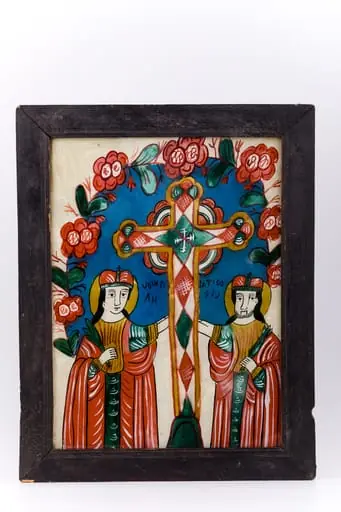 În centrul icoanei este Crucea, iar în dreapta crucii este Sfânta Împărăteasă Elena, și în stânga este Împăratul Constantin. Veșmintele sfinților împărați sunt pictate cu roșu vermillon și ocru-muștar și mânecile și epitrahile-patrafire vernil-gri. Poartă coroane împărătești și aureole de sfinți, mantiiile de împărați le au prinse la gât cu fibulă. Crucea este alb-crem cu elemente decorative geometrizante romboidale roșii-verzi și are capetele brațelor cu elemente decorative trilobate roșii vermillon-vernil. Fondul este cerul albastru ceruleum-regal foarte senin. Împrejurul Crucii este un spațiu luminos de alb-ivoriu Întreaga compoziție iconografică este încadrată de un chenar decorativ geometrizant alb-luminos și un chenar fitomorf, format dintr-o ghirlandă de 7 ruje - trandafiri și bujori roșii vermillon și 2 boboci de măceș - cu frunze gri-verzui. Cromatica este armonioasă: roșu vermillon-stacojiu-rose, albastru cobalt-regal, ocru-muștar, bronziu, brun, galben-chihlimbar, verde brad, vernil-gri, alb, negru. Inscripția în româno-chirilică se traduce Constantin și Elena. Icoana este din Nordul Transilvaniei, Nicula.
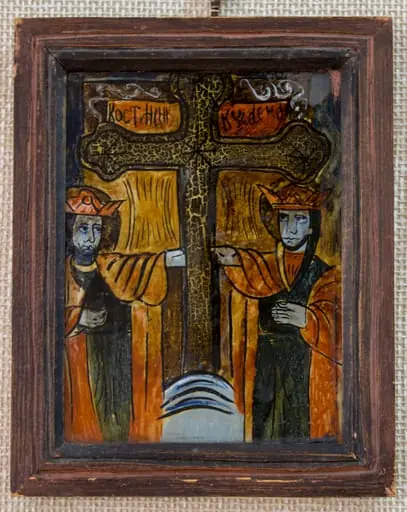 Icoana este pictată pe spatele unei bucăți de sticlă dreptunghiulară, în ax vertical. Compoziția îi reprezintă pe Sfinții Împărați Constantin și Elena, susținînd crucea pe care a fost răstignit Isus, cruce găsită de Împărăteasa Elena la Ierusalim. Crucea, aflată pe un postament semicircular, are brațele trilobate și brațele însemnate cu cruci. Chenarul crucii este trasat cu negru, din două linii subțiri. Cei doi sfinți sunt reprezentați cu coroane împărătești, în picioare, sub brațele crucii. Veșmintele sunt simple, mantii aurii și tunici verzi.Câmpul- aceeași nuanță de orange cu tonuri de brun, rezultate din distribuția neuniformă a culorii. În partea de sus, prelungit lateral până la brațele crucii, chenarul specific Niculei, zăluțe albe pe fond brun. Compoziția se remarcă prin simetrie și valorația cromatică. Rama este pictată în cafeniu la interior și roșu la exterior.
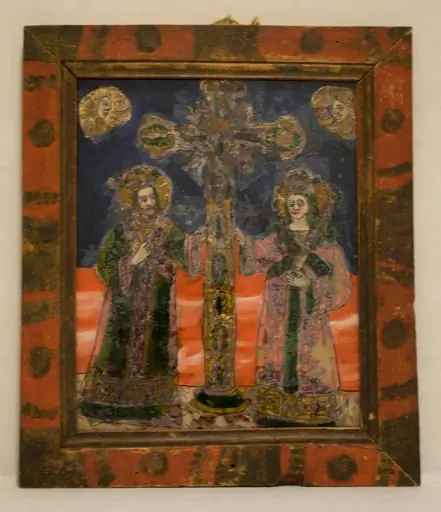 Icoana este pictată "în oglindă", pe un suport de sticlă de formă dreptunghiulară în ax vertical. Compoziția îi reprezintă pe Sfinții Împărați Constantin și Elena, susținând crucea pe care a fost răstignit Isus, cruce găsită de Împărăteasa Elena la Ierusalim. Crucea, aflată pe un postament circular, are brațele trilobate și raze care pornesc de la întretăierea brațelor. Este bogat ornamentată cu motive geometrice și florale stilizate pictată neîngrijit în alternanțe cromatice de verde smarald și galben, auriu. Cei doi sfinți sunt reprezentați cu însemnele împărătești, coroane pe cap și sceptru în mână. Veșmintele bogat ornamentate prin desenul cu condeiul, cu motive florale și fitomorfe , șiruri de romburi cu laturile duble încheiate cu cercuri.Aureolele aurite, cu marginea din desen vălurită. Apare aici și perspectiva, Crucea și sfinții fiind așezate pe o pardoseală, în spate până aproape la jumătatea icoanei un amestec de orange cu alb dând tridimensionalitate compoziției. Restul câmpului este de un albastru intens, cu reprezentări ale soarelui și lunii în cele două colțuri.Cele două astre sunt antropomorfizate, asemănătoare. Paleta cromatică variată: roșu, negru, alb, verde-oliv, gri, albastru, galben, orange, auriu, culorile intense. Desenul trasat cu condeiul este foarte încărcat și destul de neglijent, la fel umplerea cu culoare. Rama orange, ornamentată cu puncte și benzi transversale de grosimi diferite, de culoare verde.Dosul din șipci orizontale fixate de ramă.
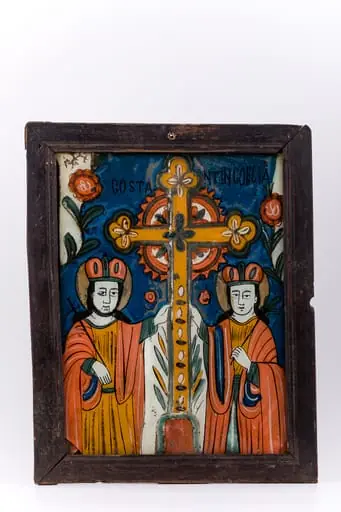 În centrul icoanei este Crucea, iar în stânga crucii este Sfânta Împărăteasă Elena, și în dreapta este Împăratul Constantin. Veșmintele sfinților împărați sunt pictate cu roșu vermillon și gri-antracit și epitrahile-patrafire gri-antracit. Poartă coroane împărătești și aureole de sfinți, mantiiile de împărați le au prinse la gât cu fibulă. Crucea este roșie-vermillon cu gri și are capetele brațelor cu elemente decorative trilobate roșii vermillon-cărămiziu. Fondul este cerul albastru bleu-ciel foarte senin, înspre alburiu. Împrejurul Crucii este un spațiu luminos de galben-chihlimbar. Întreaga compoziție iconografică este încadrată de un chenar decorativ fitomorf, format dintr-o ghirlandă de 7 ruje - trandafiri și bujori roșii vermillon și 2 boboci de măceș - cu frunze gri-verzui. Cromatica este armonioasă: roșu vermillon-cărămiziu, albastru bleu-ciel înspre alburiu, gri-antracit, bronziu, brun, galben-chihlimbar, ocru, alb, negru. Inscripția în româno-chirilică se traduce Constantin și Elena. Icoana este din Nordul Transilvaniei, Nicula.
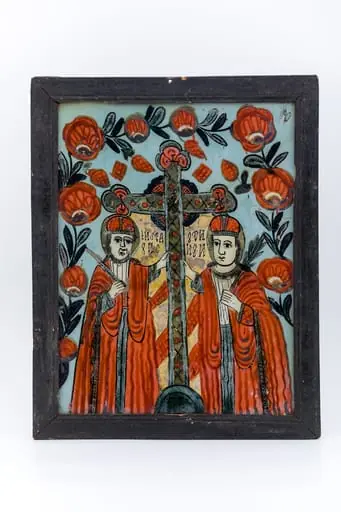 În centrul icoanei este Crucea bronzie, iar în stânga crucii este Sfânta Împărăteasă Elena, și în dreapta este Împăratul Constantin. Veșmintele sfinților împărați sunt pictate cu roșu vermillon și gri-albăstrui. Poartă coroane împărătești și aureole de sfinți, mantiiile de împărați le au prinse la gât cu fibulă. Crucea este bronzie și are capetele brațelor cu elemente decorative trilobate roșii vermillon somon. În spatele Crucii sunt elemente fitomorfe și o cunună de Rusalii. Fondul este cerul albastru bleu-ciel regal senin. Întreaga compoziție iconografică este încadrată de un chenar decorativ fitomorf, format dintr-o bogată ghirlandă de trandafiri-bujori, formată din 9 ruje roșii cu bobocei. În interiorul icoanei este un spațiu galben luminos cu umbre roșii paralele. Cromatica este armonioasă: roșu vermillon-somon, albastru bleu-ciel regal, gri, bej, crem, bronziu, brun, ocru, alb, negru. Inscripția în româno-chirilică se traduce Constantin și Elena. Icoana este din Nordul Transilvaniei, Nicula.
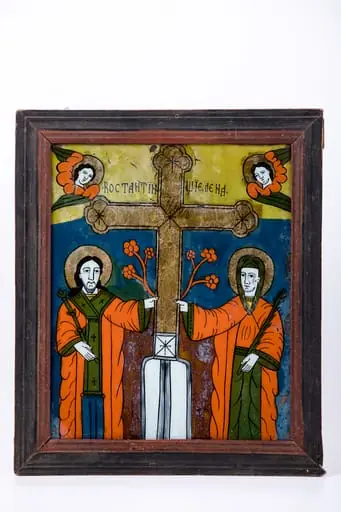 În centrul icoanei este Crucea albă la bază și bronzie în rest, cu capetele brațelor împodobite trilobat, iar în dreapta crucii este Sfântul Împărat Constantin, și în stânga este Împărăteasa Elena, mama sa. În spatele Crucii, sunt flori roșii agățătoare și unduitoare dintr-o grhirlandă de trandafiri. Crucea găsită este susținută cu bucurie de cei doi sfinți. Veșmintele Sfinților Constantin și Elena sunt într-o combinație de roșu vermillon și verde-iarbă de vară. Spațiul albastru-galben de lumină, din fondul icoanei, duce gândul la Crucea de lumină apărută pe cer In hoc signo vinces - prin acest semn vei învinge. Fondul icoanei este cerul albastru cobalt, lumina galbenă și o panglică albă, în josul crucii. În registrul superior, în colțurile stânga-dreapta sunt 2 îngeri serafimi. Cromatica este armonioasă, bogată și senină: roșu vermillon, galben-ocru, albastru cobalt, verde-iarbă de vară nuanță spanac-avocado, alb, negru. Icoana este de Nicula. Inscripția din româno-chirilică se traduce Constantin Elena.
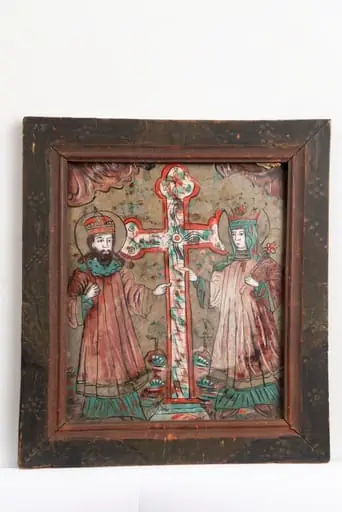 Icoana îi reprezintă pe Sfinții Împărați Constantin și Elena, pictați frontal, în picioare, ținând împreună în mână Crucea Răstignirii, ce domină central compoziția. Împărăteasa Elena ține în mâna stângă o ramură, îar împăratul Constantin are în mâna dreaptă un sceptru. Fondul icoanei e pictat integral doar în partea superioară unde apar în colțuri două ornamente din registrul vegetal, în rest e pictat cu laviuri colorate și decorat cu flori realizate din puncte, fiind vizibil fondul din hârtie argintată. Cromatica icoanei se compune din tonuri de roșu, alb, albastru, maro și gri. Rama icoanei e profilată, bicromă (latura interioară roșie, iar cea exterioară verde, decorată cu motive florale și geometrice) și e formată din îmbinarea a patru baghete de lemn. Sticla are un fragment lipsă, de mici dimensiuni, în partea stângă-sus.
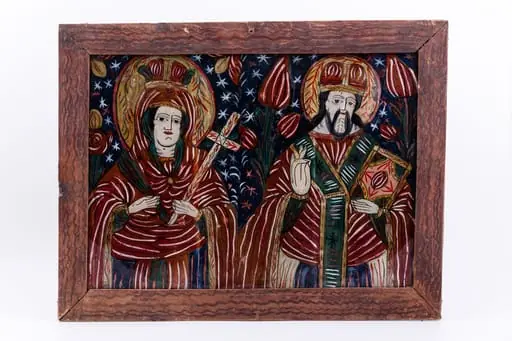 Icoana îi reprezintă pe Sfânta Mare Cuvioasă Parascheva de la Iași și pe Sfântul Ierarh Vasile cel Mare. Preacuvioasa este îmbrăcată în veșmânt roșu stacojiu-bordo-acajou, cu interiorul căptușit cu albastru și verde închis, ornat cu dungi albe subțiri. Peste maforionul roșu, sfânta cuvioasă are coroniță și aureolă. Mantia este prinsă la gât cu o fibulă aurie. În mâna dreaptă are un mănunchi de finic și în mâna stângă ține crucea. Alături de Sfânta Parascheva este Sfântul Ierarh Vasile cel Mare, îmbrăcat în veșminte liturgice arhierești cu felon-omofor roșu stacojiu, cu interiorul indigo închis, ornat cu striații albe fine, și cu epitrahil verde cu trei cruci negre. Cu mâna dreaptă Binecuvântează, iar în mâna stângă ține Sfânta Evanghelie închisă. Fondul icoanei este albastru ultramarin bleumarin închis înspre violet-indigo, cu elemente decorative fitomorfe și astrale albe și roșii. Cromatica este armonioasă, deși întunecată și rece: roșu stacojiu, bordo, acajou, albastru ultramarin bleumarin închis, violet-indigo, galben chihlimbar, brun, bej, verde de China, alb. Icoana este de Făgăraș și aparține Anei Deji.
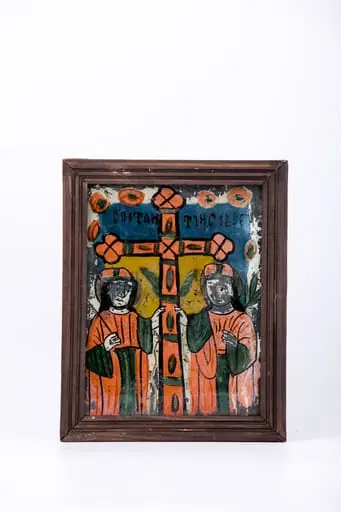 În centrul icoanei este Crucea pictată cu roșu vermillon și ornamentată cu 7 elemente ovoidale gri antracit și brațele au terminații trilobate. În dreapta crucii este Sfântul Împărat Constantin, și în stânga este Împărăteasa Elena, mama sa. Deasupra fiecăruia este inscripționat numele. În spatele Crucii, lipit de cruce, sunt două aripi ca de înger, stilizate sub formă de elemente vegetale. Veșmintele Sfinților Constantin și Elena sunt într-o combinație de roșu vermillon și gri antracit. Spațiul galben de lumină din spatele crucii duce gândul la Crucea de lumină apărută pe cer In hoc signo vinces - prin acest semn vei învinge. Icoana este bogat ornamentată de culoare, lumină și detalii semnificative, elemente decorative geometrizante și fitomorfe. Fondul icoanei este cerul de noapte, albastru ultramarin bleumarin întunecat. Întreaga compoziție este încadrată armonios de un chenar decorativ fitomorf-geometrizant, format din ruje roșii. Cromatica este armonioasă și bogată: roșu vermillon, galben-chihlimbar, albastru ultramarin bleumarin, gri antracit, alb, negru. Icoana este de Nicula. Inscripția din româno-chirilică se traduce Constantin Elena. Icoana este deteriorată, având absențe cromatice.
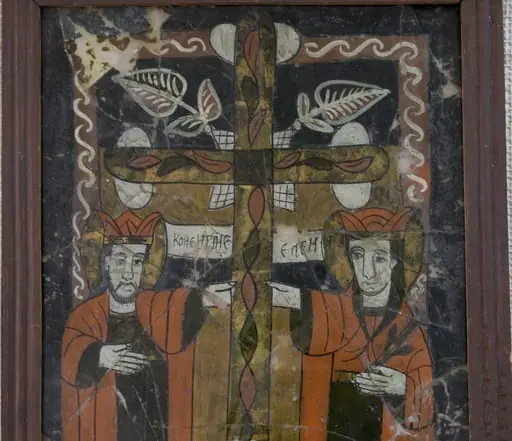 Pictură în oglindă, pe spatele unei bucăți de glajă, ax vertical.Sfinții Împărați Constantin și Elena, 3/4 , în picioare, semiprofil, sub brațele crucii pe care a fost răstignit Isus( găsită de Împărăteasa Elena la Ierusalim) Amândoi au plete castanii, lăsate pe umeri, coroane înalte, veșminte identice, simple, lungi, cămăși verzi și mantii roșii. Plasarea personajelor sub brațele crucii, în jumătatea inferioară, pe fond ocru sugerează complementaritatea celor două planuri(terestru și ceresc). Împărăteasa ține în mână o ramură verde, element ce o însoțește în majoritatea reprezentărilor populare. Fețele sunt ușor diforme, ochii negri. Crucea dreaptă, plasată în centrul compoziției, decorată cu frunze și o spirală în partea de jos, creează simetrie. La întretăierea brațelor crucii elemente vegetale cu contur alb. Chenarul specific icoanelor de Nicula, linia albă(zăluțe, funie) pe fond roșcat. Icoana este caracteristică perioadei de înflorire a picturi pe sticlă de la Nicula. Rama profilată, din lemn de brad, pictată cu o culoare roșcată. Dosul subțire. Sticla spartă în mai multe fragmente.
 Icoana este pictată pe sticlă, cu reprezentarea Sfinților Împărați Constantin și Elena, îmbrăcați în veșminte împărătești, redați de o parte și de cealaltă a crucii. Deasupra Sfinților este înscris textul: „Constantin