Artwork
Grafică „Epoca Nicolae Ceaușescu”, tablou atribuit lui Lucian Cociuba. Tabloul îl prezintă pe Nicolae Ceaușescu alături de marile reralizări ale Epocii Socialiste; realizări ornate cu garoafe roșii și tricolor. Comandat de Comitetul Județean de Partid Arad (1988).
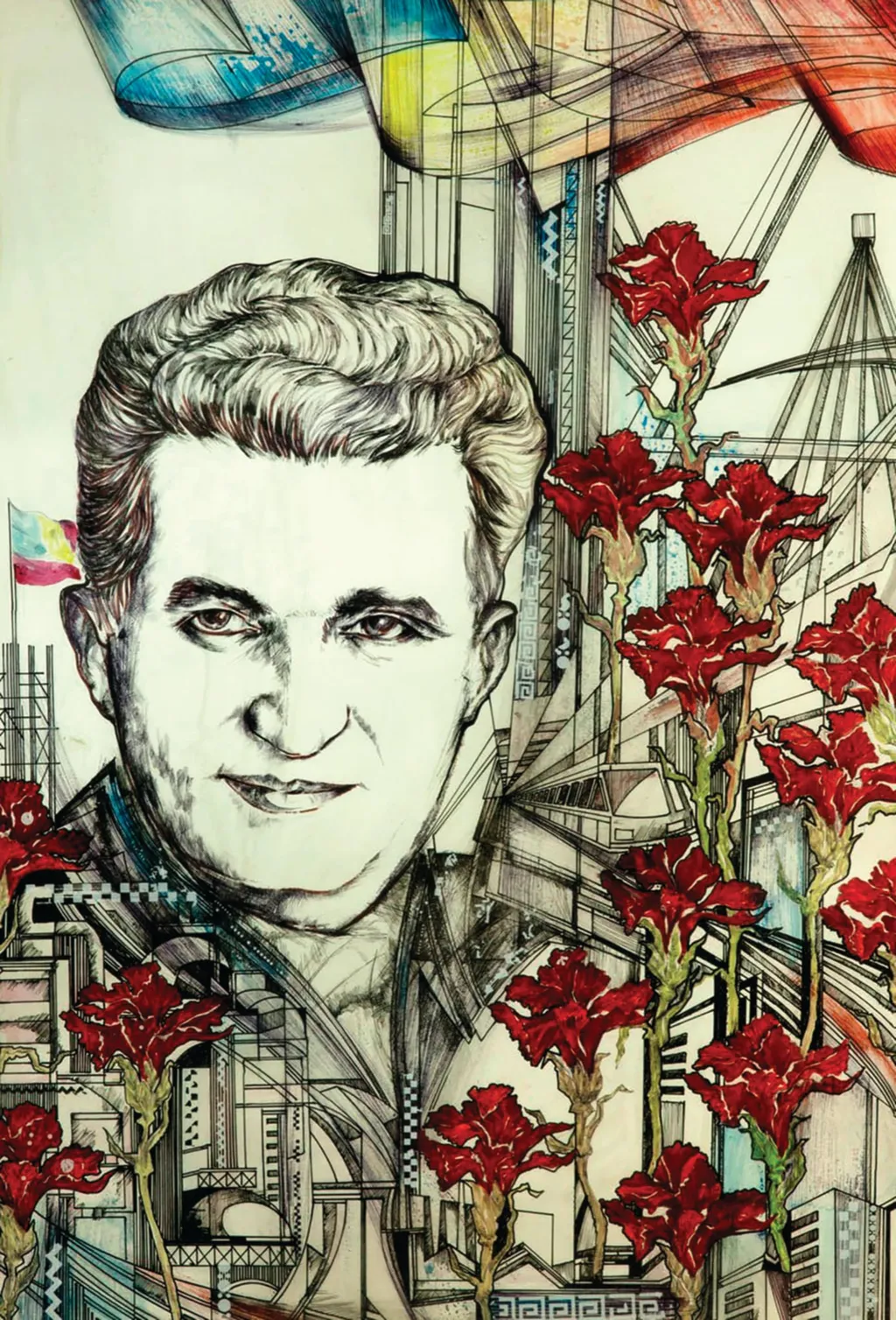
Grafică „Epoca Nicolae Ceaușescu”, tablou atribuit lui Lucian Cociuba. Tabloul îl prezintă pe Nicolae Ceaușescu alături de marile reralizări ale Epocii Socialiste; realizări ornate cu garoafe roșii și tricolor. Comandat de Comitetul Județean de Partid Arad (1988). is a print by Lucian Cociuba. It is held in the collection of the National Museum of Romanian History.
About this work
Overview
This printed image, attributed to Lucian Cociuba and commissioned in 1988 by the Arad County Party Committee, depicts Nicolae Ceaușescu surrounded by symbolic elements of Romania’s socialist era. Rendered in high-contrast black and white with splashes of red, blue, and yellow, the composition blends portraiture with decorative motifs, creating a visual narrative that merges official imagery with expressive, almost festive ornamentation.
Subject & Meaning
The contrast between the leader’s solemn expression and the exuberant surroundings underscores the tension between official rhetoric and visual spectacle.
The portrait centers Ceaușescu as a static, authoritative figure, while the background teems with red carnations, architectural arches, and national flags—symbols tied to state-promoted achievements. The flowers, climbing railings like living decorations, suggest perpetual celebration, reinforcing the regime’s cultivated image of progress and popular adoration. The contrast between the leader’s solemn expression and the exuberant surroundings underscores the tension between official rhetoric and visual spectacle.
Technique & Style
Cociuba employed bold, loose linework and saturated flat colors to create a dynamic tension between realism and stylization. The face is rendered with sharp definition, while the background dissolves into sketchy, overlapping forms—flowers, buildings, and banners blurred as if seen through motion or memory. This technique avoids photographic precision, instead favoring an energetic, almost graphic poster aesthetic that echoes both socialist realism and folk-inspired decoration.
History & Provenance
Commissioned in 1988 by the Arad County Party Committee, the work was likely intended for public display during the final years of Ceaușescu’s rule, when state imagery became increasingly ornamental and ritualized. Its production reflects the regime’s use of visual propaganda to sustain legitimacy. As a printed image, it was probably distributed locally, making it a rare artifact of regional party culture rather than a nationally circulated monument.
Context
Created during the final phase of communist rule in Romania, the piece aligns with a broader trend of visual excess in state-sponsored art—where grandiose symbolism replaced substantive messaging. The use of flowers, architecture, and flags as decorative motifs mirrors the regime’s emphasis on spectacle over substance. Similar imagery appeared in murals and posters, but this work’s intimate scale and expressive technique distinguish it from more rigid official productions.
Legacy
Attributed to Lucian Cociuba, the work stands as an example of how individual artists navigated state mandates with subtle stylistic deviations. Its blend of realism and decorative chaos offers insight into the unofficial visual language that emerged beneath official propaganda. Though not widely exhibited, it remains a documented artifact of late communist-era cultural production in Romania’s provincial centers.
Artist & collection
Artist

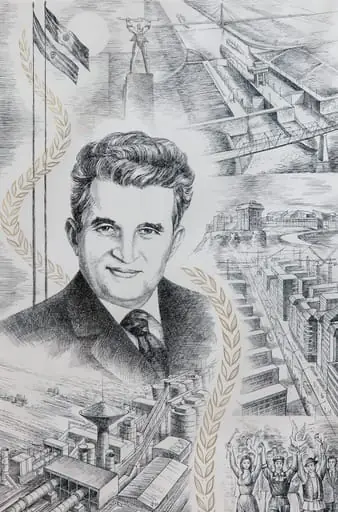 Tablou, tuș pe hârtie, „Ctitorul”, atribuit lui Levente Csutak. Tabloul îl prezintă pe Nicolae Ceaușescu și realizările sale - Canalul Dunăre Marea Neagră, Combinatul Petrochimic Midia Năvodari, Prometeu (statuia de la Barajul Vidraru), modernizarea orașelor - construcția de blocuri de locuințe pentru oamenii muncii. În partea dreaptă jos este reprezentat un grup de oameni entuziaști. Comandat și oferit de Comitetul Județean de Partid Brașov (1983).
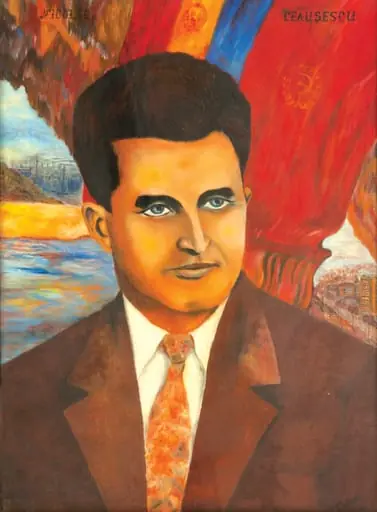 Tablou, ulei pe pânză, ”Portret Nicolae Ceaușescu”, nesemnat, atribuit lui Teodor Istrati. Portret Nicolae Ceaușescu pe fundal steagul cu stema R.S.R. și steagul cu sigla P.C.R., elemente de peisaj urban, inscripție cu majuscule în partea de sus ”NICOLAE CEAUȘESCU”. Oferit de autor lui Nicolae Ceaușescu, București, 25 iunie 1971.
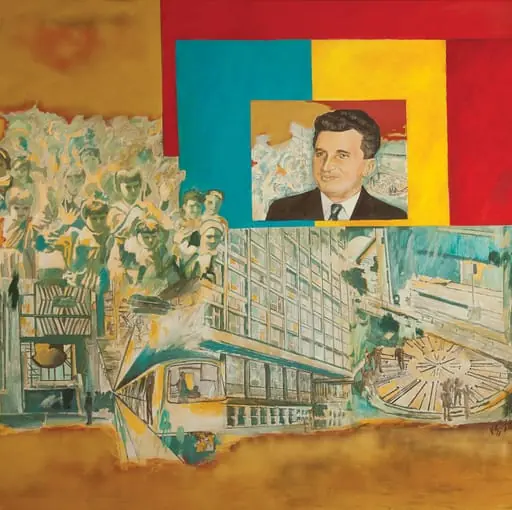 Tablou „Omagiu”, semnat Ion Bitzan și Vladimir Setran.Tabloul prezintă portretul lui Nicolae Ceaușescu încadrat de tricolor în partea dreaptă sus. Restul tabloului este completat de realizările epocii socialiste. Comandat de Comitetul Municipal de Partid 1981.
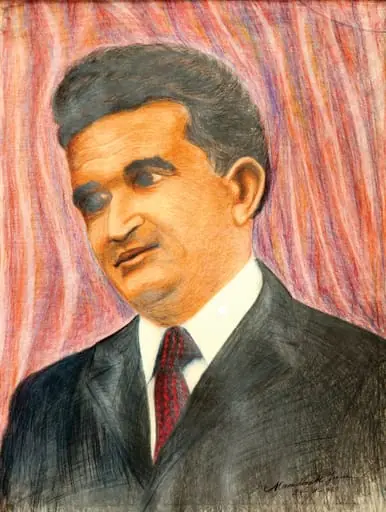 Tablou, desen pe carton, ”Nicolae Ceaușescu”, semnat cu tuș negru Jeana Macedonschi și datat 24.IX.1974, în partea dreaptă jos. Tablou oferit lui Nicolae Ceaușescu de către autor.
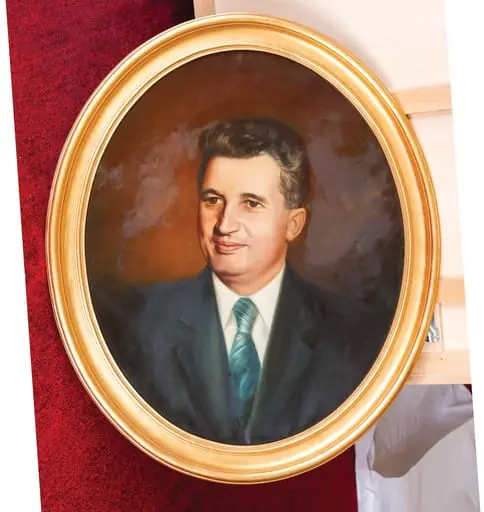 Tablou, ulei pe pânză, portret Nicolae Ceaușescu, atribuit Corneliu Brudașcu. Oferit de Uniunea Artiștilor Plastici (1979).
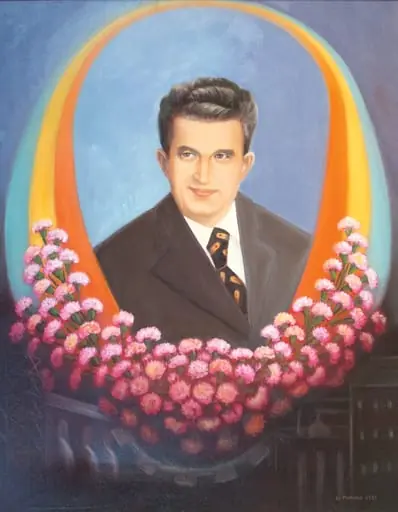 Tablou „Omagiu” semnat N. Porumb și datat în partea dreaptă jos. Tabloul îl reprezintă pe Nicolae Ceaușescu cu tricolorul în spate sub formă de curcubeu; în partea de jos a tabloului o ”mare” de garoafe și realizările socialismului. Comandat de Comitetul Județean de Partid Sibiu și dăruit lui Nicolae Ceaușescu cu ocazia zilie de naștere (ianuarie 1989).
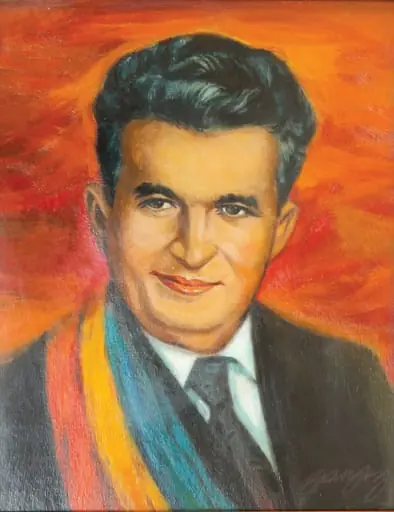 Tablou, „Portret Nicolae Ceaușescu”, semnat Barany în partea dreaptă jos, nedatat. Tabloul prezintă portretul lui Nicolae Caușescu cu banderolă tricoloră pe un fundal roșu - oranj. Comandat și oferit de Comitetul Județean de Partid Arad cu ocazia unei aniverări.
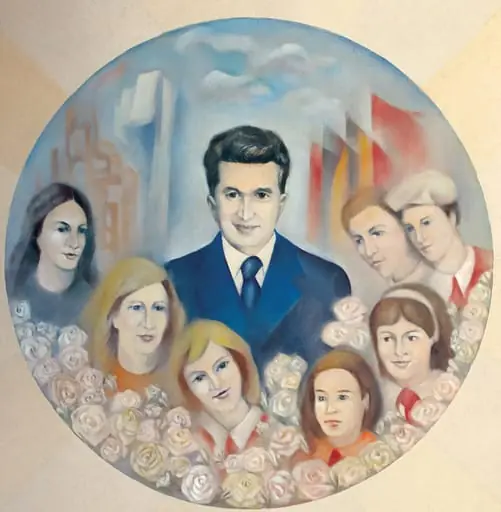 Tablou ulei pe pânză, „Nicolae Ceaușescu”, nesemnat, atribuit lui Ion Pantilie, nedatat. Nicolae Ceaușescu este reprezentat în mijlocul copiilor și tinerilor. Comandat și oferit de Comitetul Județean de Partid Argeș (1988).
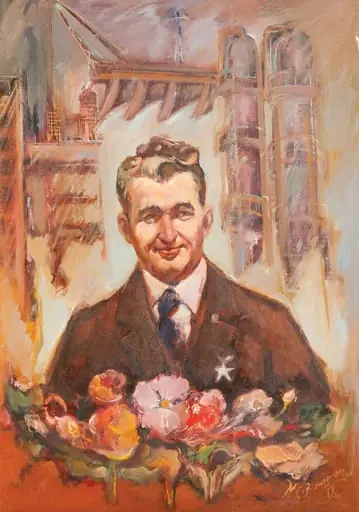 Tablou, ulei pe pânză, „Portret Nicolae Ceaușescu”, semnat C. Radovan și datat în partea dreaptă jos 1978. Nicolae Ceaușescu este reprezentat înt-o atitudine jovială, în piept are însemnul ”Erou al Republicii Socialiste România”. Pe fundal realizări ale regimului comunist. Oferit de Comitetul Județean de Partid Timiș, 22 ianuarie 1978.
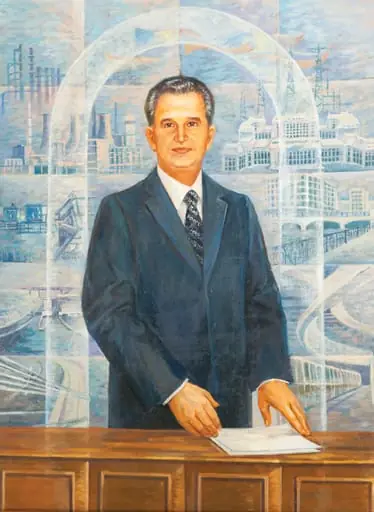 Tablou, „Epoca de aur”, atribuit Doina Catargiu. Tabloul îl prezintă pe Nicolae Ceaușescu într-un cadru oficial, la tribună. În spatele său marile realizări ale epocii sale: Casa Republicii, metroul, Canalul Dunăre - Marea Neagră, rafinării, combinate etc. Comandat și oferit de Comitetul Județean de Partid Suceava (1988).
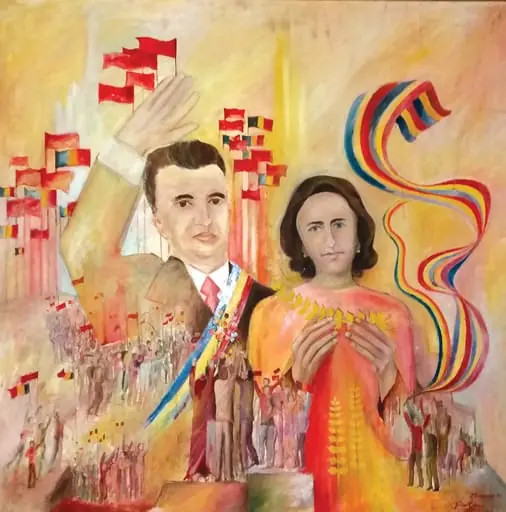 Tablou, ulei pe pânză, ”23 August”, nesemnat, atribuit Teodor Cioată. Nicolae și Elena Ceaușescu sunt prezentați în mijlocul mulțimii. Proporțiile reprezentării personajelor principale, soții Ceaușescu, nu sunt respectate de către artist - capetele sunt prea mari, la fel și mâinile care sunt ținute în poziții nefirești. În partea de jos a tabloului oameni ai muncii cu steaguri ovaționând. Tablou oferit de autor, Iași, august 1974.
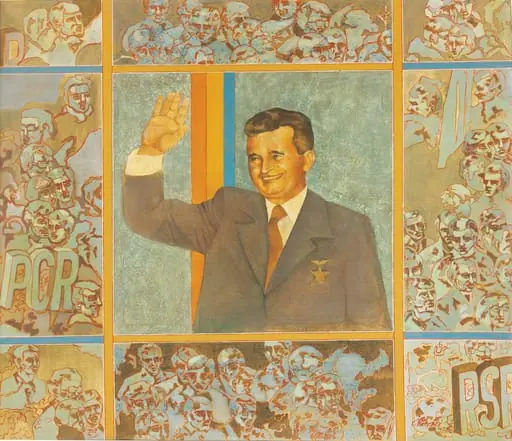 Tablou, ulei pe pânză, „Portret Nicolae Ceaușescu”, semnat în partea dreaptă jos C.Macavei și datat 1978. Tablou împărțit în mai multe registre, în plan central Nicolae Ceaușescu salutând oamenii muncii din celelalte registre. Comandat și oferit de Comitetul Județean de Partid Ilfov, 23 ianuarie 1978.
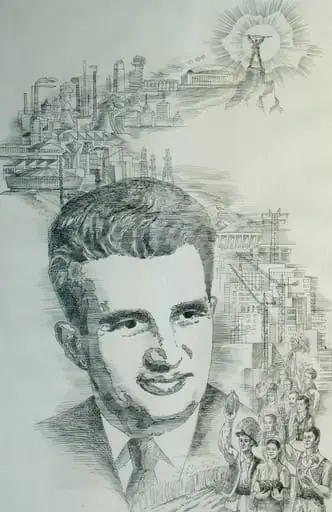 Tablou, desen cu tuș, portret Nicolae Ceaușescu pe fundal industrial, nesemnat, nedatat; atribuit lui Levente Csutak. Fundalul industrial este prezentat sub forma unui drum al realizărilor socialismului - la baza drumului stau oamenii muncii, continuă cu realizările: fabrici, uzine, combinate, hidrocentrala de la Porțile de Fier, clădirea Circului de Stat, Sala Palatului, statuia lui Prometeu de la Barajul Vidraru este luminată de un soare în formă de harta RSR. Deși nu este o realizare a socialismului este reprezentată și Coloana Infinitului a lui Brâncuși. Oferit de Comitetul Județean de Partid Brașov (1983).
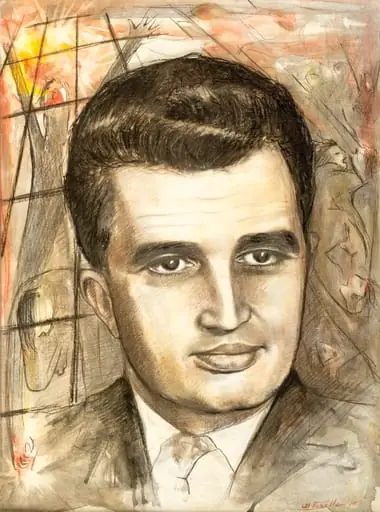 Portret Nicolae Ceaușescu, tablou realixat prin tehnică mixtă, semnat Al. Torella și datat 1975 în partea dreaptă jos.A fost oferit lui Nicolae Ceaușescu de delegația italiană condusă de Benito Craxi cu ocazia vizitei în România din noiembrie 1978
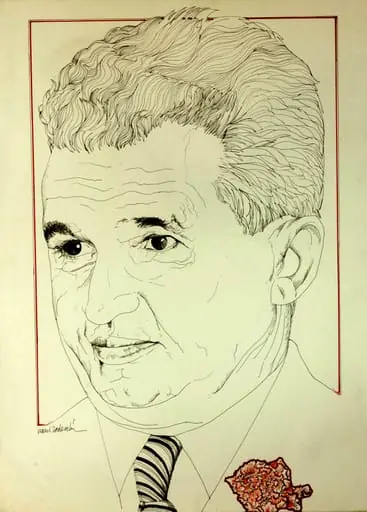 Grafică, portretul lui Nicolae Ceaușescu, semnat stânga jos Nanni Tedeschi, nedatat. Oferit de delegația italiană condusă de Benito Craxi cu ocazia vizitei în România. București, noiembrie 1978.
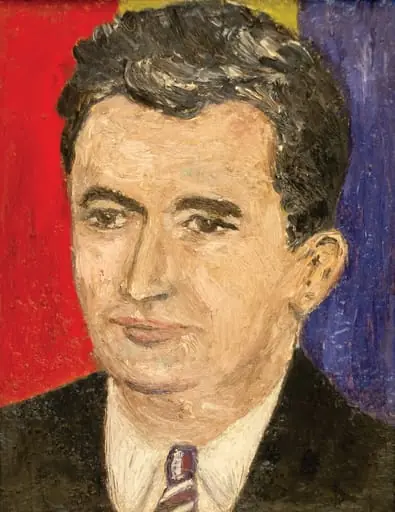 Pablou, ulei pe carton, portret Nicolae Ceaușescu. Oferit lui Nicolae Ceaușescu de Aurica Pânzaru, prof. de matematică fizică din Dorohoi, 23 ianuarie 1978.
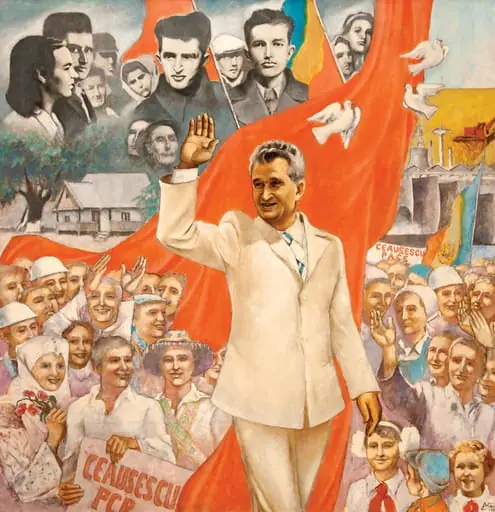 Tablou „Eroul României Socialiste” , semnat și datat în dreapta jos ”Constantin Nițescu 1988”. Comandat de Comitetul Județean de Partid Olt și oferit cadou lui Nicolae Ceaușescu la împlinirea vârstei de 70 de ani (ianuarie 1988).
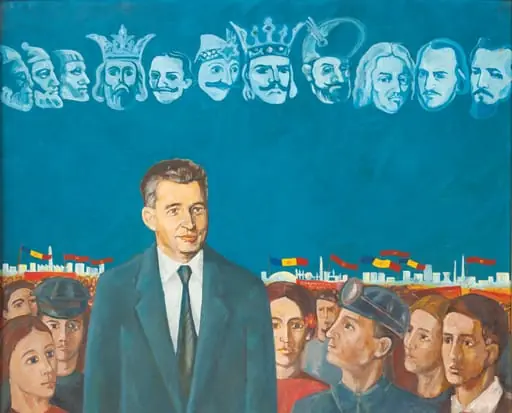 Tablou, ulei pe pânză, „Omagiu”, nesemnat. Nicolae Ceaușescu este prezentat în mijlocul oamenilor muncii vegheat de ”fantomele” eroilor neamului : Burebista, Decebal, Traian, Mircea cel Bătrân, Iancu de Hunedoara, Vlad Țepeș, Ștefan cel Mare, Mihai Viteazul, Dimitrie Cantemir, Nicolae Bălcescu, Alexandru Ioan Cuza (de la stânga la dreapta). Comandat și oferit de Comitetul Județean de Partid Tulcea, 22 ianuarie 1978.