Artwork
Untitled
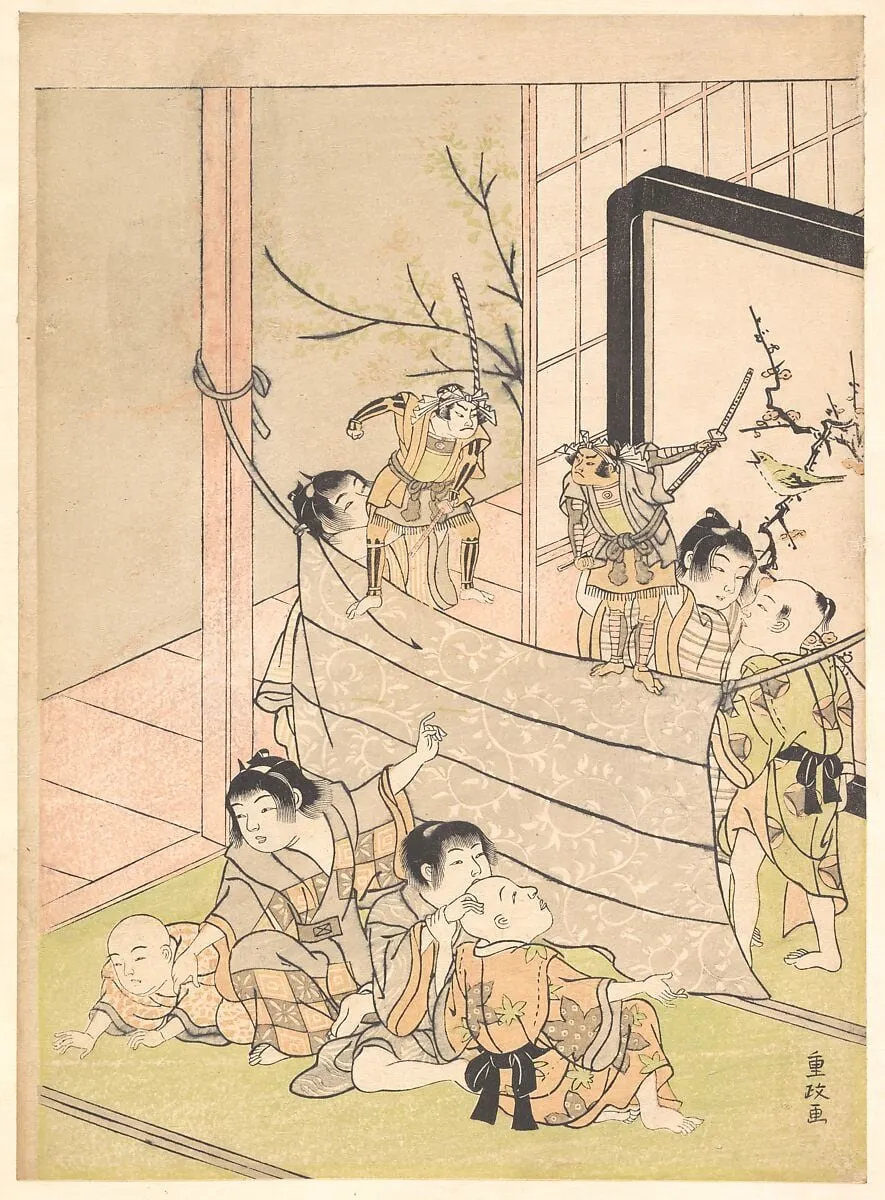
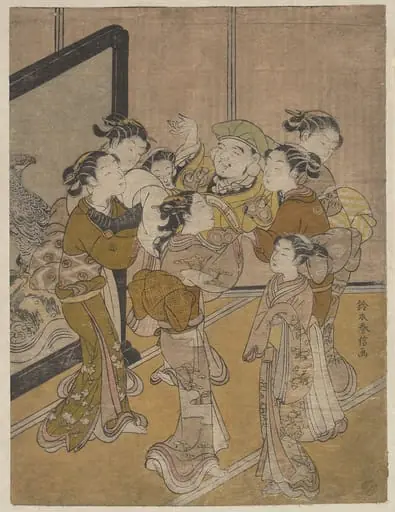
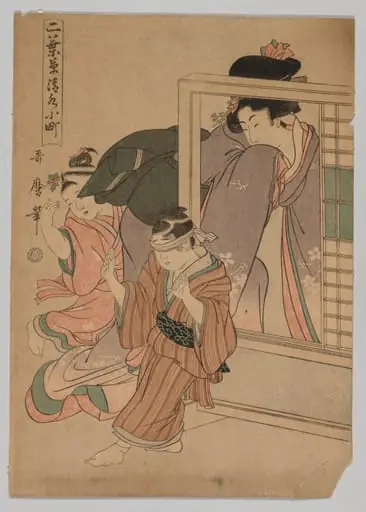
Untitled is an ink print by the Romanticist artist Kitao Shigemasa. It dates from 1770 and is held in the collection of the Metropolitan Museum of Art.
About this work
Overview
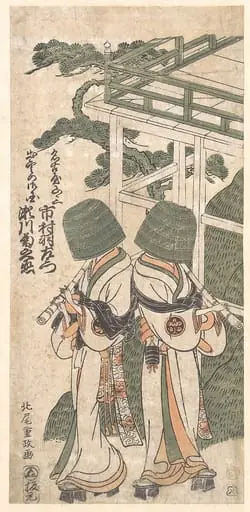
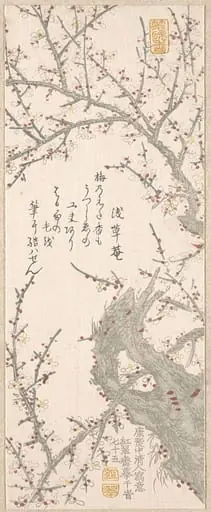
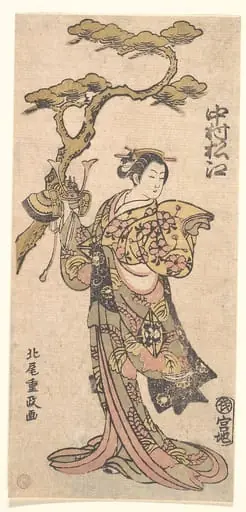
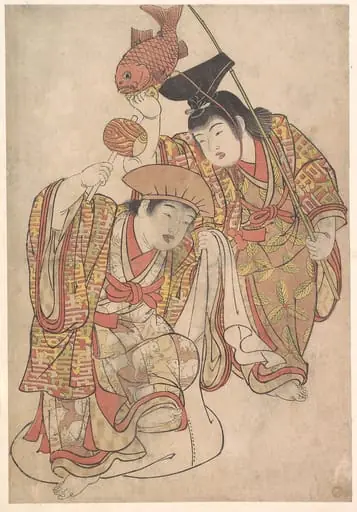
Created around 1770, this woodblock print by Kitao Shigemasa is part of The Metropolitan Museum of Art’s collection. Executed in ink and color on paper, it captures a moment of theatrical performance in Edo-period Japan. The composition centers on a life-sized puppet engaged with a group of onlookers, suggesting a scene from a popular puppet theater tradition.
Subject & Meaning
The print depicts a puppet show in progress, with figures dressed in period attire reacting to the puppet’s movements.
The print depicts a puppet show in progress, with figures dressed in period attire reacting to the puppet’s movements. The puppet, dressed similarly to the humans, blurs the line between performer and audience, reflecting the cultural significance of ningyō jōruri—puppet theater—as both entertainment and social commentary. The interaction implies shared amusement, reinforcing the communal nature of such performances.
Technique & Style
Shigemasa employed the ukiyo-e woodblock method, using fine lines and layered colors to render textures and expressions. The figures are arranged dynamically, with subtle perspective cues from the background trees and architecture lending spatial depth. The playful gestures and detailed costumes reflect the genre’s focus on everyday life and theatrical spectacle, typical of late 18th-century Edo printmaking.
History & Provenance
The print entered The Metropolitan Museum of Art’s collection as part of its broader acquisition of Japanese prints from the Edo period. While its exact early ownership is undocumented, its preservation suggests it was valued by collectors interested in popular visual culture. Shigemasa’s reputation as a prolific designer of actor prints and genre scenes supports its likely circulation among urban audiences.
Context
During the 1770s, puppet theater flourished in Edo as a form of accessible entertainment, often performed in dedicated theaters alongside kabuki. Artists like Shigemasa translated these live performances into prints for domestic consumption. The blending of human and puppet figures in this work mirrors the era’s fascination with performance, illusion, and the boundaries between reality and artifice.
Legacy
Though not among Shigemasa’s most widely reproduced works, this print exemplifies the genre’s capacity to capture fleeting moments of public life. It contributes to the historical record of ukiyo-e’s role in documenting Edo’s cultural practices, offering insight into how theater, visual art, and social ritual intersected in pre-modern Japan.
Artist & collection
Artist
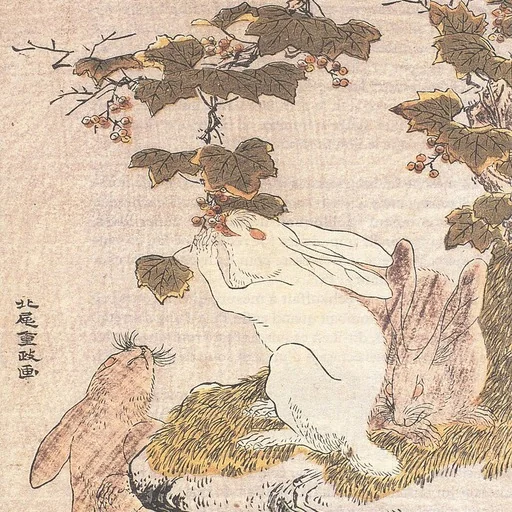
Kitao Shigemasa (北尾 重政; 1739 – 8 March 1820) was a Japanese ukiyo-e artist from Edo.


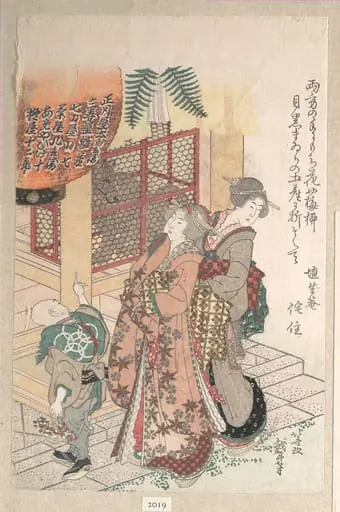 初詣|Young Women Visiting a Shinto Shrine
 Untitled
 Untitled
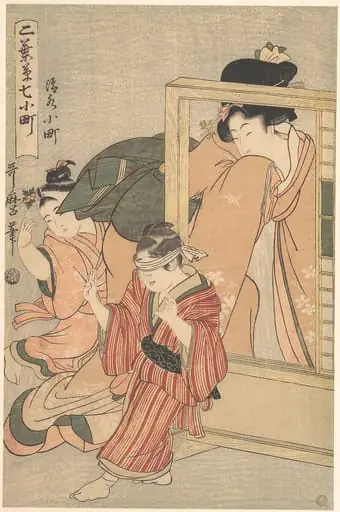 二葉草七小町 清水小町|Kiyomizu Komachi
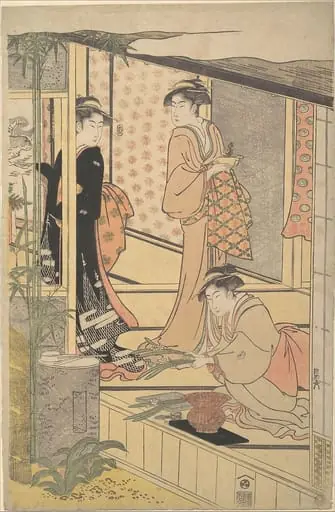 細田栄之画 正月準備|Preparing New Year Decorations
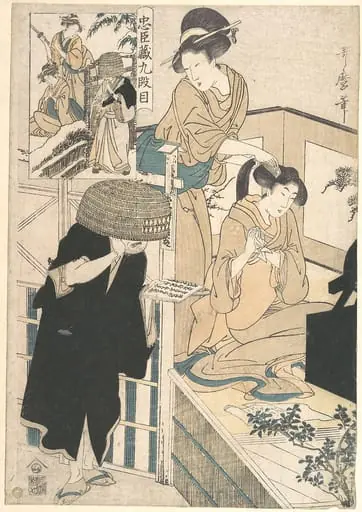 忠臣蔵九段目|A Woman at Her Toilet Seated before a Mirror, Having Her Hair combed by a Kameyui (Woman Hairdresser)
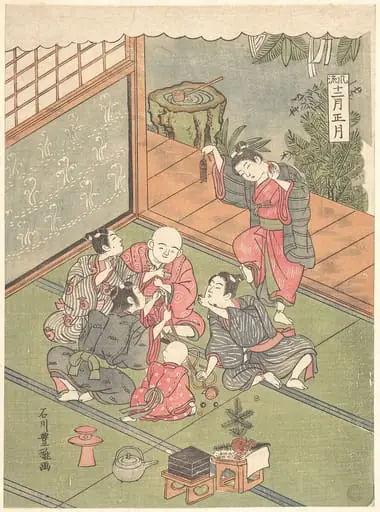 Shō gatsu|The First Month
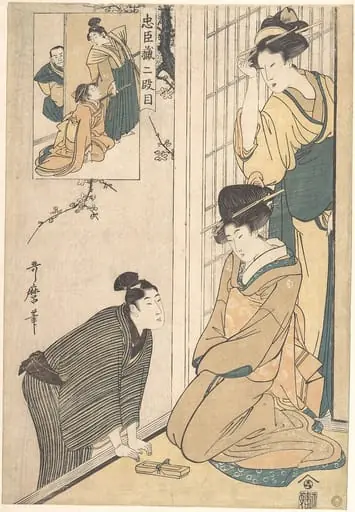 忠臣蔵二段目|A Young Man at the Side of a House
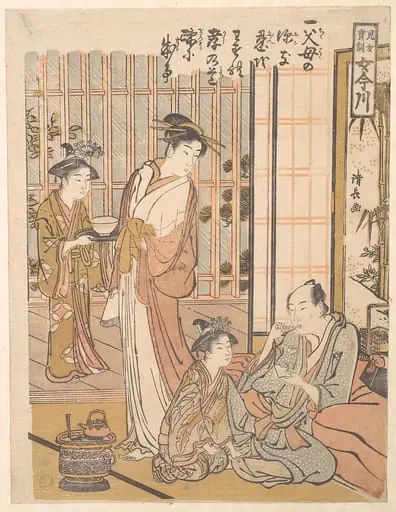 Untitled
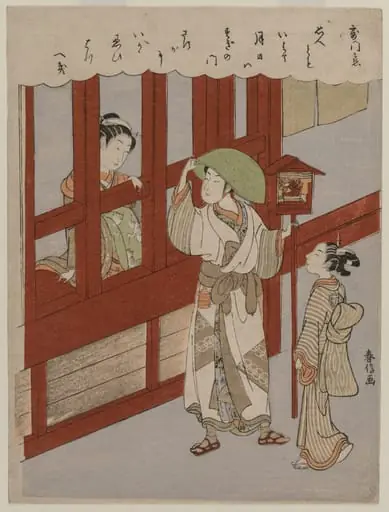 Love at the Brothel Gate
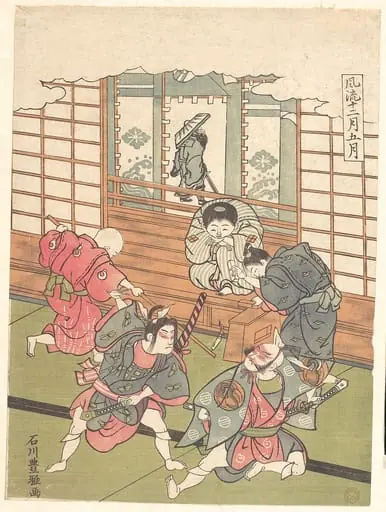 Untitled
 Kiyomizu Komachi from the series Little Seedlings: Seven Komachi