Artwork
Calligraphy Painting
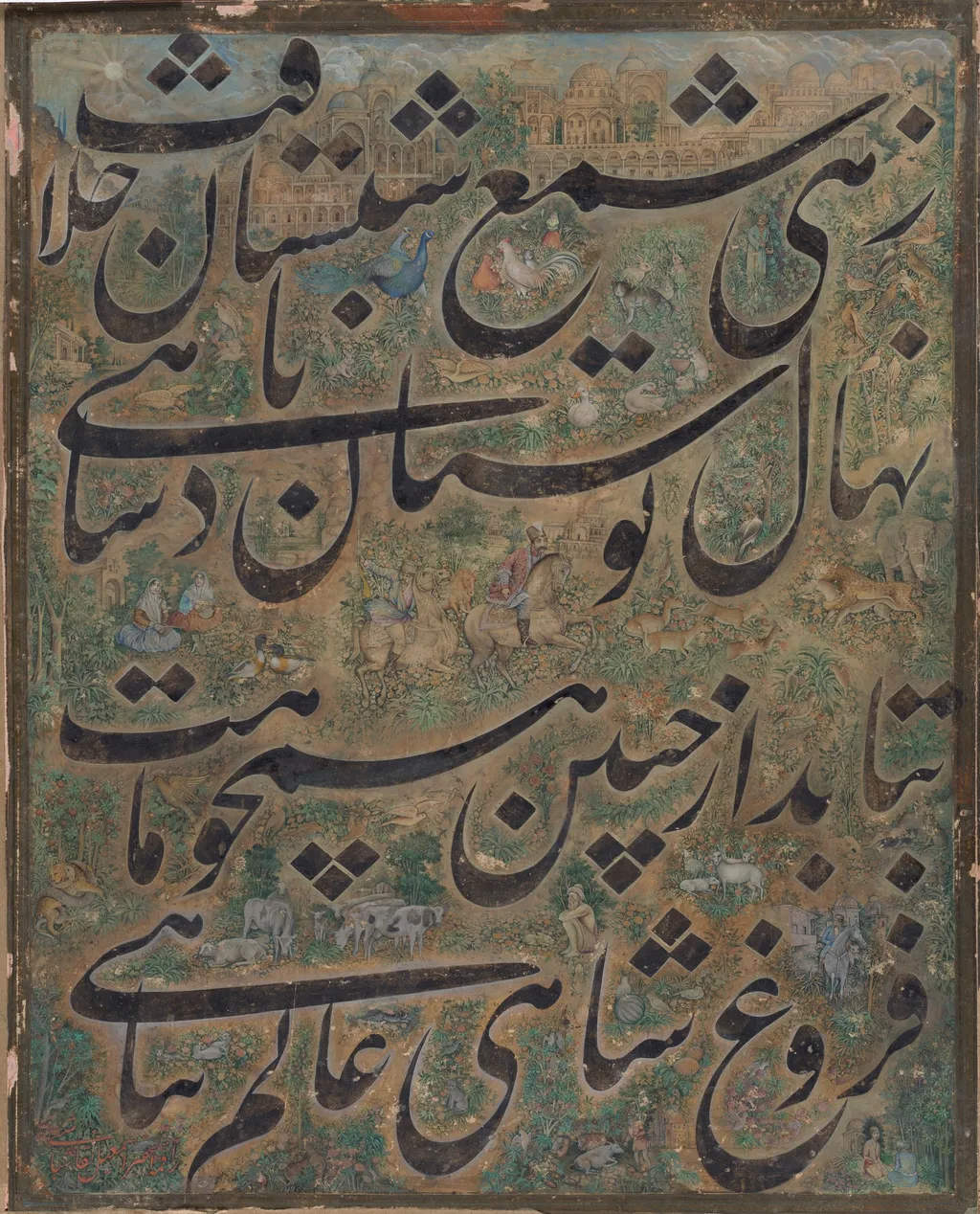
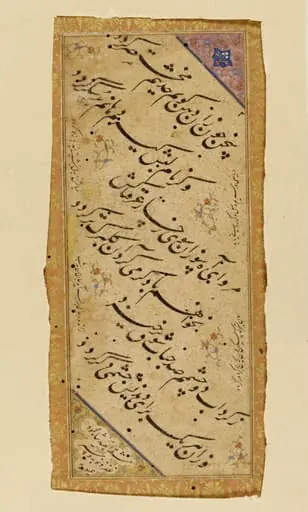
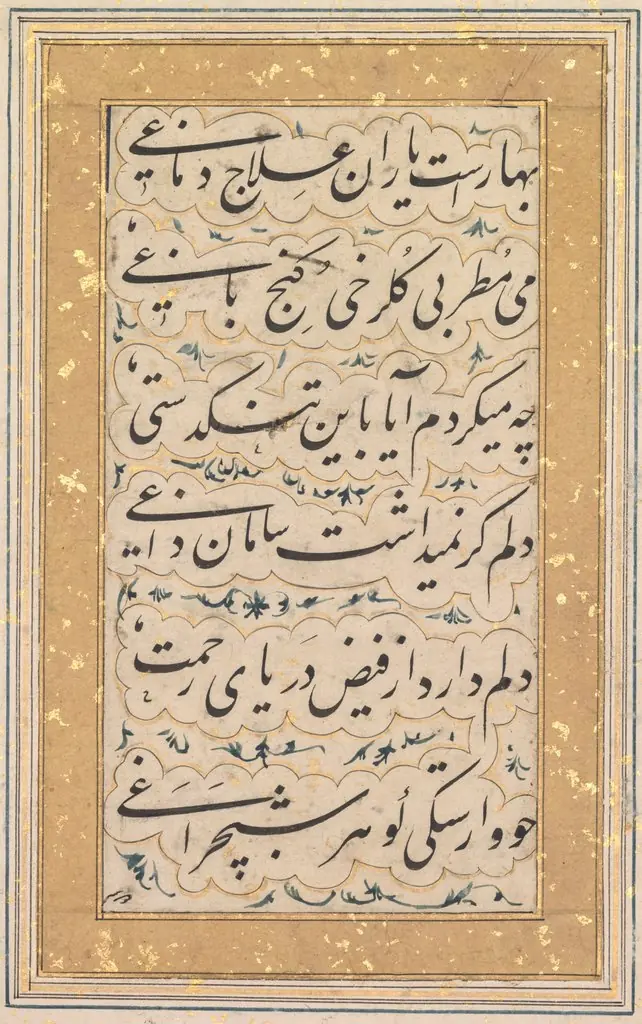
Calligraphy Painting is an unspecified painting by the Persian Miniature artist Isma'il Jalayir. It dates from 1860 and is held in the collection of the Metropolitan Museum of Art.
About this work
Overview
Created in 1860, *Calligraphy Painting* is a work by Ismaʿil Jalayir, an Iranian artist active during the later years of Naser al‑Din Shah Qajar’s reign. Executed within the Persian miniature tradition, the piece combines decorative script with pictorial elements, illustrating the painter’s synthesis of established court aesthetics and emerging visual trends of the mid‑nineteenth century.
Subject & Meaning
The composition centers on elaborate calligraphic forms that serve both as visual ornament and as carriers of textual content, a common practice in Persian court art where poetry and prose were often woven into the visual field. By foregrounding the script, Jalayir emphasizes the cultural prestige of literary expression while allowing the surrounding imagery to complement and enhance the written word.
Technique & Style
Jalayir worked in two principal Qajar modes: irāni‑sāzi, which preserves indigenous motifs and decorative conventions, and ṭabiʿat‑sāzi, a style that incorporates European‑inspired naturalism. In this painting, the calligraphic elements follow traditional miniature brushwork, while the surrounding flora and fauna are rendered with a heightened attention to realistic detail, reflecting the artist’s engagement with both native and foreign visual vocabularies.
History & Provenance
His career unfolded under the patronage networks of the Qajar court, and *Calligraphy Painting* was likely produced for a royal or aristocratic patron.
Born into the distinguished Jalayer Kalati family of Khorasan, Jalayir was the son of Haj Mohammad Khan Jalayer. His career unfolded under the patronage networks of the Qajar court, and *Calligraphy Painting* was likely produced for a royal or aristocratic patron. The work has remained within museum collections that specialize in Persian art, providing a documented lineage from its nineteenth‑century origins to its present public display.
Context
The mid‑1800s marked a period of artistic transition in Iran, as court painters encountered European prints and techniques while maintaining strong ties to the miniature heritage of earlier dynasties. Jalayir’s dual stylistic approach mirrors this cultural crossroads, positioning *Calligraphy Painting* as an example of how Qajar artists negotiated tradition and modernity within a rapidly changing visual environment.
Artist & collection
Artist
Esmail Jalayer was an Iranian painter notable artist of Naser al-Din Shah Qajar reign era (1848–1896).

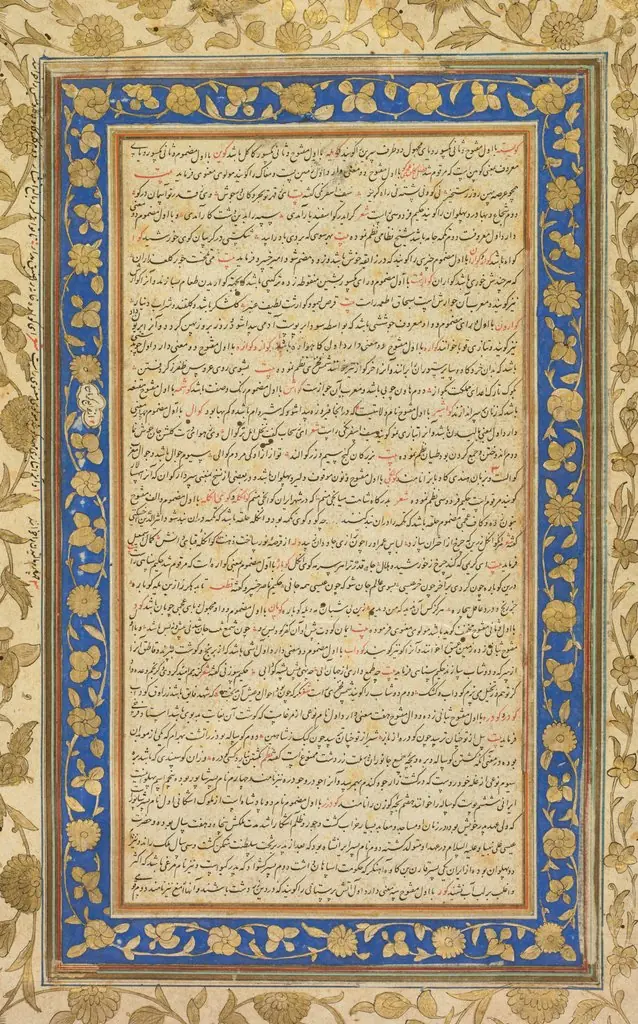 From the Farhang-i Jahangiri (Persian-language Dictionary) compiled by Mir Jamal al-Din Husayn Inju of Shiraz (Persian, d. 1626)
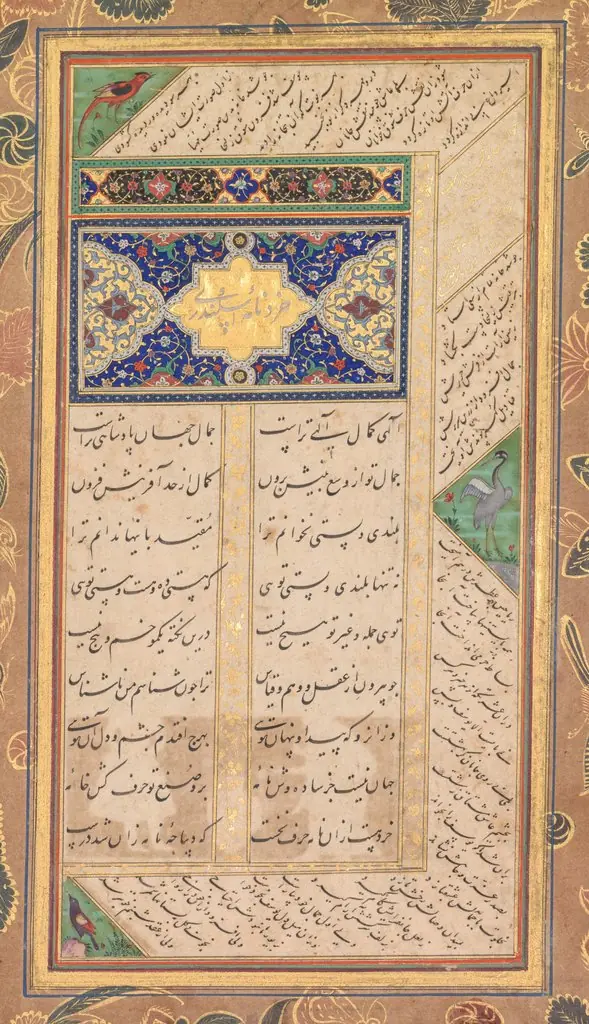 Illuminated page (verso), from a Panj Ganj (Five Treasures) of Abd al- Rahman Jami (Persian, 1414–1492) with two Persian masnavis: Yusuf va Zulaykha (Joseph and Zulaykha) and Khirad-nama-i Iskandari (Alexander’s Book of Wisdom)
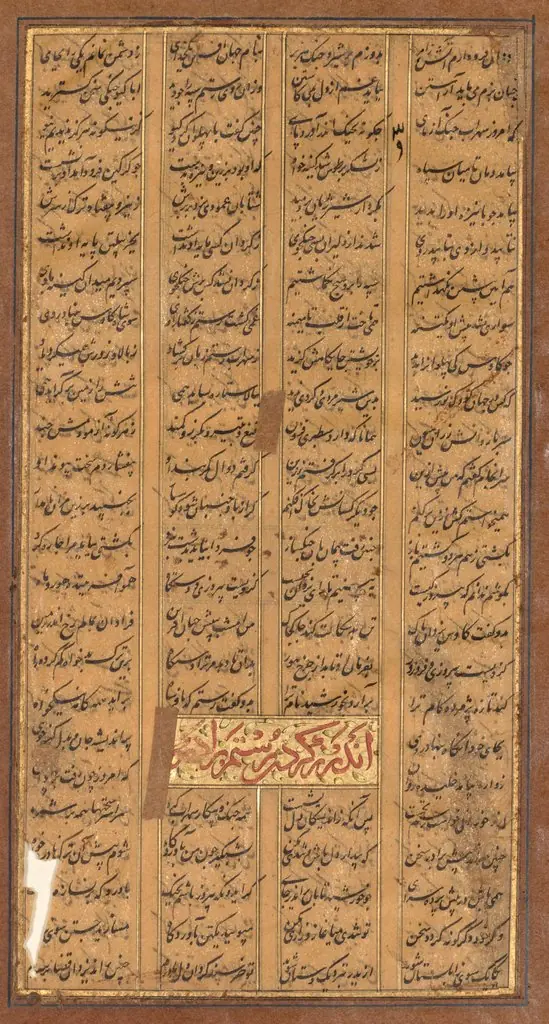 Text of Rustam and Suhrab, from the Shah-nama of Firdausi (Persian, c. 934–1020) (recto)
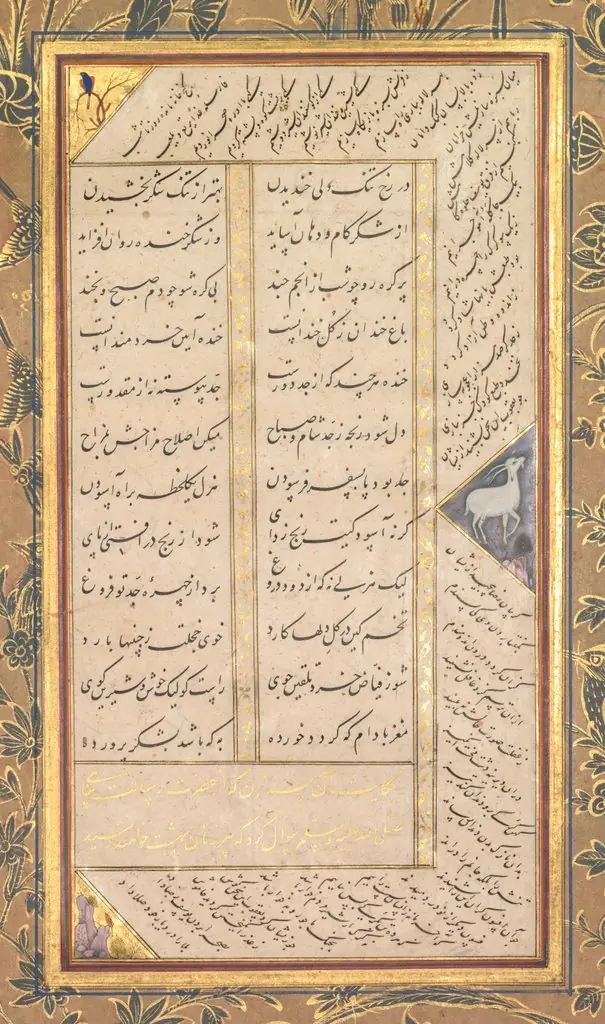 Page from a Panj Ganj (Five Treasures) of Abd al-Rahman Jami (Persian, 1414–1492), with two Persian masnavis: Yusuf va Zulaykha (Joseph and Zulaykha) and Subhat al-abrar (Rosary of the Righteous) (verso)
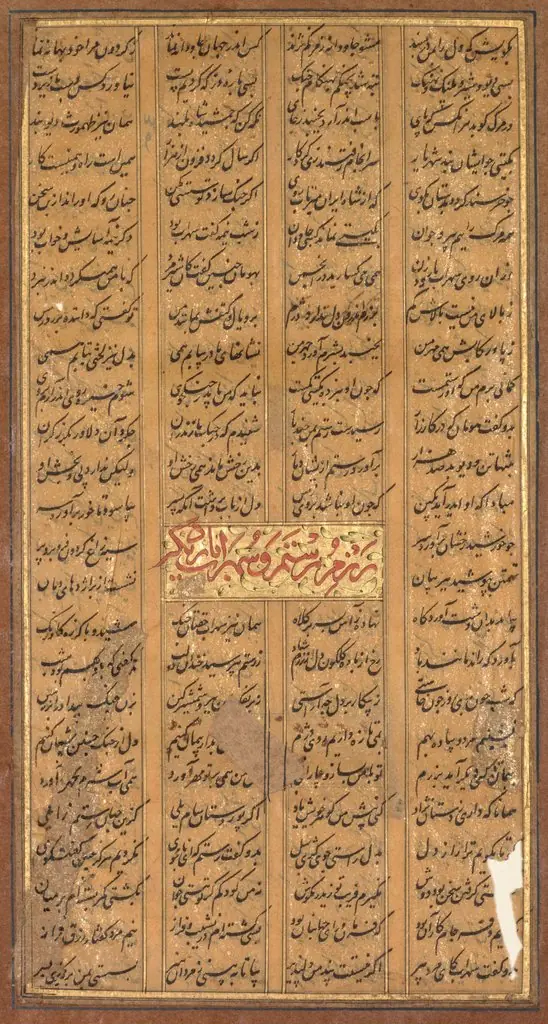 Text of Rustam and Suhrab, from the Shah-nama of Firdausi (Persian, c. 934–1020) (verso)
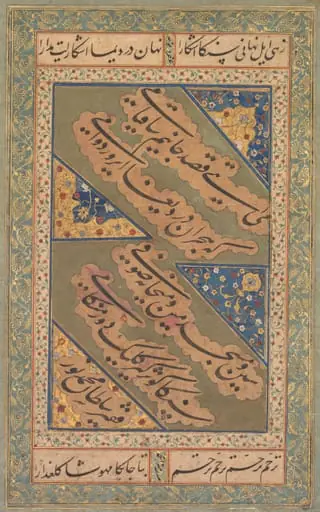 Calligraphy of Chaghatai Turkish Poems in Praise of Wine (verso)
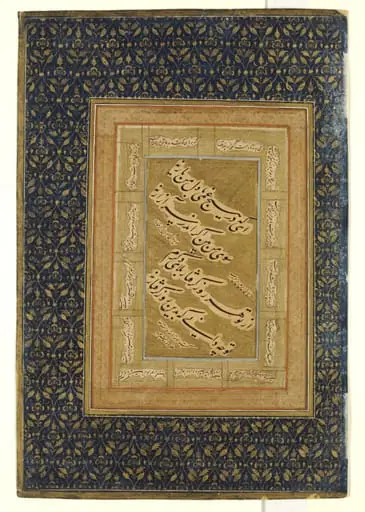 Untitled
 Untitled
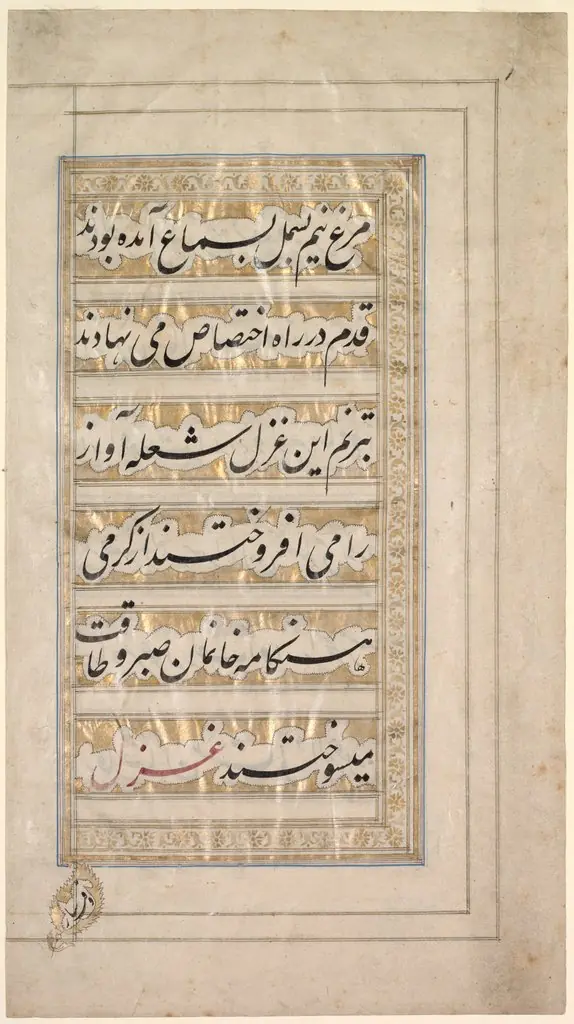 Page from the Poem of Beauty and Love
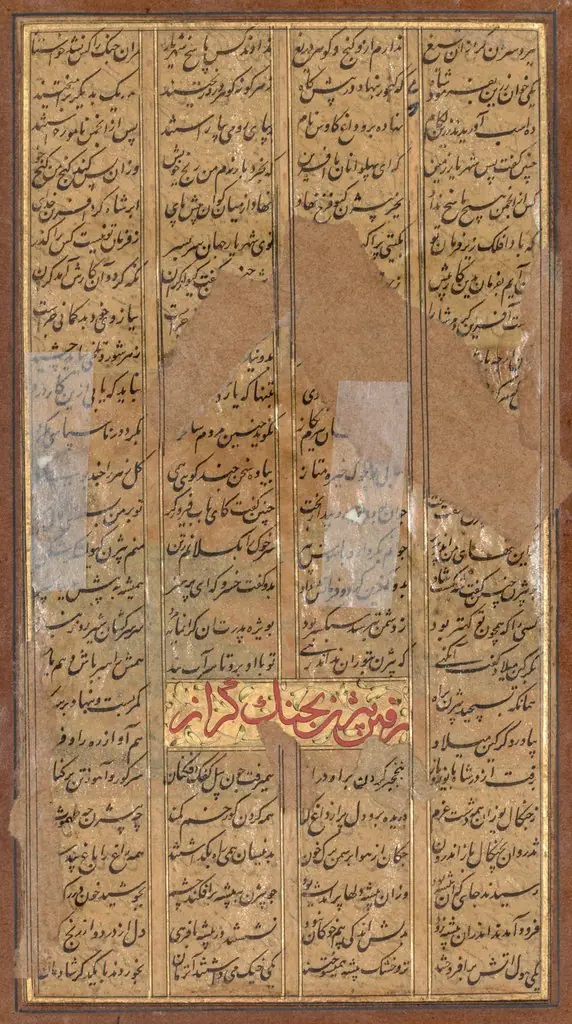 Bijan killing the wild boars of Irman, from a Shah-nama (Book of Kings) of Firdausi (Persian, about 934–1020), (recto)
 Page from the Poem of Beauty and Love
 Calligraphy (verso)