Artwork
A Ship Moving Toward the Right
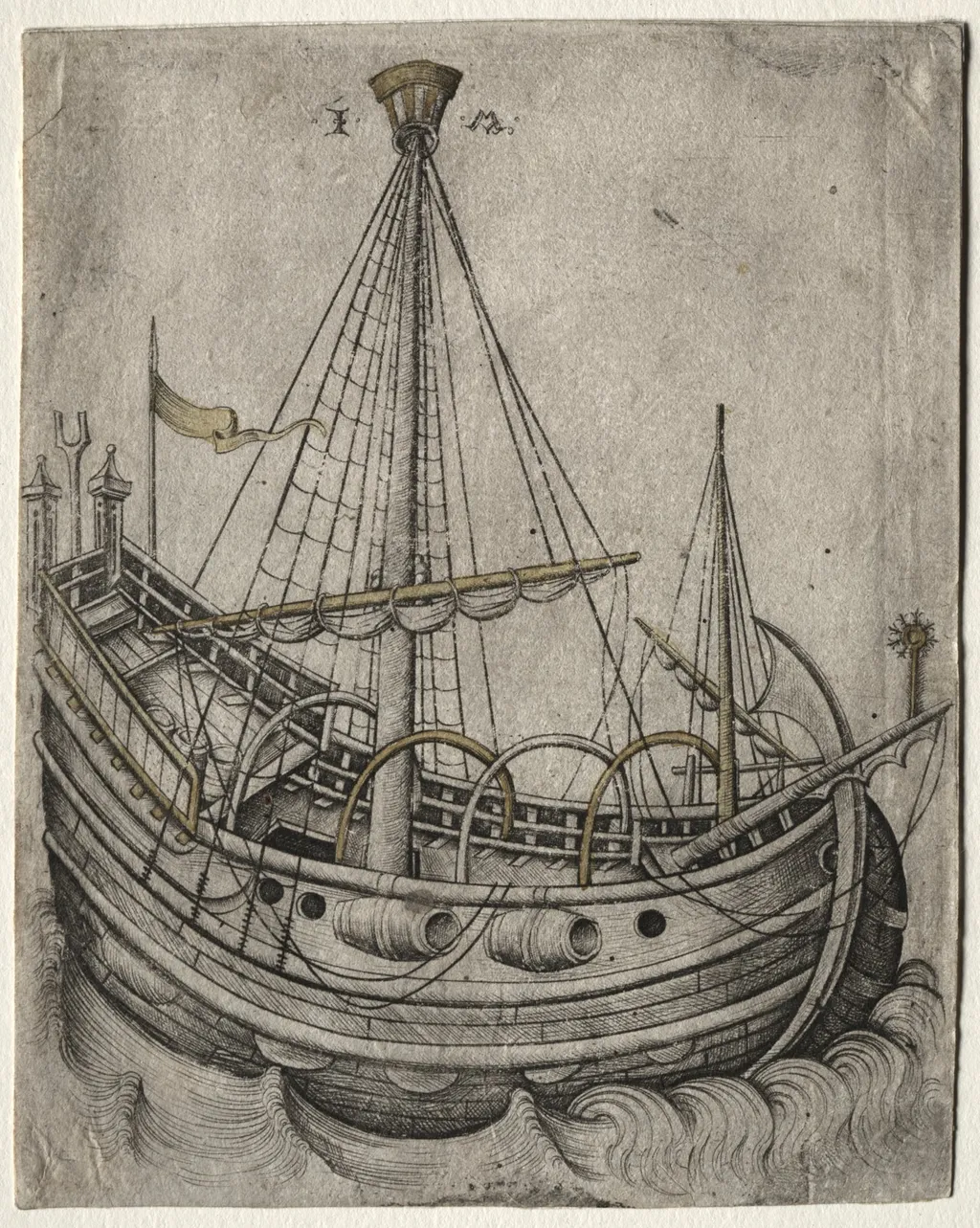
A Ship Moving Toward the Right is a print by the Renaissance artist Israhel van Meckenem. It dates from 1478 and is held in the collection of the Cleveland Museum of Art.
About this work
Overview
Van Meckenem, among the most productive printmakers of the 15th century, produced over six hundred engravings, often reinterpreting existing compositions.
Created around 1478 by Israhel van Meckenem, a German engraver and goldsmith, this print captures a vessel advancing through turbulent seas. Van Meckenem, among the most productive printmakers of the 15th century, produced over six hundred engravings, often reinterpreting existing compositions. This work exemplifies his technical precision and engagement with maritime themes during the early Northern Renaissance. The piece resides today in the collection of The Cleveland Museum of Art.
Subject & Meaning
The print portrays a large merchant or cargo ship moving rightward across a choppy sea. Its heavy hull, clustered portholes, and complex rigging suggest a functional vessel rather than a warship or ceremonial craft. A small cross at the stern may indicate Christian symbolism, common in Northern European maritime imagery to invoke divine protection. The scene reflects the era’s reliance on sea trade and the spiritual dimensions of travel.
Technique & Style
Van Meckenem employed fine, controlled lines to render the ship’s structure and the sea’s motion. The hull is defined by dense hatching, while the waves are suggested through rapid, undulating strokes. Rigging lines intersect in intricate patterns, and the windows along the hull are meticulously aligned. The engraving’s clarity and detail reflect the precision expected of goldsmiths trained in minute metalwork, adapted here to paper.
History & Provenance
The print was made during the height of van Meckenem’s career in the late 1470s, a period when printmaking was expanding across the Rhineland. Though the exact early ownership is undocumented, the work entered The Cleveland Museum of Art’s collection as part of a broader acquisition of Northern Renaissance prints. Its survival in good condition underscores its enduring value to collectors and scholars of early print culture.
Context
In late 15th-century Europe, maritime trade routes flourished, and printed images of ships served both documentary and devotional purposes. Van Meckenem’s prints circulated widely, often copied or adapted from other artists’ designs. This engraving aligns with a growing interest in secular subjects alongside religious themes, reflecting the era’s shifting cultural priorities and the rise of print as a medium for everyday imagery.
Legacy
Van Meckenem’s prolific output helped standardize engraving techniques across Northern Europe. His ship prints, though not unique in subject, contributed to a visual vocabulary for maritime life that influenced later artists. This particular work remains a representative example of how printmakers translated complex scenes into accessible, repeatable formats, bridging artisanal craft and emerging mass communication.
Artist & collection
Artist
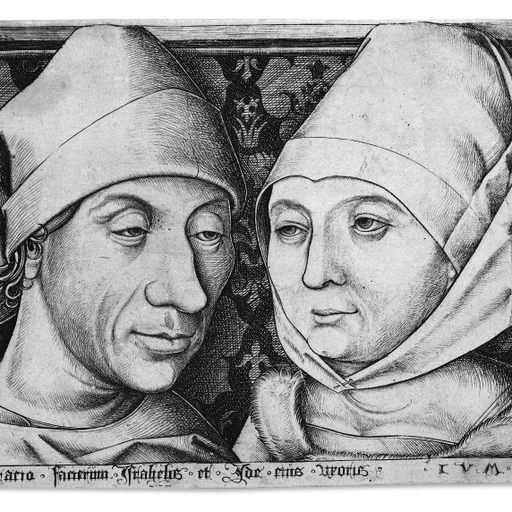
Israhel van Meckenem (c. 1445 – 10 November 1503), also known as Israhel van Meckenem the Younger, was a German printmaker and goldsmith, perhaps of a Dutch family origin. He was the most prolific engraver of the…

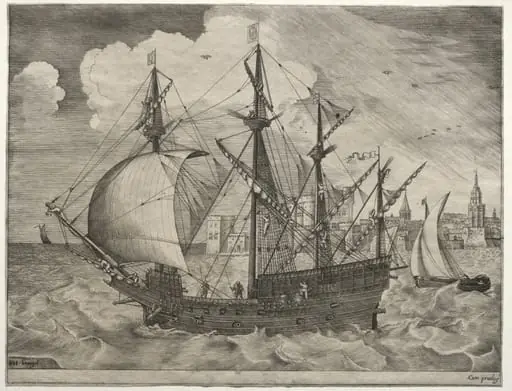 Sailing Vessels: Armed Four-Master Putting Out to Sea
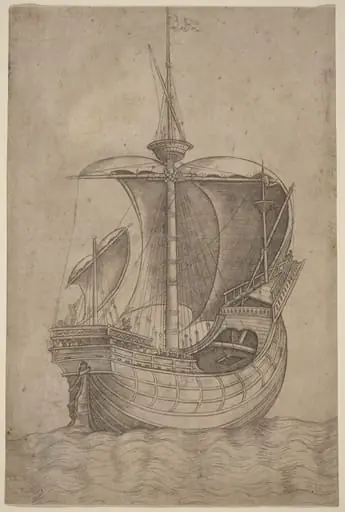 Carrack, Heading to the Right
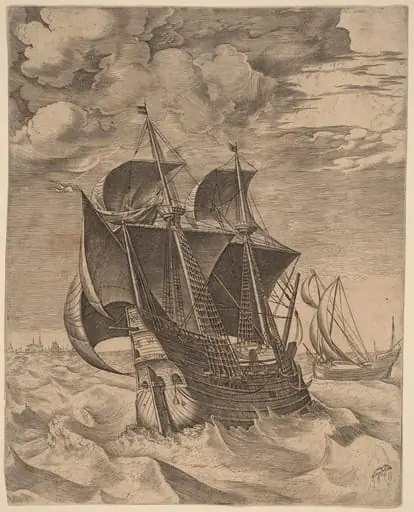 A Dutch Hulk and a Boeier
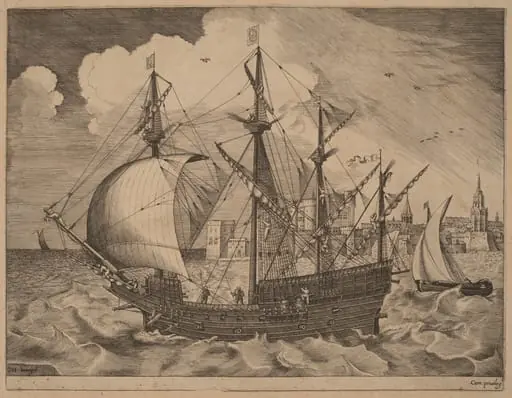 Armed Four-Master Putting Out to Sea
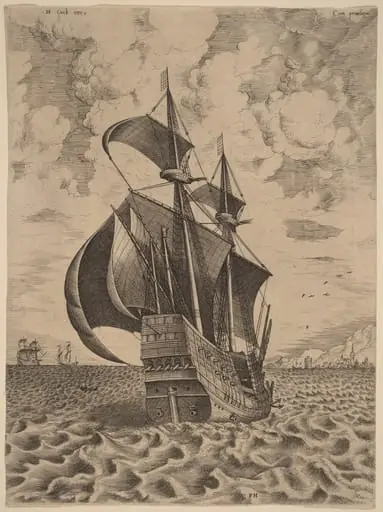 Armed Four-Master Sailing towards a Port
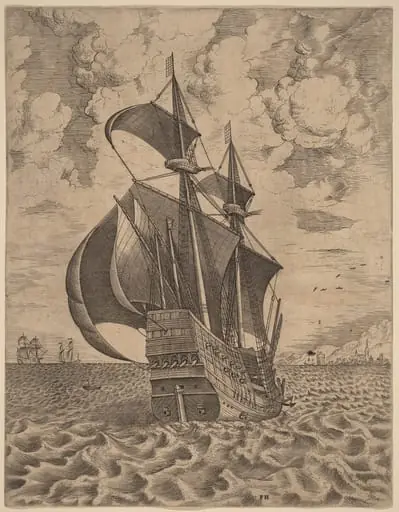 Armed Four-Master Sailing towards a Port
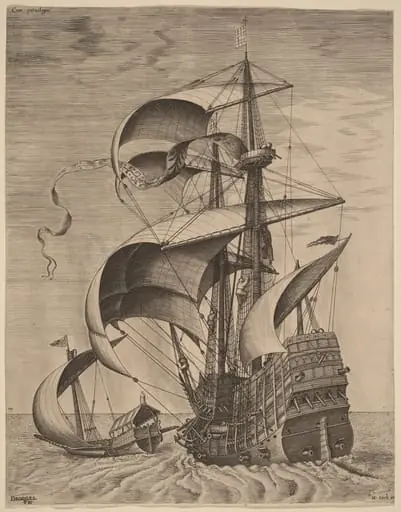 Armed Three-Master on the Open Sea, Accompanied by a Galley
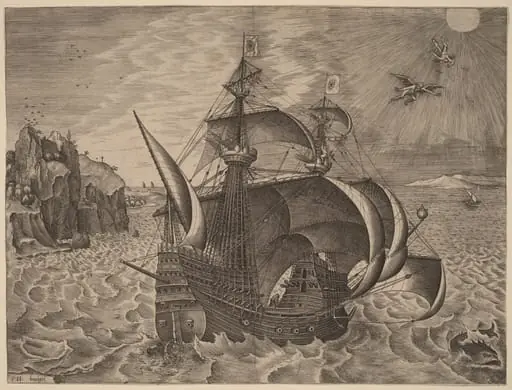 Armed Three-Master with Daedalus and Icarus in the Sky
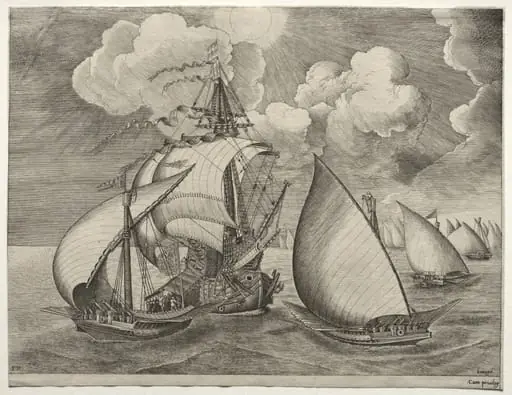 Sailing Vessels: A Fleet of Galleys Escorted by a Caravel