Artwork
Persian Sibyl
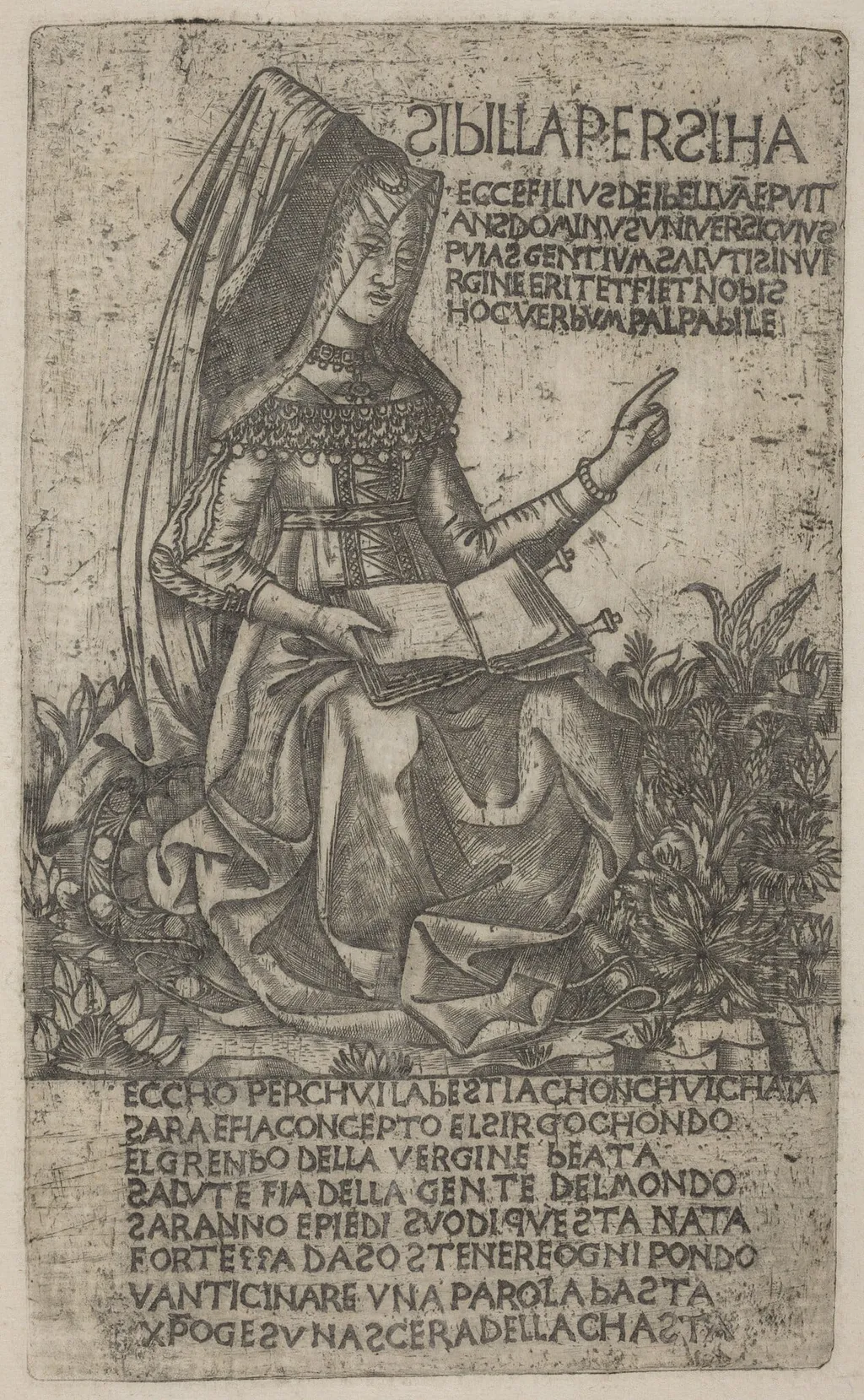
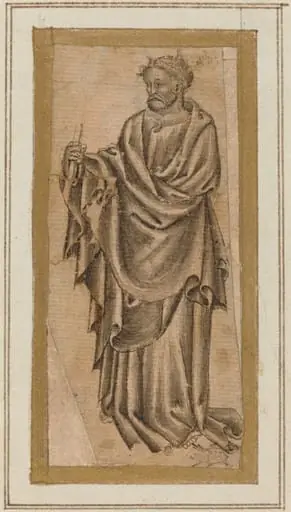
Persian Sibyl is an ink print by the Renaissance artist Italian 15th Century. It dates from 1401 and is held in the collection of the National Gallery of Art.
About this work
Overview
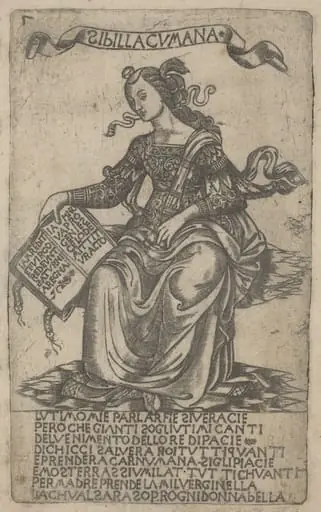
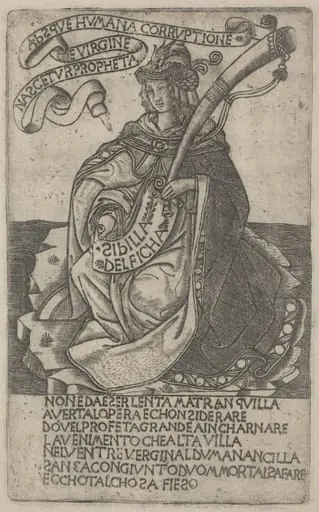
The work titled “Persian Sibyl” is an engraved print that depicts a solitary, robed female figure seated upon a rock. She holds a lengthy scroll in one hand while the other hand is raised, directing the viewer’s gaze upward. The composition is rendered in black and white, employing precise line work and dense cross‑hatching to model form and depth.
Subject & Meaning
The figure is identified as a sibyl—a prophetic woman from antiquity—here rendered with Persian attributes such as a crown and elaborate jewelry. The scroll she bears and her upward pointing gesture suggest the communication of a revelation or warning, a motif common in Renaissance depictions of prophetic figures.
Technique & Style
Executed on a metal plate, the engraving utilizes fine burins to incise sharp outlines and intricate cross‑hatching, creating tonal variation without the use of color. The artist’s handling of line conveys the texture of the drapery, the sheen of the jewelry, and the surrounding foliage, while the overall composition balances figure and landscape within a compact format.
Context
During the Renaissance, engravings served both as vehicles for disseminating classical and biblical narratives and as demonstrations of an artist’s technical skill. The inclusion of Latin text around the sibyl aligns with contemporary practices of embedding prophetic or moral messages within visual works.
Artist & collection

Artist
This anonymous Italian engraver from the 1490s carved images that could be peeled apart like paper dolls—each knot in the "First Knot" print was cut from a single sheet so you could lift the loops right off the page.

![The Destruction of the Egyptian Idols [verso], by Italian 15th Century](https://artifactworldgallery.com/img/italian-15th-century--the-destruction-of-the-egyptian-idols-verso--646d3c2b8098cfee-w320.webp)
![The Flight into Egypt [recto], by Italian 15th Century](https://artifactworldgallery.com/img/italian-15th-century--the-flight-into-egypt-recto--8f4d5275d7f90f98-w320.webp)