Artwork
Phrygian Sibyl
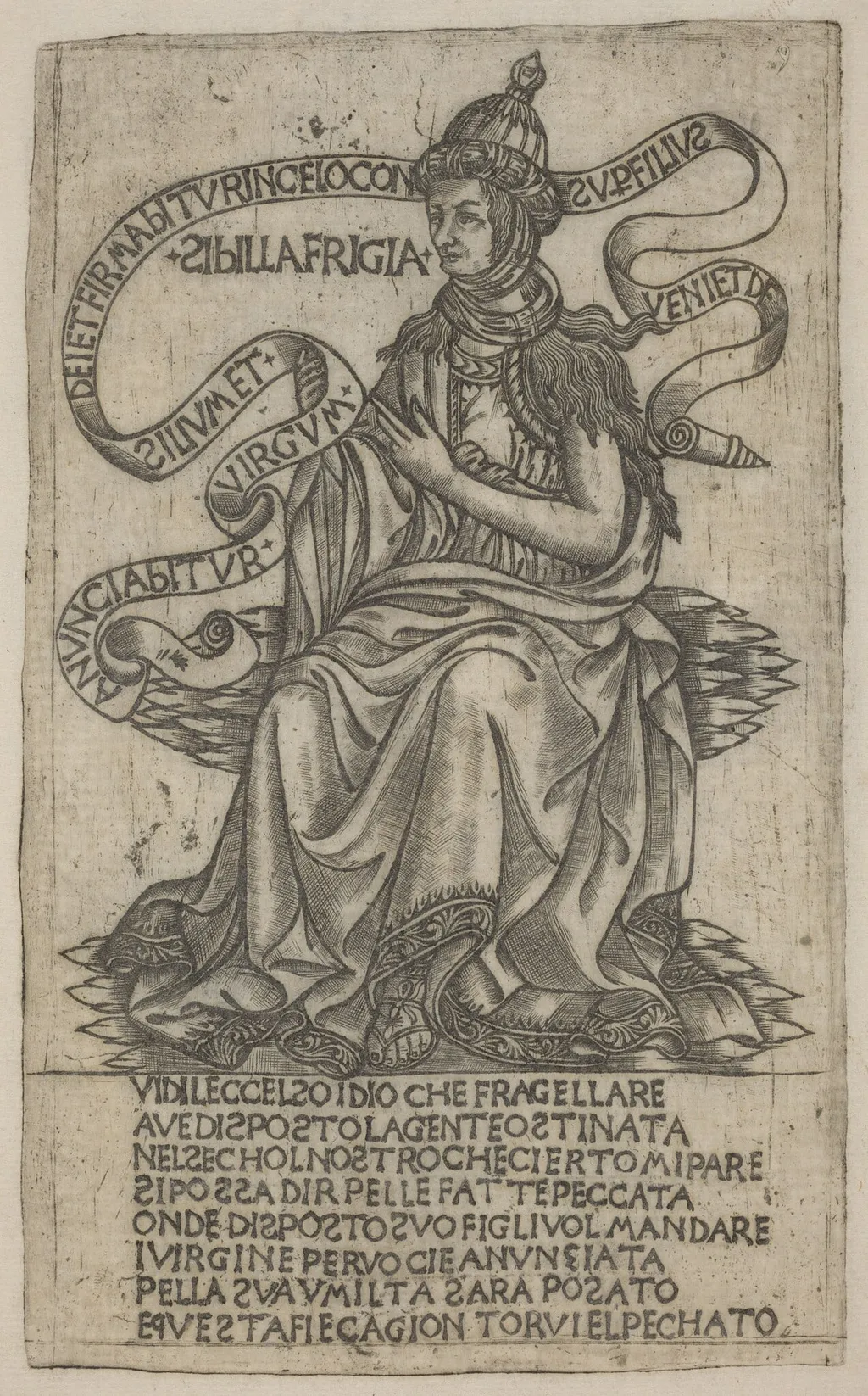
Phrygian Sibyl is an ink print by the Renaissance artist Italian 15th Century. It dates from 1401 and is held in the collection of the National Gallery of Art.
About this work
Overview
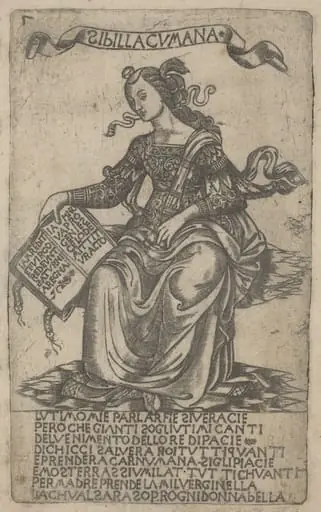
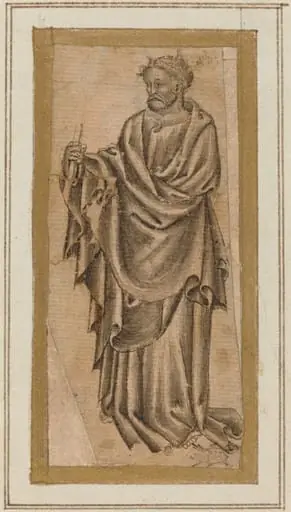
Rendered in fine linear detail, the figure is seated on a rock, draped in a flowing robe and adorned with a detailed head covering.
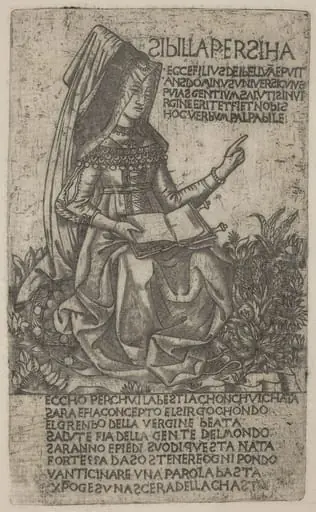
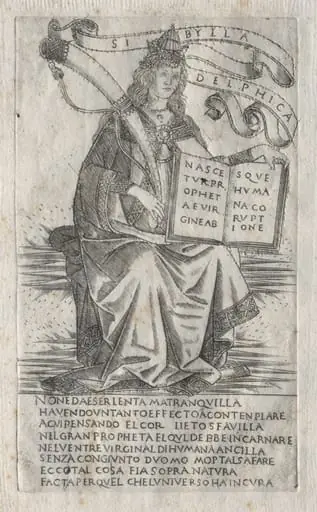
This engraving depicts the Phrygian Sibyl, one of the ancient prophetic women of classical tradition. Rendered in fine linear detail, the figure is seated on a rock, draped in a flowing robe and adorned with a detailed head covering. Two inscribed banners frame her form, suggesting divine utterance. The composition emphasizes stillness and contemplation, characteristic of Renaissance humanist ideals that revived classical mythology alongside Christian themes.
Subject & Meaning
The Phrygian Sibyl was believed to have foretold the coming of Christ in medieval and Renaissance interpretations. Her presence here aligns with a broader tradition of pairing pagan seers with Christian prophecy. The banners she holds likely contain oracular texts, reinforcing her role as a conduit between the divine and the mortal. Her composed posture and refined attire reflect the era’s idealization of wisdom as dignified and serene.
Technique & Style
The artist employs precise cross-hatching to model form and suggest volume, a hallmark of Renaissance engraving. The texture of the robe and the intricate folds of the head covering are rendered with controlled line work, creating a sense of tactile richness. The banners, though flat in surface, are integrated into the spatial depth through careful placement and contrast, enhancing the figure’s presence without overt perspective.
History & Provenance
This engraving likely dates to the late 15th or early 16th century, a period when prints of sibyls circulated widely in Europe, often as part of devotional or scholarly collections. Though the specific artist remains unattributed, its style aligns with Northern Italian or German workshops active during the height of Renaissance printmaking. Its survival in institutional collections suggests early scholarly interest in classical prophecy imagery.
Context
During the Renaissance, the sibyls were frequently depicted alongside Old Testament prophets as witnesses to Christ’s future arrival. Their inclusion in religious art reflected a humanist effort to reconcile classical antiquity with Christian doctrine. Engravings like this one served both devotional and educational purposes, disseminating complex theological ideas through accessible, portable images.
Legacy
The image contributed to a lasting visual vocabulary for prophetic women in Western art. Later artists, including Michelangelo, drew upon the sibyl’s iconography in major commissions, cementing her role in the collective imagination. This engraving exemplifies how print media preserved and transmitted classical motifs, influencing artistic representation for centuries beyond its creation.
Artist & collection

Artist
This anonymous Italian engraver from the 1490s carved images that could be peeled apart like paper dolls—each knot in the "First Knot" print was cut from a single sheet so you could lift the loops right off the page.


![The Destruction of the Egyptian Idols [verso], by Italian 15th Century](https://artifactworldgallery.com/img/italian-15th-century--the-destruction-of-the-egyptian-idols-verso--646d3c2b8098cfee-w320.webp)
![The Flight into Egypt [recto], by Italian 15th Century](https://artifactworldgallery.com/img/italian-15th-century--the-flight-into-egypt-recto--8f4d5275d7f90f98-w320.webp)