Artwork
Saint Jerome in Penitence, with Two Ships in a Harbor
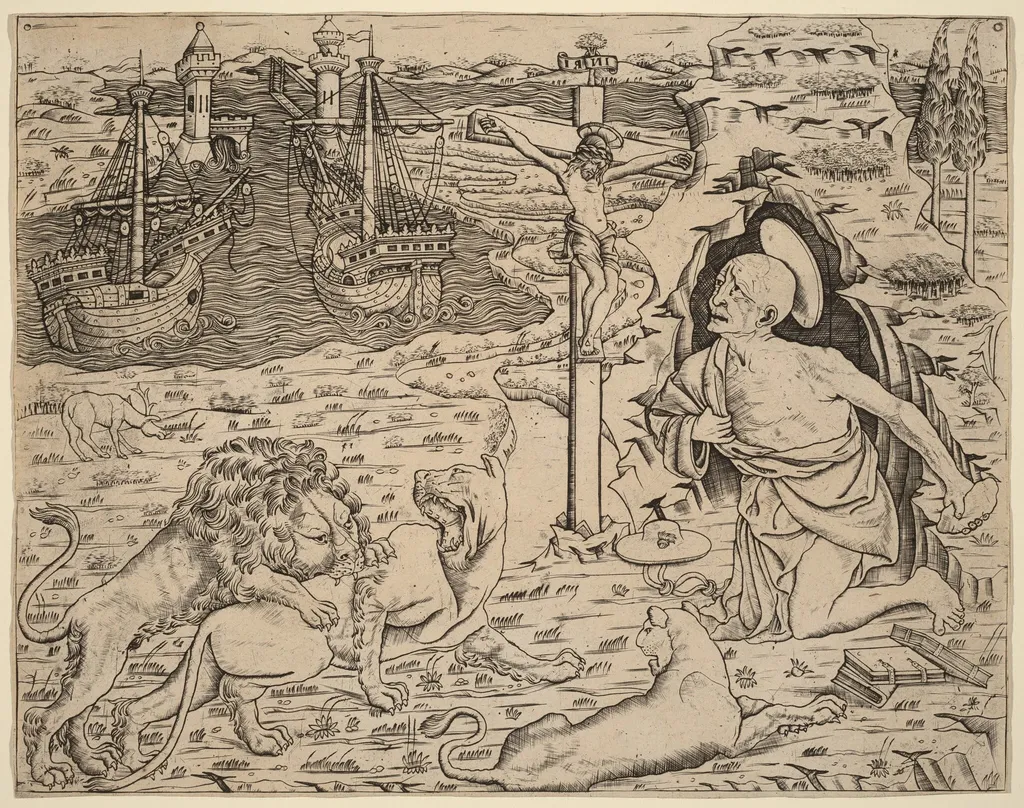
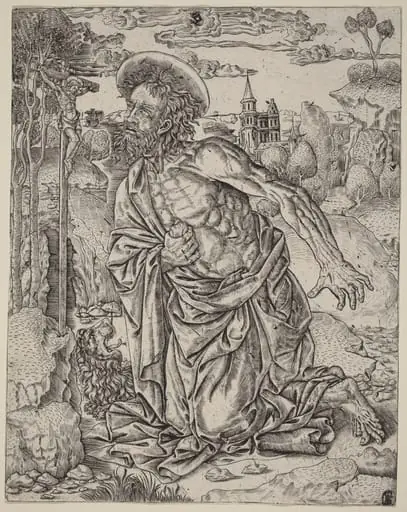
Saint Jerome in Penitence, with Two Ships in a Harbor is an ink print by the Renaissance artist Italian 15th Century. It dates from 1490 and is held in the collection of the National Gallery of Art. The print presents a kneeling figure on a rugged shoreline, draped in a coarse mantle and crowned with a halo, suggesting sanctity.
About this work
Overview
The print presents a kneeling figure on a rugged shoreline, draped in a coarse mantle and crowned with a halo, suggesting sanctity. Behind him a bustling harbor unfolds, populated by two vessels, surrounding architecture, and cranes, while surf crashes along the quay. A lion, a conventional emblem of strength, stands nearby, observing the penitent.
Subject & Meaning
The central figure is identified as Saint Jerome, traditionally depicted in penitential mode, his beard and halo confirming his identity. The inclusion of the lion references the legend of Jerome’s taming of a wild beast, while the harbor scene may symbolize the saint’s exile and the spiritual journey across turbulent waters toward contemplation.
Technique & Style
Executed as an engraving, the image relies on fine incised lines that intersect to create tonal depth, a method known as cross‑hatching. This approach yields a textured surface, allowing subtle gradations of shadow that convey the roughness of stone, the movement of water, and the atmospheric density of the harbor setting.
History & Provenance
The work is a restrike, likely produced in the late eighteenth century, indicating it was re‑printed after the original plate’s creation. Such later impressions often served a market for devotional prints, extending the reach of the image beyond its initial circulation.
Context
Depictions of Saint Jerome in penitence were common in European art, reflecting the Counter‑Reformation emphasis on asceticism and scholarly devotion. The maritime backdrop aligns with contemporary interest in trade and navigation, integrating religious narrative with the era’s expanding commercial horizons.
Artist & collection

Artist
This anonymous Italian engraver from the 1490s carved images that could be peeled apart like paper dolls—each knot in the "First Knot" print was cut from a single sheet so you could lift the loops right off the page.

![The Destruction of the Egyptian Idols [verso], by Italian 15th Century](https://artifactworldgallery.com/img/italian-15th-century--the-destruction-of-the-egyptian-idols-verso--646d3c2b8098cfee-w320.webp)
![The Flight into Egypt [recto], by Italian 15th Century](https://artifactworldgallery.com/img/italian-15th-century--the-flight-into-egypt-recto--8f4d5275d7f90f98-w320.webp)
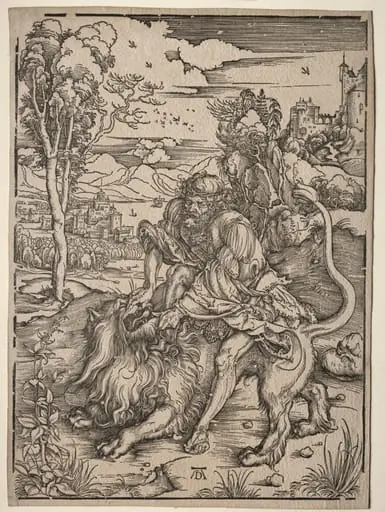 Samson Killing the Lion
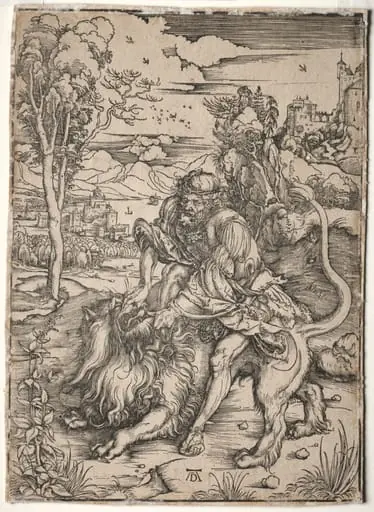 Samson Killing the Lion
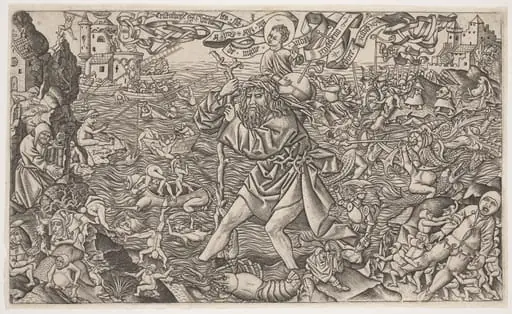 St. Christopher
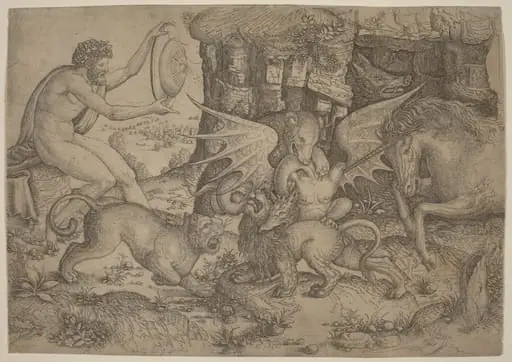 Allegorical Theme: Combat of Animals
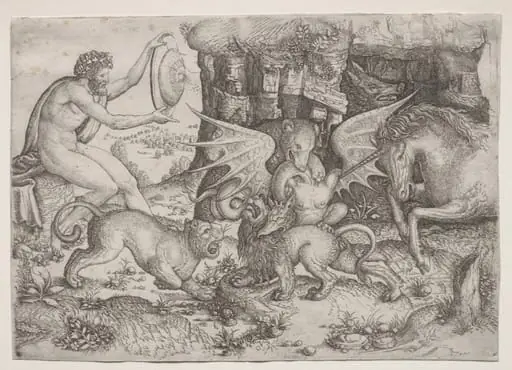 Allegorical Theme: Combat of Animals
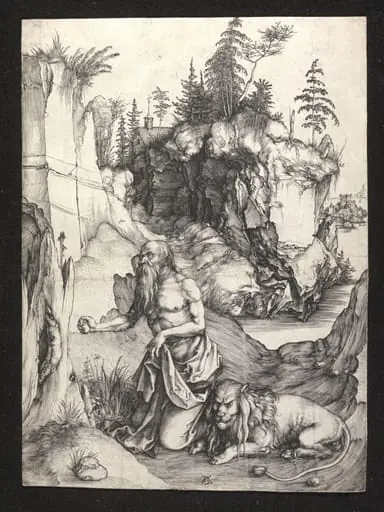 St Jerome in Penitence
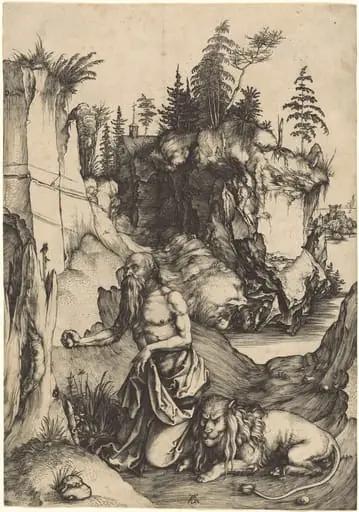 Saint Jerome Penitent in the Wilderness
![Battle of the Sea Gods [left half], by Andrea Mantegna](https://artifactworldgallery.com/img/andrea-mantegna--battle-of-the-sea-gods-left-half--084dd803fb0016b2-w320.webp) Battle of the Sea Gods [left half]
Battle of the Sea Gods [left half]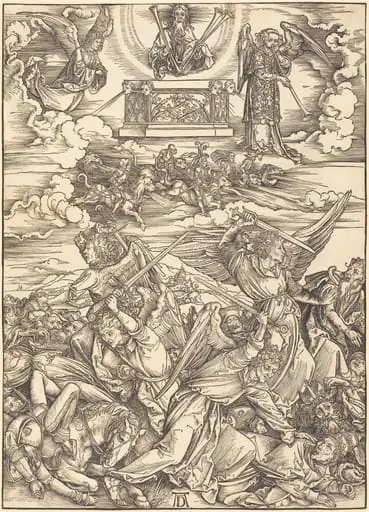 The Four Avenging Angels
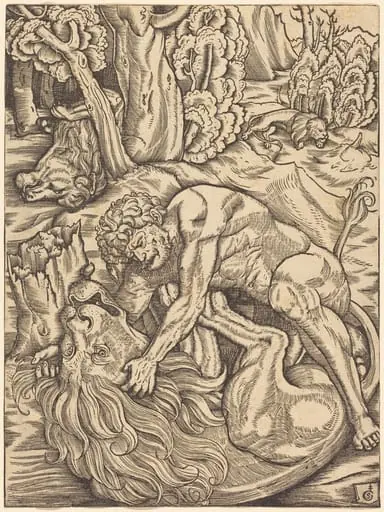 Hercules and the Nemean Lion
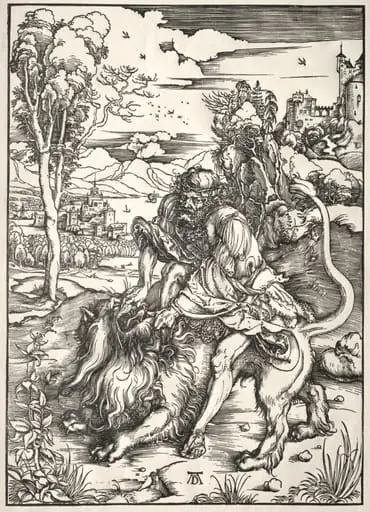 Samson and the Lion
 Saint Jerome in Penitence