Artwork
Allegorical Theme: Combat of Animals
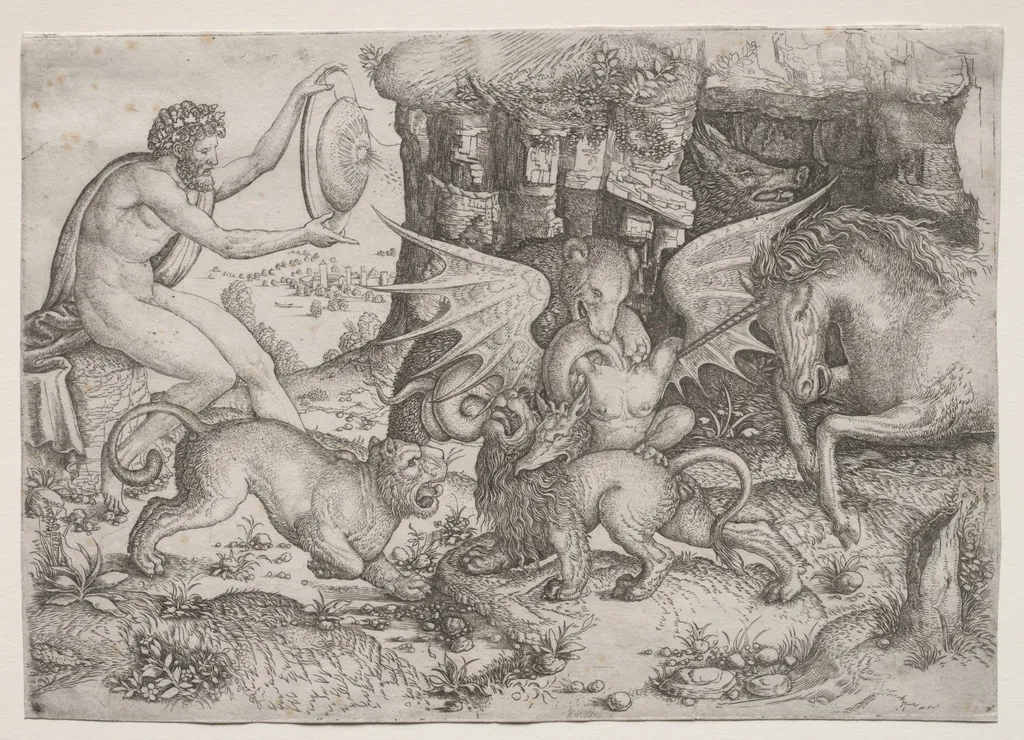
Allegorical Theme: Combat of Animals is a print by the Renaissance artist Master of the Beheading of St. John the Baptist. It dates from 1518 and is held in the collection of the Cleveland Museum of Art. Created around 1518, this print is attributed to the artist known as the Master of the Beheading of St.
About this work
Overview
The composition presents a dense, dynamic scene of animal and human figures locked in violent struggle, rendered with intricate line work and no empty spaces.
Created around 1518, this print is attributed to the artist known as the Master of the Beheading of St. John the Baptist. It is a single-sheet engraving held in the collection of The Cleveland Museum of Art. The composition presents a dense, dynamic scene of animal and human figures locked in violent struggle, rendered with intricate line work and no empty spaces. Its allegorical intent remains open to interpretation, though the imagery suggests a metaphor for conflict or moral chaos.
Subject & Meaning
The scene depicts a bearded human figure, shield in hand, surrounded by a tangle of lions, rams, and other beasts in combat. The figures are not naturalistic but symbolic, their interactions suggesting a moral or political allegory. The quiet cityscape in the background contrasts sharply with the turmoil below, possibly implying the fragility of order amid societal or inner strife. The lack of clear narrative cues invites multiple readings, typical of Renaissance allegory.
Technique & Style
The artist employs fine, angular engraving lines to convey motion and tension. Musculature and fur are rendered with rapid, intersecting strokes that give the animals a visceral, almost electric energy. The composition is tightly packed, with every inch of the sheet filled with overlapping forms. This density, combined with sharp contrasts and rhythmic line patterns, reflects a Northern Renaissance interest in intricate detail and expressive movement over spatial clarity.
History & Provenance
The print is known only through a small number of surviving impressions, with the Cleveland example being one of the most complete. It was likely produced in the early 16th century in a region influenced by German or Netherlandish printmaking traditions. The artist’s identity remains obscure, known only by this and a few other works linked stylistically to depictions of St. John’s beheading. Its provenance before the 20th century is undocumented.
Context
This work emerged during a period when Northern European artists increasingly used allegory to explore human nature and social order. While Italian Renaissance art emphasized harmony, Northern artists often embraced complexity and unease. The chaotic melee here aligns with contemporary moralizing imagery, such as depictions of the Seven Deadly Sins or the Dance of Death, reflecting anxieties about instability in religious and political life.
Legacy
Though the artist’s name is lost, this print exemplifies a distinctive strand of early 16th-century Northern printmaking that prioritized symbolic intensity over narrative clarity. Its influence is seen in later works that used animal combat as metaphor, particularly in emblem books and satirical prints. The Cleveland Museum’s holding preserves a rare, unaltered impression, offering insight into a lesser-known but visually compelling artistic voice of the period.
Artist & collection

Artist
Master of the Beheading of St. John the Baptist
Master of the Beheading of St. John the Baptist (1515–1520) was an artist.

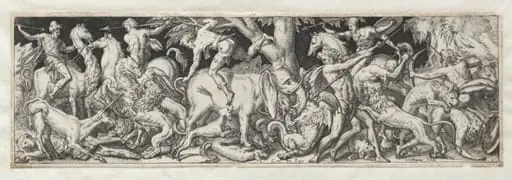 Combats and Triumphs No. 6
![Battle of the Sea Gods [left half], by Andrea Mantegna](https://artifactworldgallery.com/img/andrea-mantegna--battle-of-the-sea-gods-left-half--2510247af42f8c24-w320.webp) Battle of the Sea Gods [left half]
Battle of the Sea Gods [left half]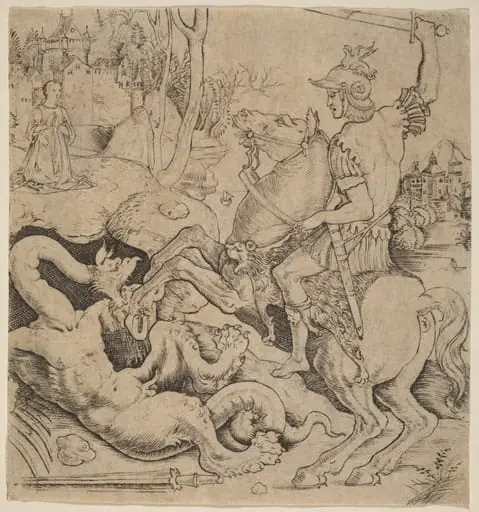 Saint George and the Dragon
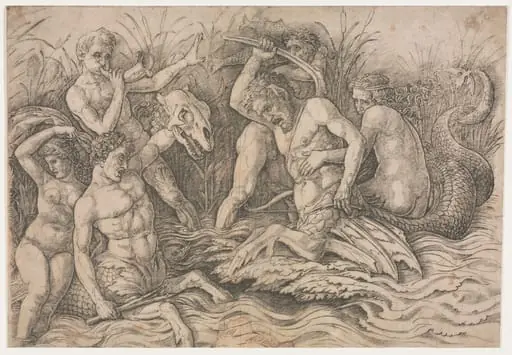 Battle of the Sea Gods - right portion
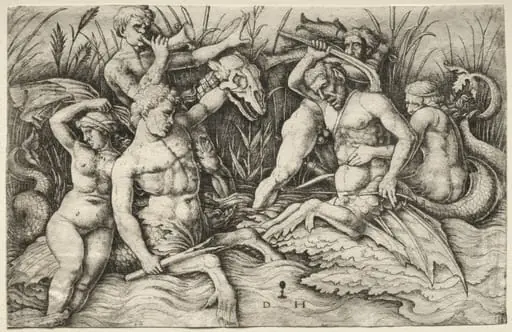 Two Tritons fighting - Battle of the Sea Gods (right portion)
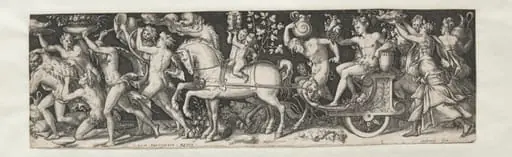 Combats and Triumphs No. 5: The Triumph of Bacchus
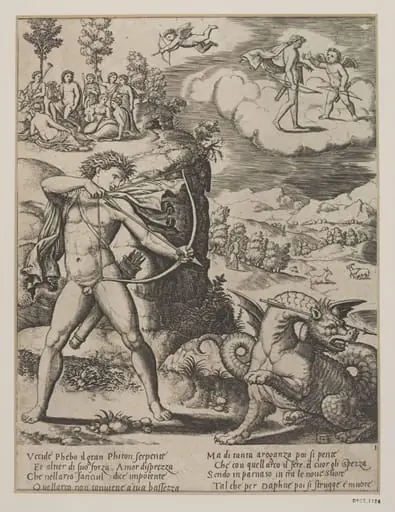 The History of Apollo and Daphne
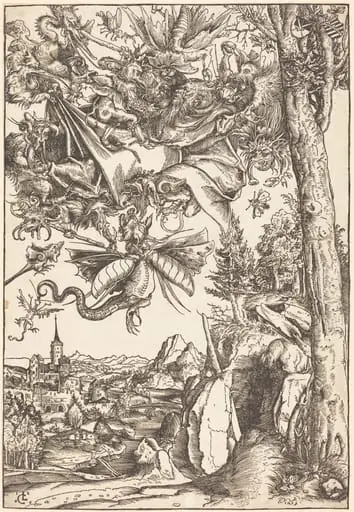 The Temptation of Saint Anthony
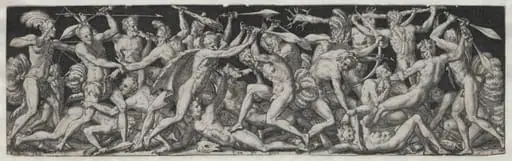 Combats and Triumphs No. 7
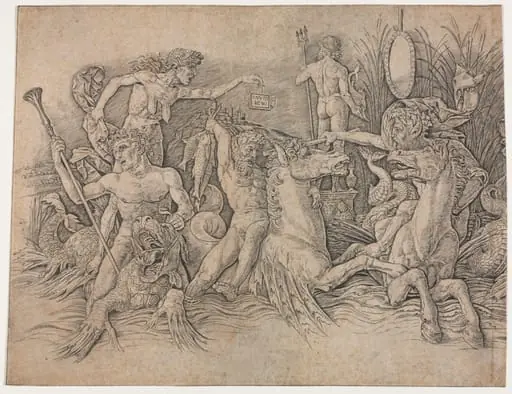 Battle of the Sea Gods - left portion