Artwork
Apocalypse of John, Leaf 42
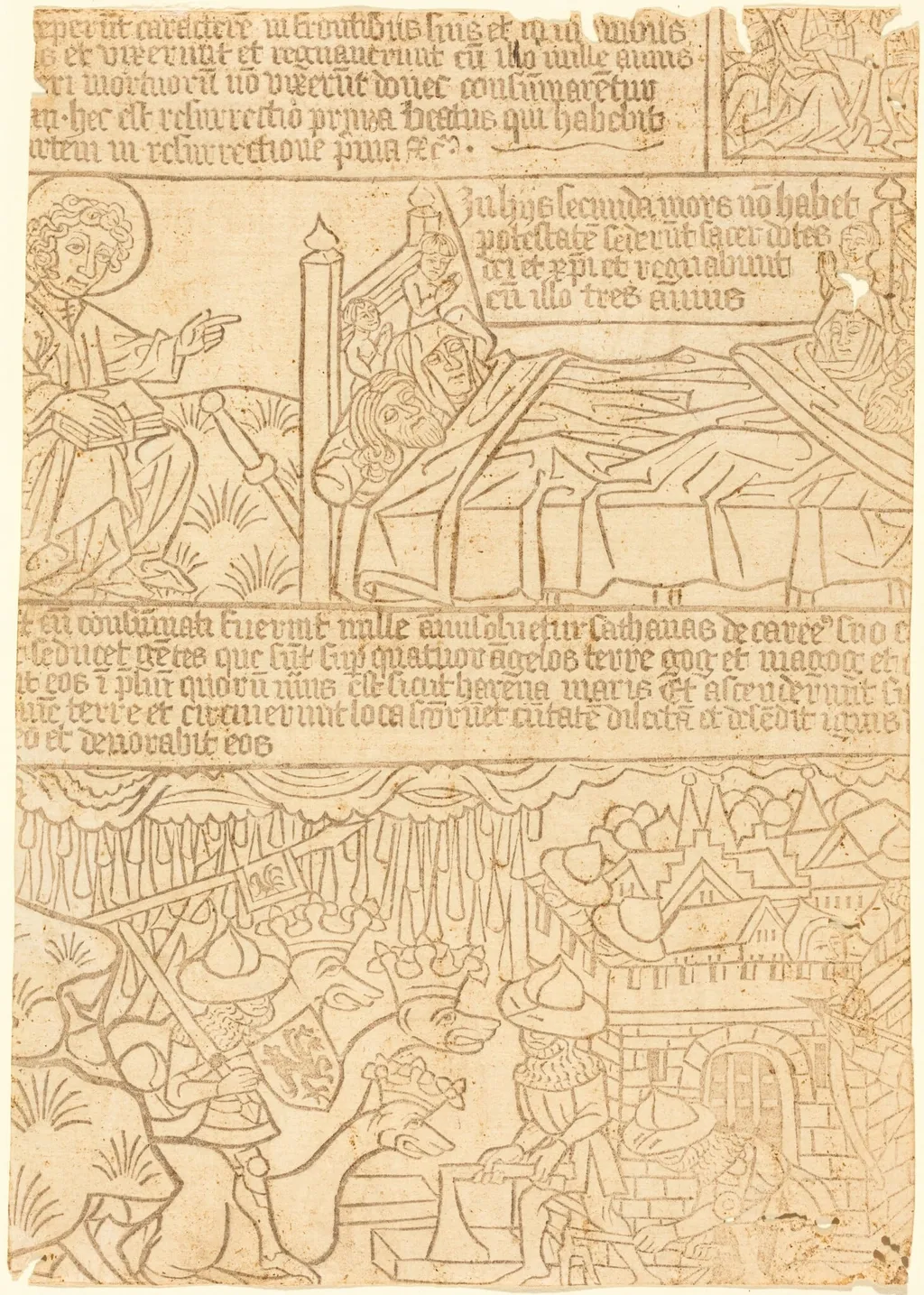
Apocalypse of John, Leaf 42 is an ink print by the Renaissance artist German 15th Century. It dates from 1465 and is held in the collection of the National Gallery of Art.
About this work
Overview
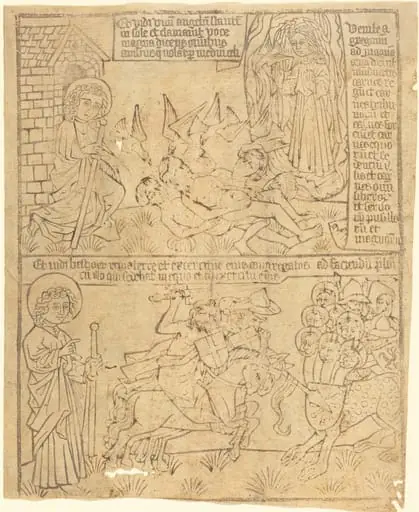
Apocalypse of John, Leaf 42 is a woodcut print on laid paper, depicting a chaotic scene characterized by dynamic, jagged forms and intense crowding. The composition features a central, tall, thin object resembling a candle, encircled by swirling shapes and figures in various states of movement.
Subject & Meaning
The subject matter is derived from the Apocalypse of John, suggesting an illustration of a visionary or eschatological event. The tumultuous arrangement of figures—kneeling, reaching, and falling—conveys a sense of turmoil or spiritual upheaval, while the central object may symbolize a focal point of divine presence or illumination.
Technique & Style
Executed as a woodcut, the image features sharp, jagged lines indicative of the carving process. The rough edges and the overall appearance of being 'carved with a knife' are characteristic of this medium. Figures have simple, sketch-like faces, and the text in old, blocky Latin script (divided into sections) complements the visual chaos, enhancing the piece's intense, handmade quality.
History & Provenance
Limited information is provided about the specific history or provenance of Leaf 42. However, as part of the Apocalypse of John series, it is likely from a 15th or 16th-century European production, given the prevalence of woodcut illustrations in religious texts during this period.
Context
This woodcut reflects the medieval to early Renaissance interest in illustrating religious and apocalyptic texts. The use of woodcuts made such images more accessible to a broader audience than handwritten manuscripts, contributing to the dissemination of religious themes and fears during a time of social and religious upheaval.
Legacy
As an illustrative element from the Apocalypse of John, Leaf 42 contributes to the visual legacy of apocalyptic representation in Western art. Its style and technique, while specific to its time, influenced subsequent generations of printmakers and religious illustrators, though its direct impact would depend on the broader recognition of the series it belongs to.
Artist & collection

Artist
This 15th-century German artist carved vivid religious scenes into metal and wood, then hand-painted them in bright, symbolic colors.

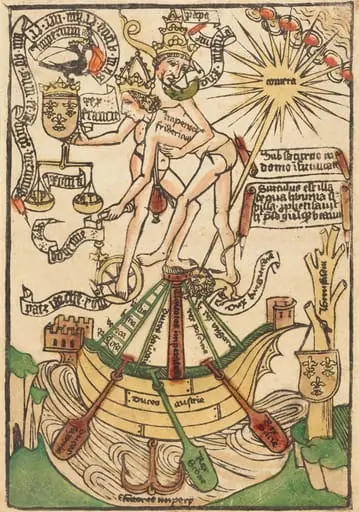 Allegory of the Meeting of Pope Paul II and Emperor Frederick III
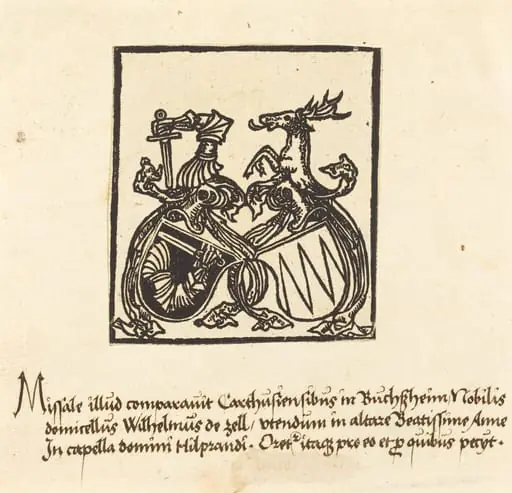 Bookplate of Wilhelm von Zell
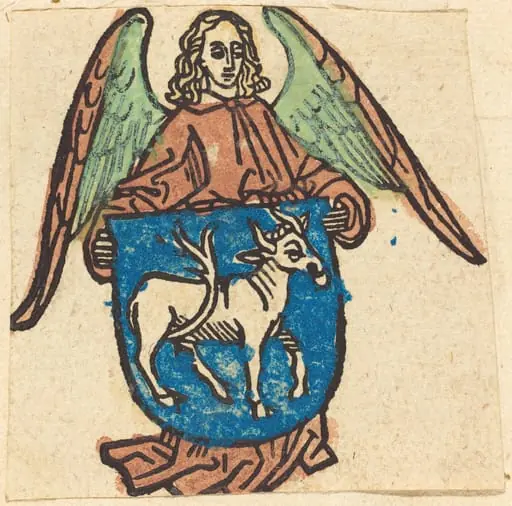 Bookplate of Hilprand Brandenburg of Bibrach
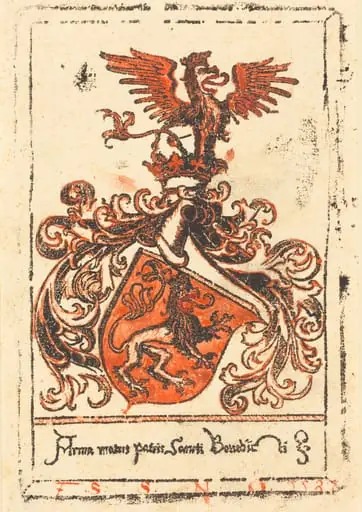 Bookplate of the Abbey of Ottobeuren
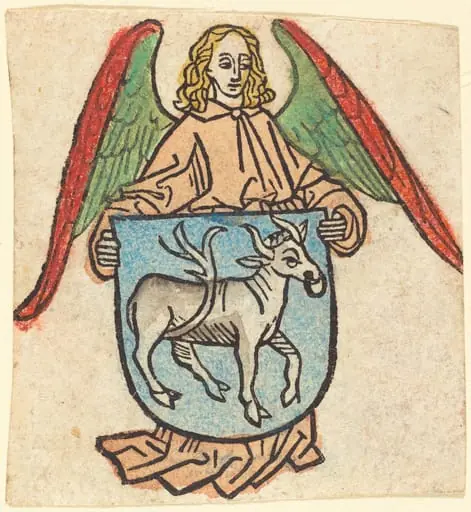 Bookplate of Hilprand Brandenburg of Bibrach
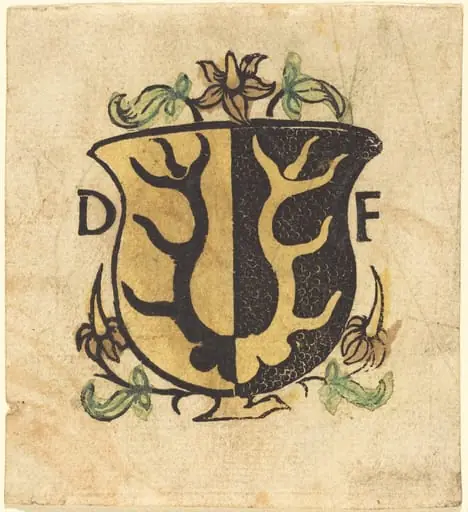 Bookplate of Dominicus Frauenfelder
![Studies for Six Figures (sheet from a model book) [recto], by German 15th Century](https://artifactworldgallery.com/img/german-15th-century--studies-for-six-figures-sheet-from-a-model-book-recto--4837429e0755bc3f-w320.webp) Studies for Six Figures (sheet from a model book) [recto]
Studies for Six Figures (sheet from a model book) [recto]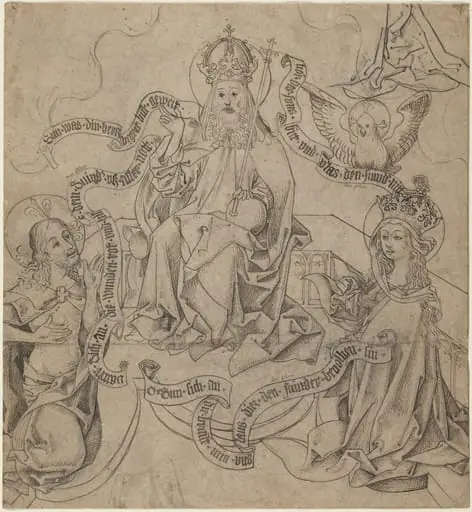 Christ and Mary Interceding with God the Father
![The Destruction of the Egyptian Idols [verso], by Italian 15th Century](https://artifactworldgallery.com/img/italian-15th-century--the-destruction-of-the-egyptian-idols-verso--646d3c2b8098cfee-w320.webp) The Destruction of the Egyptian Idols [verso]
The Destruction of the Egyptian Idols [verso]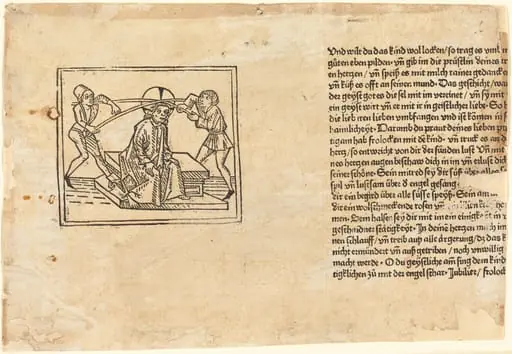 Christ Crowned with Thorns
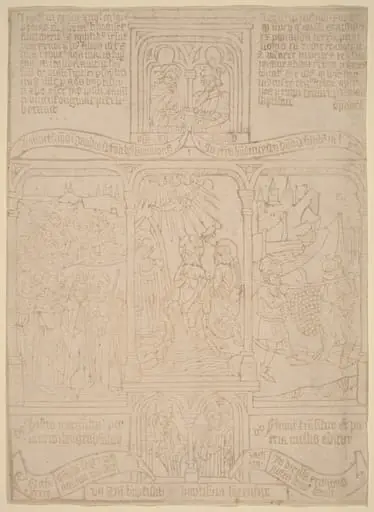 The Baptism of Christ; Pharoah Passing through the Red Sea; Joshua and Caleb
![The Flight into Egypt [recto], by Italian 15th Century](https://artifactworldgallery.com/img/italian-15th-century--the-flight-into-egypt-recto--8f4d5275d7f90f98-w320.webp) The Flight into Egypt [recto]
The Flight into Egypt [recto]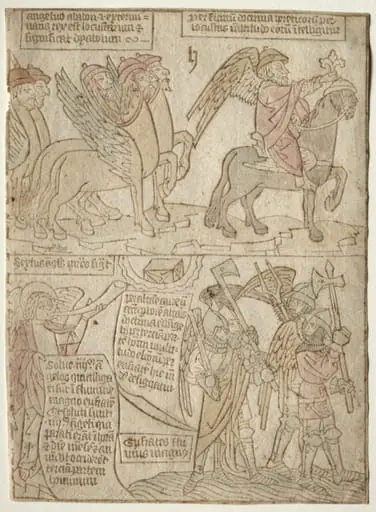 page from the Apocalypse (The Locusts with the Angel of the Abyss and The Sixth Trumpet)
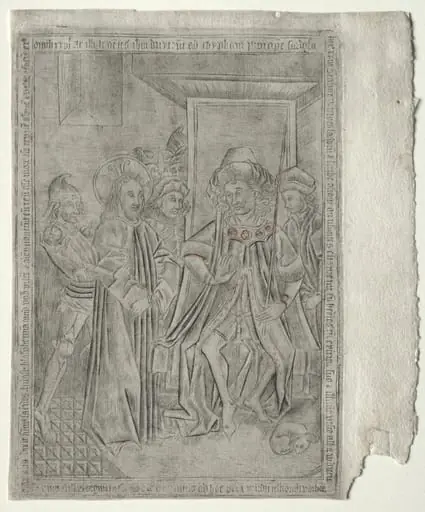 The Passion: Christ before Caiaphas
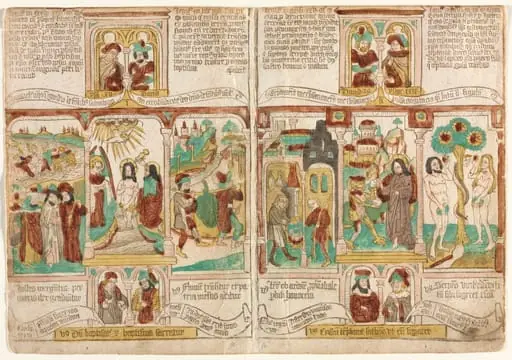 The Bible of the Poor (Biblia Pauperum),
Pharaoh's Army Drowned in the Red Sea; Baptism of Christ; and Moses' Spies Returning with Grapes from Canaan
Esau Selling Jacob his Birthright; Temptation of Christ; and Temptation of Adam and Eve
The Bible of the Poor (Biblia Pauperum),
Pharaoh's Army Drowned in the Red Sea; Baptism of Christ; and Moses' Spies Returning with Grapes from Canaan
Esau Selling Jacob his Birthright; Temptation of Christ; and Temptation of Adam and Eve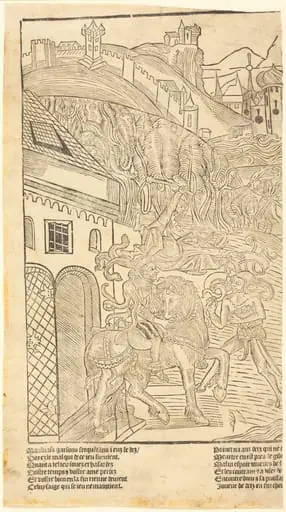 A Warning Against Playing Dice
 Apocalypse of John, Leaf 10