Artwork
Mucius Scaevola
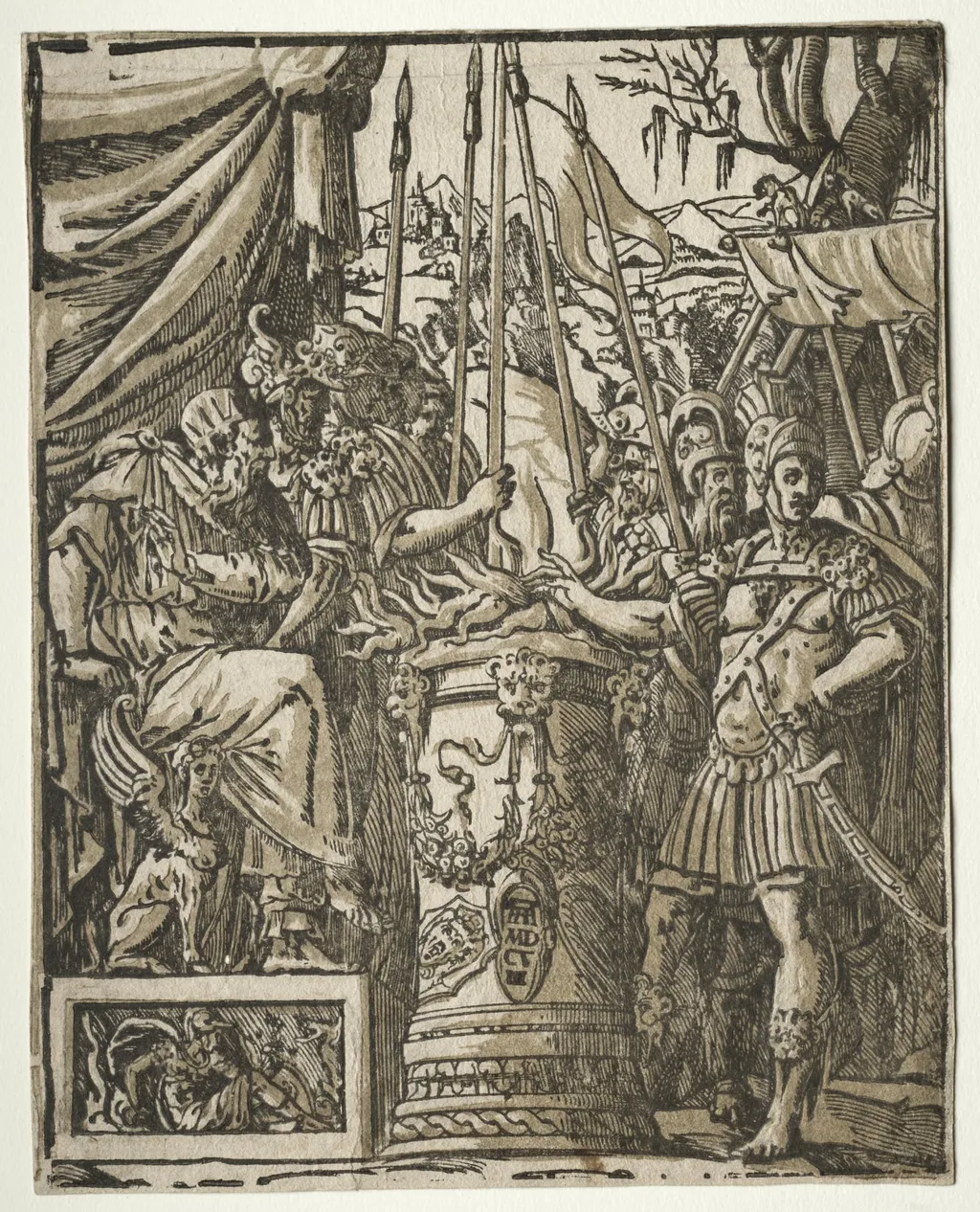
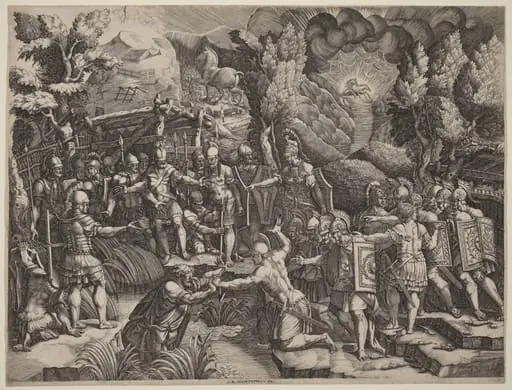
Mucius Scaevola is a print by the Baroque artist Andrea Andreani. It dates from 1608 and is held in the collection of the Cleveland Museum of Art. This chiaroscuro woodcut, composed of two blocks in shades of gray and black, reproduces a drawing by Baldassarre Peruzzi.
About this work
Overview
This chiaroscuro woodcut, composed of two blocks in shades of gray and black, reproduces a drawing by Baldassarre Peruzzi.
This chiaroscuro woodcut, composed of two blocks in shades of gray and black, reproduces a drawing by Baldassarre Peruzzi. It depicts a moment from Roman legend involving Gaius Mucius Cordus, a young man who attempted to assassinate the Etruscan king Lars Porsena during the siege of Rome around 509 BC. The scene captures his act of self-sacrifice to prove his resolve, rendered through stark contrasts of light and shadow.
Subject & Meaning
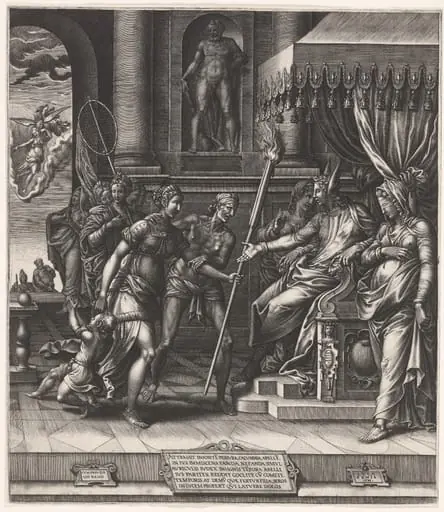
The print illustrates Gaius Mucius thrusting his right hand into a sacrificial flame to demonstrate his indifference to pain. His act was meant to intimidate the enemy and convey Roman resolve. By enduring the torture without flinching, he convinced Porsena of Rome’s unyielding spirit. The epithet 'Scaevola'—meaning left-handed—was later given to him after he lost the use of his right hand.
Technique & Style
The image employs a two-block chiaroscuro technique, using only greenish-gray and black tones to model form and depth. This method, derived from Renaissance drawing practices, emphasizes volume through gradations of tone rather than line. The composition is tightly focused, directing attention to the figure’s stoic expression and the violent contrast between flesh and flame.
History & Provenance
The print was produced after a design by Baldassarre Peruzzi, an architect and artist active in early 16th-century Rome. Though the original drawing is lost, the woodcut survives as evidence of how classical narratives were revived in print form during the Renaissance. It likely circulated among scholars and collectors interested in antiquity and moral exemplars.
Context
During the Renaissance, Roman legends like that of Mucius Scaevola were frequently revisited as symbols of civic virtue and personal fortitude. Artists and patrons used such stories to reinforce ideals of courage and self-discipline. The choice of chiaroscuro woodcut—a medium associated with serious, intellectual subjects—reflects the print’s didactic purpose within humanist circles.
Legacy
This print contributed to the enduring visual tradition of Mucius Scaevola in Western art. Its restrained palette and dramatic tension influenced later depictions of heroic endurance. Though not widely known today, it remains a significant example of how Renaissance printmakers translated classical morality tales into accessible, emotionally charged imagery.
Artist & collection

Artist
Andrea Andreani (1540–1623) was an Italian engraver on wood, who was among the first printmakers in Italy to use chiaroscuro, which required multiple colours.

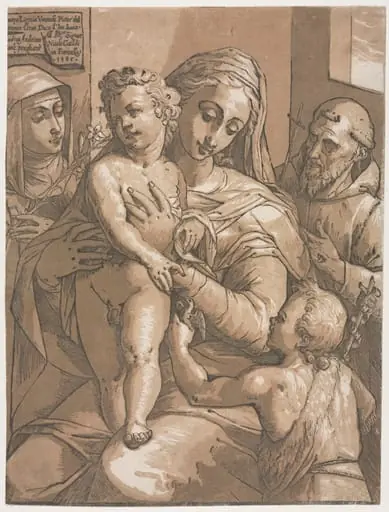 Virgin and Child with St. John, St. Catherine of Siena and St. Francis
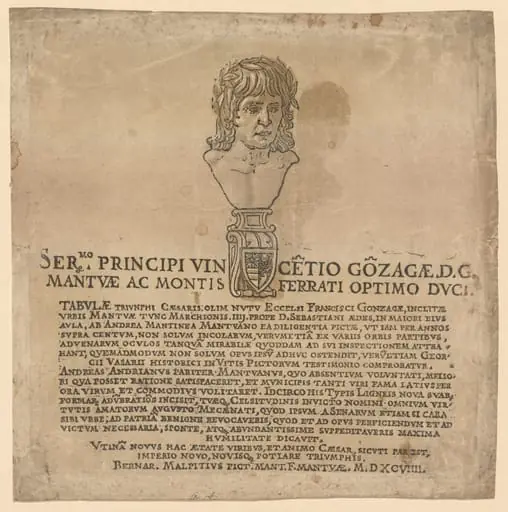 The Triumph of Julius Caesar
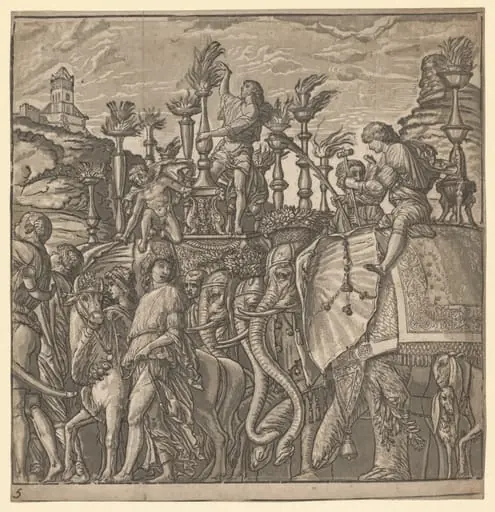 The Triumph of Julius Caesar: Elephants Carrying Torches
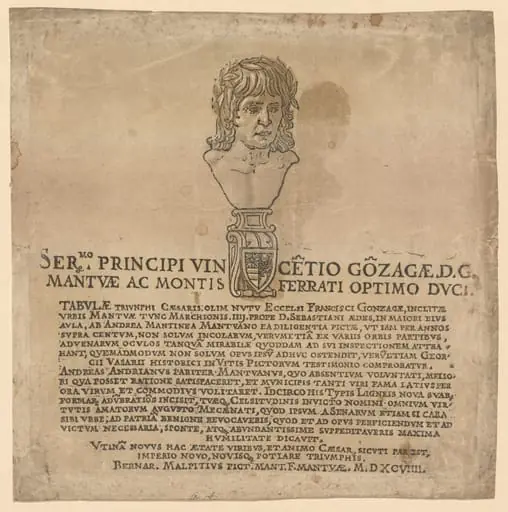 The Triumph of Julius Caesar: Frontispiece
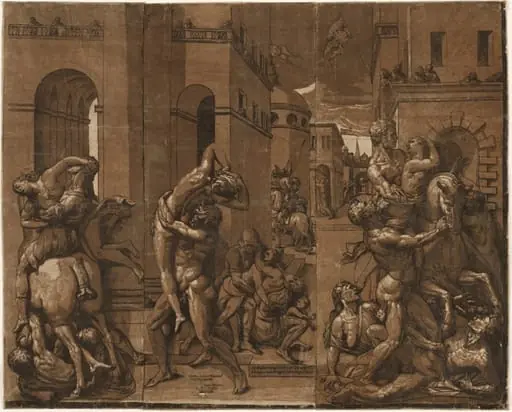 The Abduction of the Sabine Women
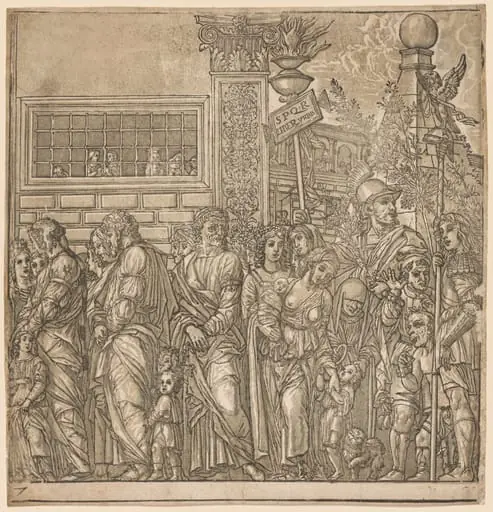 The Triumph of Julius Caesar: Procession of Men, Women and Children
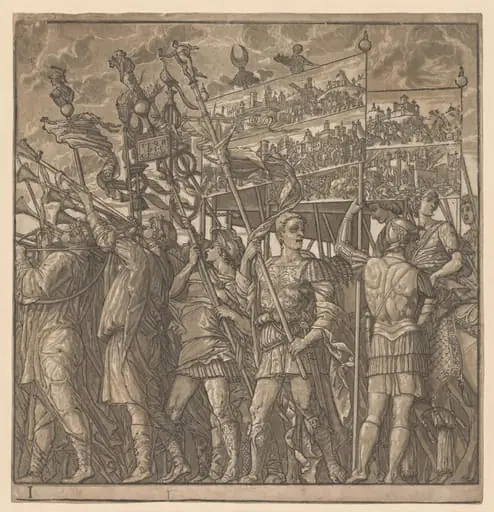 The Triumph of Julius Caesar: Soldiers Carrying the Pictures of War
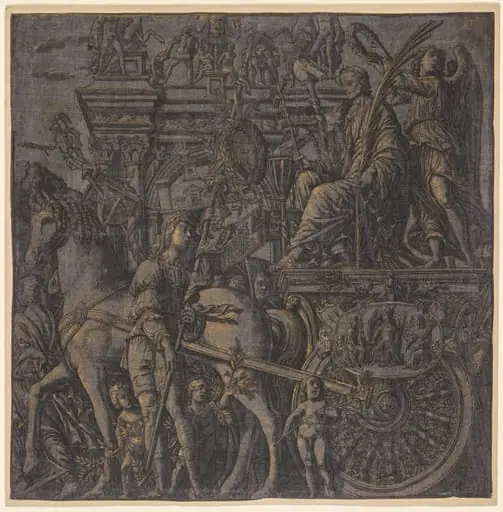 The Triumph of Julius Caesar: Caesar Triumphant