Artwork
Saint Bartholomew
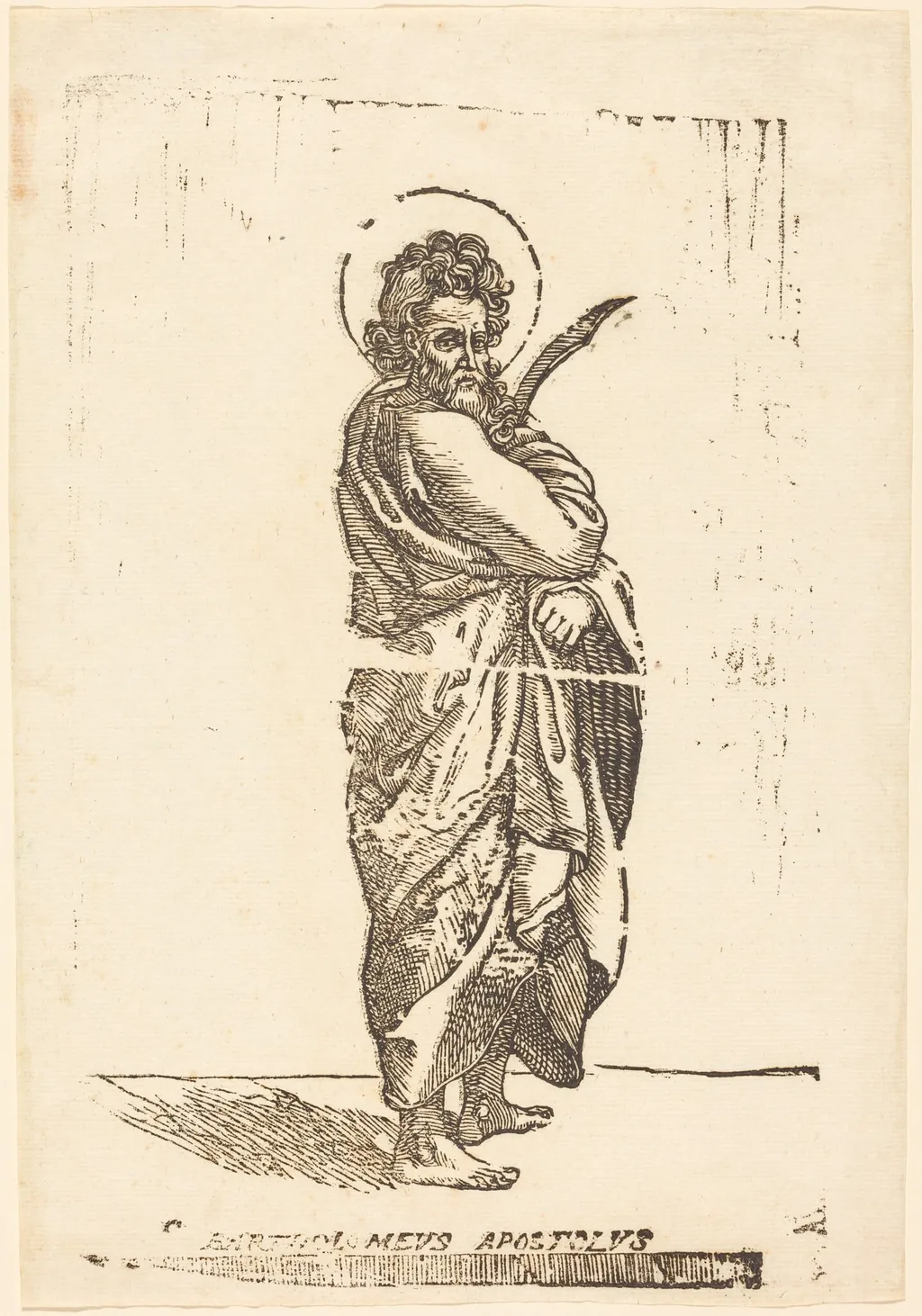
Saint Bartholomew is an ink print by the Renaissance artist Italian 16th Century. It dates from 1626 and is held in the collection of the National Gallery of Art.
About this work
Overview
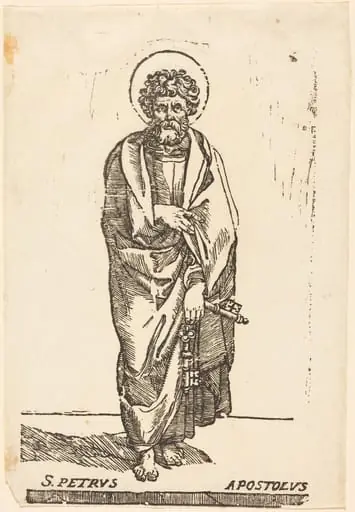
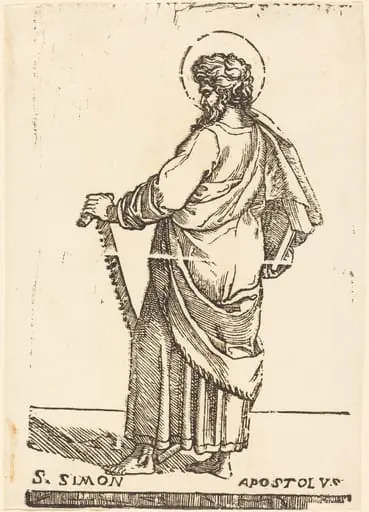
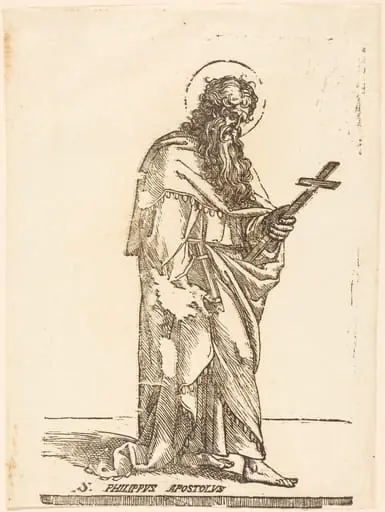
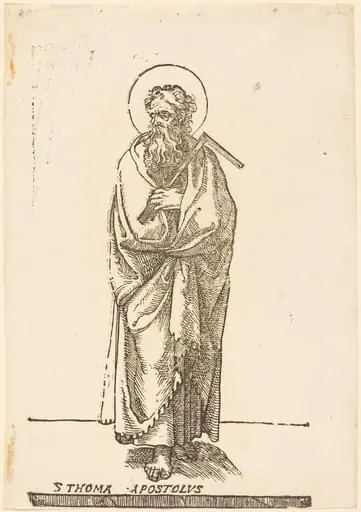
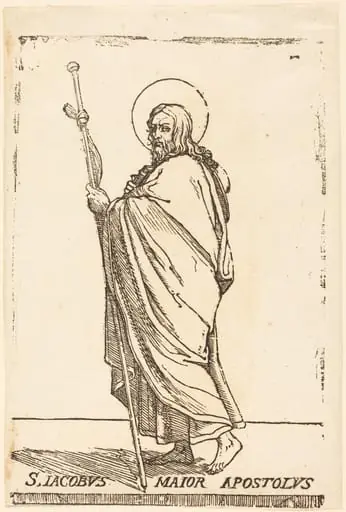
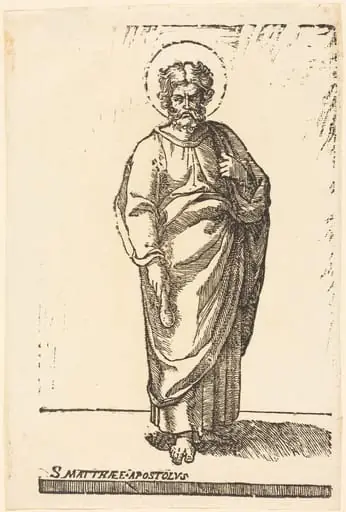
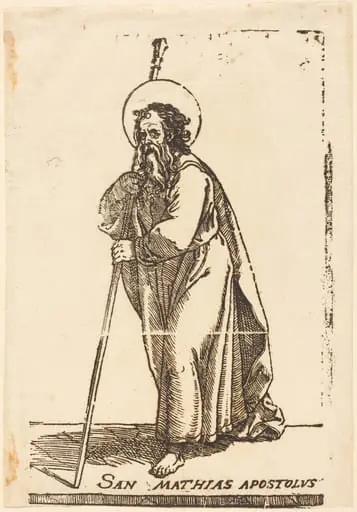
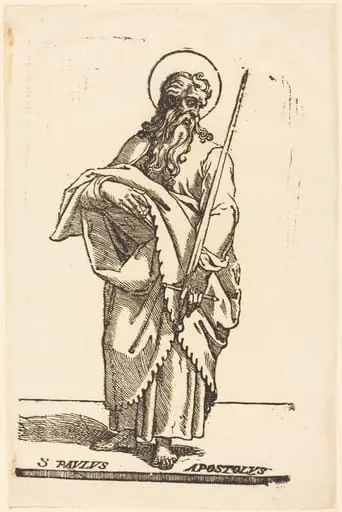
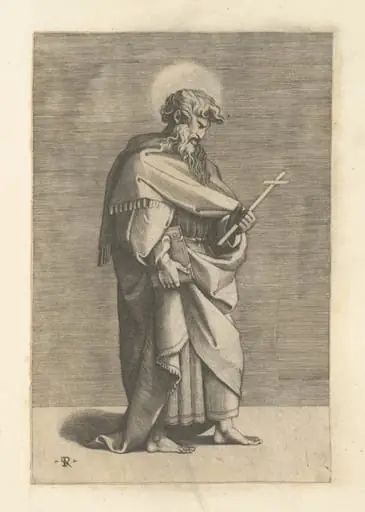
This black-and-white woodcut depicts Saint Bartholomew, one of Christ’s twelve apostles, rendered in a straightforward, linear style.
This black-and-white woodcut depicts Saint Bartholomew, one of Christ’s twelve apostles, rendered in a straightforward, linear style. Executed on laid paper, the print shows signs of age through staining and irregular edges. The figure stands in profile, holding an object in his left hand while gesturing with his right. A halo encircles his head, identifying him as a saint. The Latin inscription at the base confirms his identity as S. Bartholomeus Apostolus.
Subject & Meaning
Saint Bartholomew is portrayed as a solemn, bearded apostle, his posture and halo signaling his sacred status. The object in his left hand may reference his traditional attribute—the flaying knife or skin, alluding to his martyrdom. His pointing gesture could indicate teaching or divine witness. The image serves a devotional function, inviting contemplation of the saint’s faith and sacrifice within a religious context.
Technique & Style
The image was produced using a woodcut technique, where lines were carved into a wooden block and inked to transfer the design onto paper. The artist employed bold, simplified contours to define the robe, beard, and halo, ensuring clarity even in reproduction. The lack of shading and reliance on line reflect the constraints and strengths of early printmaking, prioritizing legibility over naturalism.
History & Provenance
The print’s paper shows wear consistent with early modern handling, suggesting it was produced and circulated in the 15th or 16th century. While the artist’s name is unrecorded, the Latin inscription and iconography align with devotional prints common in Northern Europe during the late Middle Ages. Its survival in this condition indicates it was valued enough to be preserved despite use.
Context
This woodcut belongs to a broader tradition of religious imagery produced for private devotion and instruction. Before widespread literacy, such prints helped convey biblical narratives and saintly lives to lay audiences. The standardized representation of saints, including halos and attributes, allowed viewers to recognize figures quickly, reinforcing communal religious identity.
Legacy
As an example of early printmaking, this work illustrates how images were mass-produced for spiritual use, democratizing access to sacred iconography. Though anonymous, it reflects the technical skill and devotional intent of artisans who shaped visual piety in the centuries before the Reformation. Its preservation offers insight into the material culture of everyday religious practice.
Artist & collection

Artist
A 16th-century Italian sculptor left us small bronze works in dark brown and gold.