Artwork
First Flemish Rebellion
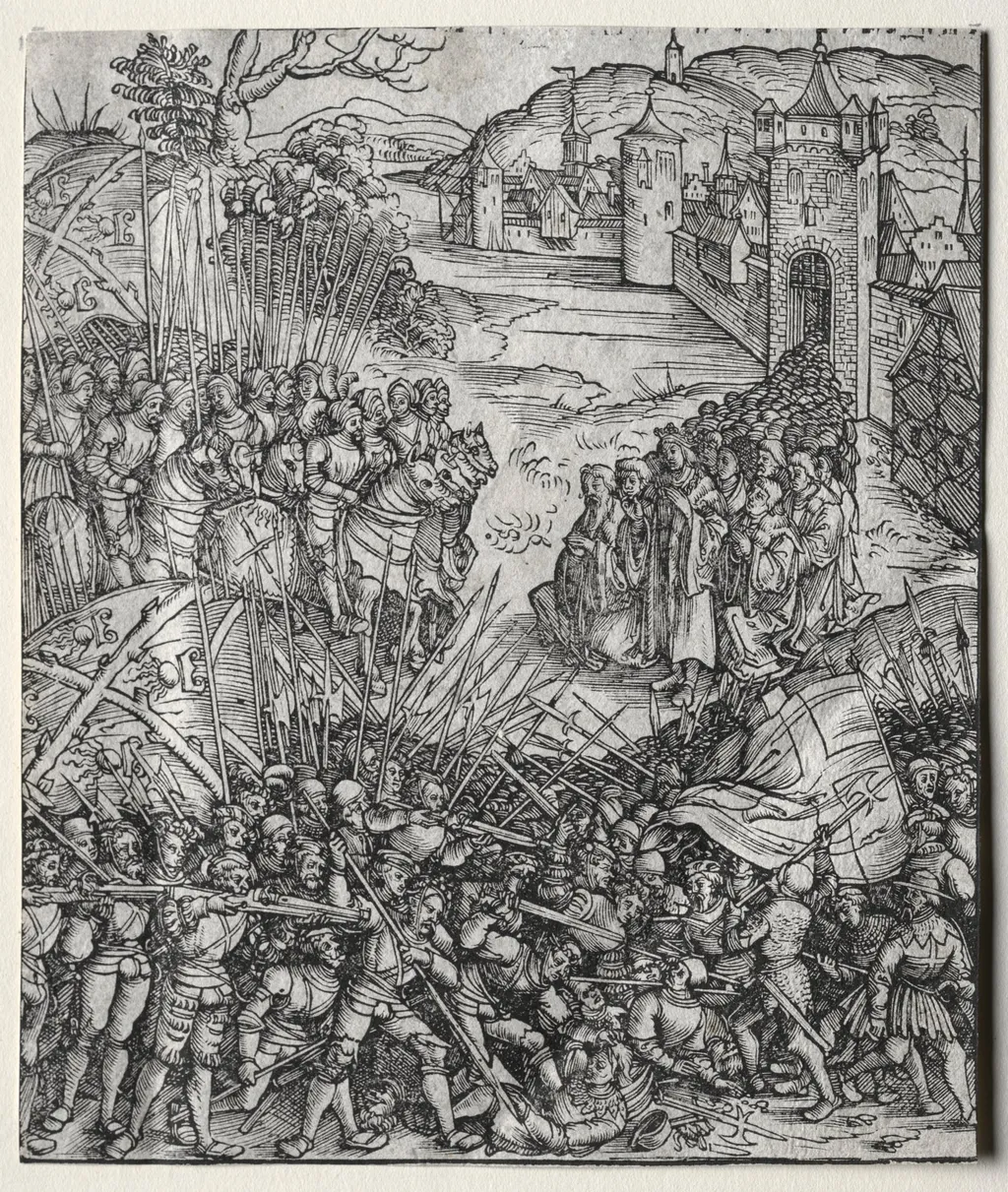
First Flemish Rebellion is a print by the Renaissance artist Wolf Traut. It dates from 1514 and is held in the collection of the Cleveland Museum of Art.
About this work
Overview
Created in 1514 by Wolf Traut, this print depicts a violent clash between two opposing forces on a rugged hillside.
Created in 1514 by Wolf Traut, this print depicts a violent clash between two opposing forces on a rugged hillside. Executed in fine detail, the scene captures the turmoil of armed conflict with precision. The work is part of the collection at The Cleveland Museum of Art, where it stands as an early example of Northern European printmaking that blends narrative intensity with meticulous craftsmanship.
Subject & Meaning
The print illustrates a conflict between organized, armored soldiers and a less structured group in robes, possibly representing rebels or civilians. The presence of a burning town on elevated ground suggests broader societal disruption. The scene may allude to early resistance against authority in the Low Countries, though no specific historical event is confirmed. The chaos underscores themes of disorder and the cost of uprising.
Technique & Style
Traut employed fine-line engraving to render each figure with individualized features, even in dense crowds. The steep, stair-like terrain adds dynamic tension, guiding the viewer’s eye upward through the composition. Smoke curls from a single building in the background, subtly signaling destruction without overt spectacle. The controlled detail reflects the precision typical of early 16th-century Northern printmakers.
History & Provenance
The print was produced in 1514, during a period of rising social unrest in the Low Countries. It entered the collection of The Cleveland Museum of Art through documented acquisitions, though its earlier ownership remains unclear. As a rare surviving example of Traut’s work, it offers insight into the visual culture of rebellion in early modern Flanders, preserved through institutional conservation.
Context
Produced during the early years of the Protestant Reformation and regional tensions under Habsburg rule, the image reflects anxieties about authority and resistance. While not a direct record of a specific revolt, it resonates with contemporary fears of civil upheaval. Similar imagery appeared in broadsheets and woodcuts, serving both as news and moral commentary in an increasingly literate society.
Legacy
Traut’s print contributes to a broader tradition of Northern European prints that documented social conflict with narrative clarity. Its survival and preservation in a major museum highlight its value as a historical document. Though not widely reproduced, it remains a significant reference for scholars studying the visual representation of rebellion in the early 16th century.
Artist & collection

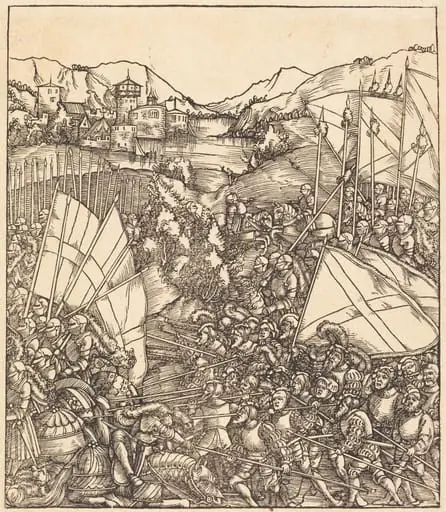 The War at Hainault
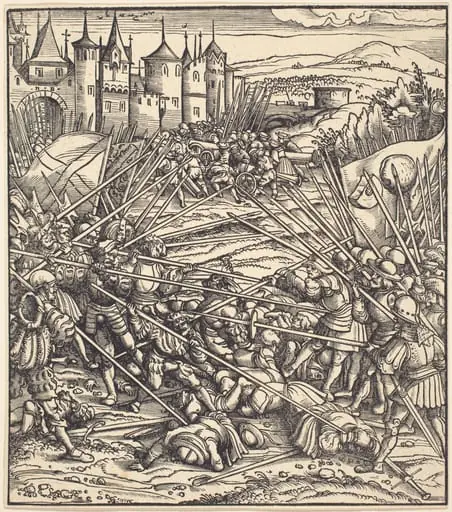 Battle of the Foot Soldiers with Lances
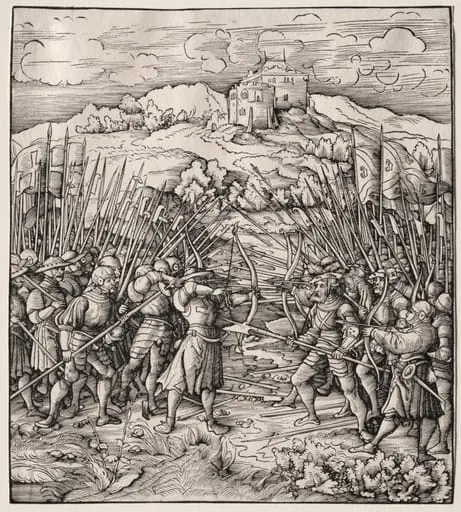 The Battle Against the Blue Company
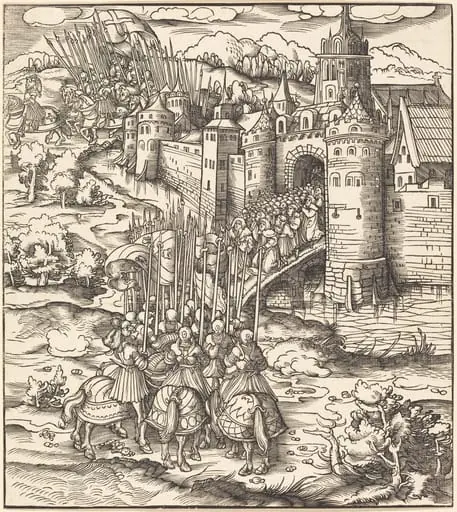 Various Men Kneeling on a Bridge in front of a Town
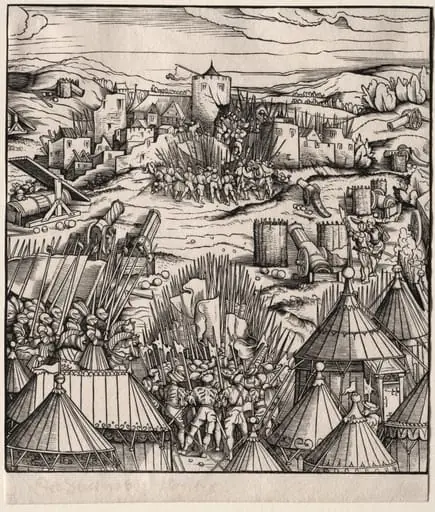 The Storming of Nantes
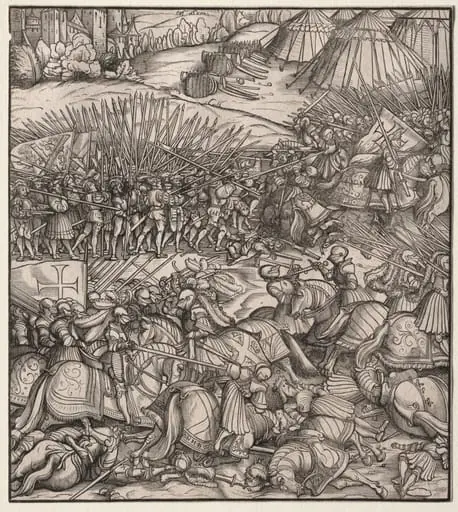 How the French King made war on the King of Feuereisen in his realm and how the King of Feuereisen died in the battle
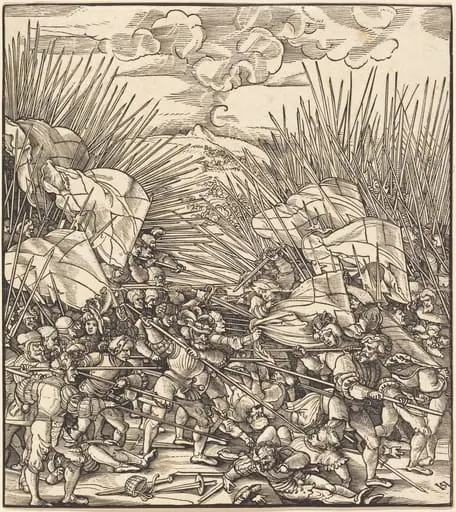 Battle of Cividale
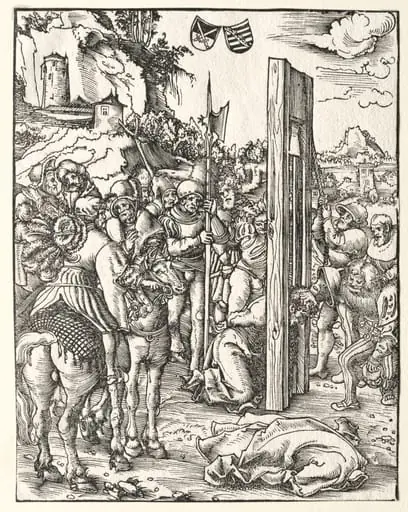 Martyrdom of St. Matthias
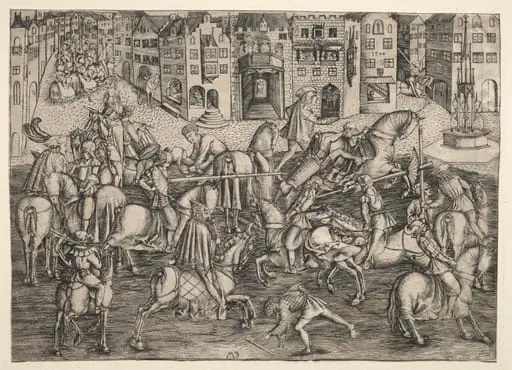 The Great Tournament: Munich
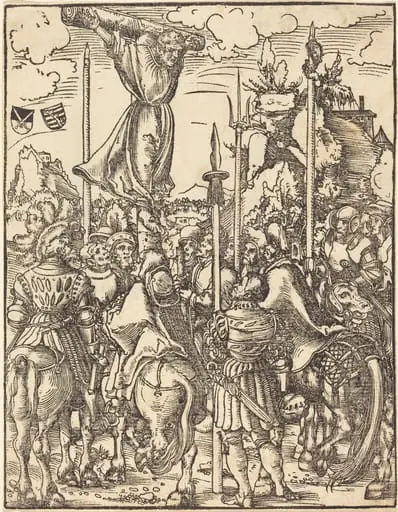 Saint Philip
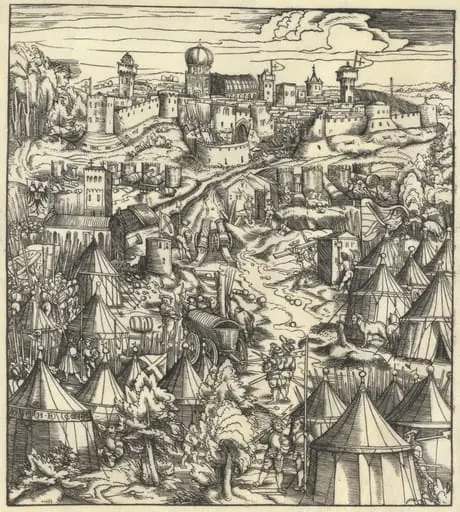 The Battle of Padua
 The Great Passion: Christ Bearing the Cross