Artwork
The War at Hainault
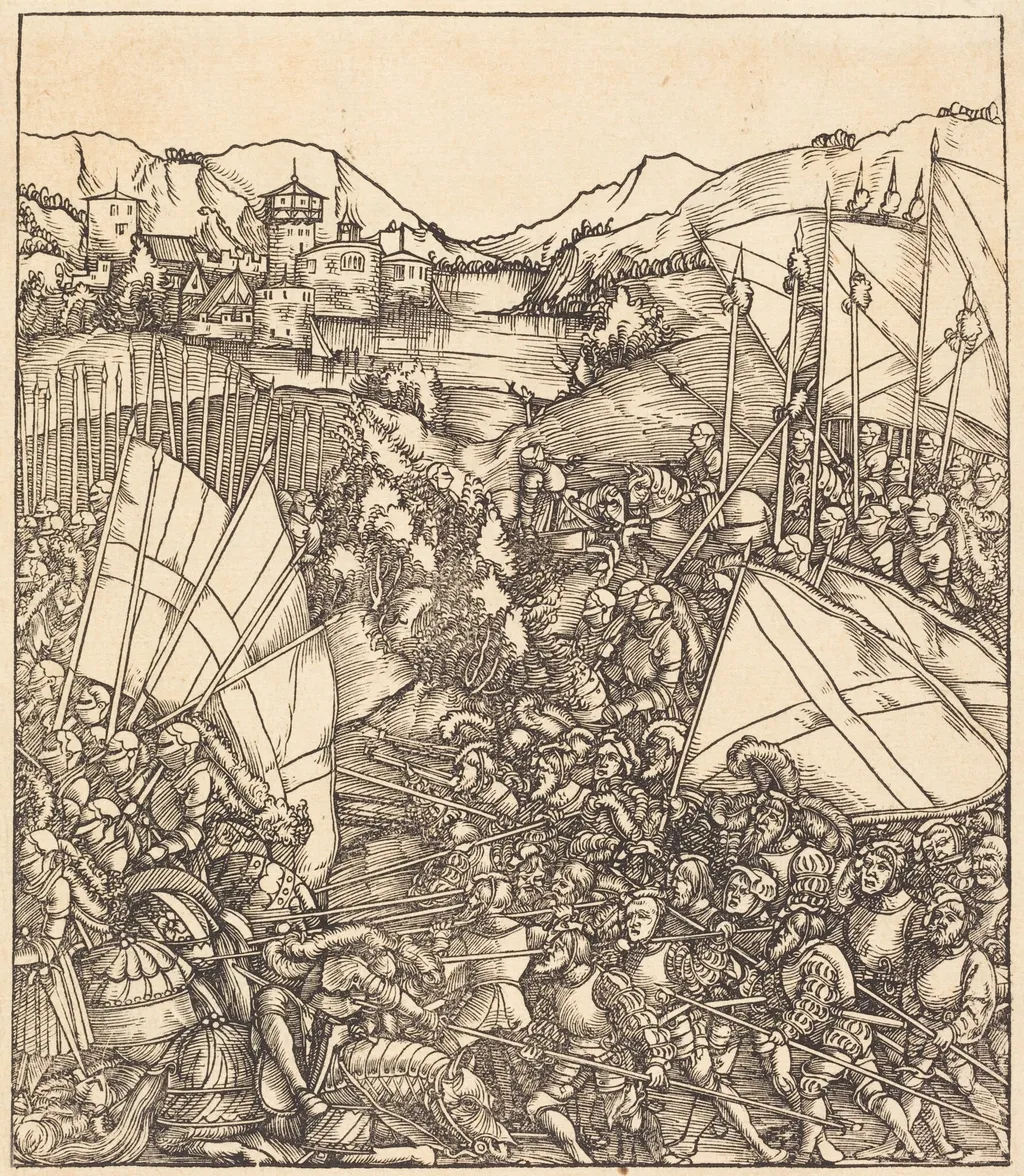
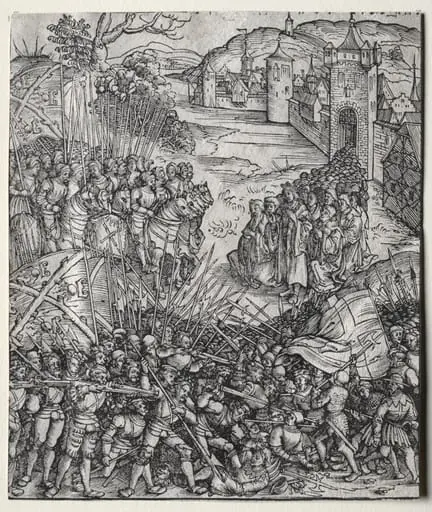
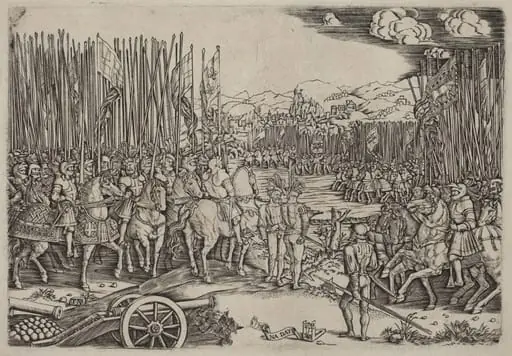
The War at Hainault is an ink print by the Renaissance artist Hans Springinklee. It dates from 1515 and is held in the collection of the National Gallery of Art.
About this work
It’s a woodcut from 1515—so the artist carved the image into wood, inked it, and pressed paper onto the block to make the print.
This print shows a battle scene with soldiers on horseback and foot fighting in a muddy field. The trees behind them are bare, and arrows fly through the air. It’s a woodcut from 1515—so the artist carved the image into wood, inked it, and pressed paper onto the block to make the print.
Woodcuts were cheap and fast in the 1500s, so artists used them to spread news and stories. This one tells of a fight called the War at Hainault, but details are lost over time. Only one copy of this print survives today.
Look at the harsh lines in the soldiers’ armor—it’s almost scratchy. Try finding it at the National Gallery of Art, Washington.
Overview
Created in 1515, *The War at Hainault* is a woodcut by Hans Springinklee, a German artist trained in Nuremberg. As a print made by carving an image into a wooden block, it was part of a widespread medium for disseminating visual narratives in the early 16th century. The work captures a battle scene, likely referencing a regional conflict in Hainault, though specific historical details have faded. Only one known impression of this print remains today.
Subject & Meaning
The scene portrays armed combatants—both mounted and on foot—engaged in violent struggle across a muddy landscape. Bare trees and flying arrows suggest a harsh, open battlefield. While the exact event depicted is no longer clearly identified, the image conveys the chaos and brutality of medieval warfare. Its focus on movement and conflict, rather than individual heroes, reflects a documentary impulse common in early printmaking.
Technique & Style
Springinklee employed the woodcut technique, carving bold, angular lines into a wooden block to create contrast and texture. The armor and clothing are rendered with sharp, almost jagged strokes, emphasizing the physicality of the fighters. The composition lacks depth, relying on overlapping figures and dense linework to suggest space. This direct, linear style was typical of Nuremberg printmakers and suited the medium’s capacity for rapid reproduction.
History & Provenance
The print was produced in 1515 during a period when woodcuts were commonly used to illustrate current events and historical tales. Its survival is exceptional—only a single known impression exists, likely preserved due to its rarity or early institutional acquisition. The print’s journey through private and public collections remains undocumented, but its current location is held in the collection of the National Gallery of Art in Washington, D.C.
Context
In early 16th-century Germany, woodcuts served as a primary means of visual communication, especially in urban centers like Nuremberg. Artists like Springinklee, trained under Albrecht Dürer, contributed to a culture where prints circulated news, religious themes, and military events. *The War at Hainault* fits within this tradition, offering a visual account of a localized conflict that would have resonated with contemporary audiences familiar with regional warfare.
Legacy
Though Springinklee’s name is less known than his mentor Dürer, this print stands as a rare surviving example of his work. Its survival underscores the fragility of early printed materials and the importance of institutional preservation. The image contributes to the broader understanding of how visual media documented conflict before the rise of engraved or painted historical narratives.
Artist & collection

Artist
Hans Springinklee (c.1490/c.1495 – c.1540) was a German artist from Nuremberg, best known for his woodcuts. He was a pupil of Albrecht Dürer.

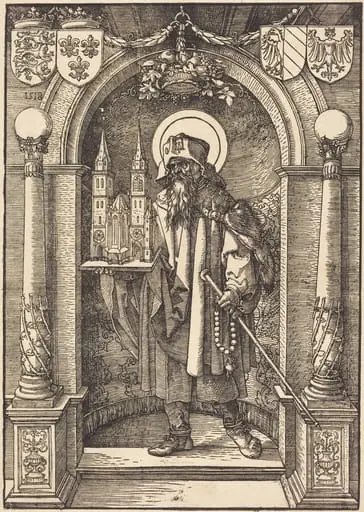
 First Flemish Rebellion
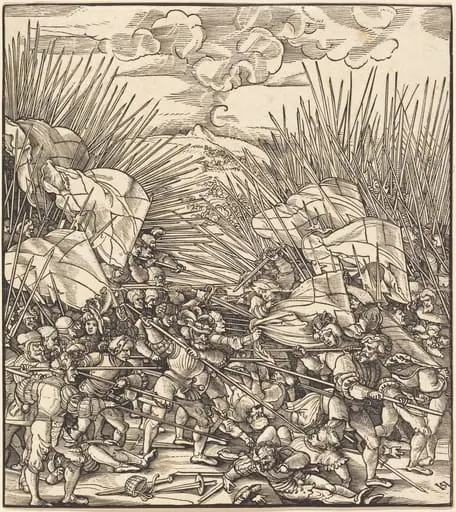 Battle of Cividale
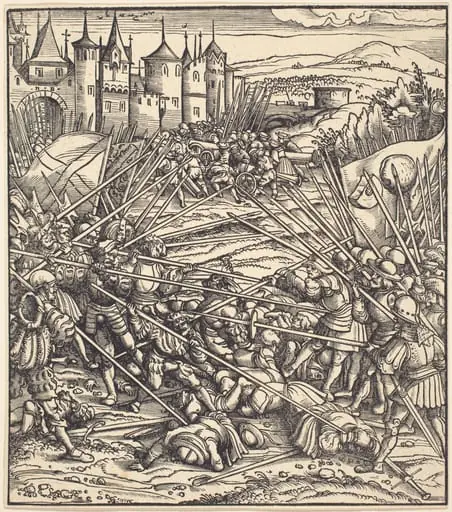 Battle of the Foot Soldiers with Lances
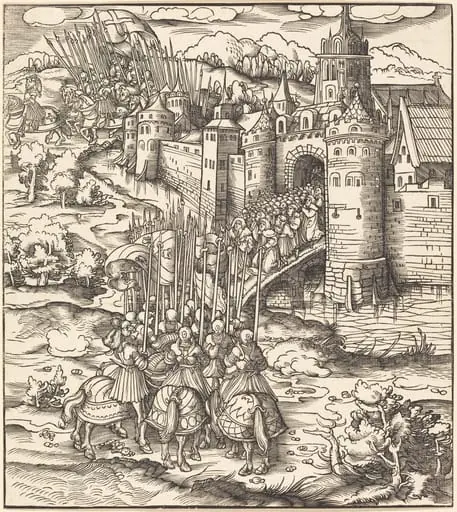 Various Men Kneeling on a Bridge in front of a Town
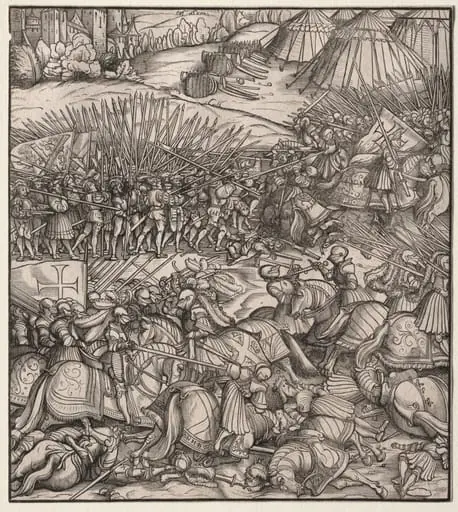 How the French King made war on the King of Feuereisen in his realm and how the King of Feuereisen died in the battle
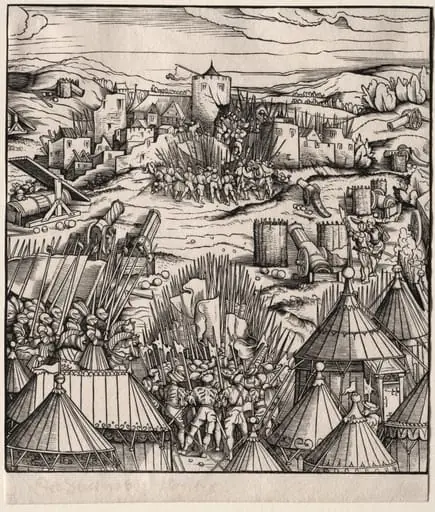 The Storming of Nantes
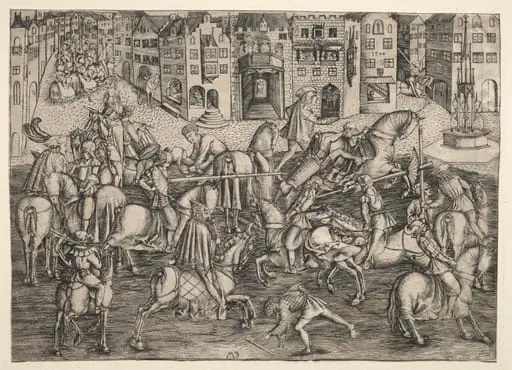 The Great Tournament: Munich
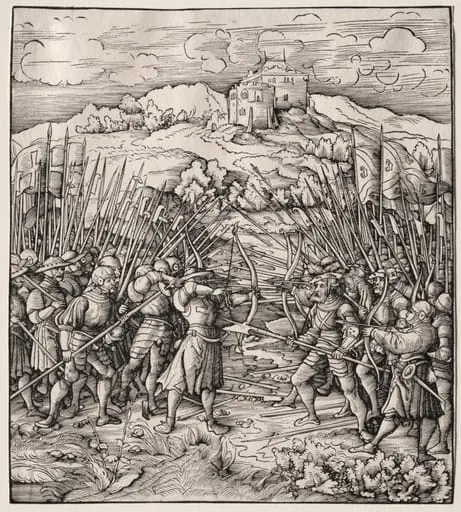 The Battle Against the Blue Company
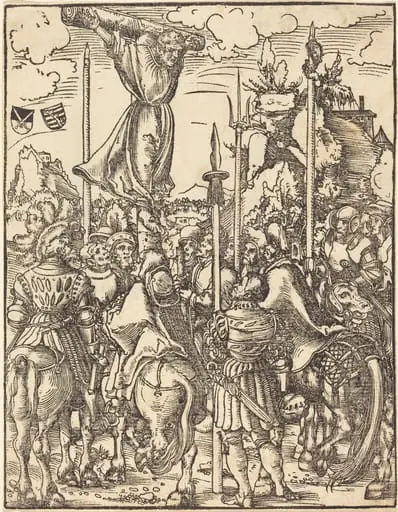 Saint Philip
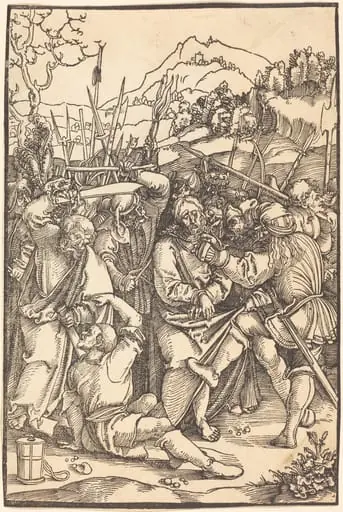 Christ Taken Prisoner
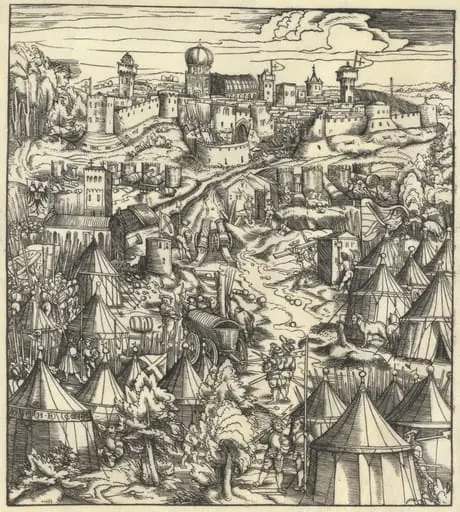 The Battle of Padua
 The Two Armies at the Battle of Ravenna