Artwork
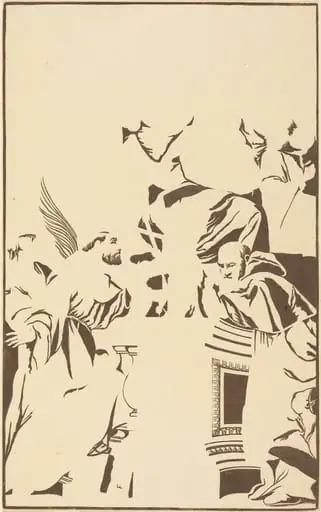
The Miracle of Saint Mark (right side)
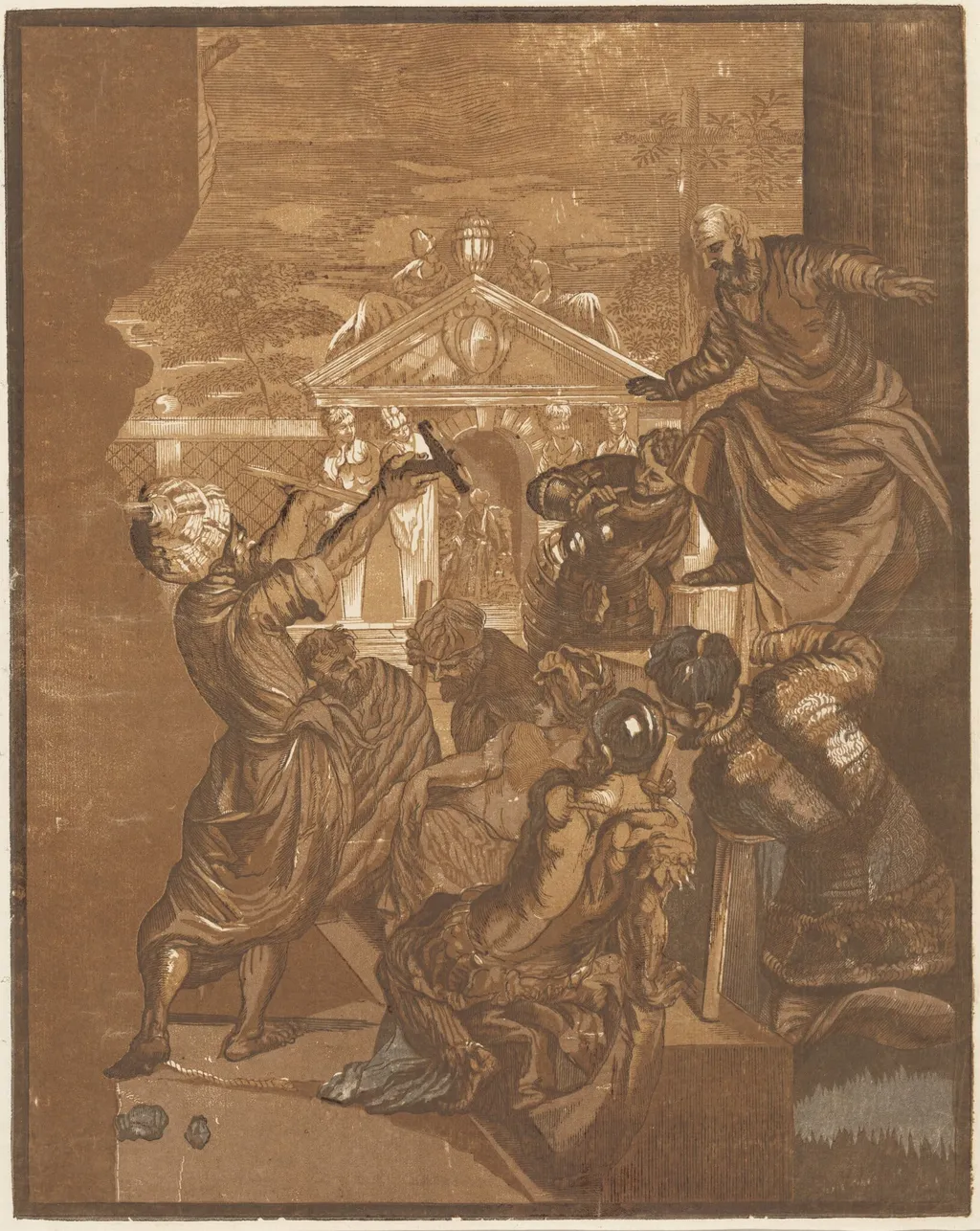
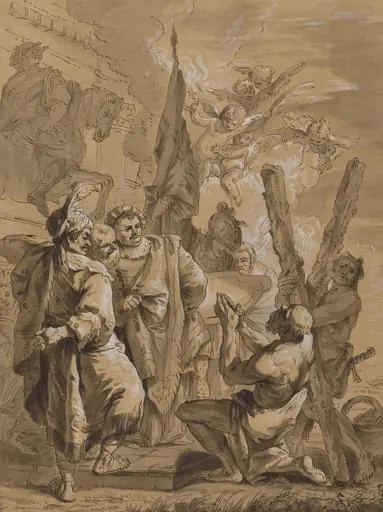
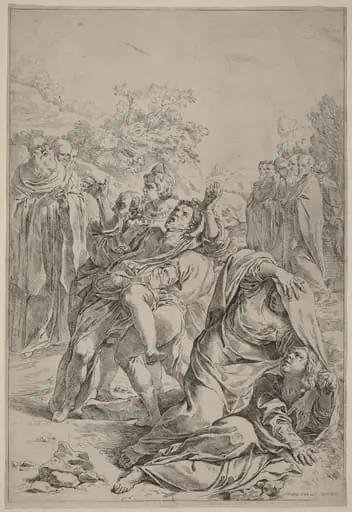
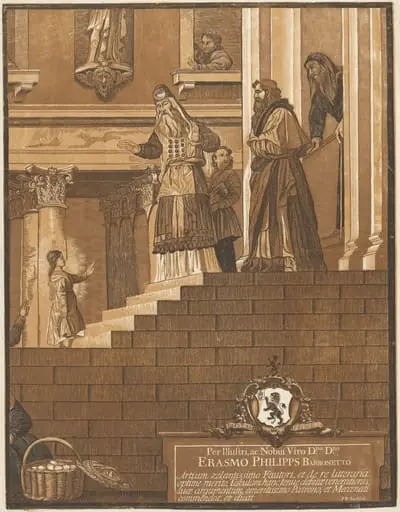
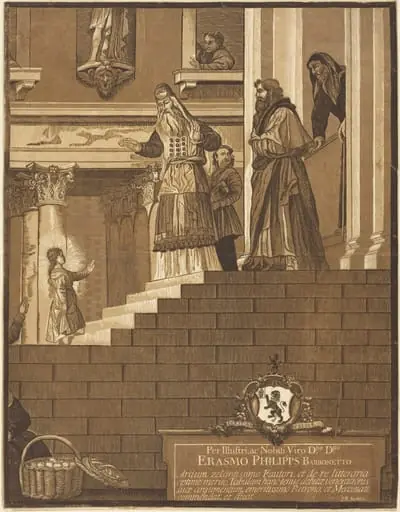
The Miracle of Saint Mark (right side) is an ink print by the Baroque artist John Baptist Jackson. It dates from 1740 and is held in the collection of the National Gallery of Art.
About this work
Overview
Created around 1740 by British printmaker John Baptist Jackson, this chiaroscuro woodcut depicts a moment from the legend of Saint Mark.
Created around 1740 by British printmaker John Baptist Jackson, this chiaroscuro woodcut depicts a moment from the legend of Saint Mark. Jackson, active in Paris and Venice, specialized in translating oil paintings into printed form rather than replicating drawn sketches. The work is part of a larger composition, with this panel focusing on the right side of the scene. Its layered printing technique and embossing distinguish it from typical woodcuts of the period.
Subject & Meaning
The scene captures a moment of divine intervention associated with Saint Mark, likely his resurrection of a man or a similar miracle. A central figure in a long robe, possibly the saint, gestures commandingly from a raised platform. Below, a crowd reacts with urgency—kneeling, reaching, clutching objects that suggest worldly concerns. The crumbling architecture and faint glow above imply a rupture between the earthly and the sacred, reinforcing the miraculous nature of the event.
Technique & Style
Jackson employed chiaroscuro woodcut, using multiple carved blocks to layer tones of ink, creating depth through contrast. He enhanced the effect with subtle overprinting to achieve a broader palette and heavy embossing to give texture to garments and architecture. The result is a dramatic interplay of light and shadow that models forms with sculptural weight, evoking the volume and movement typical of Baroque painting rather than flat linear prints.
History & Provenance
Jackson produced this print during his time in Italy and France, where he adapted compositions from contemporary religious paintings. The work was likely made for collectors interested in devotional imagery and technical innovation in printmaking. Though few of his prints survive in large numbers, this piece is recognized for its refined execution and departure from the dominant styles of British print culture at the time.
Context
In the mid-eighteenth century, religious themes remained popular in European printmaking, even as secular subjects gained ground. Jackson’s choice to render a saint’s miracle reflects continued demand for devotional imagery among elite patrons. His use of chiaroscuro, a technique more common in Italian prints, shows the influence of Venetian and Roman artistic circles, where printmakers sought to emulate painterly effects in relief.
Legacy
Jackson’s work contributed to the evolution of printmaking as a medium capable of conveying painterly depth. His layered chiaroscuro approach influenced later printmakers interested in tonal range and texture. While not widely known today, his prints are studied for their technical ambition and their role in bridging the gap between painting and print in eighteenth-century Europe.
Artist & collection

Artist
John Baptist Jackson (1701–1780) was a British artist, a woodcut printmaker of the eighteenth century.

![The Marriage at Cana [left plate], by John Baptist Jackson](https://artifactworldgallery.com/img/john-baptist-jackson--the-marriage-at-cana-left-plate--22bae83d46cc40b5-w320.webp)
![The Challenge [right], by Gabriel de Saint-Aubin](https://artifactworldgallery.com/img/gabriel-de-saint-aubin--the-challenge-right--75162e00e6876b27-w320.webp)