Artwork
The Mystic Marriage of Saint Catherine
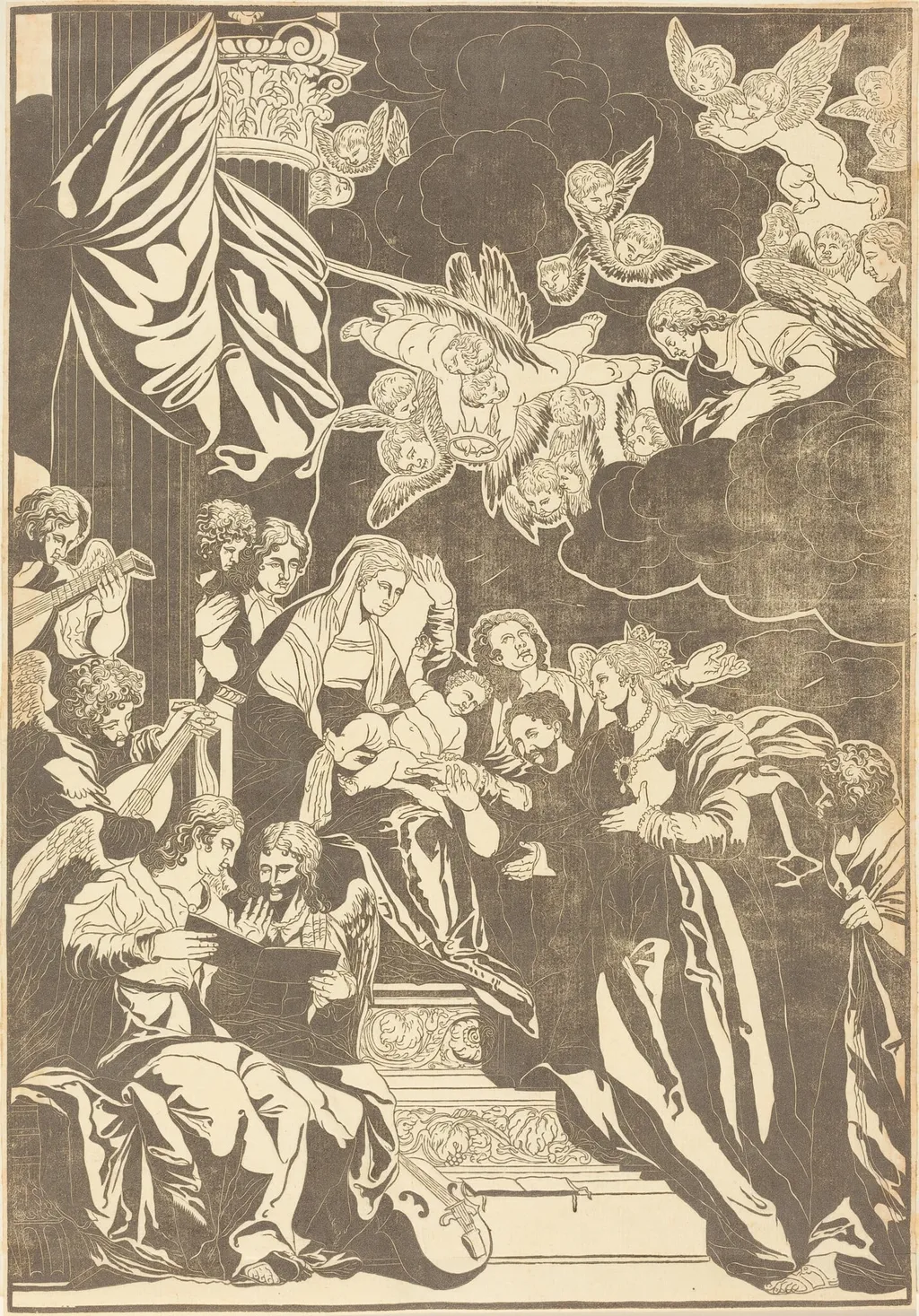
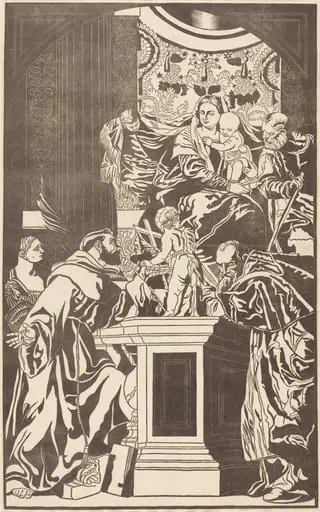
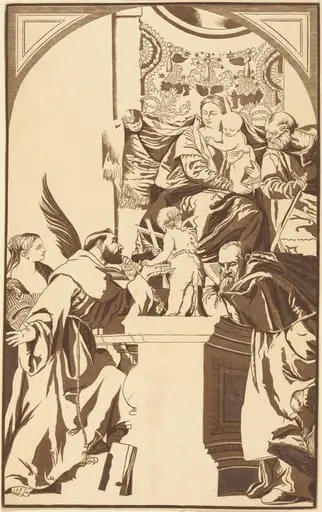
The Mystic Marriage of Saint Catherine is an ink print by the Baroque artist John Baptist Jackson. It dates from 1740 and is held in the collection of the National Gallery of Art.
About this work
Overview
The work exemplifies his technical curiosity within the printmaking traditions of the mid-eighteenth century.
Created in 1740 by British printmaker John Baptist Jackson, this chiaroscuro woodcut is a trial proof in black ink, representing a religious scene of Saint Catherine’s mystical union with Christ. Jackson, active in Paris and Venice, adapted compositions from oil paintings into printed form, refining his approach through layered printing and surface manipulation. The work exemplifies his technical curiosity within the printmaking traditions of the mid-eighteenth century.
Subject & Meaning
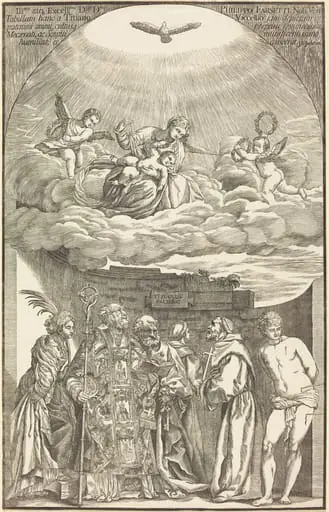
The scene depicts Saint Catherine kneeling before a divine presence, symbolized by a hovering crown, as angels surround her with musical instruments. Figures in prayer and adoration frame the central moment, evoking the spiritual marriage between the saint and Christ. The composition draws from hagiographic tradition, emphasizing divine favor and celestial harmony, rendered with emotional intensity through clustered figures and upward gazes.
Technique & Style
Jackson employed a chiaroscuro woodcut technique, using multiple blocks to build tonal depth through gradations of black ink. Subtle overprinting and embossing enhanced the illusion of volume and texture, mimicking the dramatic lighting of Baroque painting. The dense arrangement of figures against a dark, cloud-filled sky heightens the contrast between illuminated forms and shadow, creating a sense of sacred theater.
History & Provenance
This trial proof suggests Jackson was refining the print before final production, possibly testing ink density or registration. As a printmaker working across Europe, he likely sourced compositions from Italian or French originals. The work’s survival as a trial impression offers insight into his process, though its early ownership remains undocumented beyond its creation in the 1740s.
Context
In the mid-eighteenth century, religious imagery remained influential in print culture, even as secular themes gained ground. Jackson’s adaptation of Baroque painting into woodcut aligned with a broader European interest in translating painterly effects into print. His use of chiaroscuro reflected ongoing experimentation in printmaking, bridging the grandeur of oil painting with the accessibility of the printed image.
Legacy
Jackson’s work contributed to the evolution of chiaroscuro printing in Britain and continental Europe, though he remains a lesser-known figure compared to his Italian or Dutch contemporaries. This print stands as a testament to his technical ambition and the persistence of religious iconography in printmaking during a period of shifting artistic priorities.
Artist & collection

Artist
John Baptist Jackson (1701–1780) was a British artist, a woodcut printmaker of the eighteenth century.

![The Marriage at Cana [left plate], by John Baptist Jackson](https://artifactworldgallery.com/img/john-baptist-jackson--the-marriage-at-cana-left-plate--22bae83d46cc40b5-w320.webp)
![The Adoration of the Kings [recto], by German 16th Century](https://artifactworldgallery.com/img/german-16th-century--the-adoration-of-the-kings-recto--d7f3fbf5ae8063c3-w320.webp)