Artwork
Le Coucher à l'italienne
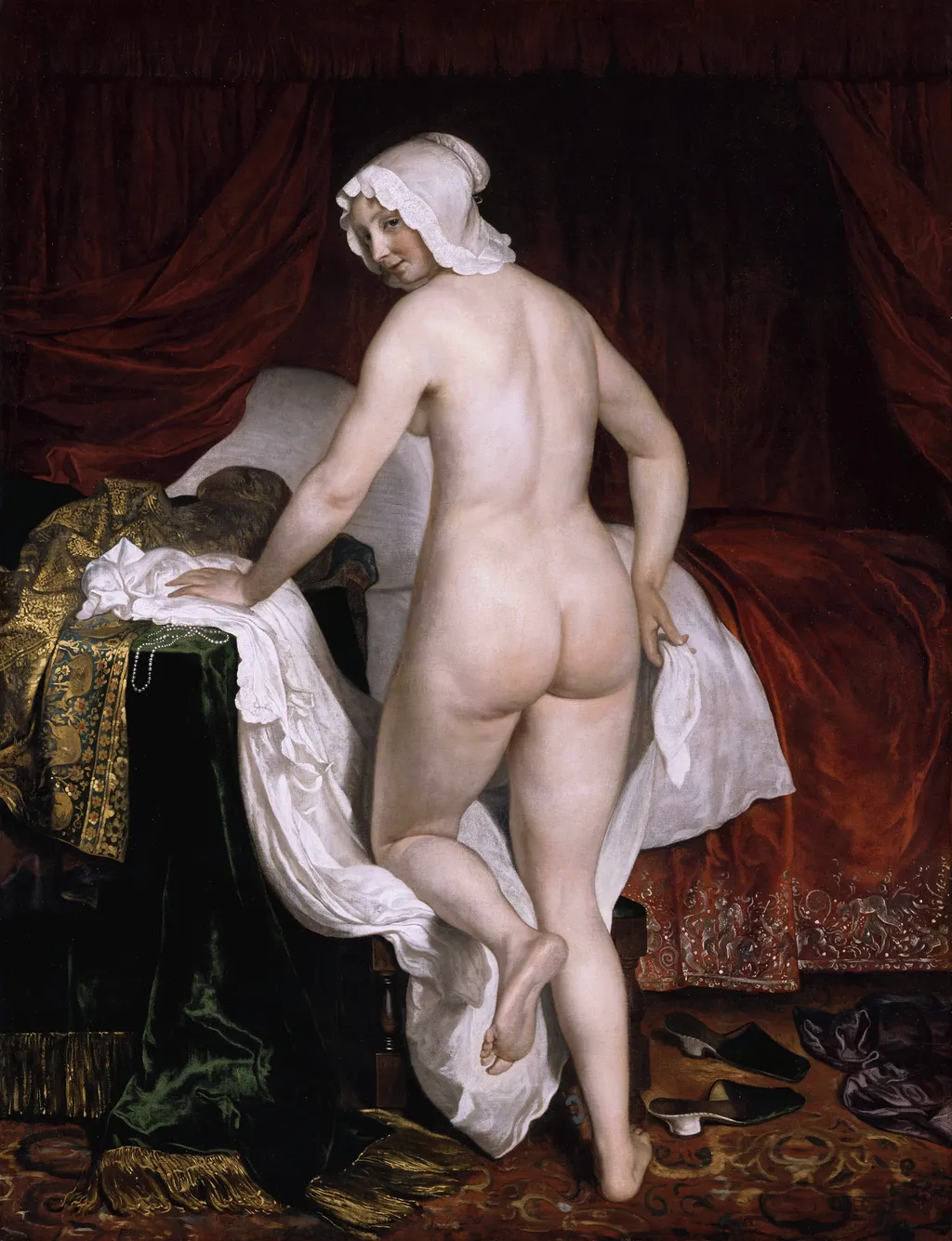
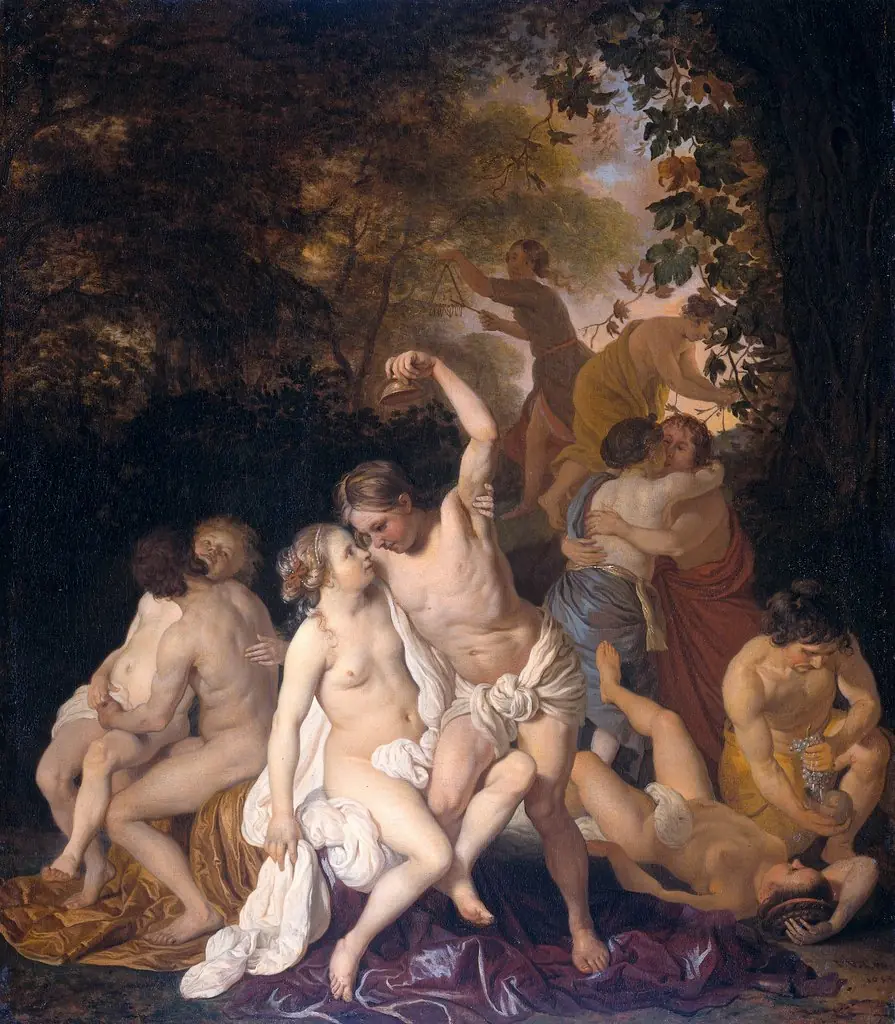
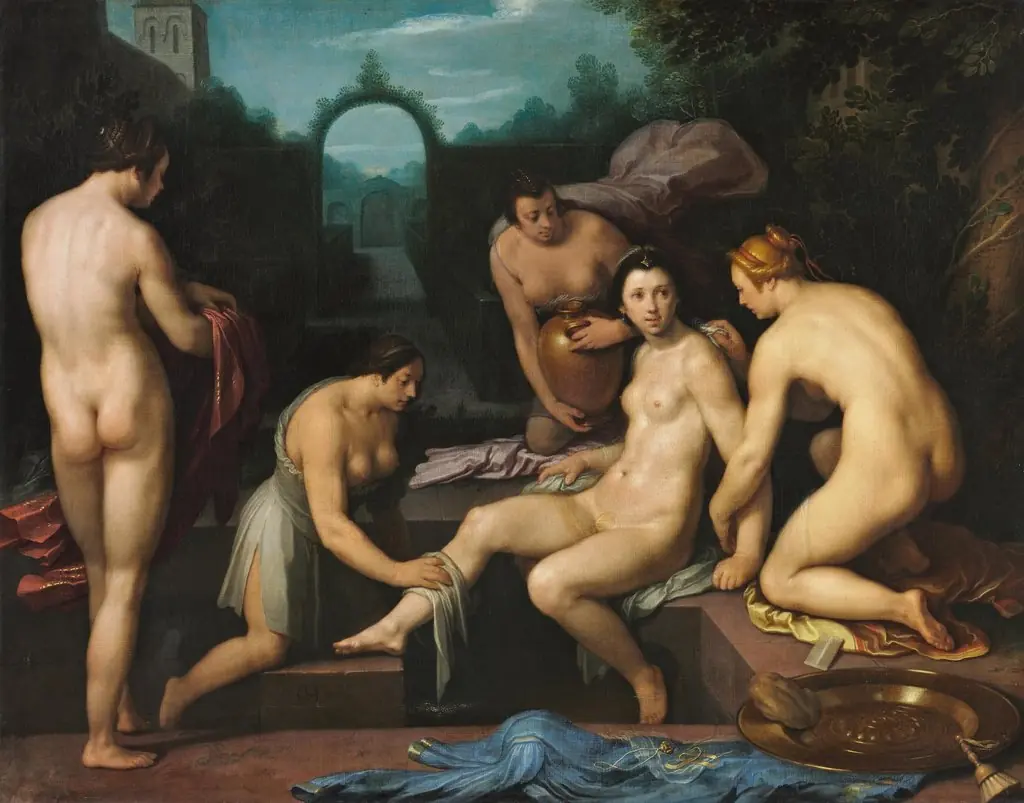
Le Coucher à l'italienne is an oil painting by the Dutch Golden Age artist Jacob van Loo. It dates from 1649 and is held in the collection of the Museum of Fine Arts of Lyon.
About this work
Overview
Painted in 1649 by Jacob van Loo, *Le Coucher à l'italienne* is an oil-on-canvas genre scene that captures a private moment in a domestic interior.
Painted in 1649 by Jacob van Loo, *Le Coucher à l'italienne* is an oil-on-canvas genre scene that captures a private moment in a domestic interior. Van Loo, originally from the Netherlands and later active in Paris, specialized in figure studies with a focus on naturalistic rendering. The work exemplifies the Dutch Golden Age’s interest in intimate, everyday settings, though its subject and lighting suggest a more theatrical sensibility than typical domestic scenes of the period.
Subject & Meaning
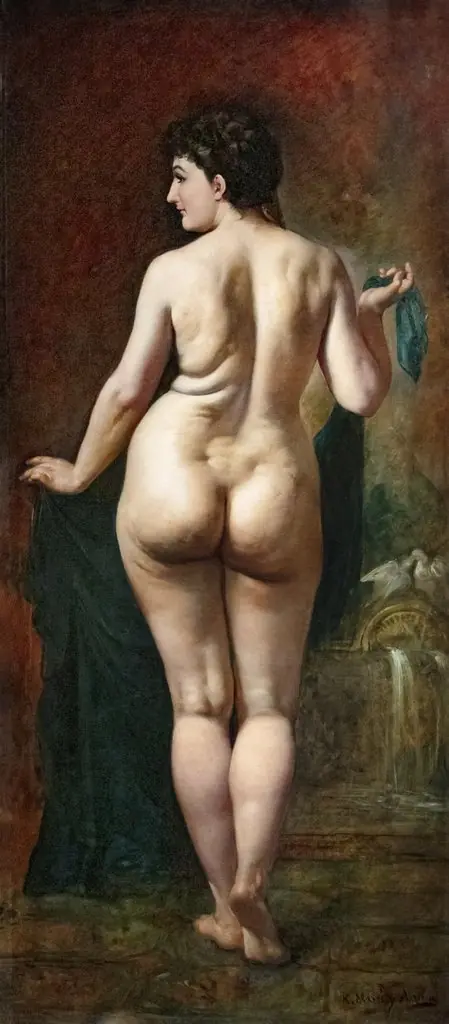
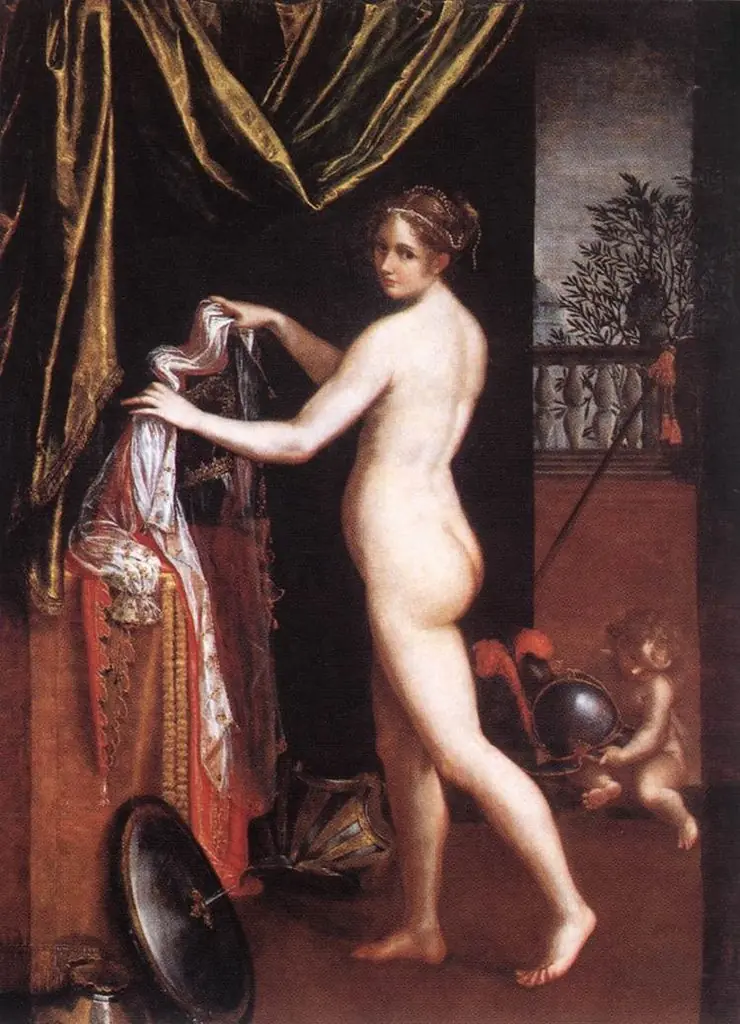
The painting portrays a nude woman standing with her back to the viewer, partially draped in white fabric, holding another cloth in her right hand. The scene evokes the ritual of retiring for the night, yet its composition and lighting elevate it beyond mere documentation. The absence of narrative context invites contemplation of solitude and vulnerability, while the title’s reference to 'Italian' style may hint at contemporary ideals of elegance associated with southern Europe.
Technique & Style
Van Loo employs chiaroscuro to model the woman’s form with subtle gradations of light and shadow, enhancing three-dimensionality without overt drama. The textures of velvet, silk, and woven rug are rendered with precise brushwork, contrasting the softness of skin against the richness of furnishings. The palette is restrained—dominated by deep greens, muted reds, and gold accents—creating a quiet, enclosed atmosphere that focuses attention on the figure’s posture and the play of fabric.
History & Provenance
Created during van Loo’s early career in Amsterdam, the painting entered the collection of the Museum of Fine Arts of Lyon in the 19th century. Its presence there reflects 19th-century French interest in Dutch and Flemish genre painting. While the work was admired in its time for its technical finesse, particularly in the depiction of the female form, it remained less widely known than the works of contemporaries like Rembrandt, though contemporaries noted van Loo’s skill in rendering flesh with particular sensitivity.
Context
In mid-17th-century Dutch art, scenes of private life were common, but nudity was rare outside mythological or allegorical contexts. Van Loo’s choice to depict a nude woman in a domestic setting aligns with a broader trend among Northern artists to blend realism with sensual suggestion. The 'Italian' in the title may reference contemporary French and Dutch admiration for Italianate grace, suggesting the figure embodies an idealized, almost classical poise within a contemporary interior.
Legacy
Though not among van Loo’s most frequently reproduced works, *Le Coucher à l'italienne* remains a significant example of his ability to merge genre realism with psychological nuance. It reflects the transitional nature of Dutch painting in the 1640s, where secular intimacy began to absorb elements of classical idealism. The painting continues to be studied for its quiet mastery of light, texture, and the unspoken narrative of a solitary moment.
Own this work as a print
Artist & collection

Artist
Jacob van Loo (1614 – 26 November 1670) was a painter of the Dutch Golden Age, chiefly active in Amsterdam and, after 1660, in Paris.