Artwork
Lovers
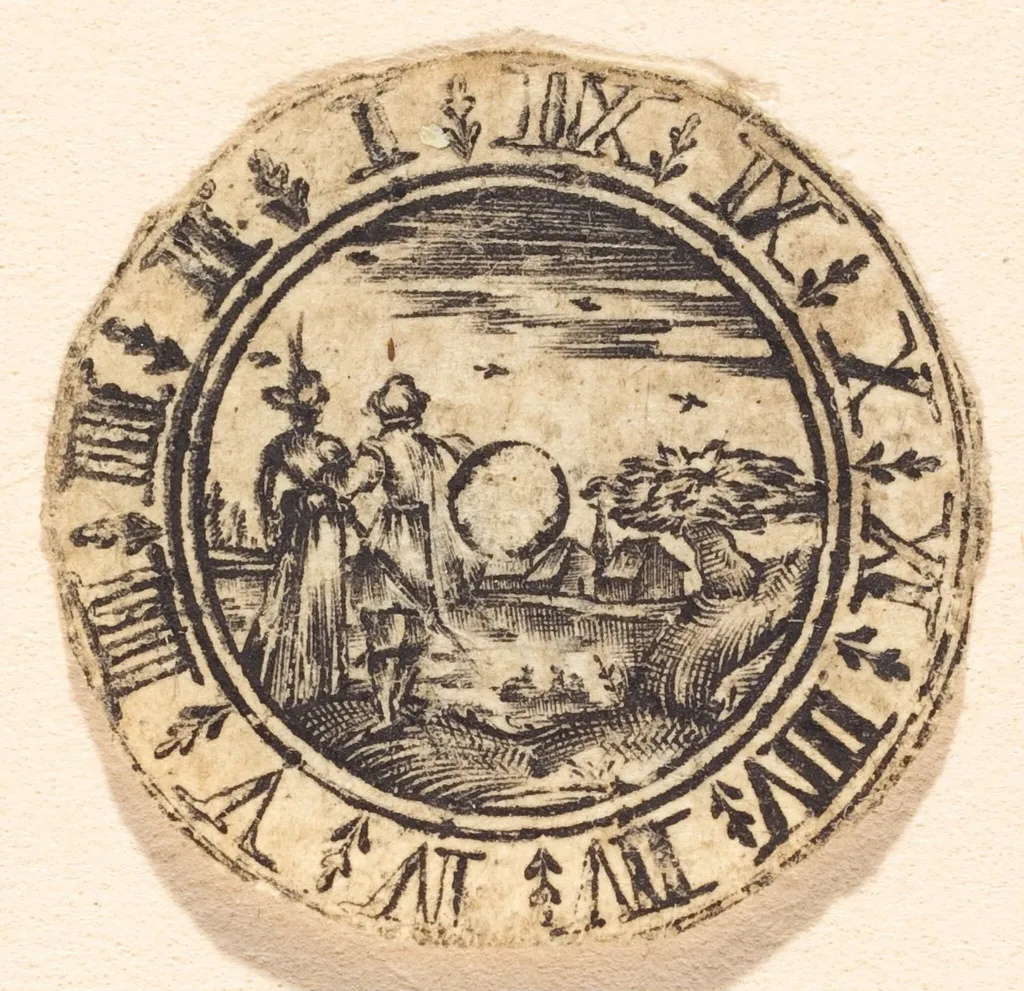
Lovers is an ink print by the Renaissance artist Antoine Jacquard. It dates from 1612 and is held in the collection of the National Gallery of Art.
About this work
Overview
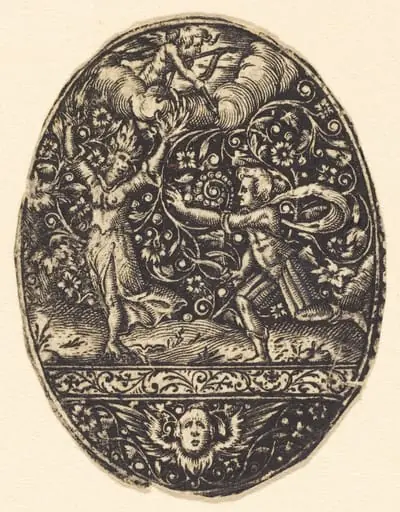
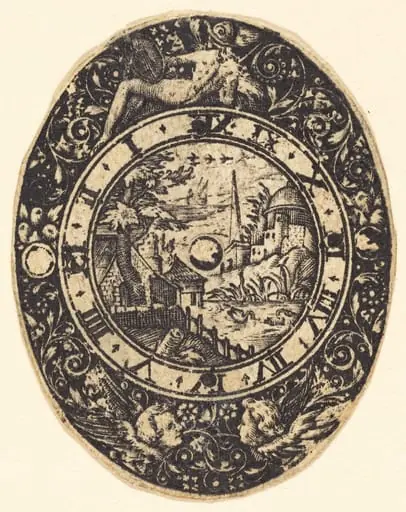
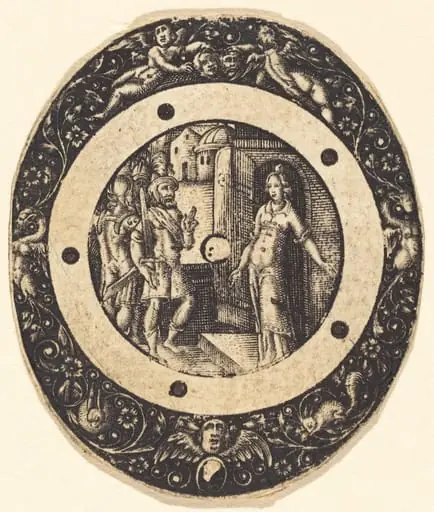
Created in 1612 by Antoine Jacquard, this engraving depicts a quiet moment between two figures in a pastoral setting.
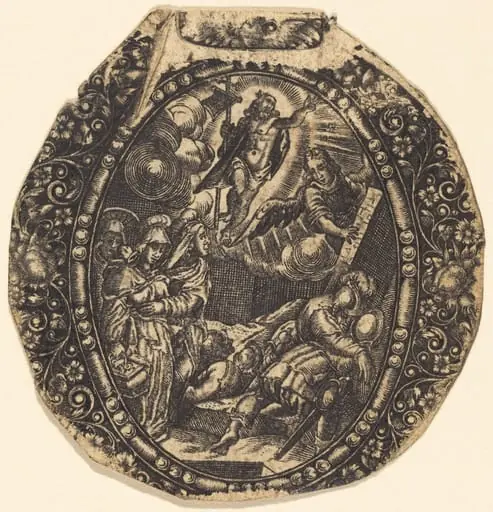
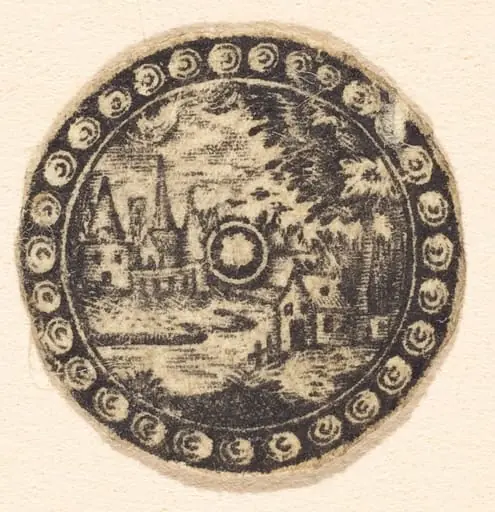
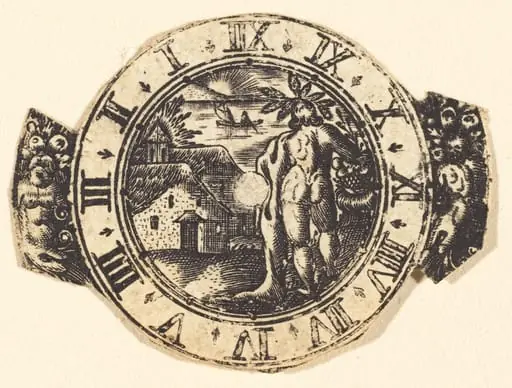
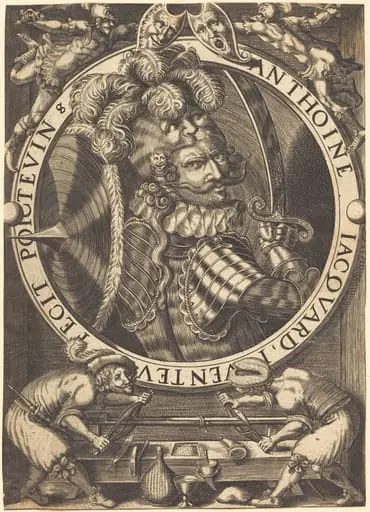
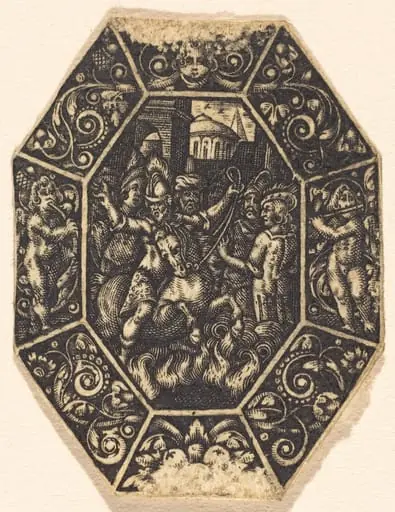
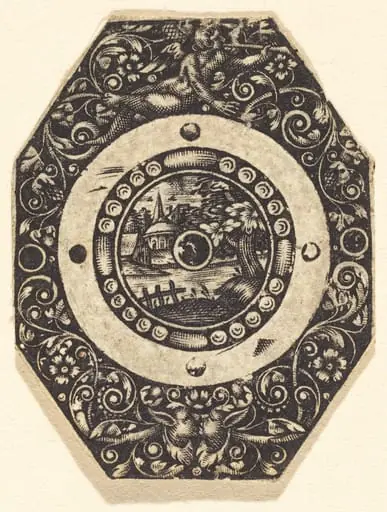
Created in 1612 by Antoine Jacquard, this engraving depicts a quiet moment between two figures in a pastoral setting. Rendered in fine linear detail on metal, the composition centers on a circular frame filled with ornamental motifs—leaves, scrolls, and geometric bands—that enclose the main scene. The technique emphasizes precision, with delicate shading and controlled line work defining form and atmosphere.
Subject & Meaning
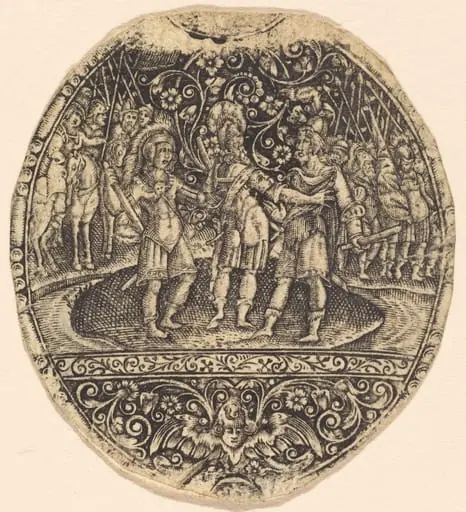
Two figures stand in close proximity, one holding a fan or scroll, the other dressed in long robes and a hat. Their posture and gaze suggest introspection or silent exchange, evoking a narrative without explicit action. The tranquil landscape behind them—a town, river, bridge, and distant hill—frames their interaction as a private moment within a broader world, possibly symbolizing intimacy, courtship, or contemplation.
Technique & Style
Jacquard employed engraving to achieve fine detail, using incised lines to model light and texture. The figures’ faces and hands are rendered with particular care, conveying subtle expression through nuanced shading. The surrounding decorative border, rich with stylized foliage and geometry, contrasts with the naturalism of the central scene, reflecting a blend of artistic convention and observational precision.
History & Provenance
The work originates from early 17th-century France, a period when engraved prints were widely circulated as affordable art. While specific ownership records are sparse, its style aligns with contemporary Northern European printmaking traditions. Its survival suggests it was valued for its craftsmanship and intimate subject matter, likely collected by private patrons rather than displayed publicly.
Context
Produced during the late Renaissance, this print reflects a growing interest in secular, lyrical scenes amid religious and mythological dominance. Engravings like this served both decorative and narrative functions, often circulated as standalone images or bound in albums. The circular format and ornamental border echo medallion designs popular in book illustration and decorative arts of the time.
Legacy
Though not widely known today, the engraving exemplifies the quiet sophistication of early 17th-century printmaking. Its focus on personal interaction within a natural setting anticipates later developments in genre scenes. As a preserved artifact of artisanal skill, it offers insight into how everyday emotion was rendered in pre-industrial visual culture.
Artist & collection