Artwork
Leda
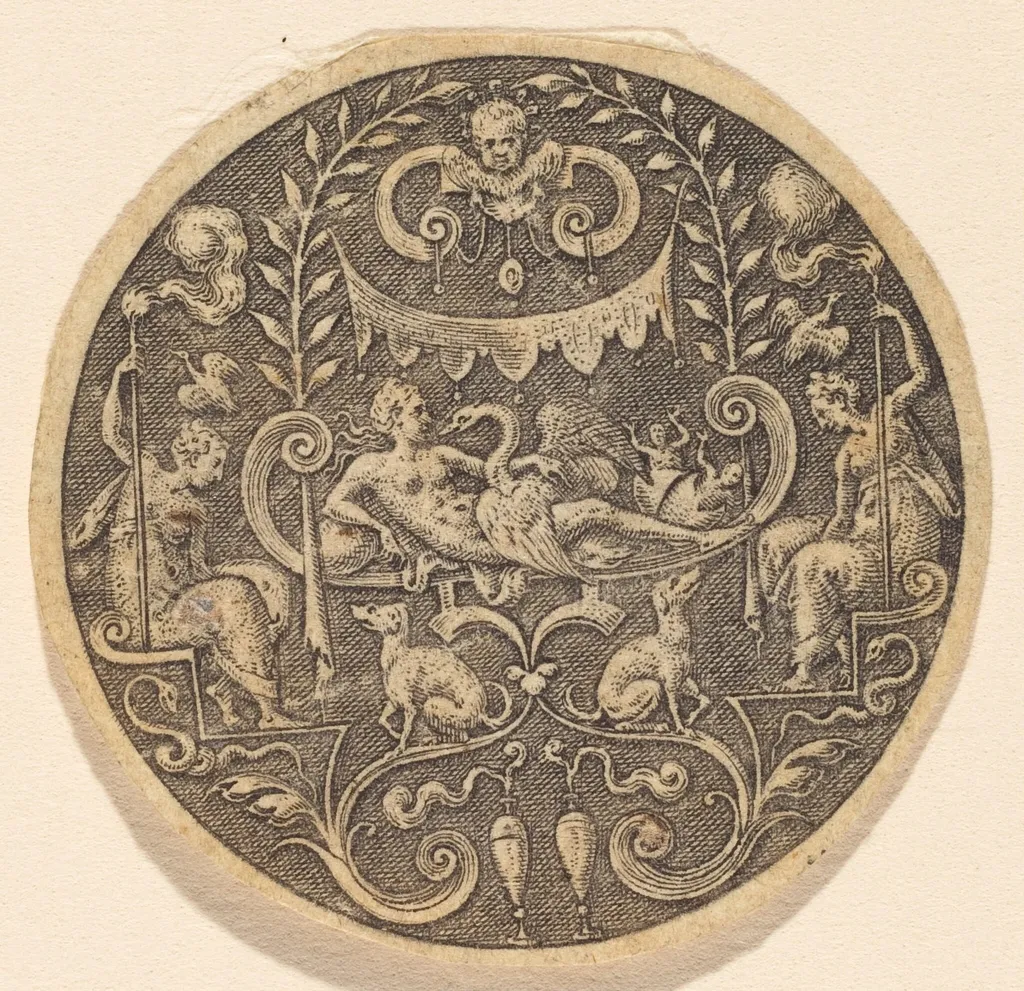
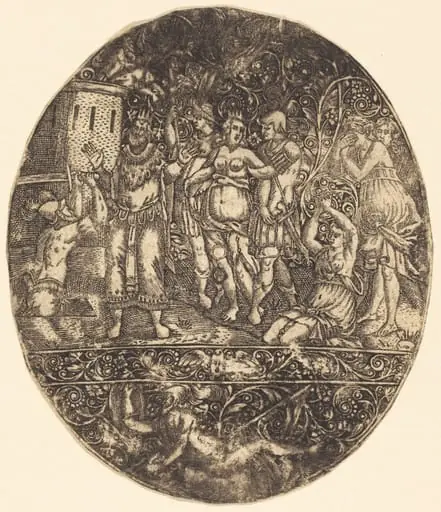
Leda is an ink print by the Renaissance artist Etienne Delaune. It dates from 1551 and is held in the collection of the National Gallery of Art.
About this work
Overview
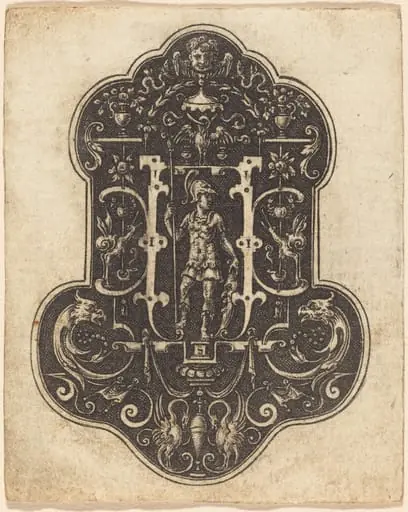
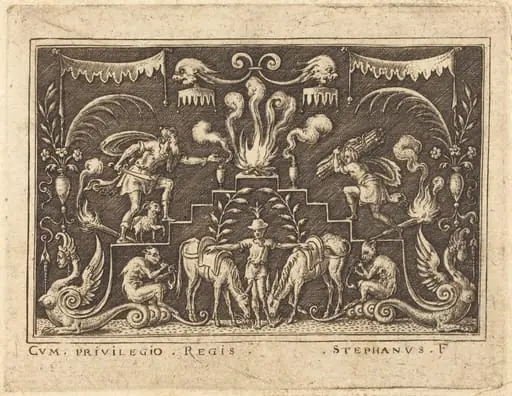
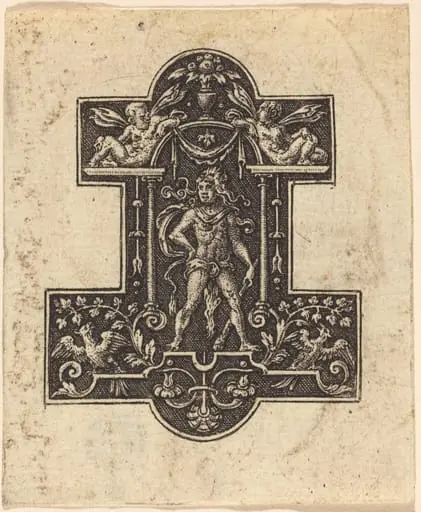
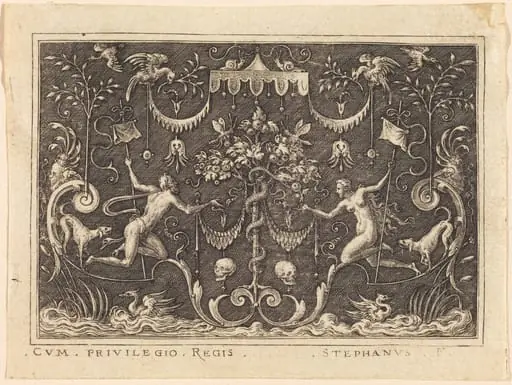
Etienne Delaune’s 1551 engraving titled Leda presents a circular composition in which a female figure is accompanied by a swan. The scene is framed by swirling ornamental lines and a group of diminutive cherubic figures near a tree with curling branches. The work exemplifies the intricate line work characteristic of mid‑sixteenth‑century printmaking.
Subject & Meaning
The image draws on the classical myth of Leda and the Swan, in which the goddess Leda encounters Zeus in the form of a swan. Delaune emphasizes the interaction through the close proximity of the bird’s detailed plumage to the woman’s flowing hair, while the surrounding putti suggest a celestial or allegorical dimension to the narrative.
Technique & Style
Executed entirely with fine engraved lines, the print achieves depth through delicate hatching and cross‑hatching, particularly in the rendering of the swan’s feathers and the folds of the woman’s drapery. The swirling decorative motifs and the precise rendering of miniature figures reflect the Renaissance engraving tradition, where artists sought to convey texture and volume within the limits of black‑and‑white media.
History & Provenance
Created in 1551, the engraving belongs to Delaune’s mature period, during which he produced a series of mythological and religious prints for the French market.
Created in 1551, the engraving belongs to Delaune’s mature period, during which he produced a series of mythological and religious prints for the French market. While specific ownership records are scarce, the work has been documented in several early modern print collections, indicating its circulation among collectors interested in classical themes and the technical virtuosity of French engravers.
Artist & collection