Artwork
Cattle at Dusk
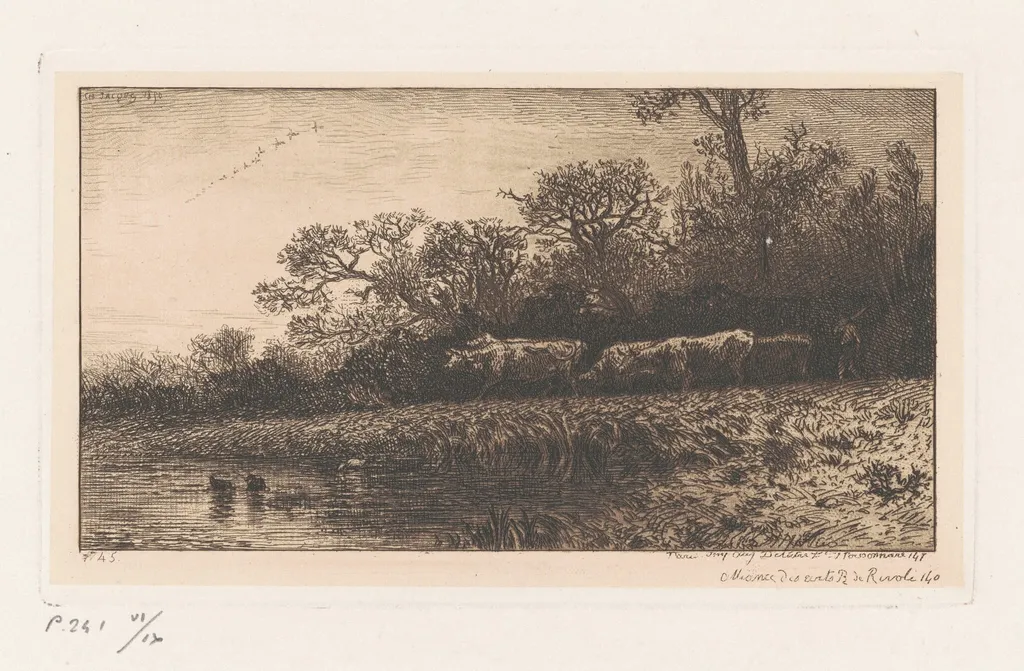
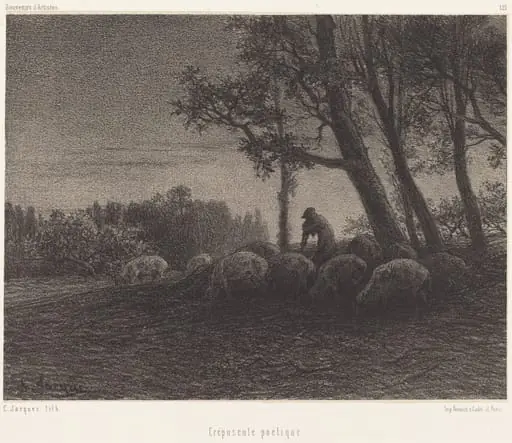
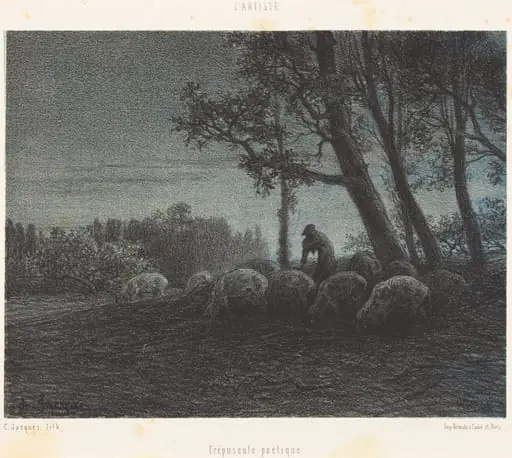
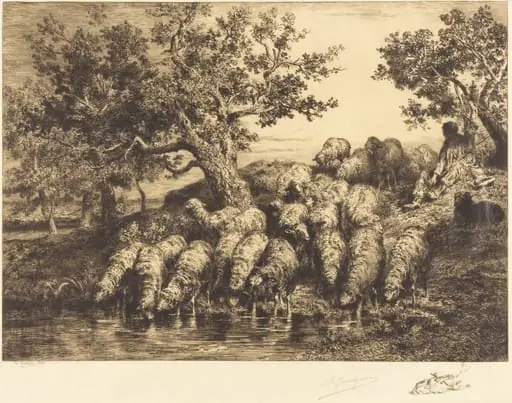
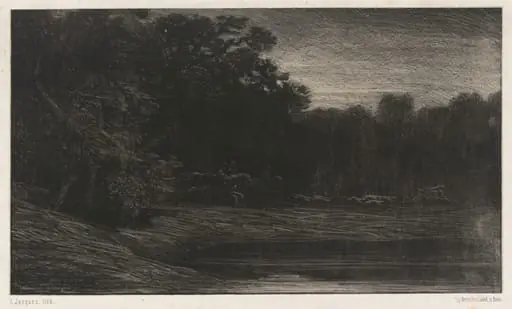
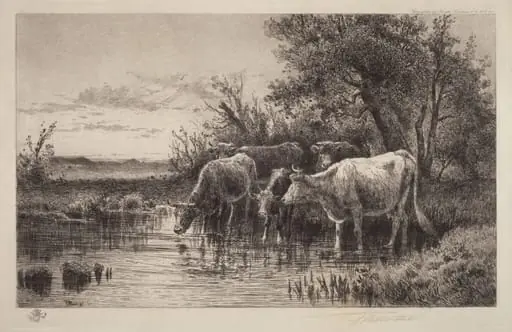
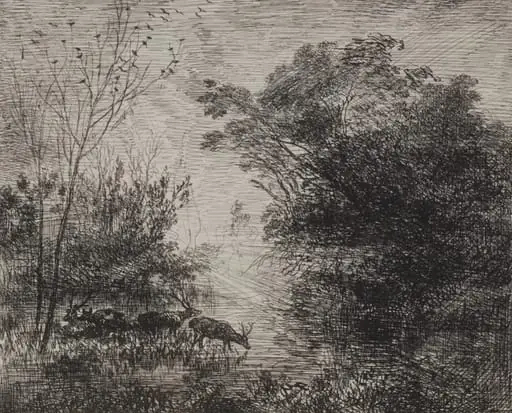
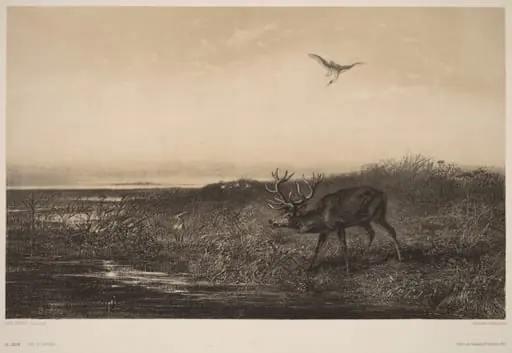
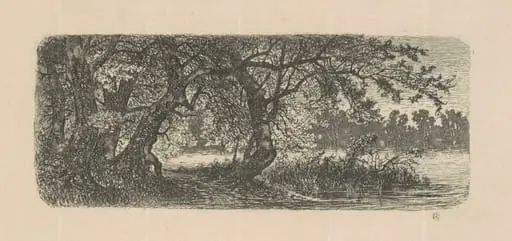
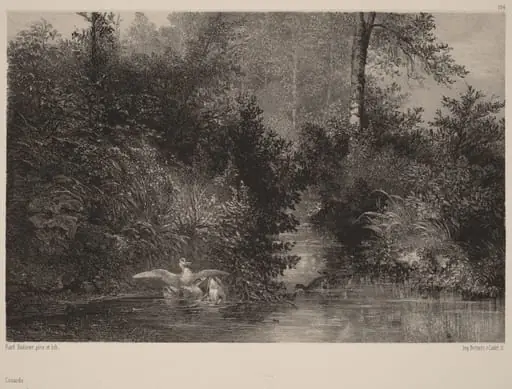
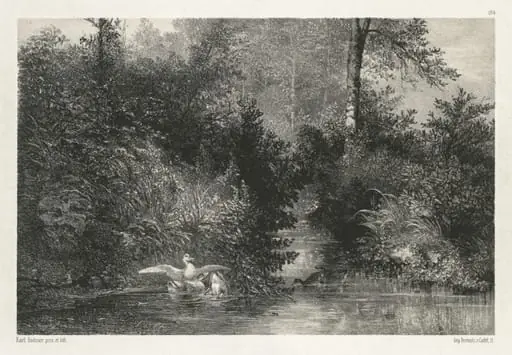
Cattle at Dusk is an ink print by the Impressionist artist Charles Émile Jacque. It dates from 1850 and is held in the collection of the National Gallery of Art.
About this work
Overview
It belongs to the print collection of the National Gallery of Art in Washington, D.
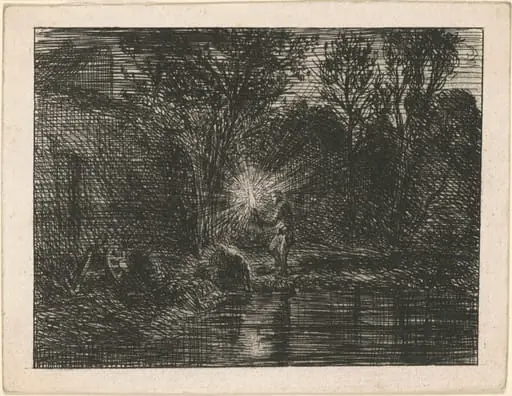
Cattle at Dusk is an etching by Charles Émile Jacque, completed in 1850. It belongs to the print collection of the National Gallery of Art in Washington, D.C. The work captures a quiet rural moment as livestock rest near water at twilight. Jacque’s use of fine lines and tonal gradations conveys the stillness of the hour, emphasizing the harmony between animals and landscape without dramatic intervention.
Subject & Meaning
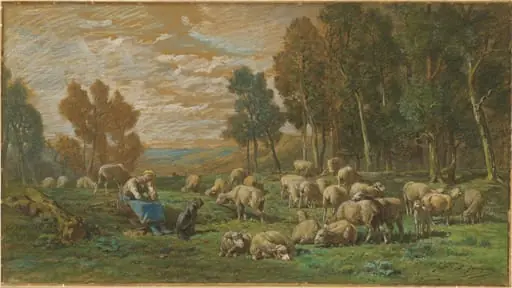
The scene centers on a small herd of cattle, calmly grazing beside a reflective stretch of water. Surrounding vegetation frames the animals, suggesting a secluded pastoral setting. There is no human presence, reinforcing a sense of natural order. The timing—dusk—evokes transition and repose, inviting contemplation rather than narrative. The work reflects Jacque’s interest in rural life as a subject worthy of quiet artistic attention.
Technique & Style
Jacque employed etching to achieve subtle tonal variations, using fine, controlled lines to model the animals’ wool and the texture of foliage. The sky is rendered with soft, atmospheric washes, while the foreground details remain sharply defined. The contrast between the detailed cattle and the hazy background enhances spatial depth. His technique avoids theatricality, favoring precision and restraint to evoke mood through nuance.
History & Provenance
Created in 1850, the etching emerged during Jacque’s early focus on rural subjects, before his later involvement with the Barbizon School. It entered the National Gallery of Art’s collection as part of its broader effort to document 19th-century European printmaking. The work has remained in institutional hands since its acquisition, with no known private ownership history in the modern era.
Context
In mid-19th-century France, artists increasingly turned to everyday rural scenes as alternatives to historical or mythological themes. Jacque, alongside contemporaries like Millet, helped elevate agricultural life as a legitimate subject for fine art. Etching, once primarily used for reproduction, was being reclaimed by artists for its expressive potential. This work reflects that shift, aligning with broader cultural interest in the dignity of labor and nature.
Legacy
Cattle at Dusk exemplifies Jacque’s role in revitalizing etching as a medium for original artistic expression. While not widely reproduced, it influenced later printmakers who sought to capture quiet, unidealized moments in nature. Its presence in a major American museum underscores its significance in the transnational appreciation of French rural realism during the 19th century.
Artist & collection