Artwork
The Shepherdess
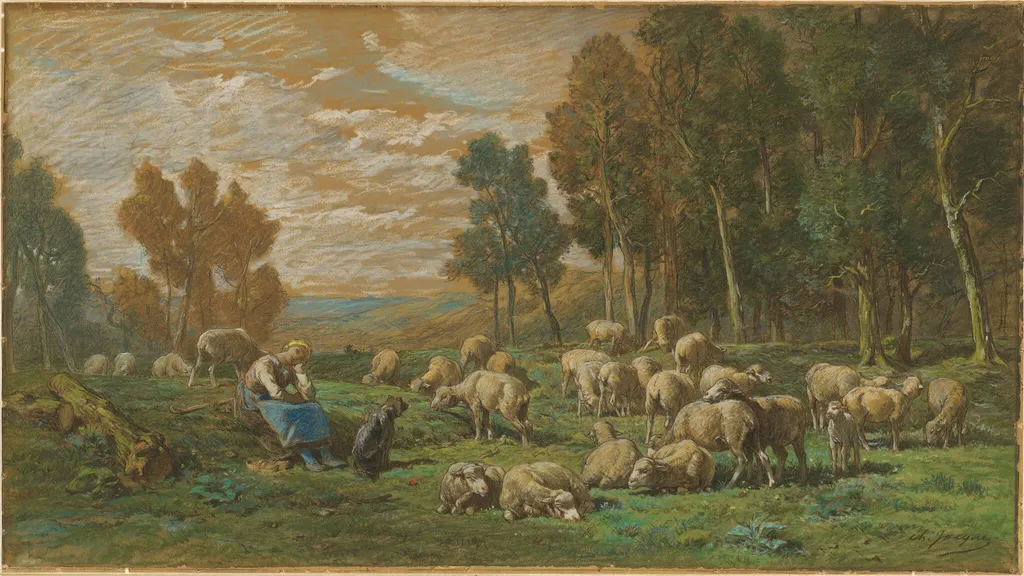
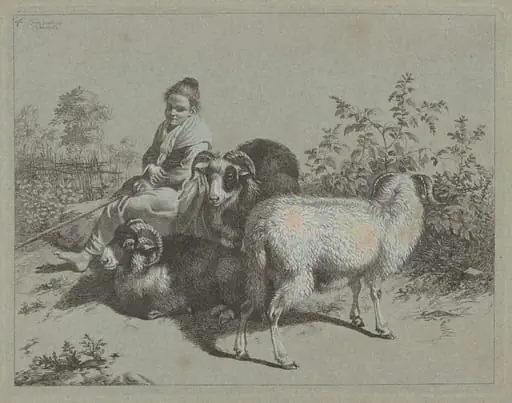
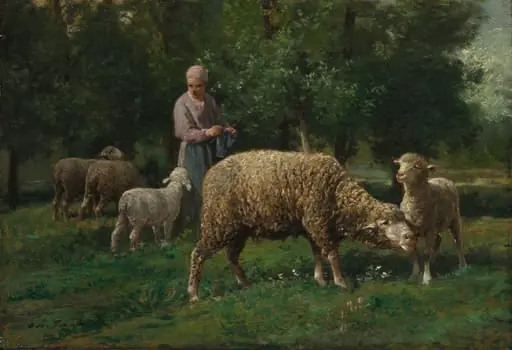
The Shepherdess is a pastel drawing by the Impressionist artist Charles Émile Jacque. It dates from 1869 and is held in the collection of the National Gallery of Art.
About this work
Overview
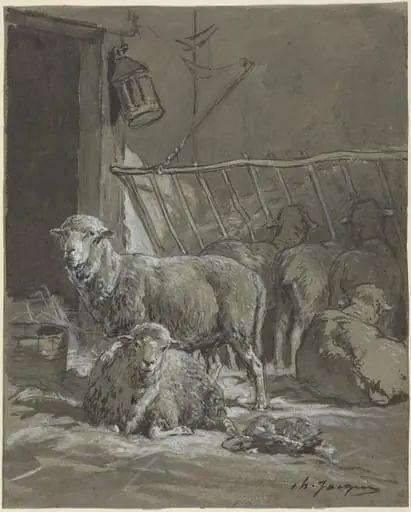
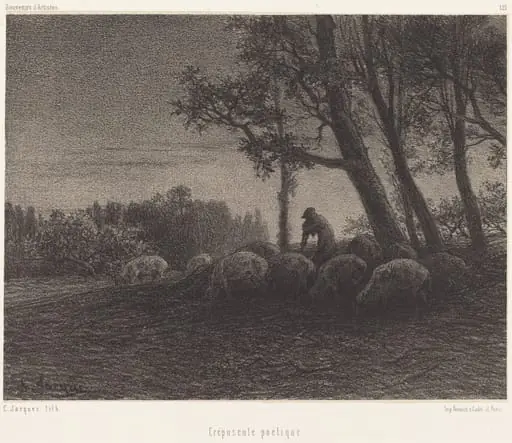
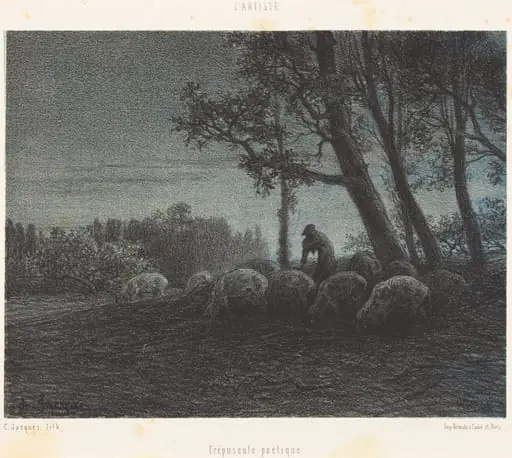
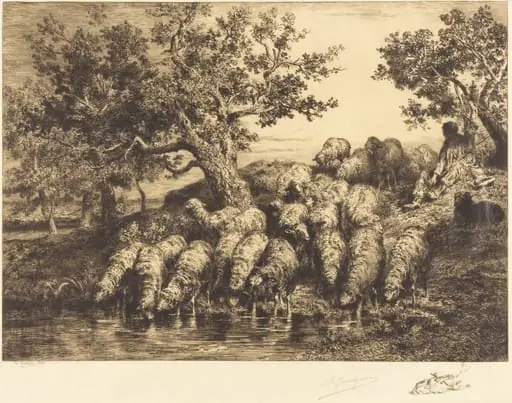
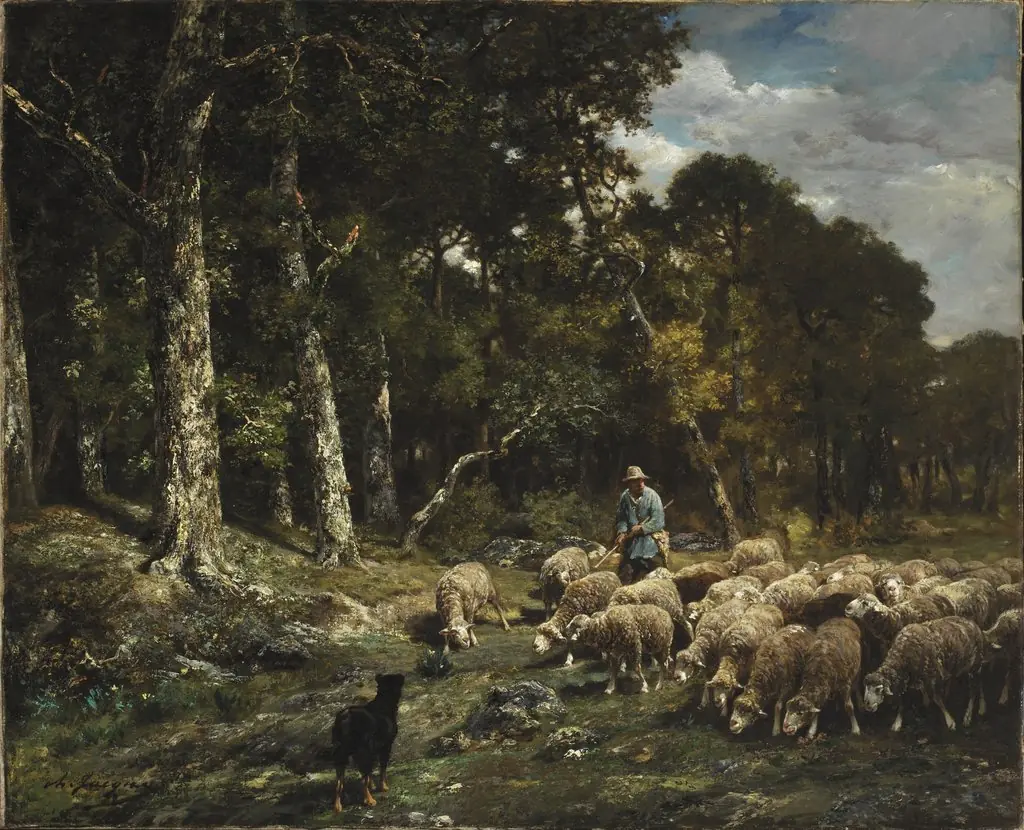
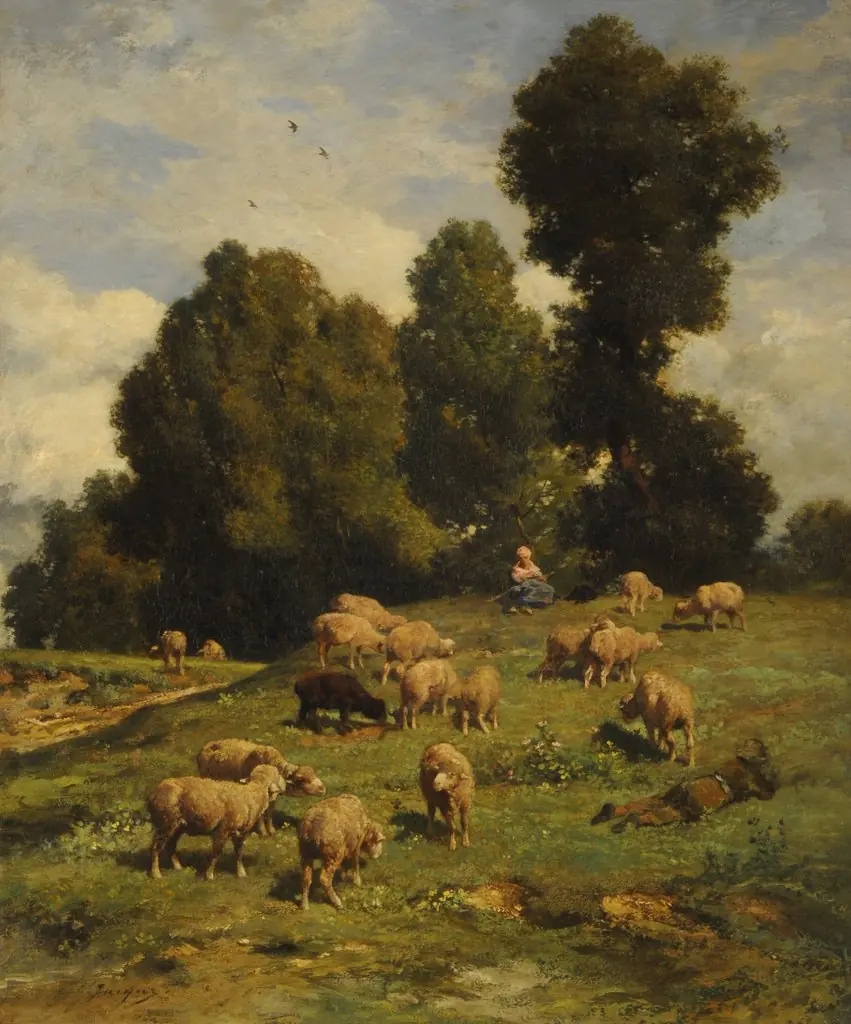
The work titled The Shepherdess is a drawing executed in pastel on brown wove paper, attributed to Charles‑Émile Jacque and dated to around 1869. It presents a modestly dressed woman guiding a small flock of sheep across an open landscape, rendered in a muted palette that conveys a calm, bucolic atmosphere.
Subject & Meaning
The composition centers on a solitary shepherdess, whose simple attire and attentive posture emphasize the everyday labor of rural women in the nineteenth‑century French countryside. The gathered sheep, clustered around her, underscore themes of stewardship and the intimate relationship between humans and livestock within agrarian life.
Technique & Style
Jacque employed soft pastel sticks on a toned brown paper, allowing the medium’s velvety texture to blend gently across the surface. The limited color range and delicate shading create a subtle sense of depth, while the loose, yet controlled, handling of the pastel highlights the artist’s interest in capturing fleeting light and atmosphere.
History & Provenance
Created circa 1869, The Shepherdess reflects Jacque’s ongoing focus on pastoral subjects during the later phase of his career. The drawing has remained in private collections before entering its current institutional setting, where it is displayed as part of a broader survey of nineteenth‑century French genre drawing.
Artist & collection