Artwork
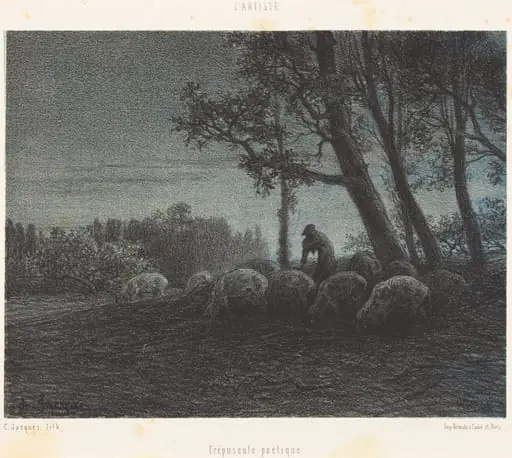
Crépuscule poetique (Poetical Twilight)
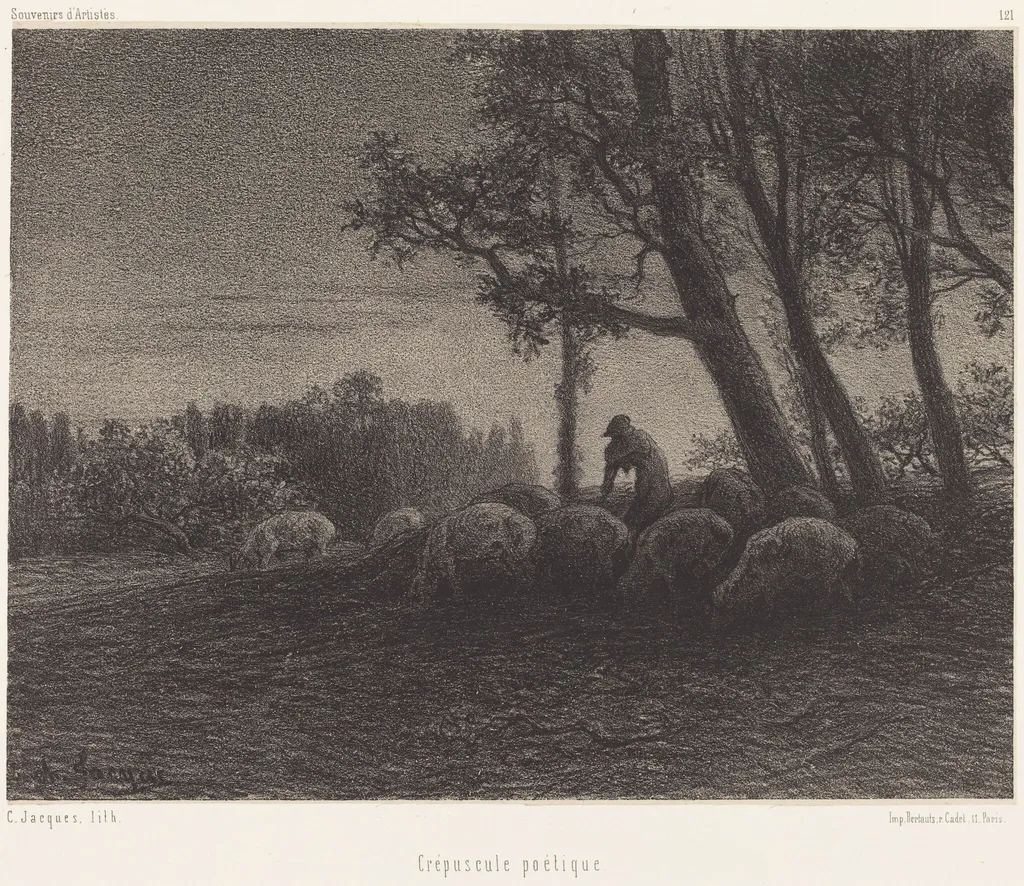
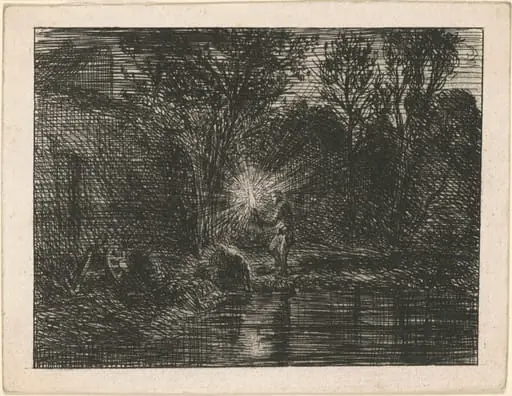
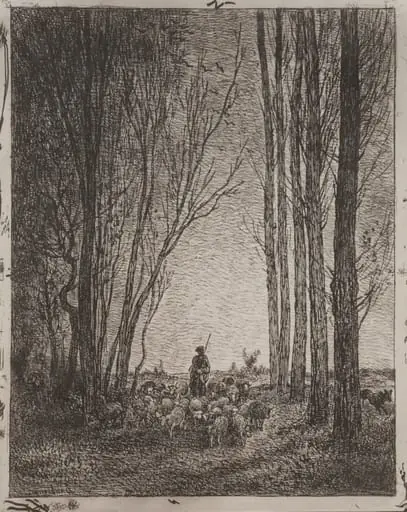
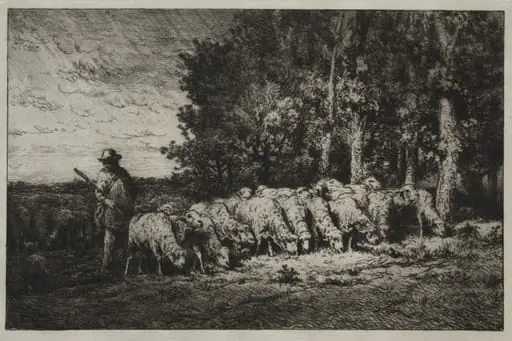
Crépuscule poetique (Poetical Twilight) is an ink print by the Romanticist artist Charles Émile Jacque. It dates from 1853 and is held in the collection of the National Gallery of Art.
About this work
Overview
Created around 1853, Crépuscule poetique is a lithograph on chine collé mounted on wove paper by Charles Émile Jacque. It captures a quiet woodland scene at twilight, rendered with subtle tonal gradations. The work exemplifies Jacque’s interest in rural atmospheres and the quietude of nature’s transitional moments, avoiding dramatic narrative in favor of restrained mood.
Subject & Meaning
A solitary figure, burdened with a bundled load, walks along a narrow path between two tall trees. The setting—dusk, uneven ground, sparse vegetation—evokes solitude and introspection. The title, Poetical Twilight, suggests an emotional resonance rather than a literal depiction, inviting contemplation of stillness, labor, and the fading light as metaphors for transition or quiet endurance.
Technique & Style
Jacque employed lithography on chine collé to achieve delicate tonal shifts and soft edges. The technique allowed him to build atmosphere through nuanced shading rather than sharp lines, enhancing the hazy, indistinct quality of twilight. The thin paper overlay heightened the print’s intimacy, while the textured wove paper beneath added subtle depth to the forest floor.
History & Provenance
Produced in the early 1850s, this print emerged during Jacque’s period of focus on pastoral subjects and printmaking. It was likely part of a small, private circulation among collectors of French graphic art, rather than mass distribution. No public record of its early ownership survives, but its preservation reflects its appeal to connoisseurs of intimate, mood-driven prints.
Context
In mid-19th-century France, landscape prints gained traction as artists turned from grand historical themes to everyday natural scenes. Jacque, alongside contemporaries like Daubigny, helped elevate rural imagery through technical refinement. Crépuscule poetique aligns with this shift, reflecting a broader cultural interest in nature’s quiet, transient moments over overt spectacle.
Legacy
Though not widely exhibited, the print contributes to Jacque’s reputation as a sensitive observer of rural life through print. Its restrained aesthetic influenced later artists exploring mood in graphic media, particularly those drawn to the poetic potential of twilight and solitude. It remains a quiet example of how lithography could convey emotional nuance without narrative force.
Artist & collection