Artwork
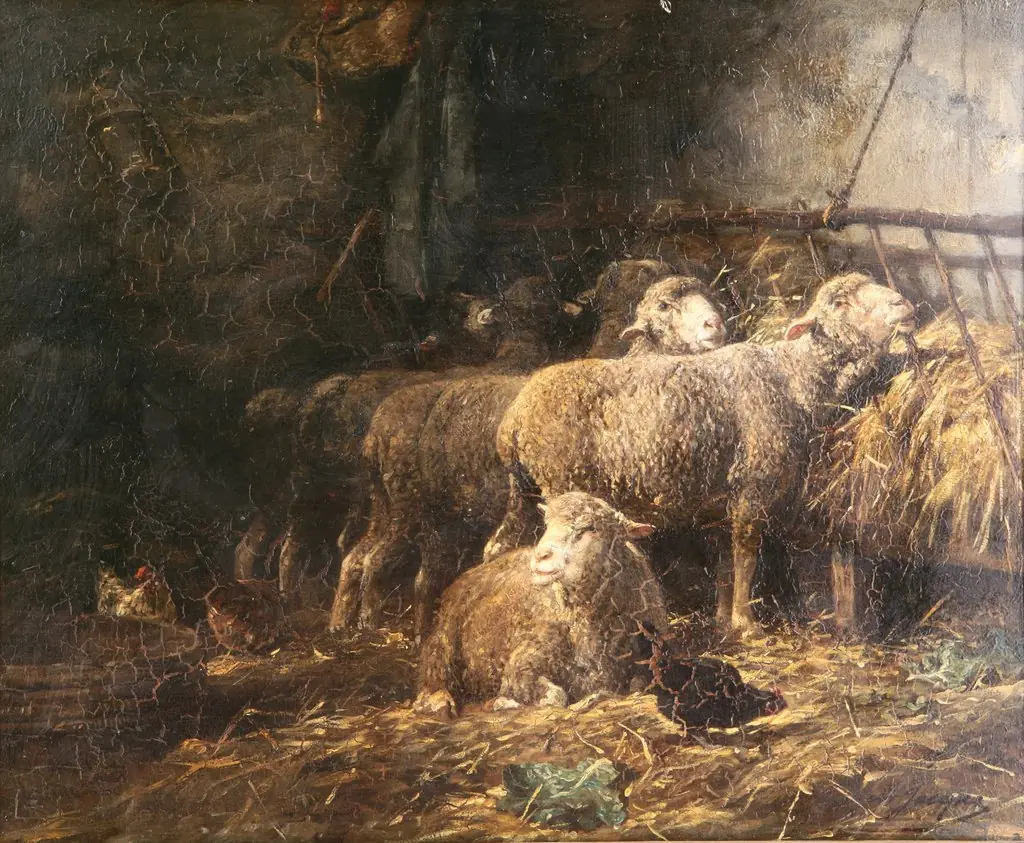
Sheep in a Manger
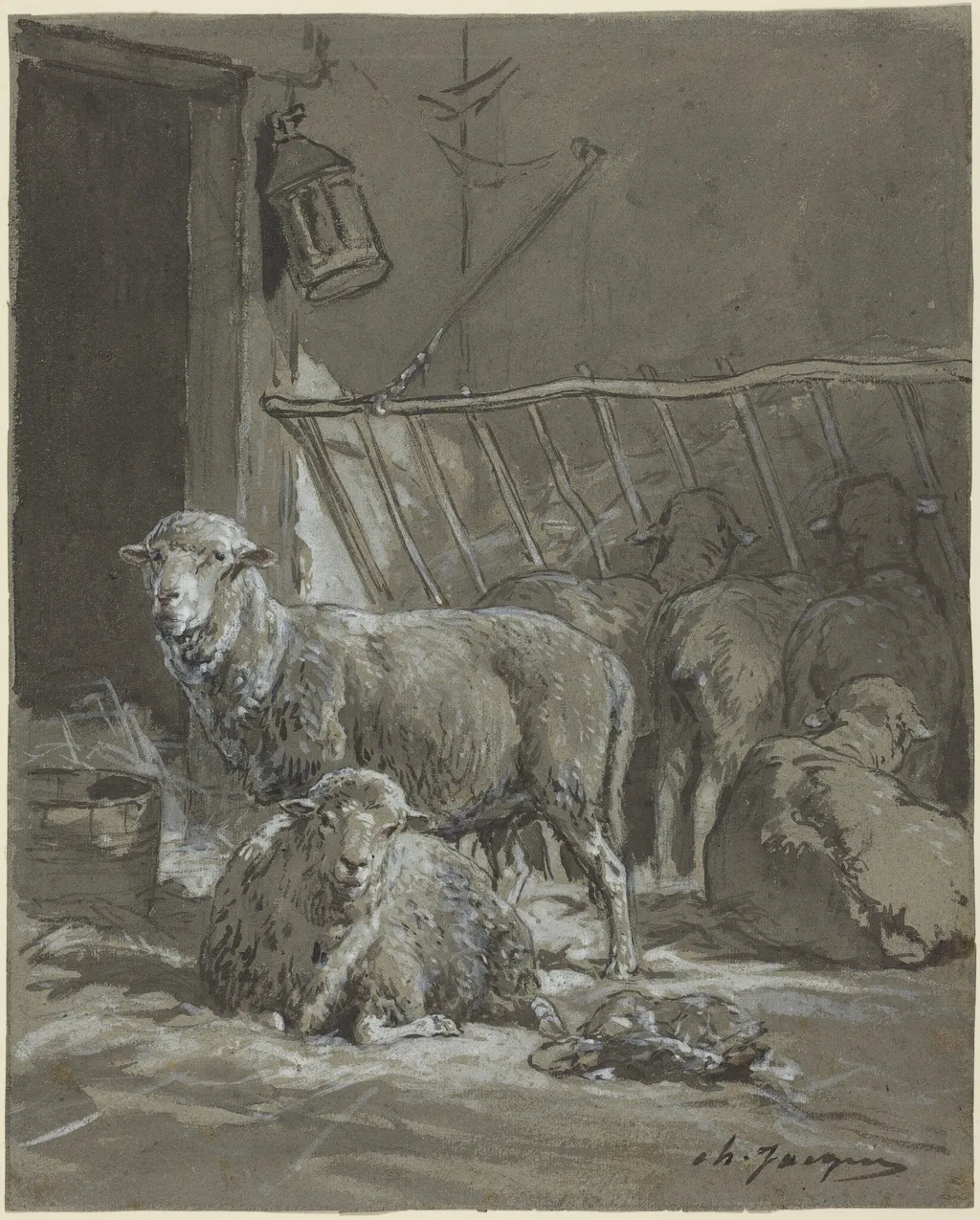
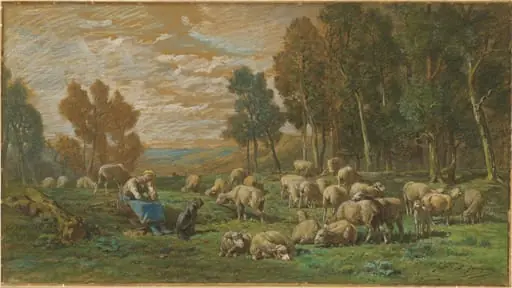
Sheep in a Manger is a chalk drawing by the Romanticist artist Charles Émile Jacque. It dates from 1854 and is held in the collection of the National Gallery of Art.
About this work
Overview
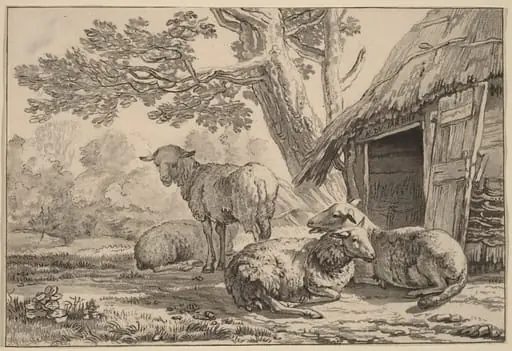
Sheep in a Manger is a drawing by Charles Émile Jacque, executed in 1854. The work features a manger containing sheep, rendered primarily in gray wash with selective pink watercolor accents, over a base of black chalk, and heightened with white on gray paper.
Subject & Meaning
The subject is a serene depiction of sheep within a manger, conveying a sense of tranquility. The choice of subject may reflect Jacque's early exploration of rural or pastoral themes, common in 19th-century art.
Technique & Style
Jacque employed a mixed-media approach, combining black chalk for initial drawing, gray wash for tonal depth, pink watercolor for subtle color accents, and white highlights. This technique showcases the beginnings of his stylistic development during his early career.
History & Provenance
Created in 1854 when Jacque was notably young, the drawing provides insight into the formative stages of his artistic style. Provenance details are not specified in available information.
Context
Situated within the broader context of 19th-century French art, the piece aligns with contemporary interests in pastoral subjects. Jacque's work would later contribute to the Barbizon School's emphasis on naturalism and outdoor settings.
Legacy
Sheep in a Manger serves as an early example of Jacque's oeuvre, illustrating the foundational techniques and themes that would evolve in his later, more renowned works associated with the Barbizon School.
Own this work as a print
Artist & collection