Artwork
Raft Conveying Winged Bull to Baghdad
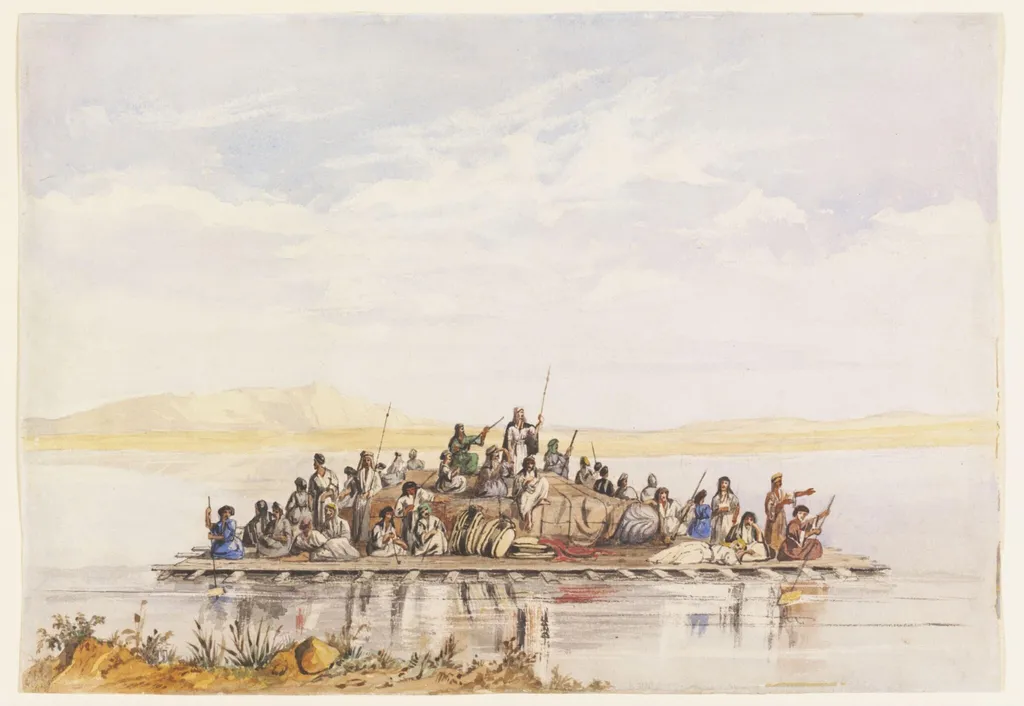
Raft Conveying Winged Bull to Baghdad is a watercolor work on paper by the Romanticist artist Frederick Charles Cooper. It dates from 1850 and is held in the collection of the Victoria and Albert Museum.
About this work
They sat for centuries in Nimrud before being loaded on rafts made of animal skins and wood.
This watercolour shows a raft carrying an ancient Assyrian winged bull. Made around 1849–50, it’s a quick sketch of how massive statues traveled down the Tigris.
The bulls were dug up in Iraq by Austen Henry Layard. They sat for centuries in Nimrud before being loaded on rafts made of animal skins and wood.
They’re now at the Victoria and Albert Museum. Check out the museum’s Assyrian galleries next time you’re in London.
Overview
This watercolor, executed around 1849–1850, records a stage in the transport of an Assyrian winged bull from the ruins of Nimrud on the Tigris River. The sketch captures a raft laden with the massive stone sculpture, its head emerging from a protective covering, as it drifts downstream toward the Persian Gulf.
Subject & Meaning
The image documents a moment in the 19th‑century movement of ancient Near Eastern artifacts to Europe. By depicting the bull on a makeshift raft, the work highlights both the physical scale of the monument and the logistical challenges involved in moving such objects across a river.
Technique & Style
Rendered in watercolor, the piece employs swift washes and limited detail to convey the scene’s immediacy. The artist suggests the raft’s inflated goat and sheep skins and wooden frame through loose brushwork, while the bull’s form is hinted rather than fully rendered, emphasizing the overall composition over precise rendering.
History & Provenance
The winged bull was excavated by Austen Henry Layard under the auspices of the British Museum, after remaining at Nimrud for roughly 2,730 years. Loaded onto traditional skin‑inflated rafts, the statue traveled six hundred miles down the Tigris to Basra, where it was transferred to British naval vessels for the long sea journey to England.
Context
Layard, who spoke Arabic and Persian, organized local crews for the removal and transport of the monument. Although the watercolor’s creator was not present at the actual loading, he likely reconstructed the scene from Layard’s own sketches and accounts, reflecting contemporary interest in archaeological discovery and imperial acquisition.
Artist & collection
Artist
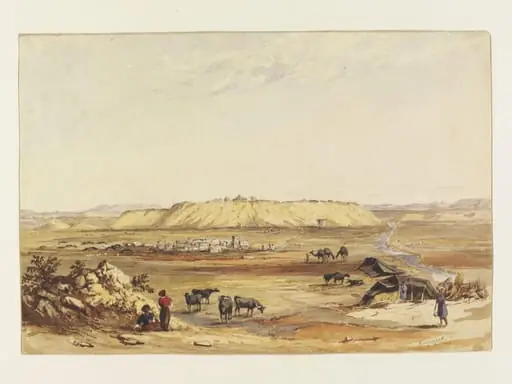
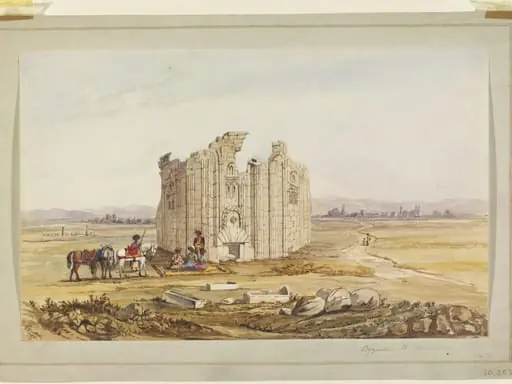
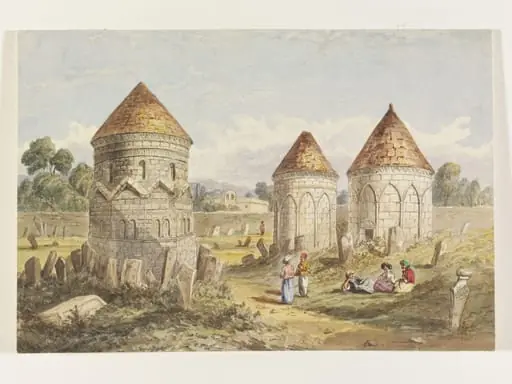
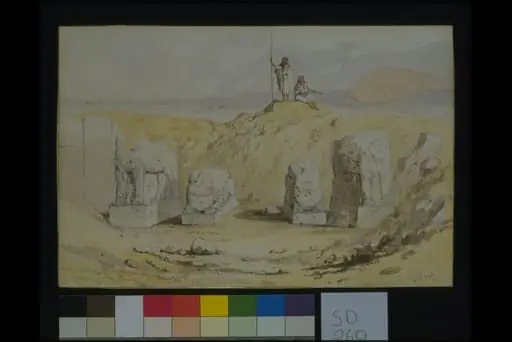
Frederick Charles Cooper painted watercolours of Ottoman-era landmarks he saw in 1849.

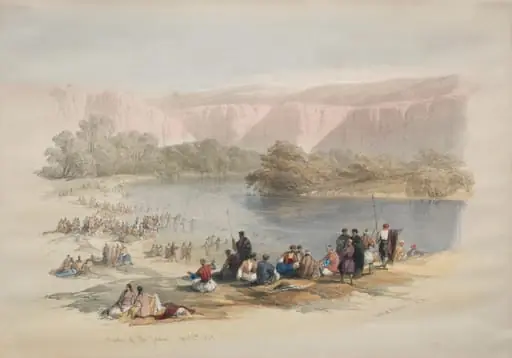 Banks of the Jordan
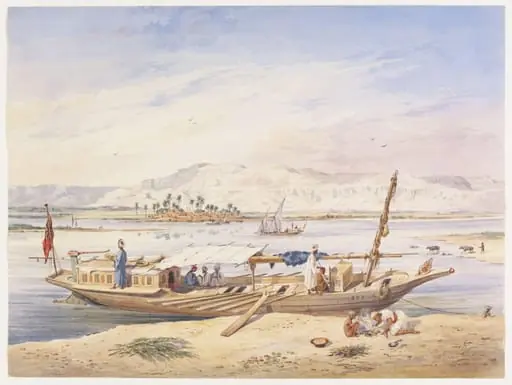 J.W.P.'s Kanja moored beside the East bank of the Nile at Luxor
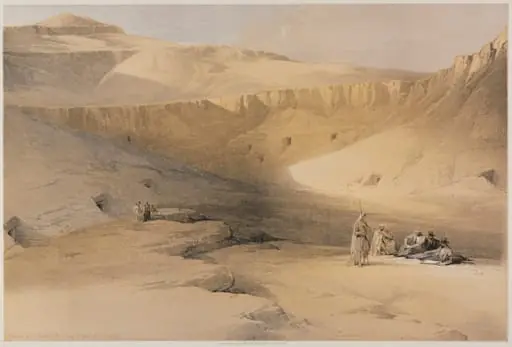 Egypt and Nubia, Volume II: Entrance to the Tombs of the Kings of Thebes, Bab-El-Malouk
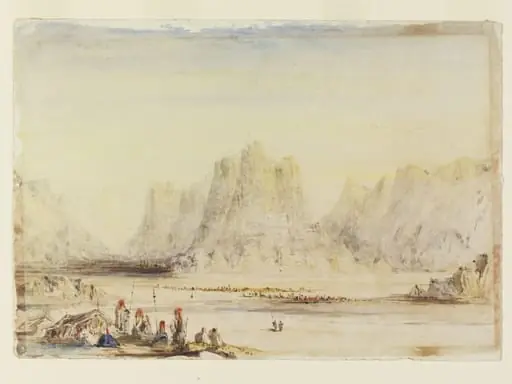 Plain of Raha, Sinai
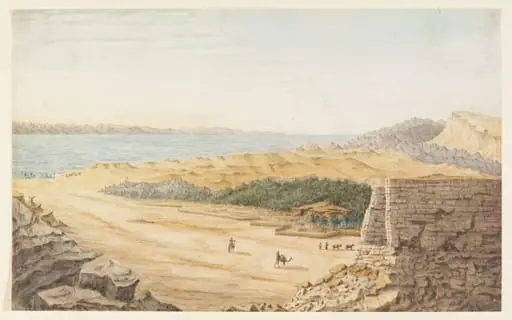 Ancient Ruins in the land of Edom above the bed of a valley and Arab Date gardens
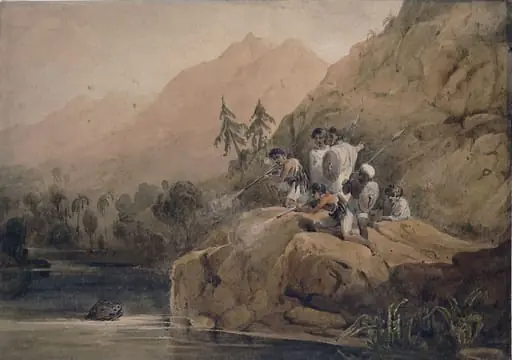 A Hippopotamus Hunt
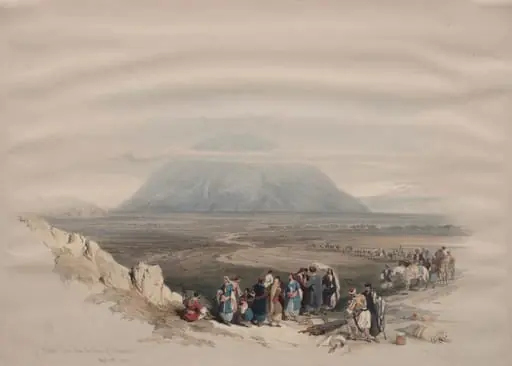 Mount Tabor from the Plain of Esdraelon
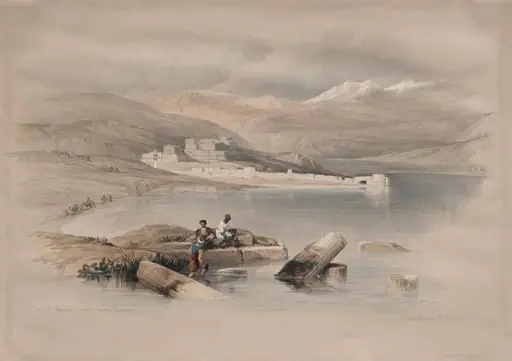 Town of Tiberias Looking Towards Lebanon
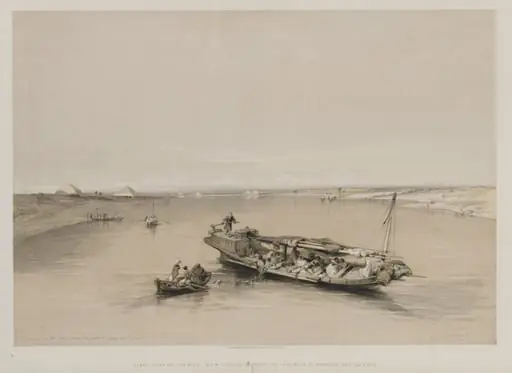 Egypt and Nubia, Volume I: View on the Nile Looking Towards the Pyramids of Dashour and Saccara
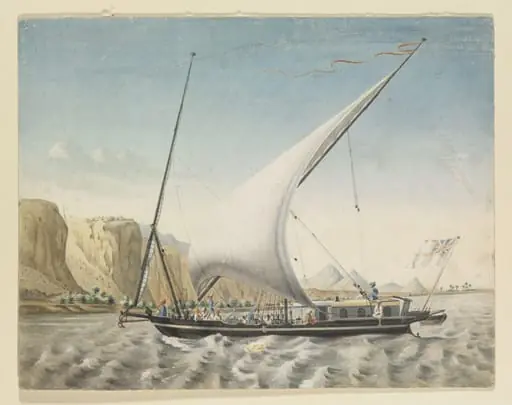 A Canja on the Nile near Qasr Ibrim, Nubia, flying a White Ensign
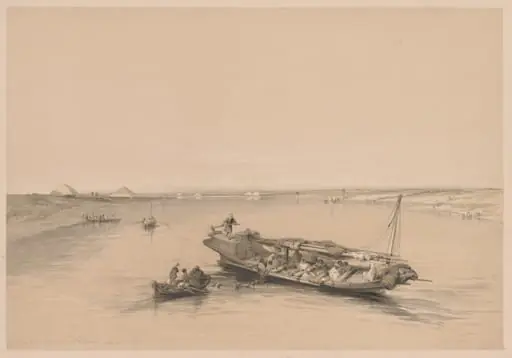 Egypt and Nubia: Volume I - No. 4, Slave Boats on the Nile, View Looking Towards the Pyramids of Dashour and Saccara