Artwork
The Prodigal Son: The Fatted Calf (L’enfant prodigue: le veau gras)
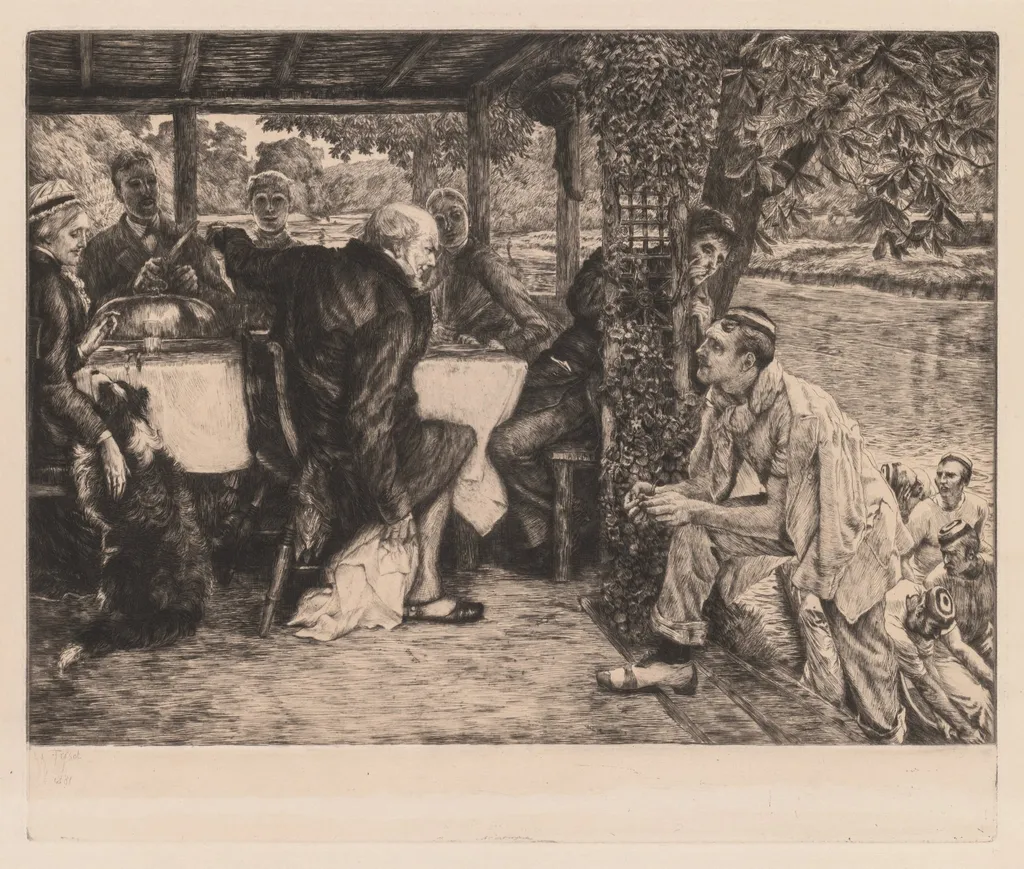
The Prodigal Son: The Fatted Calf (L’enfant prodigue: le veau gras) is a print by the Impressionist artist James Tissot. It dates from 1881 and is held in the collection of the Cleveland Museum of Art.
About this work
Overview
Created in 1881, this black-and-white print by James Tissot is one of twelve illustrations from a series depicting the Parable of the Prodigal Son. Executed in pen and ink with wash, it captures a moment of quiet tension rather than overt celebration. The composition emphasizes human reaction over dramatic action, focusing on the gathering’s subdued atmosphere rather than the feast itself.
Subject & Meaning
The scene portrays the return of the prodigal son, now humbled, kneeling before his father as the family prepares a meal. The fatted calf, symbolizing reconciliation, is implied rather than shown. The figures surrounding the table—some watchful, others weary—reflect varied emotional responses to the son’s homecoming, underscoring themes of forgiveness, judgment, and quiet redemption.
Technique & Style
The absence of color heightens the emotional gravity, aligning the work with illustrative traditions rather than painterly expression.
Tissot employs precise pen lines and dense ink washes to model form and depth, creating a sense of volume without color. The heavy shading defines folds of clothing and spatial recession, while the sharp contours of figures contrast with the looser, sketchlike rendering of the background. The absence of color heightens the emotional gravity, aligning the work with illustrative traditions rather than painterly expression.
History & Provenance
This print was produced as part of a commercially published series illustrating biblical stories, commissioned for a wide audience. Tissot, having shifted from secular genre painting to religious subjects after a personal crisis in the late 1870s, dedicated years to studying Middle Eastern landscapes and costumes to ensure historical accuracy. The series was widely distributed in France and England, reaching both religious and artistic circles.
Context
In the 1880s, Tissot’s biblical illustrations responded to a growing public interest in visually grounded religious narratives, fueled by advances in print technology and rising biblical scholarship. Unlike traditional altar paintings, his works avoided idealization, instead portraying figures in contemporary dress and realistic interiors, bridging scriptural stories with the visual language of modern life.
Legacy
Tissot’s series influenced later illustrators seeking to depict sacred stories with psychological nuance and observational detail. Though less celebrated than his society paintings, these prints remain significant for their fusion of documentary precision and narrative restraint. They reflect a broader 19th-century trend toward visualizing faith through everyday human experience rather than symbolic grandeur.
Own this work as a print
Artist & collection
Artist
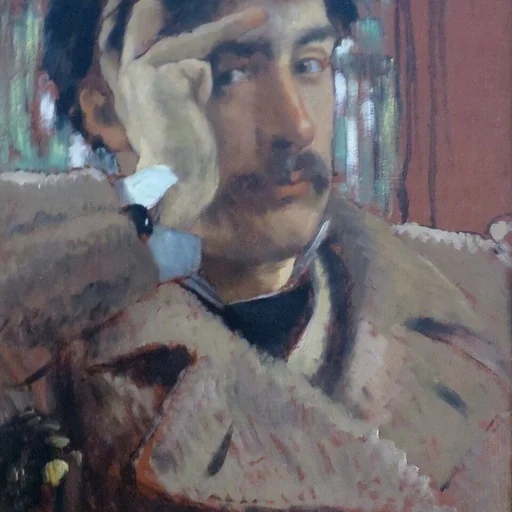
Jacques Joseph Tissot (French: ; 15 October 1836 – 8 August 1902), better known as James Tissot (UK: TISS-oh, US: tee-SOH), was a French painter, illustrator, and caricaturist.

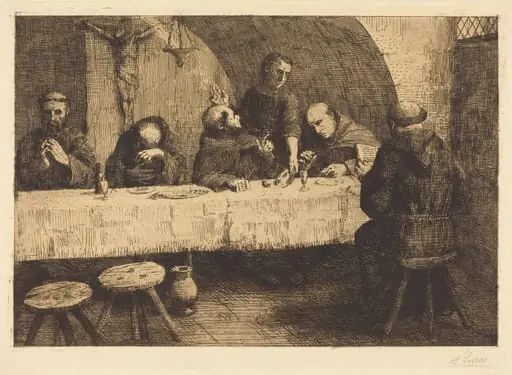 The Refectory (Le refectoire)
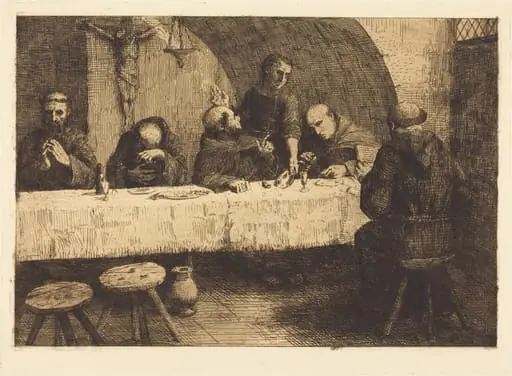 The Refectory (Le refectoire)
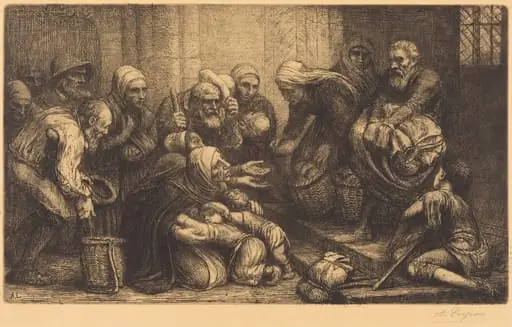 Beggars of Brussels (Les mendiants de Bruges)
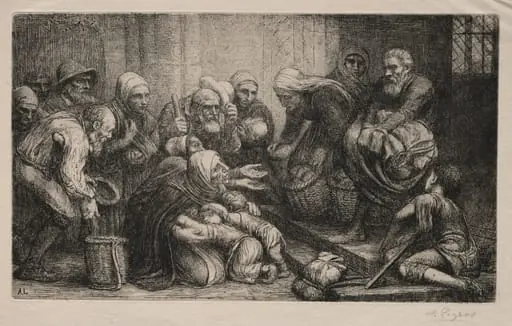 The Beggars of Bruges
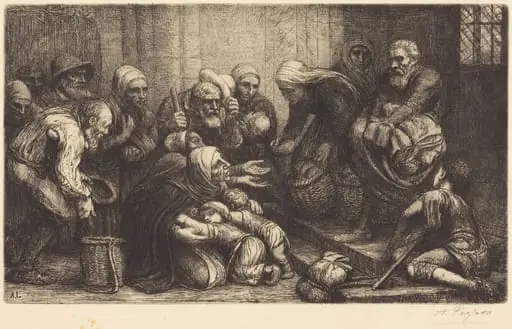 Beggars of Brussels (Les mendiants de Bruges)
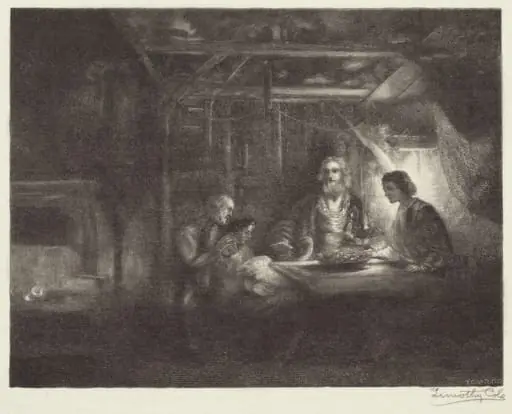 Philemon and Baucis
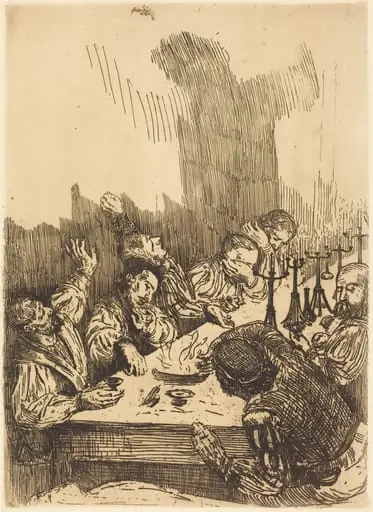 Shadow (Ombre)
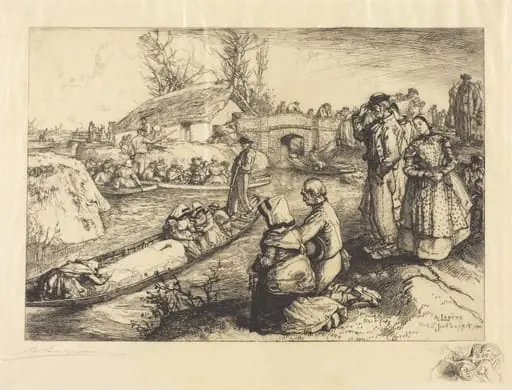 Burial in the Vendeen Marsh (Un enterrement dans le marais Vendeen)
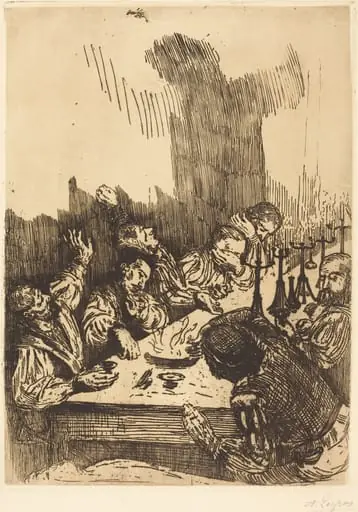 Shadow (Ombre)
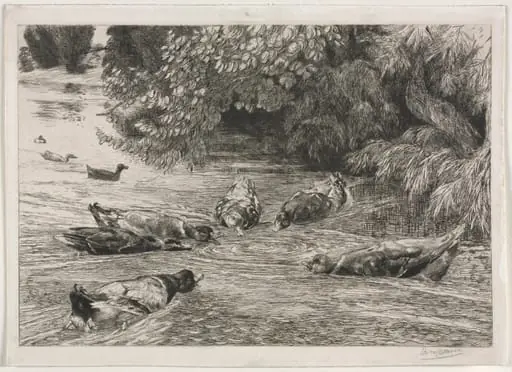 The Question Mark
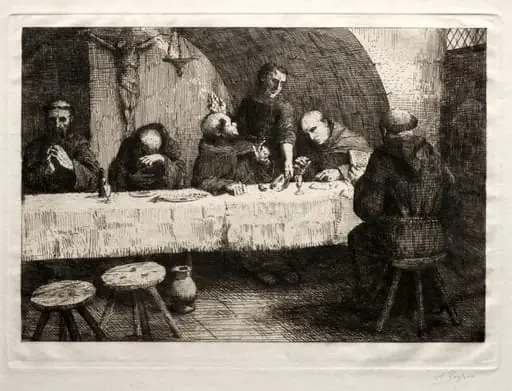 The Refectory
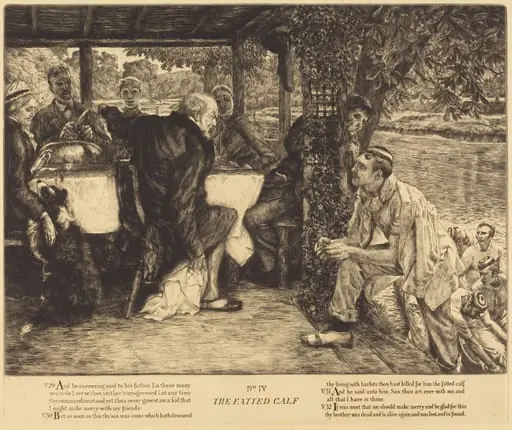 The Fatted Calf