Artwork
Still life with a boy
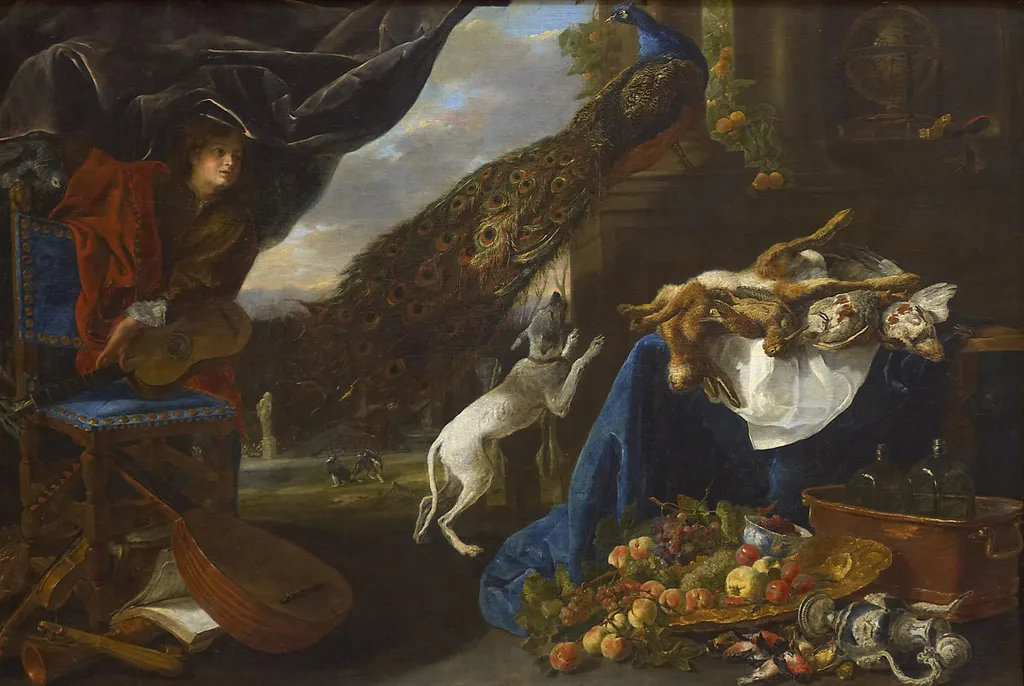
Still life with a boy is an oil painting by the Flemish Baroque painting artist Jan Fyt. It dates from 1661 and is held in the collection of the Kunsthistorisches Museum.
About this work
Overview
Painted in 1661 by the Flemish artist Jan Fyt, this oil on canvas work blends still life with a human figure, a less common approach in his oeuvre.
Painted in 1661 by the Flemish artist Jan Fyt, this oil on canvas work blends still life with a human figure, a less common approach in his oeuvre. Fyt, who died the same year, was primarily known for detailed depictions of game, flowers, and fruit. This painting stands as one of his final works, integrating a child into a richly arranged interior scene that reflects the Flemish tradition of combining domestic life with symbolic objects.
Subject & Meaning
A boy in a red robe and brown fur, wearing a white hat, sits on a blue chair playing a guitar. His presence introduces a narrative element amid a still life of fruit, a vase, and a white tablecloth. Nearby, a peacock and a dog suggest themes of luxury and loyalty. The inclusion of music and domestic objects may allude to the transient nature of pleasure, a subtle memento mori common in Baroque still lifes, though rendered with quiet intimacy rather than overt symbolism.
Technique & Style
Fyt employs precise brushwork to render textures: the sheen of fruit, the softness of fur, the glint of ceramic. Light enters from a large window, casting subtle shadows that model form and deepen spatial recession. The palette is warm and restrained, with reds and browns anchored by the blue chair and the cool tones of the background. Chiaroscuro is used sparingly but effectively to unify the boy and the objects, binding them into a cohesive, atmospheric whole.
History & Provenance
The painting entered the collection of the Kunsthistorisches Museum in Vienna, where it remains today. Its provenance before museum acquisition is not fully documented, but it likely passed through private collections in the Low Countries or Austria. As one of Fyt’s last known works, its survival offers insight into his late style and the evolving role of the human figure in Flemish still life during the mid-17th century.
Context
In mid-17th century Antwerp, still life painting flourished alongside growing interest in domestic interiors and naturalistic detail. Fyt’s work aligns with contemporaries like Snyders and de Heem, yet his integration of a child playing music distinguishes this piece. The presence of exotic elements like the peacock reflects global trade influences, while the guitar hints at the cultural value of music among the urban elite, blending everyday life with symbolic richness.
Legacy
Though Fyt is chiefly remembered for his animal and floral compositions, this painting demonstrates his versatility and willingness to expand the boundaries of the still life genre. His handling of light and texture influenced later artists, including Pieter Boel. The work remains a quiet example of how Flemish painters wove narrative and observation into objects, bridging the gap between genre and still life traditions without overt sentimentality.
Artist & collection
Artist
Jan Fijt, Jan Fijt or Johannes Fijt (or Fyt) (19 August 1609 – 11 September 1661) was a Flemish Baroque painter, draughtsman and etcher.

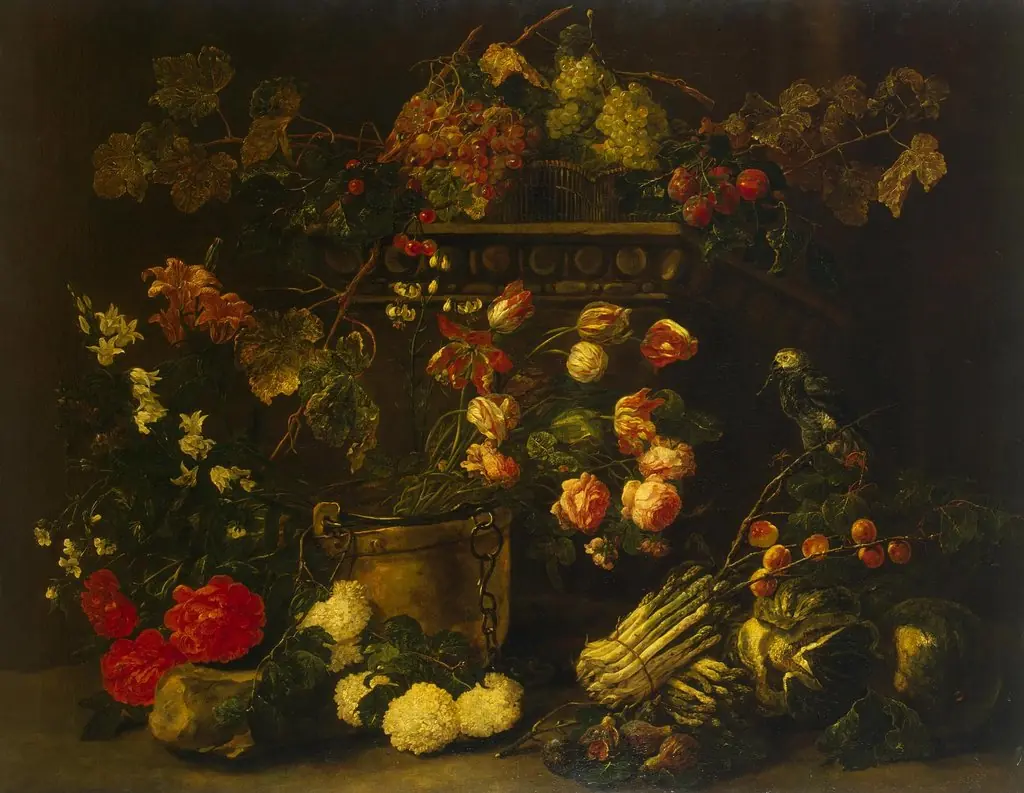
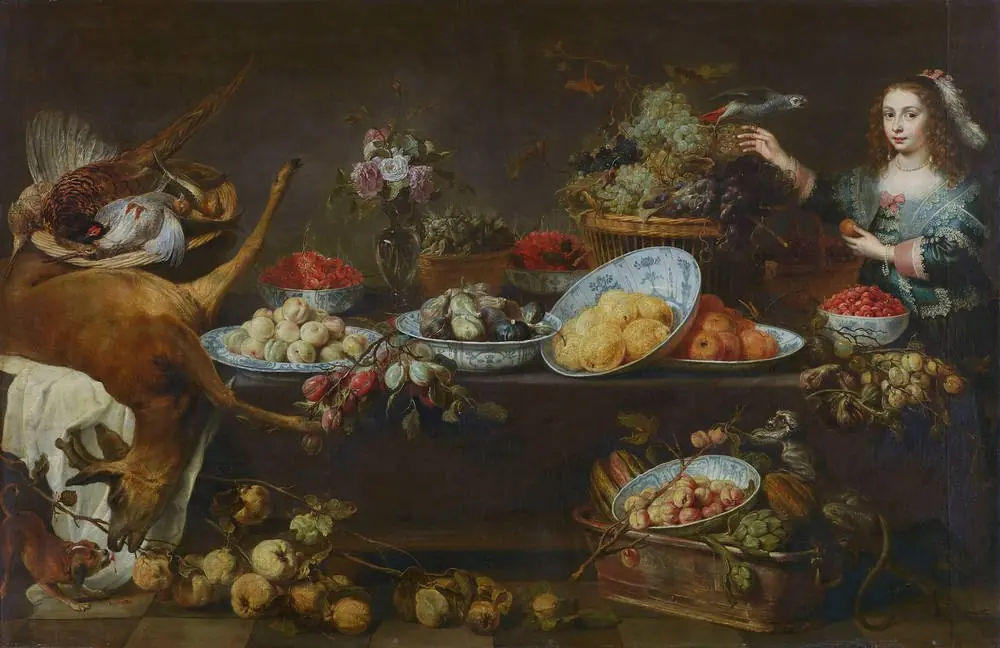 Large Still-life with a Lady and a Parrot
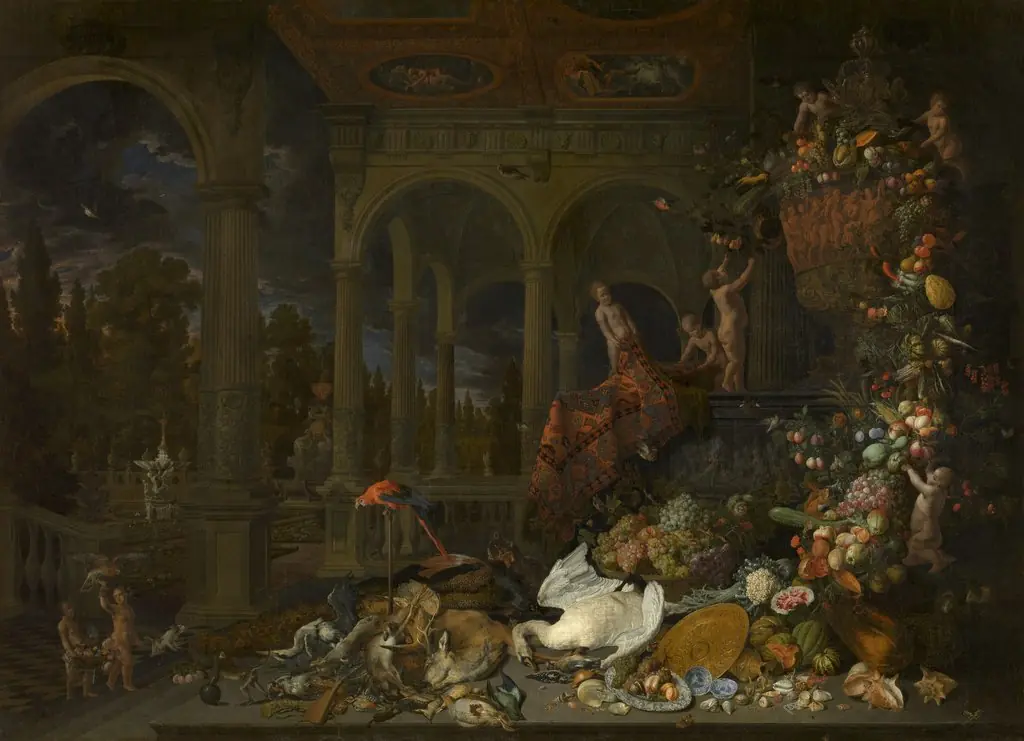 Still Life
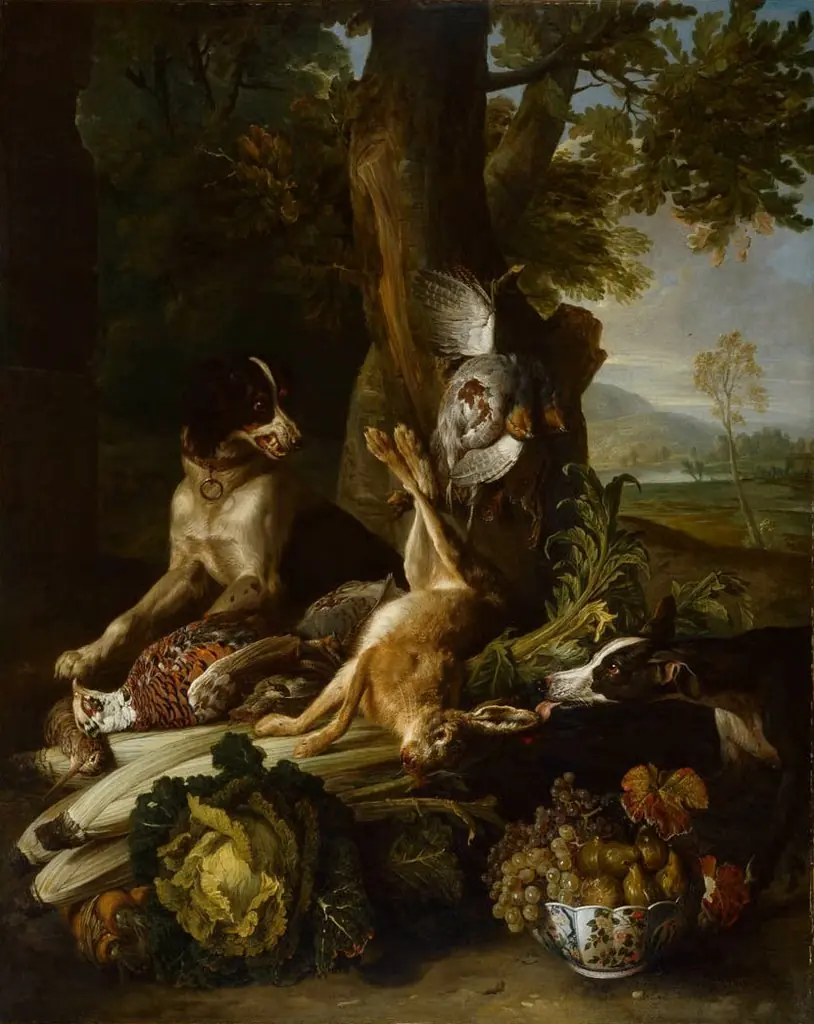 Automne : épagneul et chien de meute, gibier, fruits et légumes
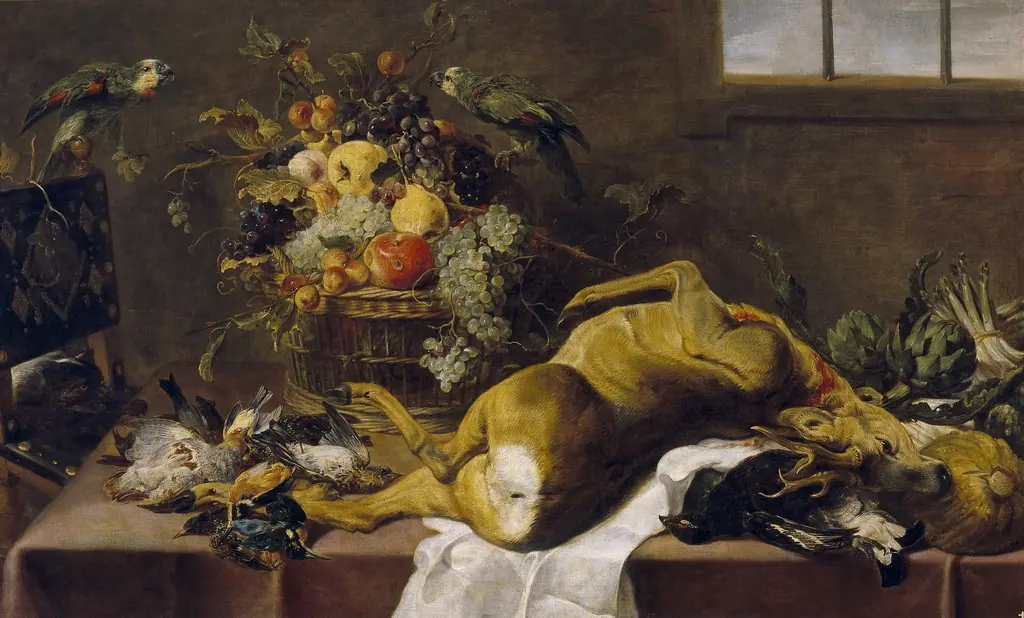 The larder
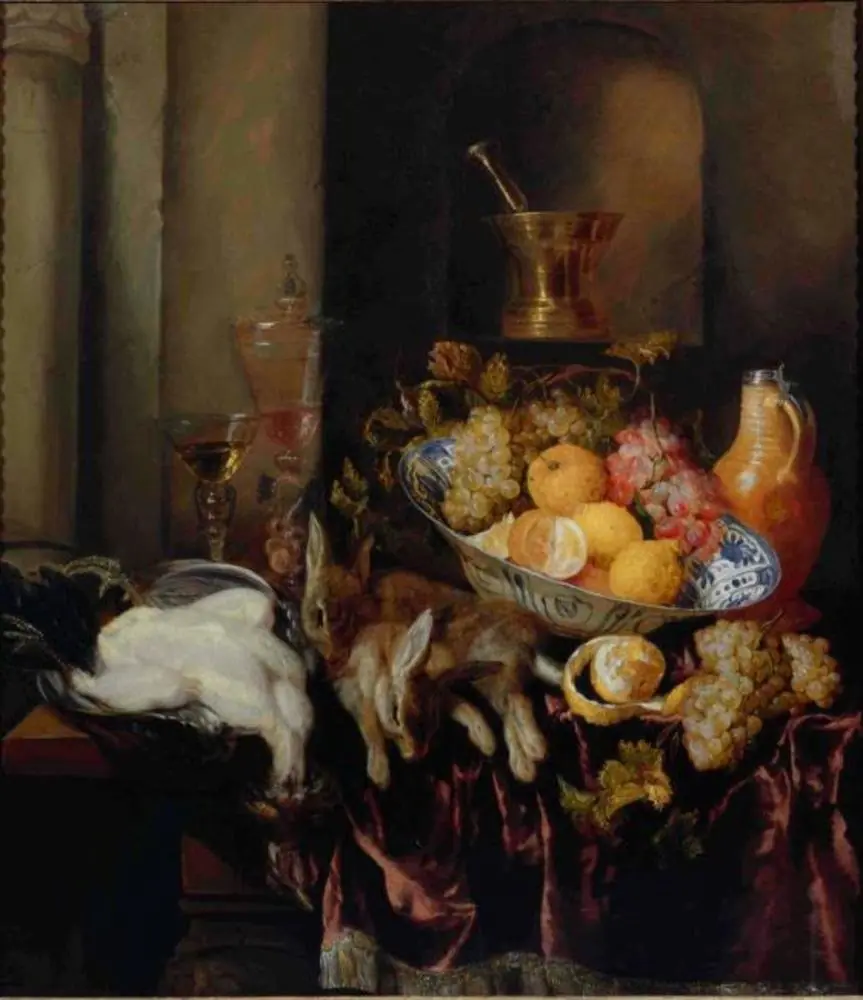 Still life with fruit and game
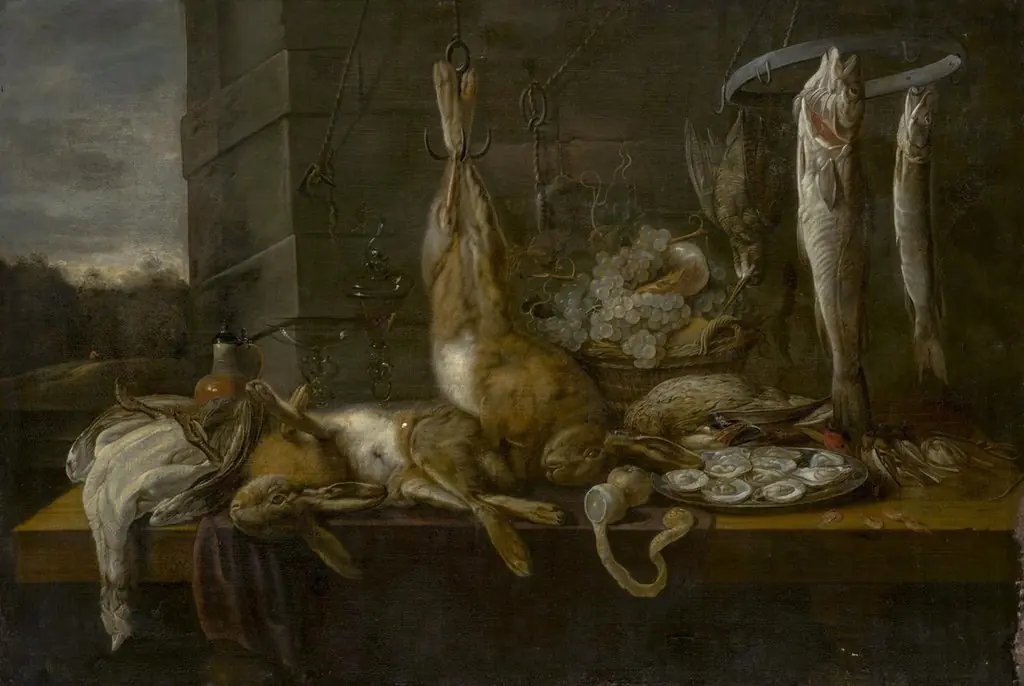 Still life of dead game
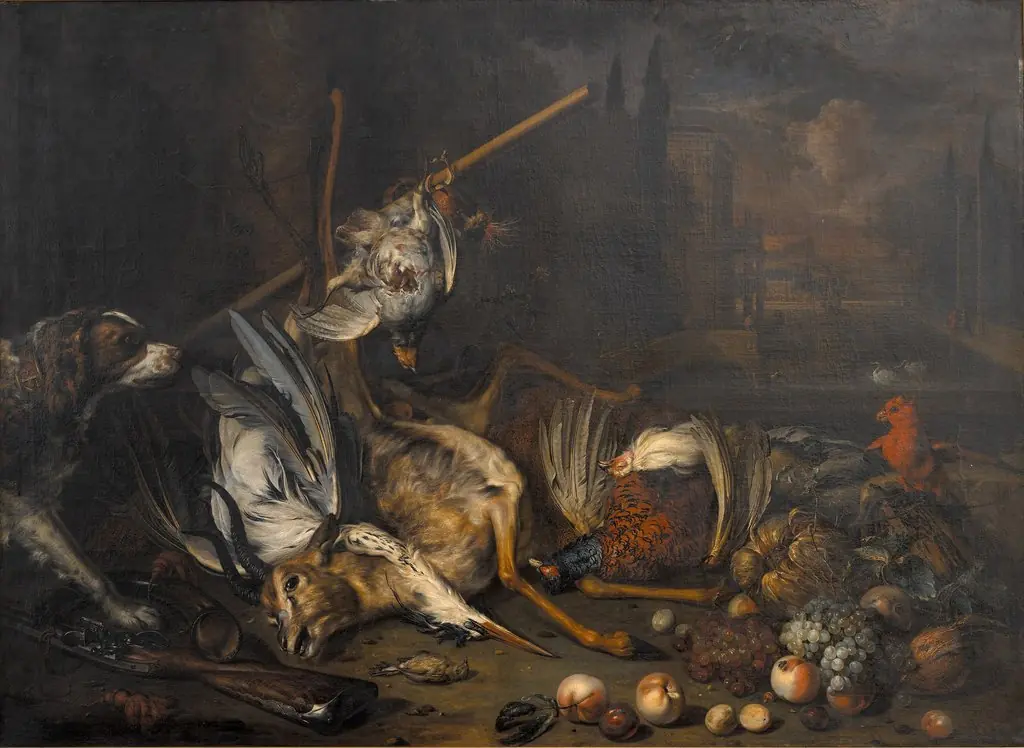 Game and Fruit
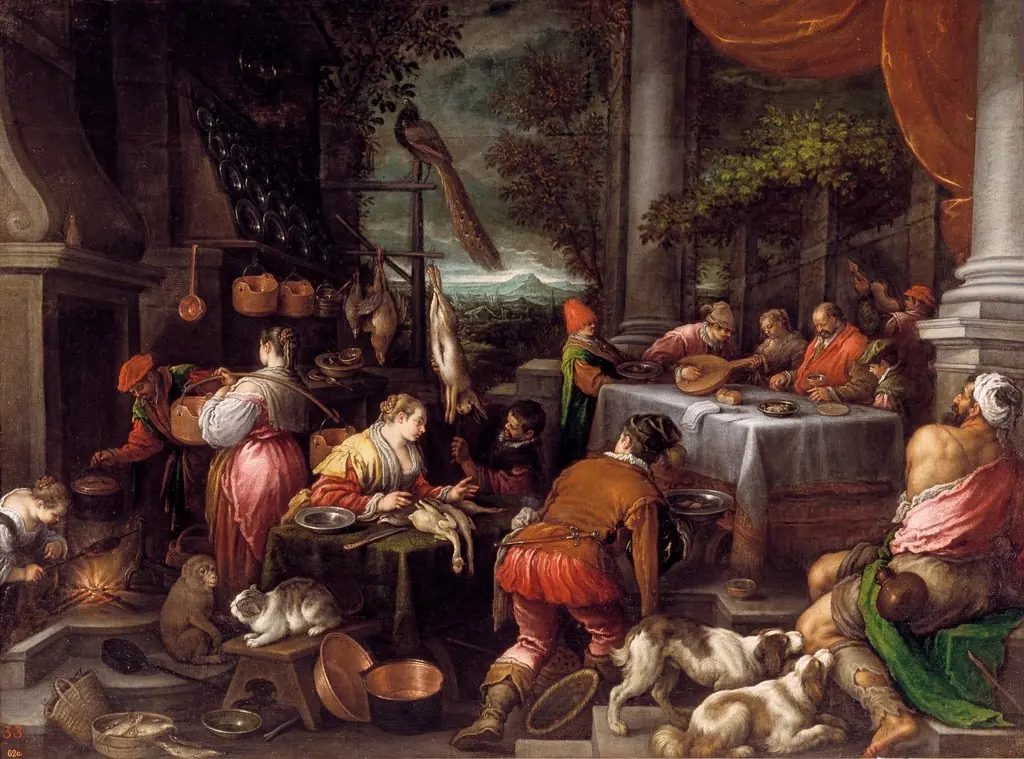 Lazarus and Dives
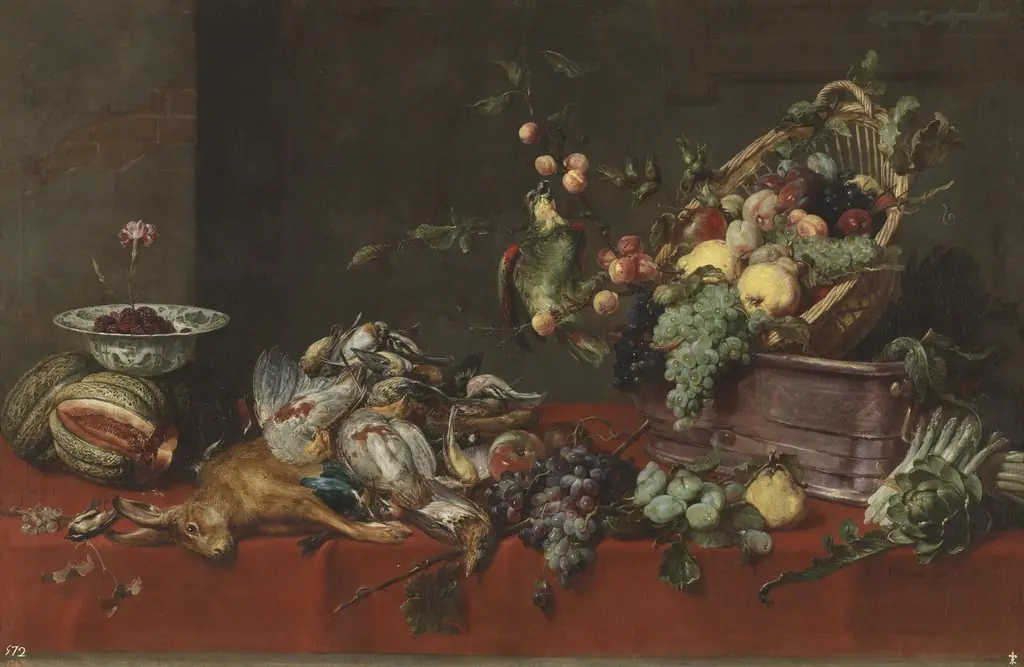 A still life with game, vegetables and fruit on a table, with a parrot on a branch
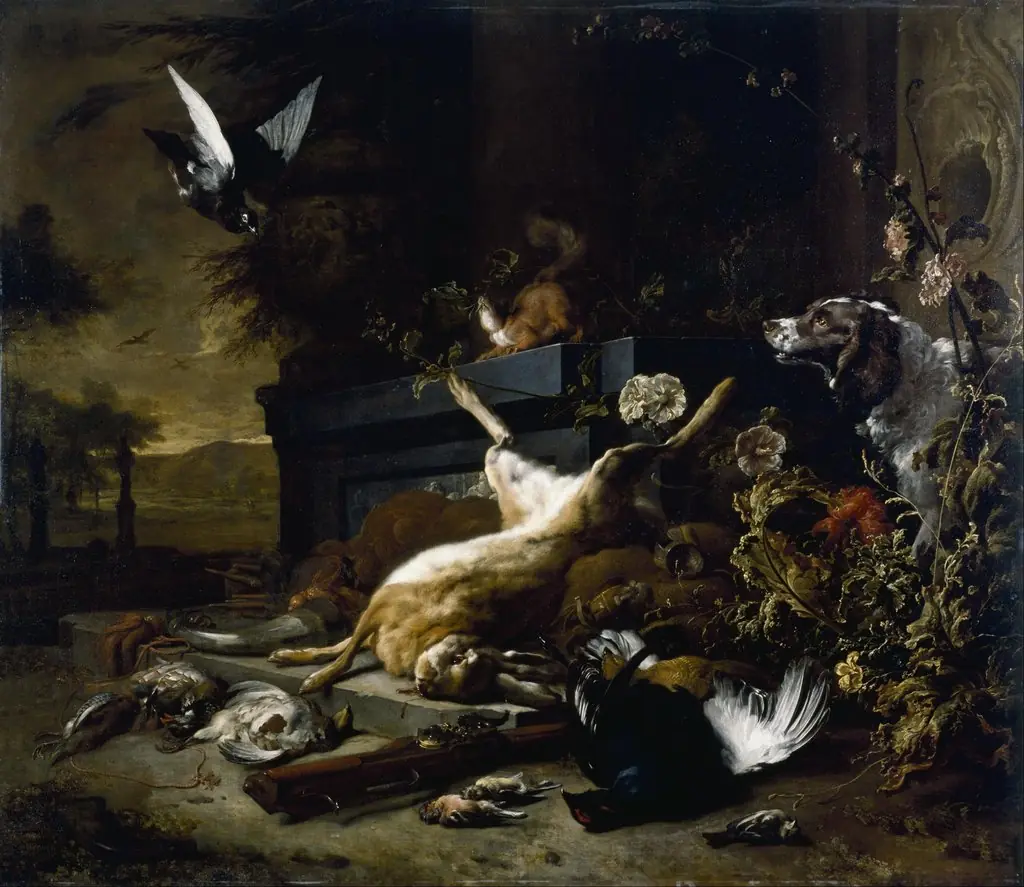 Still Life of Game including a Hare, Black Grouse and Partridge, a Spaniel looking on with a Pigeon in Flight
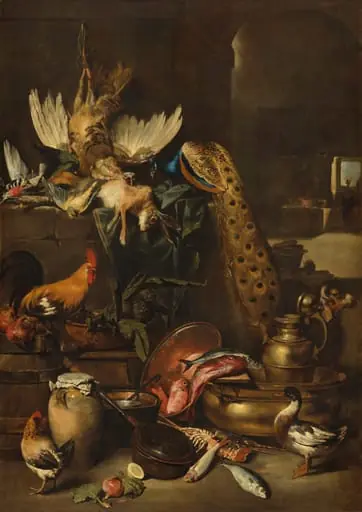 The Larder
 A still life with a view of a river landscape