Artwork
Hosius, bishop of Vilnius, and Sigismund Augustus
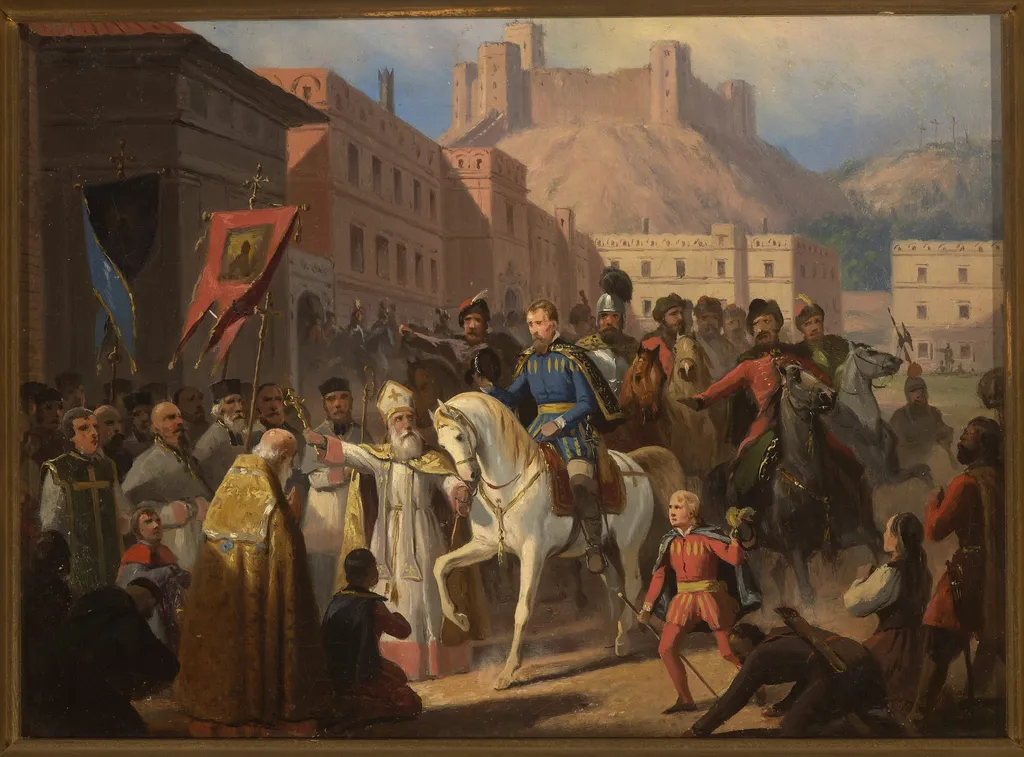
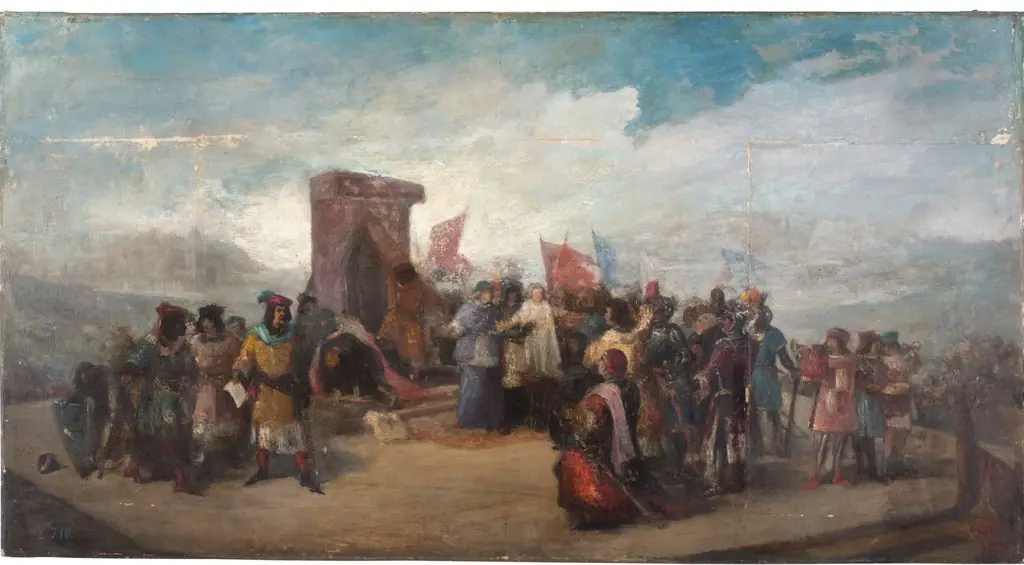
Hosius, bishop of Vilnius, and Sigismund Augustus is an oil painting by January Suchodolski. It dates from 1848 and is held in the collection of the National Museum in Warsaw.
About this work
Overview
Suchodolski, trained at the Imperial Academy of Arts and experienced in military service, approached the scene with formal precision.
Painted in 1848 by January Suchodolski, this oil-on-canvas work portrays a historical encounter between Hosius, Bishop of Vilnius, and King Sigismund Augustus of Poland. Suchodolski, trained at the Imperial Academy of Arts and experienced in military service, approached the scene with formal precision. The painting resides in the National Museum in Warsaw, reflecting 19th-century Poland’s interest in reviving national historical narratives through academic art.
Subject & Meaning
The scene captures a moment of political and religious dialogue between Hosius, a key Catholic figure in the Counter-Reformation, and Sigismund Augustus, the last Jagiellonian king. Their interaction symbolizes the alliance between the monarchy and the Church during a time of religious upheaval. The composition emphasizes hierarchy and solemnity, with the bishop’s white vestments contrasting the king’s blue garments to signify spiritual and temporal authority.
Technique & Style
Suchodolski employed chiaroscuro to model figures with volume and depth, drawing from academic traditions of historical painting. The figures are arranged in a balanced, staged composition, with the bishop and king positioned centrally. Background elements—a monumental building and distant mountains—frame the scene without distracting, while muted tones in the surroundings heighten the luminosity of the central figures’ attire.
History & Provenance
Completed in 1848, the painting entered the collection of the National Museum in Warsaw shortly after its creation. It was produced during a period of Polish cultural revival under foreign partition, when historical subjects were used to sustain national identity. Suchodolski’s academic training and military service informed his disciplined rendering of costume, gesture, and setting, aligning the work with state-sponsored historical narratives of the era.
Context
In the mid-19th century, Polish artists frequently turned to early modern history to evoke continuity and dignity amid political fragmentation. The pairing of Hosius and Sigismund Augustus referenced a time when Poland-Lithuania held significant influence in Central Europe. Suchodolski’s depiction reflects Romantic-era ideals of leadership and moral authority, filtered through the conventions of academic realism.
Legacy
The painting remains a representative example of 19th-century Polish academic history painting. While not widely exhibited outside Poland, it contributes to the scholarly understanding of how historical memory was visually constructed during the partitions. Suchodolski’s work helped establish a visual language for national heroes and ecclesiastical figures that influenced later generations of Polish painters.
Artist & collection
Artist
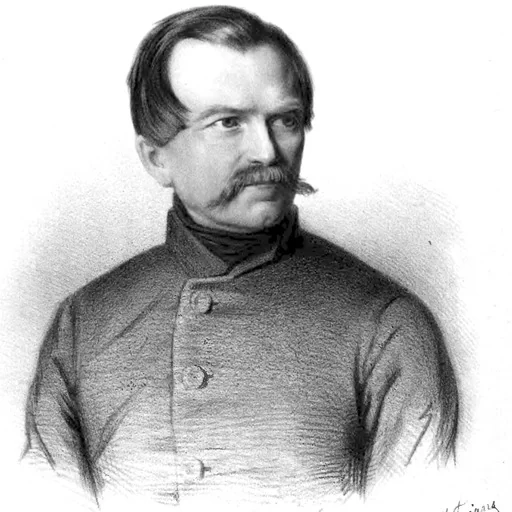
January Suchodolski (Polish: ; 19 September 1797 – 20 March 1875) was a Polish painter and Army officer, and a member of the Imperial Academy of Arts.

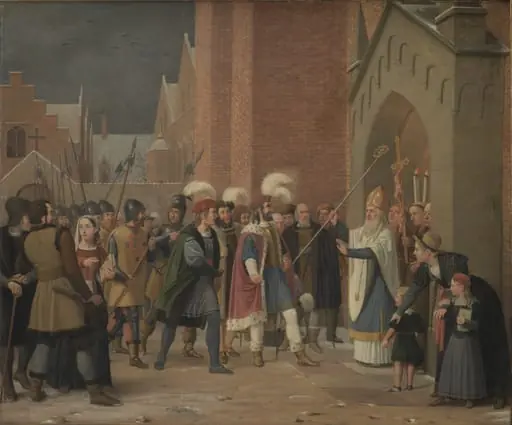 Svend Estridsen and Bishop Vilhelm
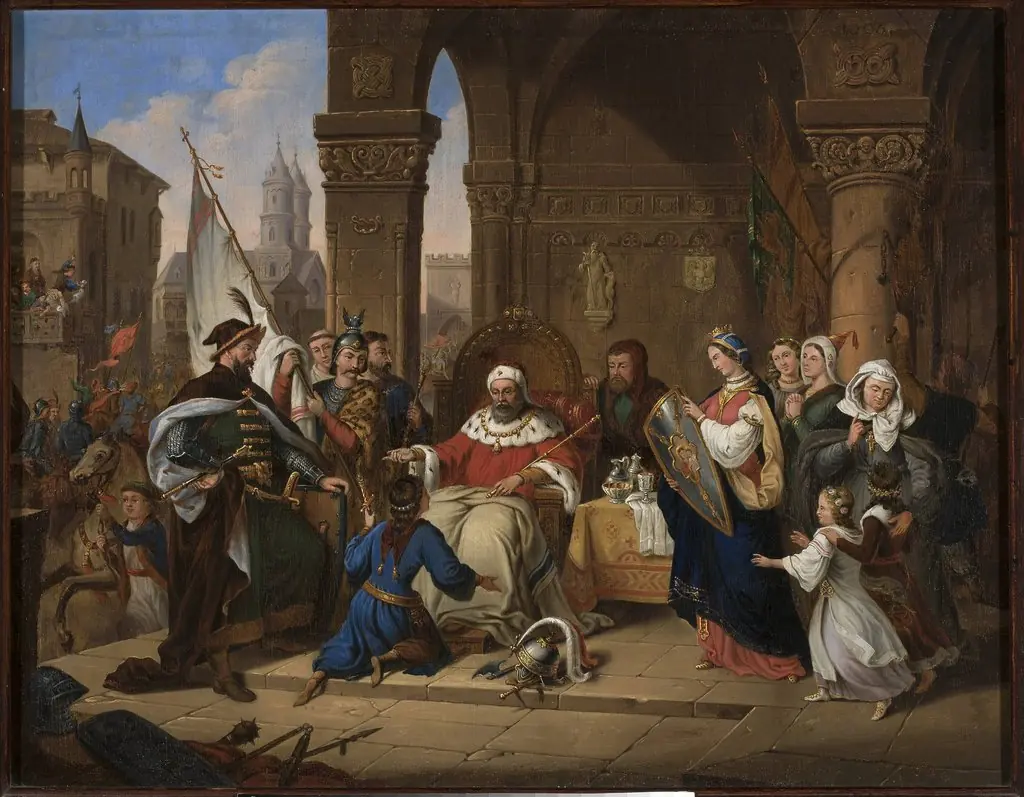 Youth of Bolesław the Wry-Mouthed
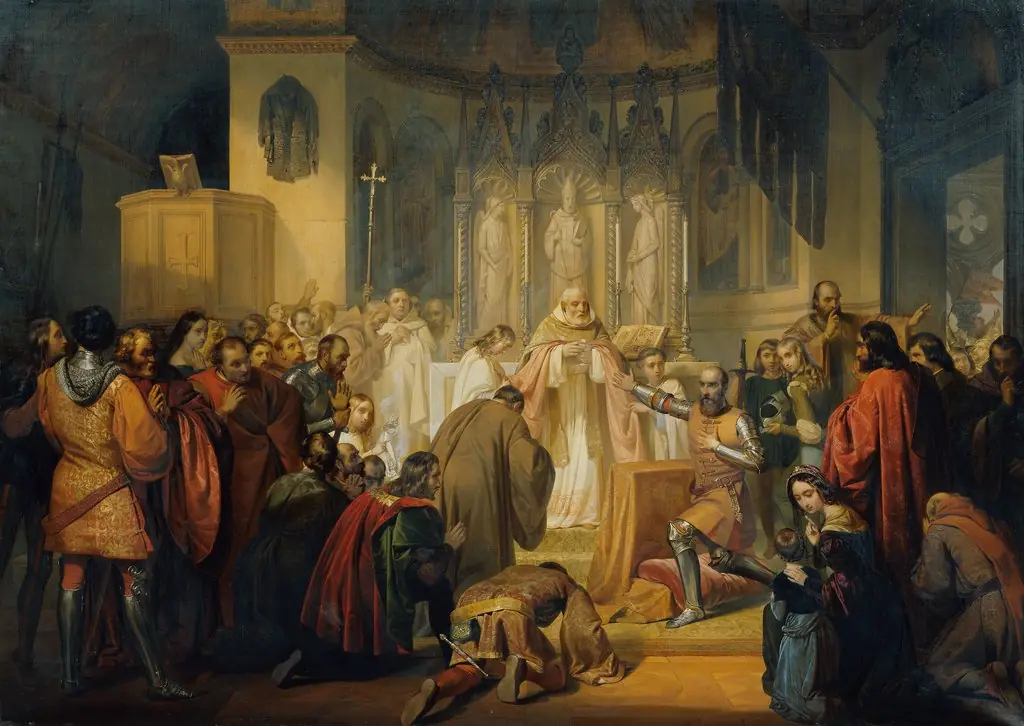 Vittore Pisani receives Holy Communion before taking command of an expedition against the Genoese
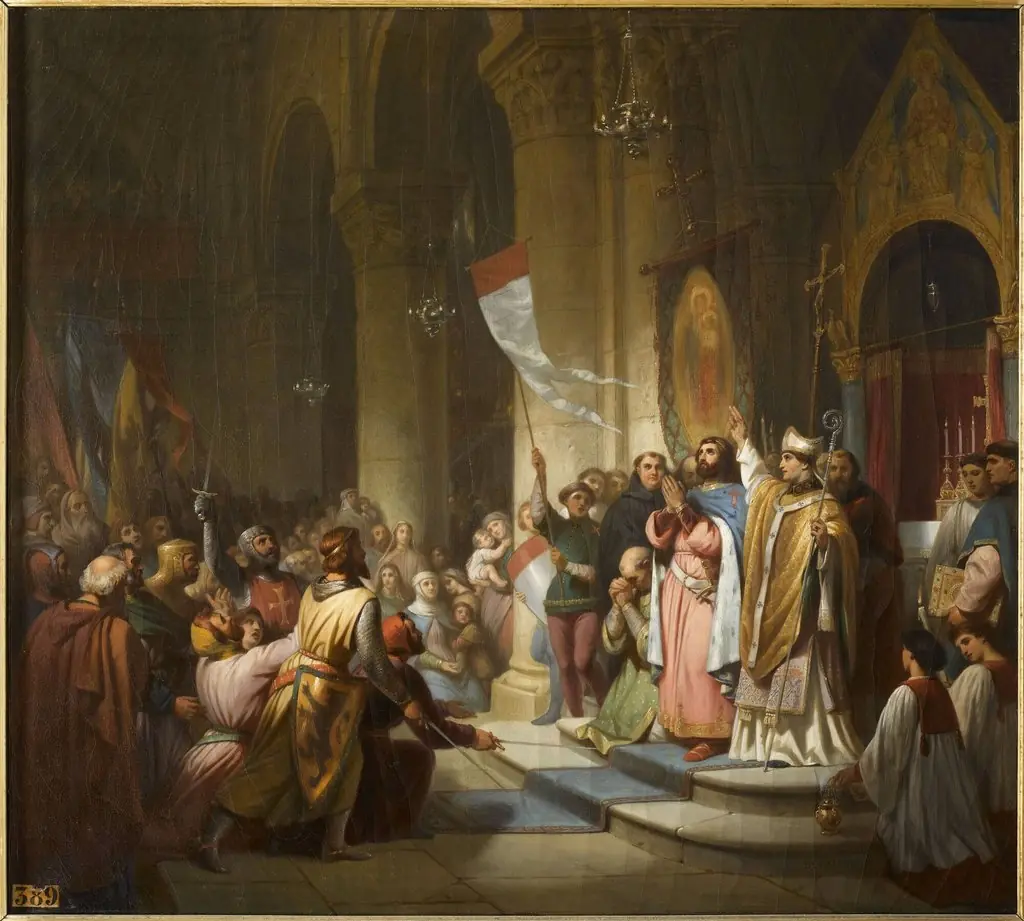 Election of Boniface of Montferrat as leader of the Fourth Crusade.
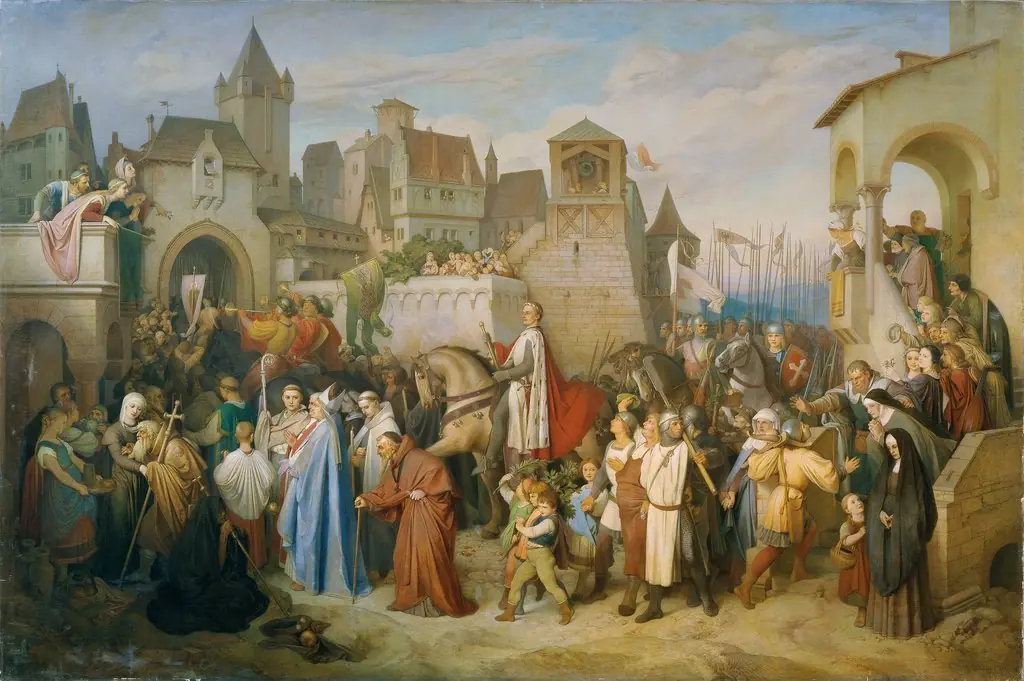 Herzog Leopolds des Glorreichen Einzug in Wien nach dem Kreuzzug von 1219
 Συνθηκολόγηση Ρώσων και Τουρκών στον Ποταμό Προύθο το 1771
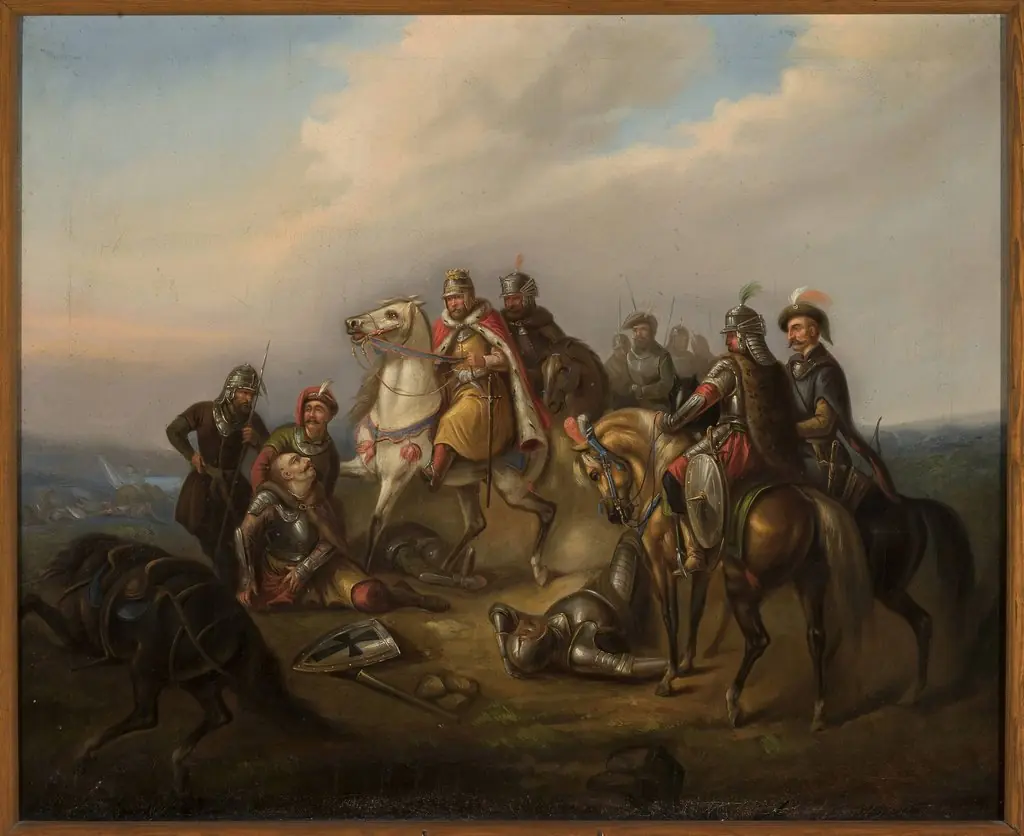 After the battle
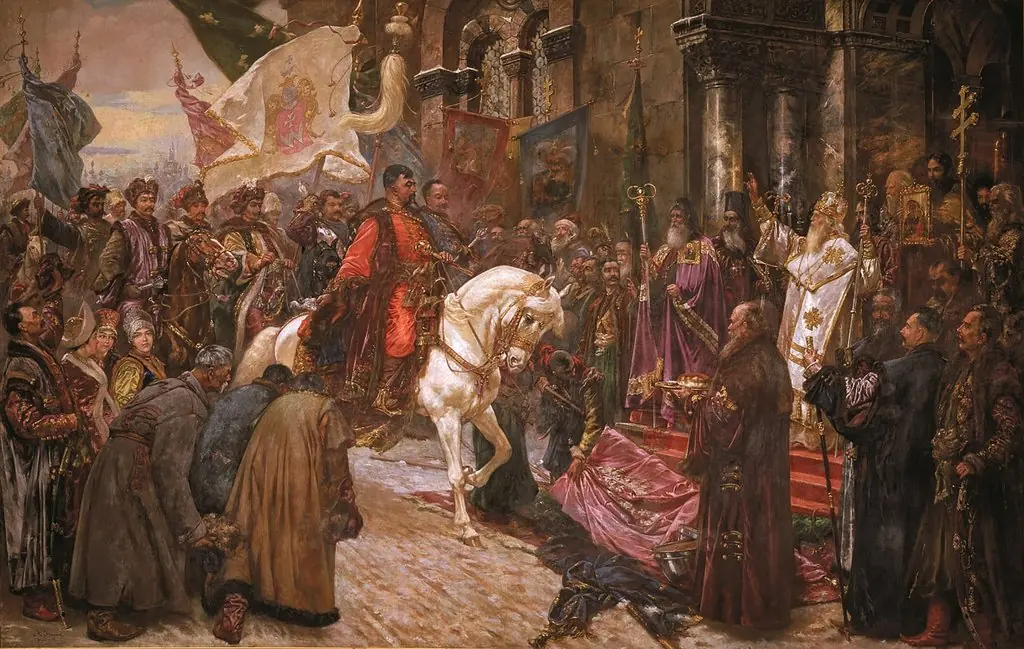 В'їзд Богдана Хмельницького до Києва 1649 року
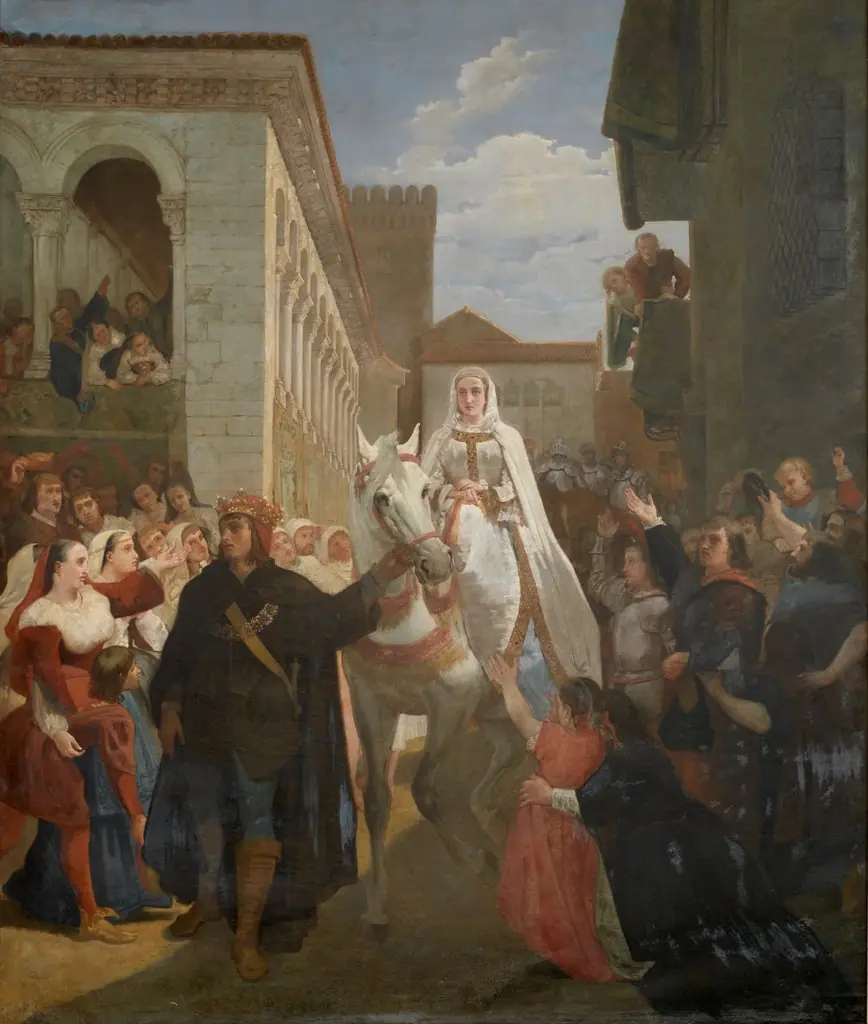 Manifestación del rey don Enrique IV de Castilla al pueblo segoviano
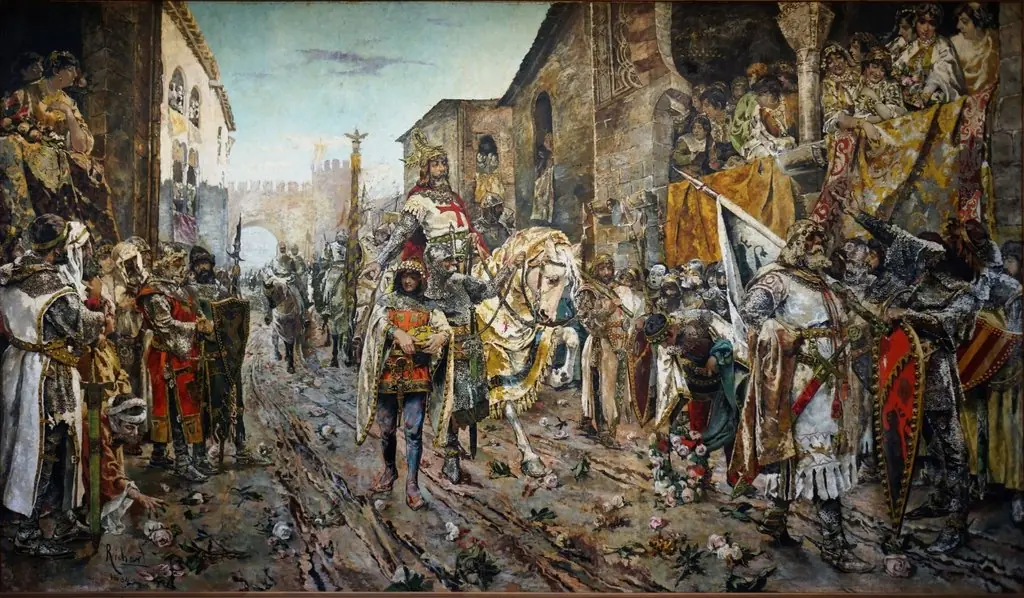 Entrada triunfal en Valencia del rey don Jaime el Conquistador (año 1238)
 La farsa de Ávila
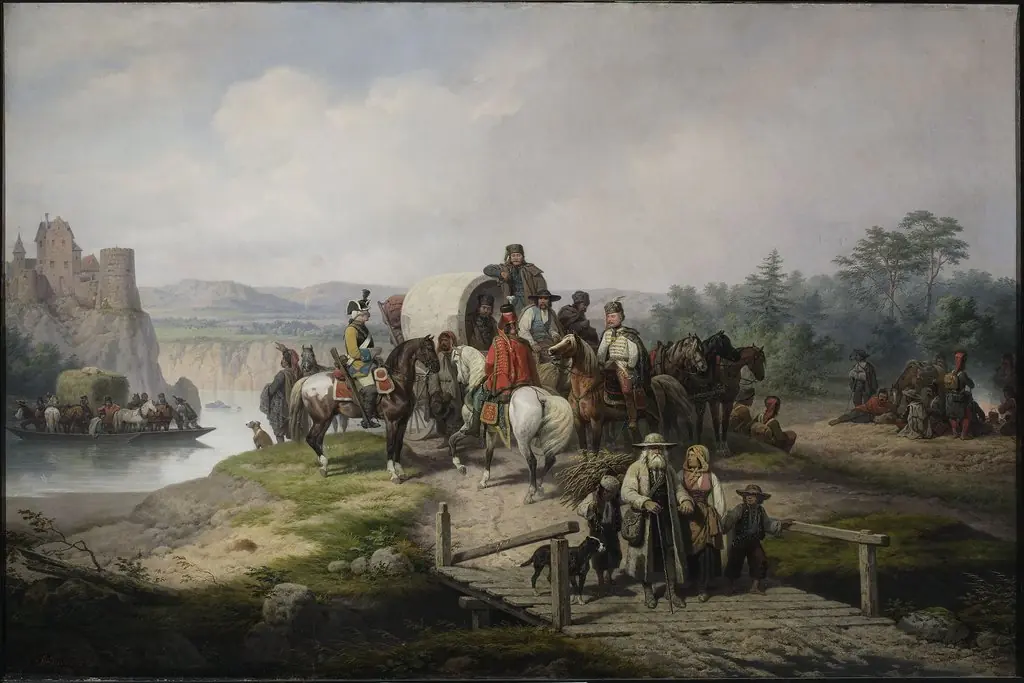
 Skirmish on the road