Artwork
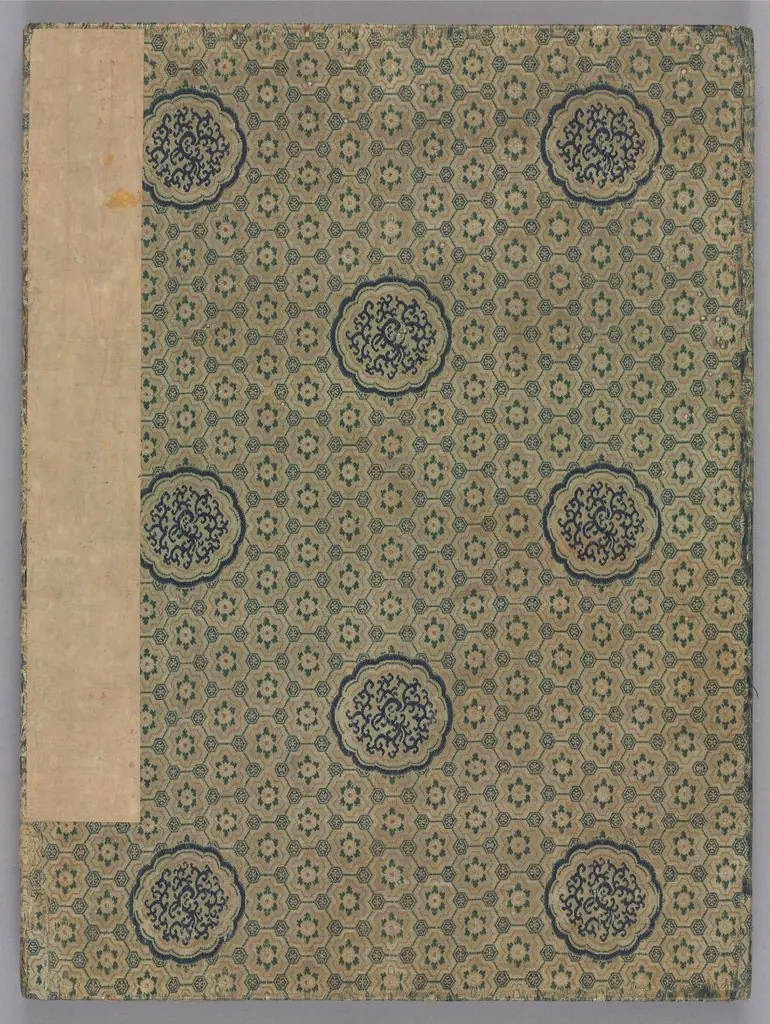
The Apocalypse (bound volume)
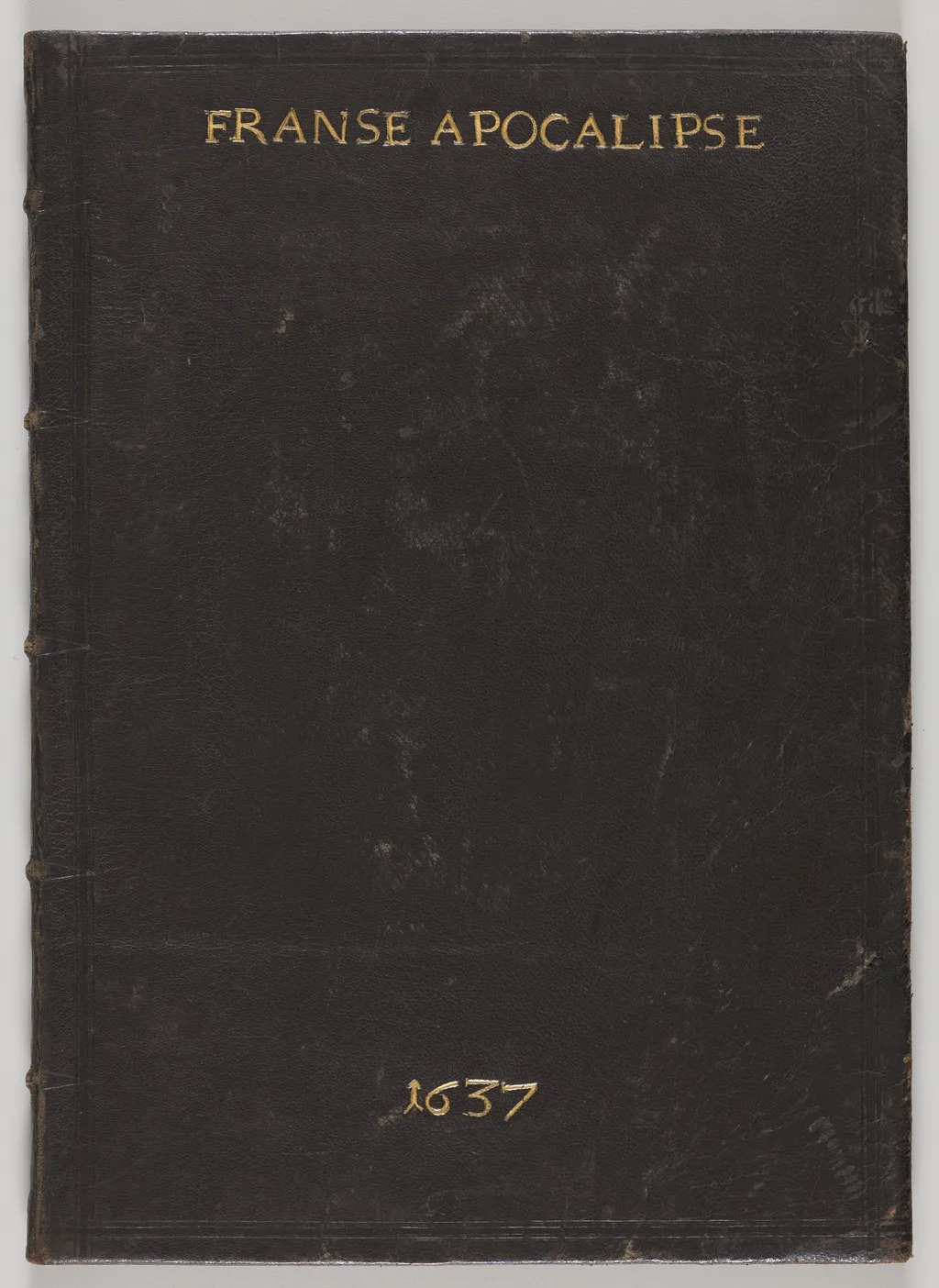
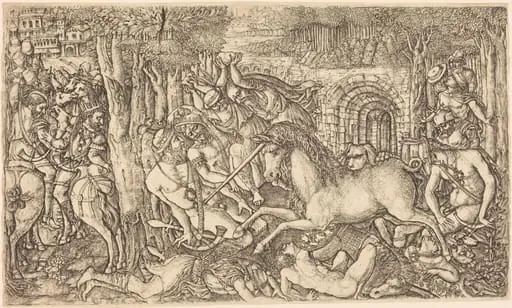
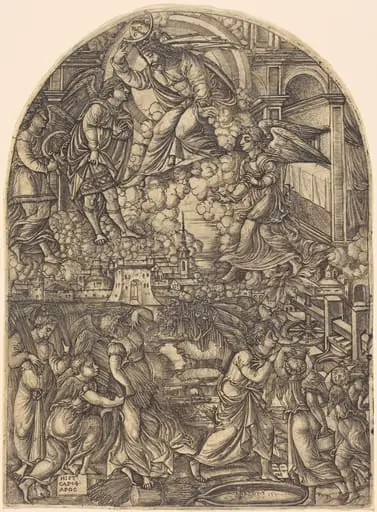
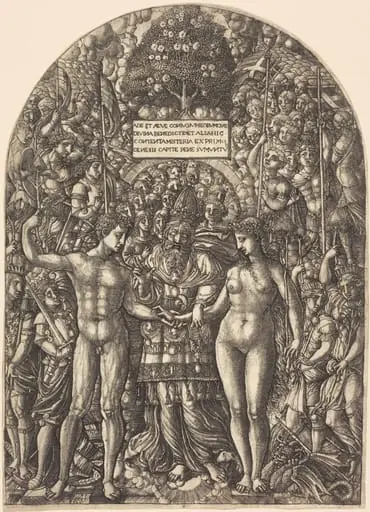
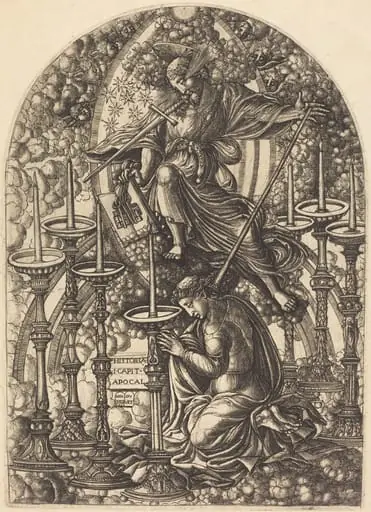
The Apocalypse (bound volume) is a print by the Renaissance artist Jean Duvet. It dates from 1555 and is held in the collection of the Cleveland Museum of Art.
About this work
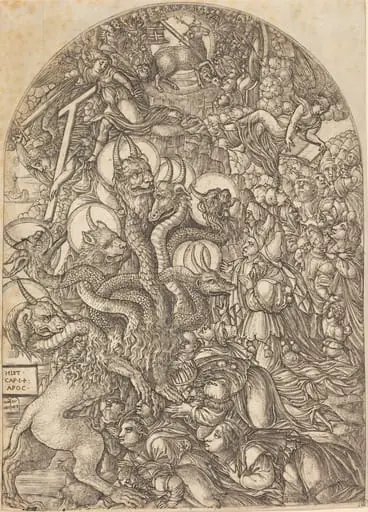
This engraving shows a fierce angel descending with a scroll, while a dragon waits below. The lines are sharp and detailed, almost like a storybook. You can almost feel the tension in the scene.
Jean Duvet spent years on this series. Only seven full sets survive today. The work blends old religious tales with new artistic ideas.
Want to see more like this? Try Jean Duvet (French, 1485–1561).
Overview
Duvet, based in Langres, developed a distinctive visual language despite limited direct contact with Italian centers of artistic innovation.
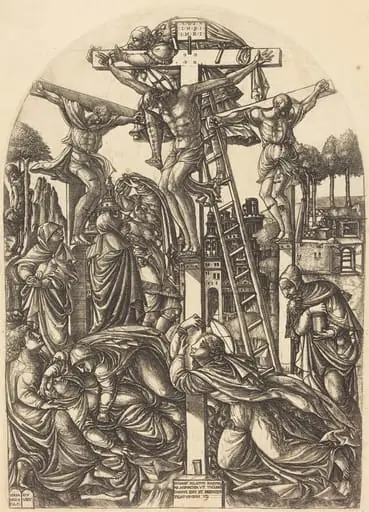
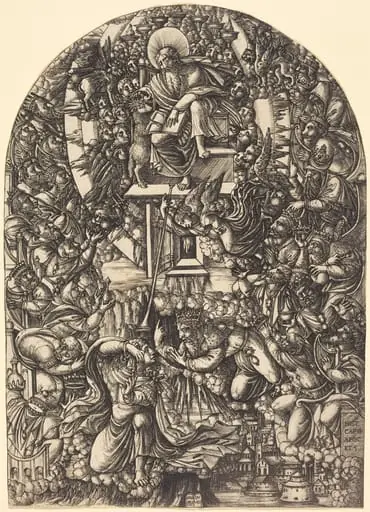
The Apocalypse is a bound volume containing 23 engravings by Jean Duvet, illustrating scenes from the Book of Revelation. Created over several years, the series represents the culmination of his artistic career. Only seven complete sets are known to survive, making this one a rare artifact of 16th-century French printmaking. Duvet, based in Langres, developed a distinctive visual language despite limited direct contact with Italian centers of artistic innovation.
Subject & Meaning
The series depicts apocalyptic events described in the Revelation of Saint John, including divine judgment, celestial beings, and cosmic battles. One plate shows a powerful angel descending with a scroll, confronting a dragon below—a symbolic clash between divine authority and chaos. The imagery draws from medieval Christian eschatology, rendered with intense emotional gravity, reflecting both theological urgency and personal interpretation of sacred text.
Technique & Style
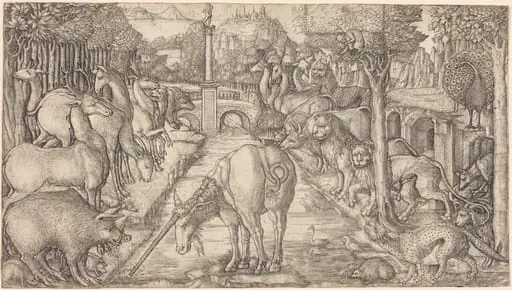
Duvet employed fine, precise engraving lines to create dense, intricate compositions. His figures are robustly modeled, hinting at Italian Renaissance influence, yet arranged in flattened, non-perspectival spaces. Ornamental patterns dominate over spatial logic, producing a rhythmic, almost textile-like surface. The result is a highly stylized, dreamlike intensity that prioritizes symbolic weight over naturalistic coherence.
History & Provenance
Jean Duvet, active in the provincial town of Langres, produced this series between the 1540s and 1560s. Though geographically isolated, he absorbed Italian artistic trends through circulating prints, particularly those by Marcantonio Raimondi. The volume was likely commissioned for private devotion or scholarly circles. Its survival in only seven complete copies underscores its rarity and the fragility of early printed books.
Context
In mid-16th-century France, religious imagery was shaped by both Catholic tradition and emerging Reformation debates. Duvet’s work reflects a Catholic worldview, yet his idiosyncratic style diverged from mainstream Northern Renaissance naturalism. His fusion of Italianate form with local, decorative sensibility positioned him as an outlier—neither fully aligned with Parisian trends nor with German printmakers like Dürer.
Legacy
Duvet’s Apocalypse series stands as a singular achievement in French printmaking, notable for its psychological intensity and formal experimentation. Though largely overlooked in his lifetime, later scholars recognized its originality. The volume remains a key example of how regional artists could reinterpret international styles through personal vision, contributing to the diversity of early modern visual culture.
Artist & collection

Artist
Jean Duvet (1485 – after 1562) was a French Renaissance goldsmith and engraver, now best known for his engravings.

 Mascarade à la Grecque
 Icoai"(a
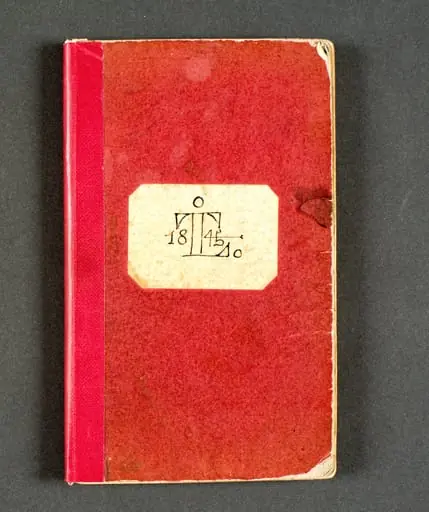 Skitse- og rejsedagbog. Danmark, Tyskland og Schweiz 1842 og 1845
 Landscapes
 Maica Domnului, Sfântul Nicolae, Sfântul Gheorghe, Sfântul Mihail
 Landscapes
 Aloys Senefelder, Inventor of Lithography
 Motiv decorativ II
 Imagine realizată prin tehnica desenului și a acuarelei, ce prezintă un bărbat în port orășenesc săsesc din Sibiu. Acesta ține în mână o blană. Acuarela este încadrată într-un chenar negru, realizat pe hârtie cu tuș. Sub imagine, însemnare manuscrisă în limba germană: „Ein sächsischer Burger in Hermannstadt
 Drawing Book
 Icoana de factură catolică îl reprezintă pe sfântul Teodor Tiron (306 d. Hr) sărbătorit pe 17 februarie.Sf. Teodor înveșmântat ca oștean: coif cu pene, armura și mantie roșie. În dreapta ține un coif cu stânga sulița. În planul doi o biserică catolică. Pe fondul alb, de o parte și alta a sfântului câte tulpină cu o floare roșie. Cromatica: predomină roșul(inclusiv ca desen) albastru, bleu, negru, maro, auriu, verde deschis, verde închis, fond alb.Ramă îngustă, patru stinghiii îmbinate oblic la colțuri.
 Buna gro