Artwork
Glory of the Princes takes the Princes and Princesses of the Realm
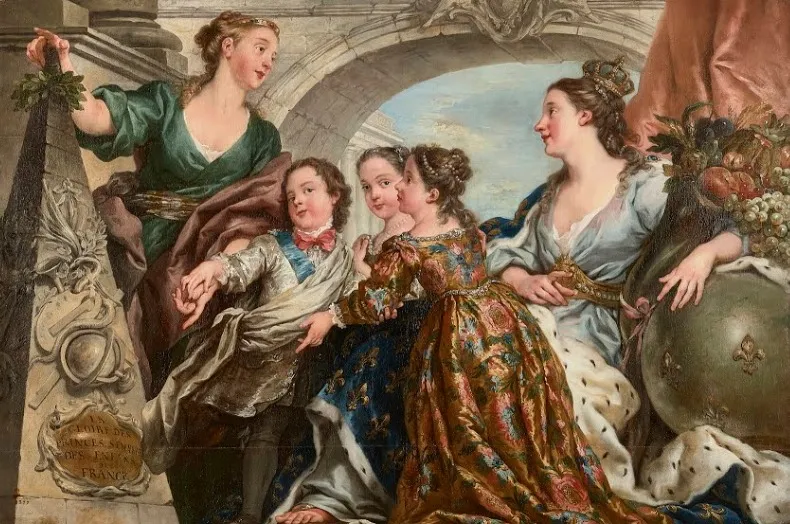
Glory of the Princes takes the Princes and Princesses of the Realm is an oil painting by the Rococo painting artist Jean-François de Troy. It dates from 1734 and is held in the collection of the Palace of Versailles.
About this work
Overview
Painted in 1734 by Jean-François de Troy, this oil-on-canvas work depicts a ceremonial gathering of royal figures in an ornate architectural setting.
Painted in 1734 by Jean-François de Troy, this oil-on-canvas work depicts a ceremonial gathering of royal figures in an ornate architectural setting. It reflects de Troy’s role as a painter of aristocratic life and his engagement with the Rococo aesthetic, characterized by elegance, rich detail, and theatrical composition. The piece resides in the Palace of Versailles, where it once contributed to the visual narrative of royal authority and courtly ritual.
Subject & Meaning
The painting portrays five members of the French royal family—four princesses and a young prince—engaged in a symbolic moment of transition or presentation. The green orb with fruit may represent abundance or sovereignty, while the boy’s sword signals his future role as a ruler. Their mutual gaze and coordinated gestures suggest a ritualized affirmation of lineage, blending personal identity with dynastic duty in a carefully staged tableau.
Technique & Style
De Troy employed fine brushwork and layered glazes to render luxurious fabrics, metallic accents, and textured surfaces with precision. The composition is asymmetrical yet balanced, with figures arranged around a central archway that frames the scene. Soft lighting and pastel hues align with Rococo sensibilities, while the intricate details in costume and setting reflect his background in documenting contemporary aristocratic fashion and social customs.
History & Provenance
Commissioned during the reign of Louis XV, the painting was likely intended for display within the royal residences, reinforcing the image of the monarchy through allegorical representation. It entered the Versailles collection shortly after completion and has remained there since, preserved as part of the palace’s broader decorative program. De Troy’s dual role as painter and tapestry designer ensured his works were integrated into the court’s visual culture.
Context
Created in the early 1730s, the work emerged during a period when French court art increasingly emphasized intimacy and refinement over grandeur. De Troy’s genre scenes and 'tableaux de modes' captured the evolving tastes of the nobility, blending historical themes with contemporary dress and behavior. This painting situates royalty within a world of cultivated manners, where appearance and symbolism reinforced political legitimacy.
Legacy
Though less widely known today than some of his contemporaries, de Troy’s work provides insight into the visual language of 18th-century French royalty. His ability to merge narrative with fashion and ritual influenced later court painters and remains a valuable record of aristocratic self-presentation. The painting continues to serve as a primary source for understanding the aesthetics and ideology of the pre-Revolutionary French court.
Artist & collection
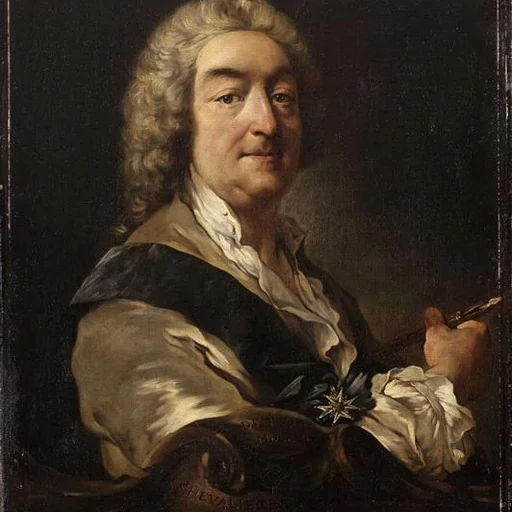
Artist
Jean-François de Troy (27 January 1679, Paris – 26 January 1752, Rome) was a French Rococo easel and fresco painter, draughtsman and tapestry designer.

 Fête Champêtre - Dance
 Fête Champêtre - Music
 Summer
 Achilles Discovered among the Daughters of Lycomedes
 The family of the Grand Dauphin, Louis of France (1661-1711)
 George II, King of England and his Family
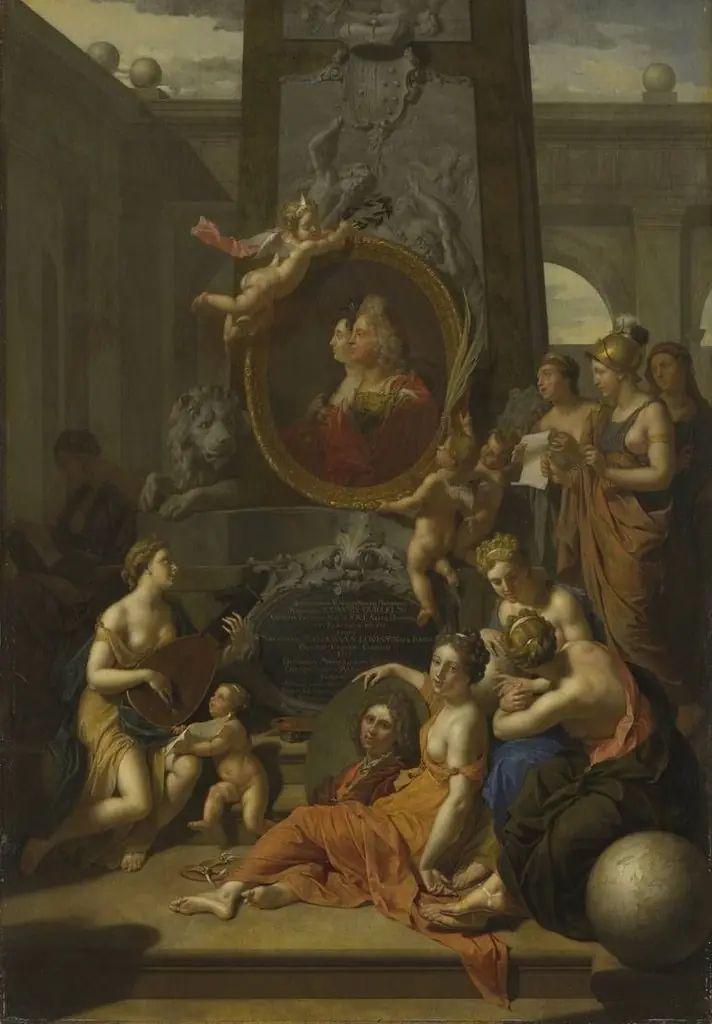 The Arts, represented by the royal couple Johann Wilhelm von der Pfalz and Maria Anna Louisa de' Medici
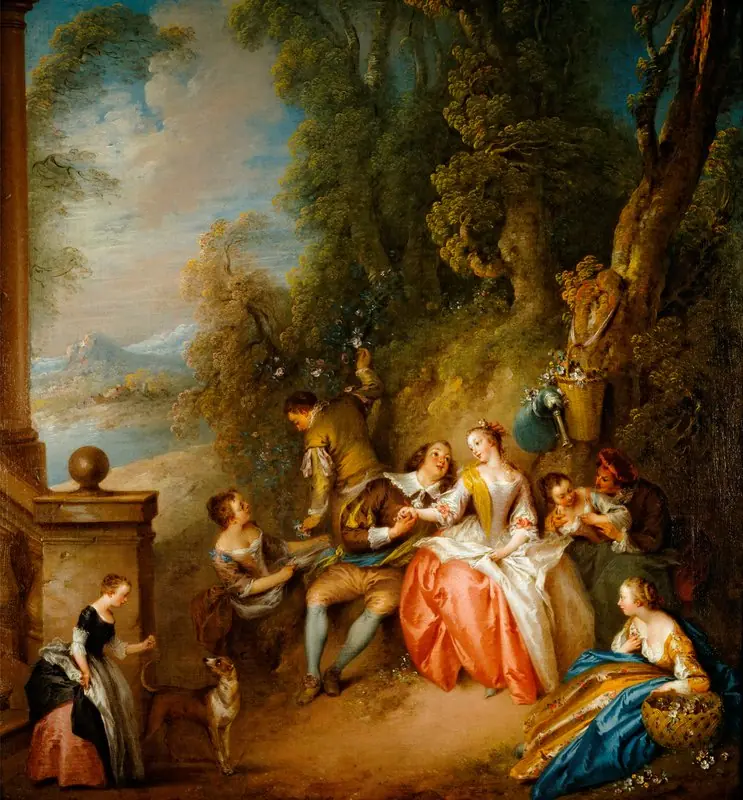 Fête champêtre
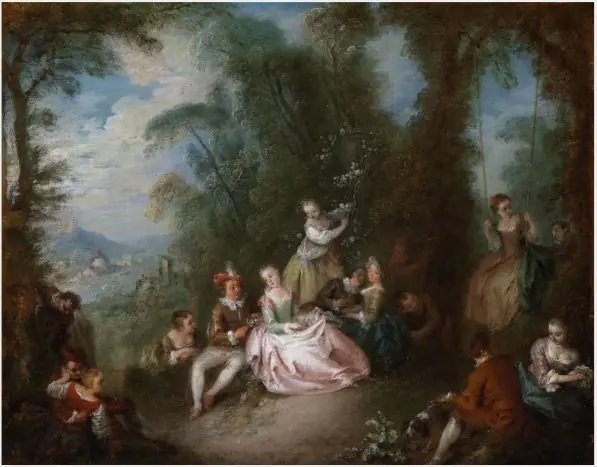 Fête Champêtre
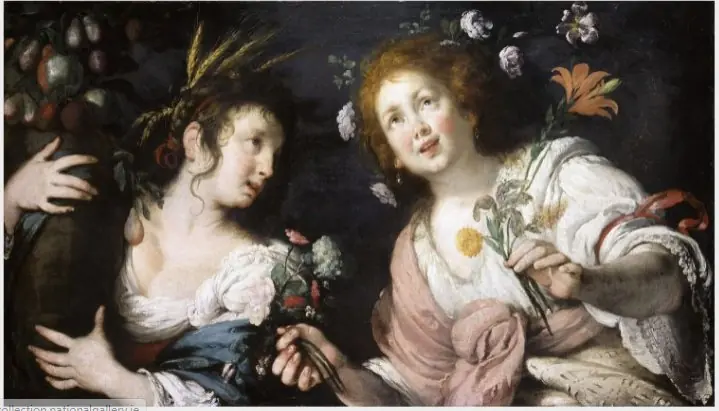 Allegory of Spring and Summer
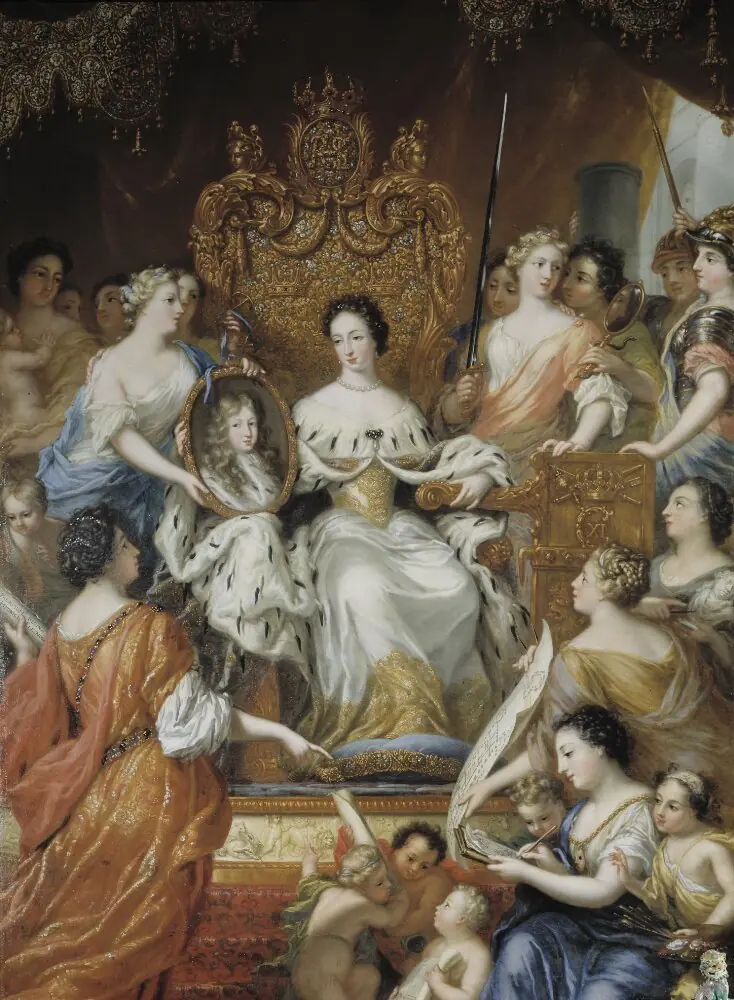 Allegori över änkedrottning Hedvig Eleonoras förmyndarregering
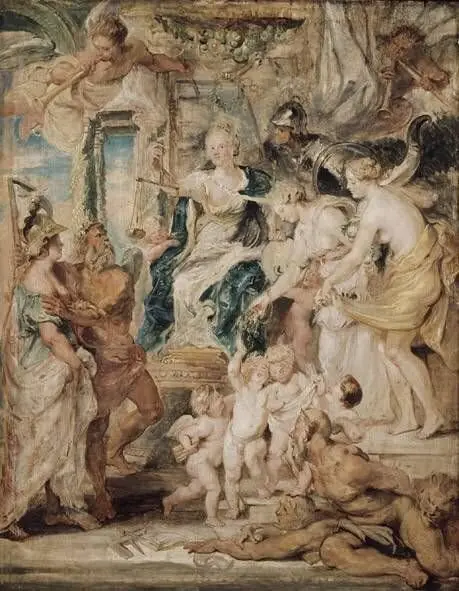 The Felicity of the Regency