Artwork
Design for a Window (Hunting Scene)
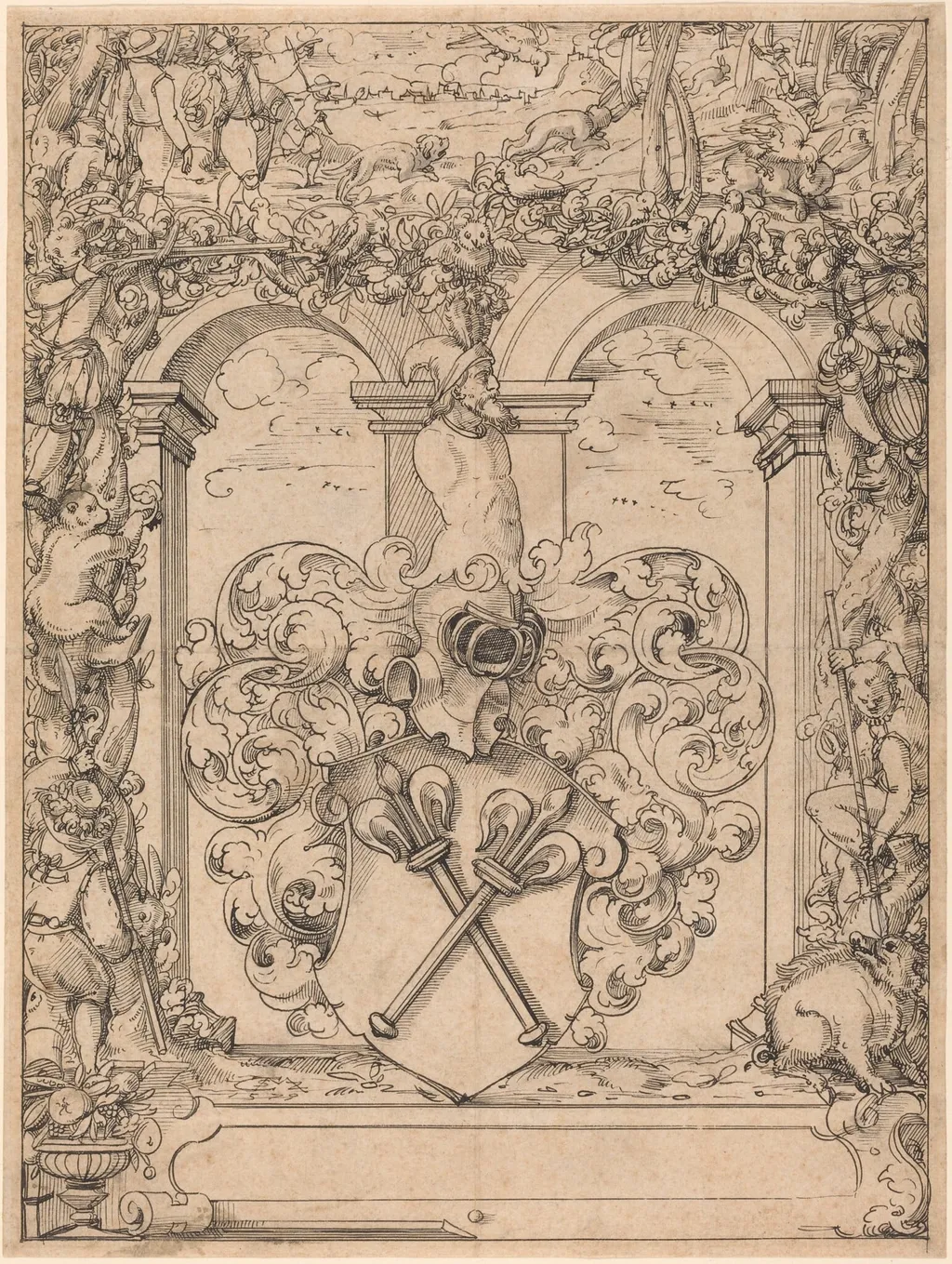
Design for a Window (Hunting Scene) is an ink drawing by the Renaissance artist Christoph Murer. It dates from 1579 and is held in the collection of the National Gallery of Art.
About this work
Overview
Christoph Murer’s 1579 drawing, titled Design for a Window (Hunting Scene), is executed in pen and black ink with subtle gray wash on laid paper. The composition is a preparatory design intended for a decorative window, combining ornamental architecture with elements suggestive of a hunt. The work measures roughly a small format and demonstrates Murer’s skill in line work and decorative motifs.
Subject & Meaning
At the centre of the drawing lie two crossed firearms, bound with ribbons and set upon a modest pedestal. Behind them a window frame is filled with scrolling, leafy foliage that resembles vines, while an arch supported by columns frames the scene. A diminutive bird perched atop the arch adds a natural touch, linking the martial symbols of the guns to the broader theme of hunting and celebration.
Technique & Style
The gray wash, applied sparingly, enhances tonal variation without overwhelming the ink.
Murer employs fine cross‑hatching to model form and convey depth, layering intersecting lines to create shadows and texture across the metal, ribbons, and foliage. The gray wash, applied sparingly, enhances tonal variation without overwhelming the ink. The decorative scrollwork around the window reflects the late‑Renaissance penchant for intricate ornamentation, while the precise line quality underscores the artist’s mastery of drawing as a design tool.
Context
The drawing belongs to a period when artists produced detailed designs for architectural and decorative commissions, often serving as templates for craftsmen. Murer, active in the German-speaking lands, frequently blended figurative and ornamental elements, catering to patrons who desired elaborate visual programs for interiors such as windows, panels, or tapestries.
Legacy
Although the piece remains a study rather than a finished decorative panel, it illustrates the integration of hunting iconography into domestic ornamentation during the late sixteenth century. The work continues to inform scholars of Murer’s preparatory methods and the broader practice of using detailed ink drawings to communicate complex decorative schemes to artisans.
Artist & collection


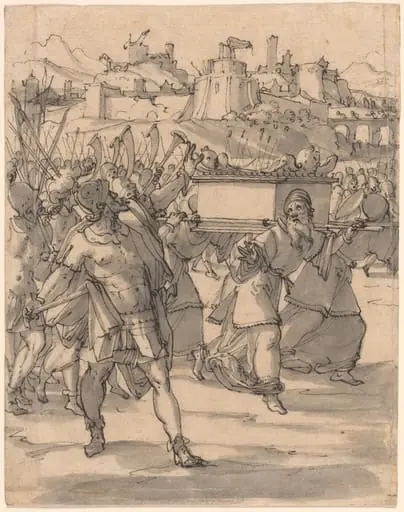 Joshua and the Israelites before the Walls of Jericho
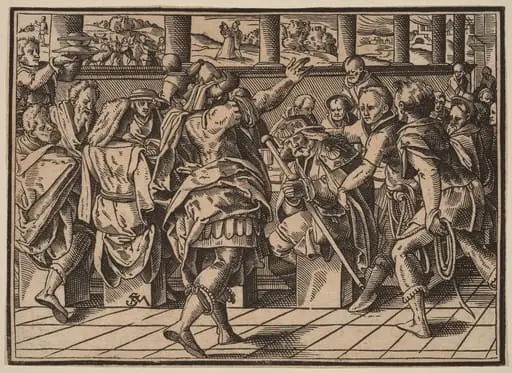 The Martyrdom of Saint James (?)
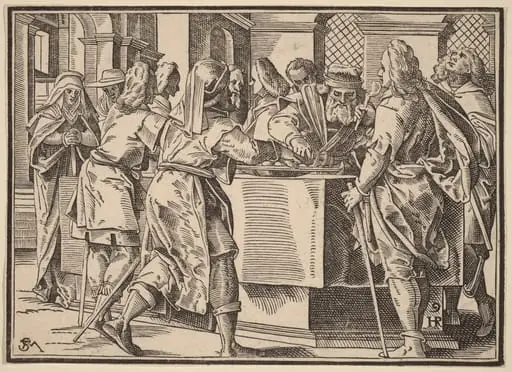 Christ Tells His Disciples of the Last Judgment
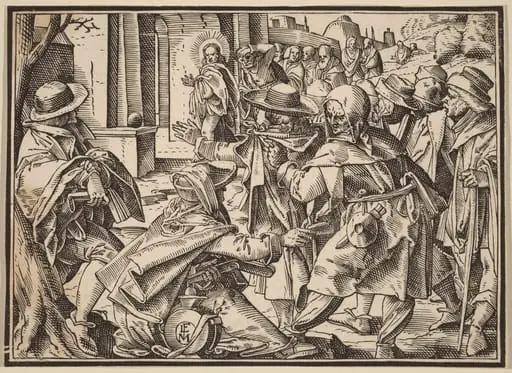 Christ Tells His Disciples of the Last Judgment
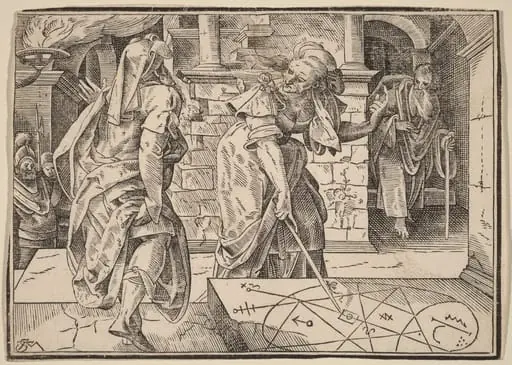 Christ Tells His Disciples of the Last Judgment
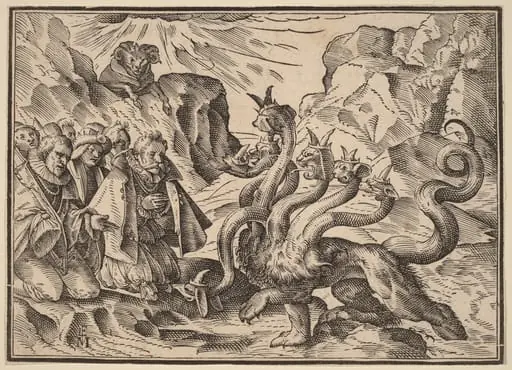 The Four Horsemen of the Apocalypse
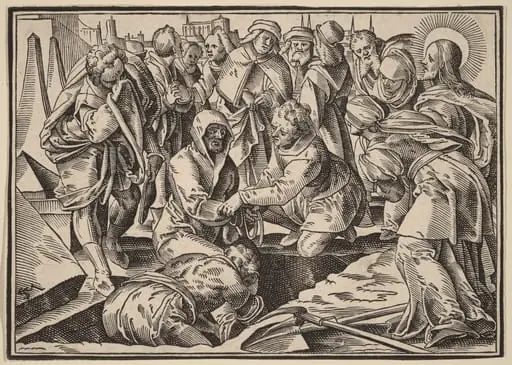 Christ Tells His Disciples of the Last Judgment
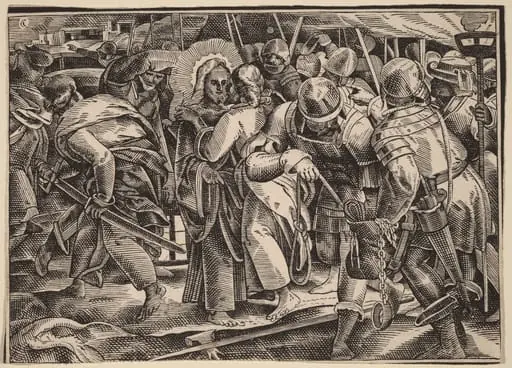 Christ Tells His Disciples of the Last Judgment
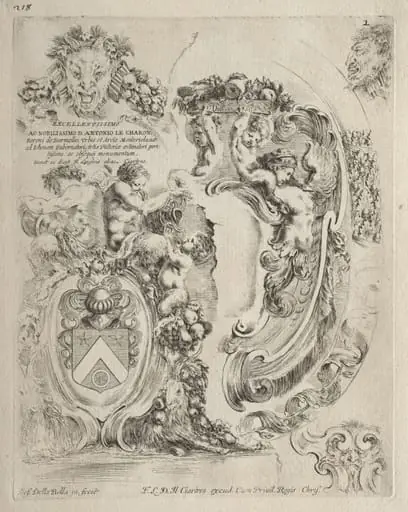 Collection of Various Caprices and New Designs of Cartouches and Ornaments: No. 2, Dedication Page
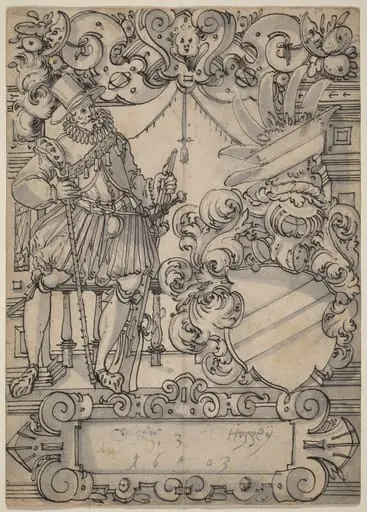 A Donor with a Coat of Arms (Schildbegleiter und Wappenschild mit Schrägbalken)
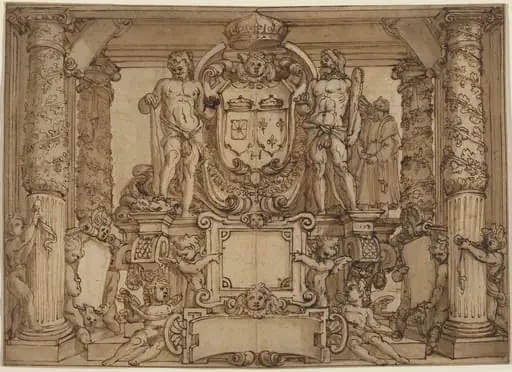 An Architectural Wall Design in Honor of Henry IV, the Gallic Hercules
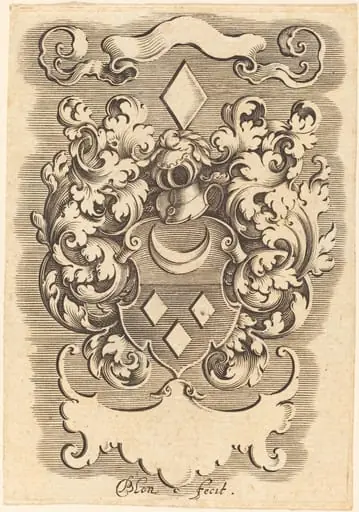 Crest
Crest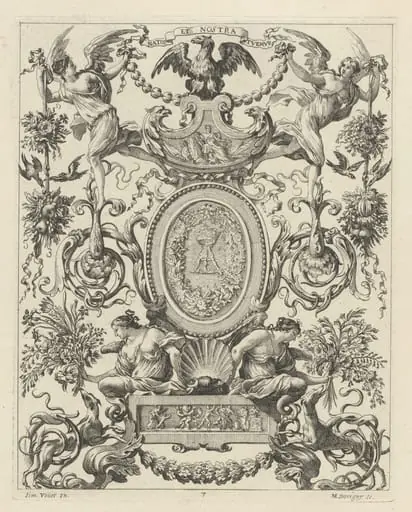 Ornamental Panel Surmounted by an Eagle and the Motto NATOS ET NOSTRA TUEMUR
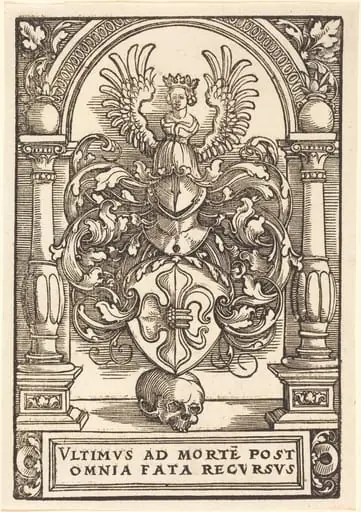 Coat of Arms of Lazarus Spengler
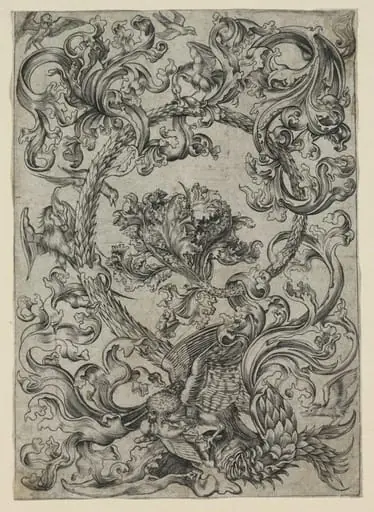 Ornamental Foliage, with an Owl and other Birds
 Coat of Arms with a Lion and a Cock
 Upright Ornament with Eight Naked Men
 Shield with Mascaron
 Coat of Arms with Tumbling Boy
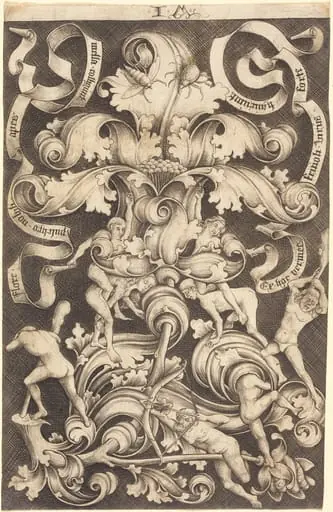 Ornament with Flower and Eight Wild Folk