Artwork
William II of Orange
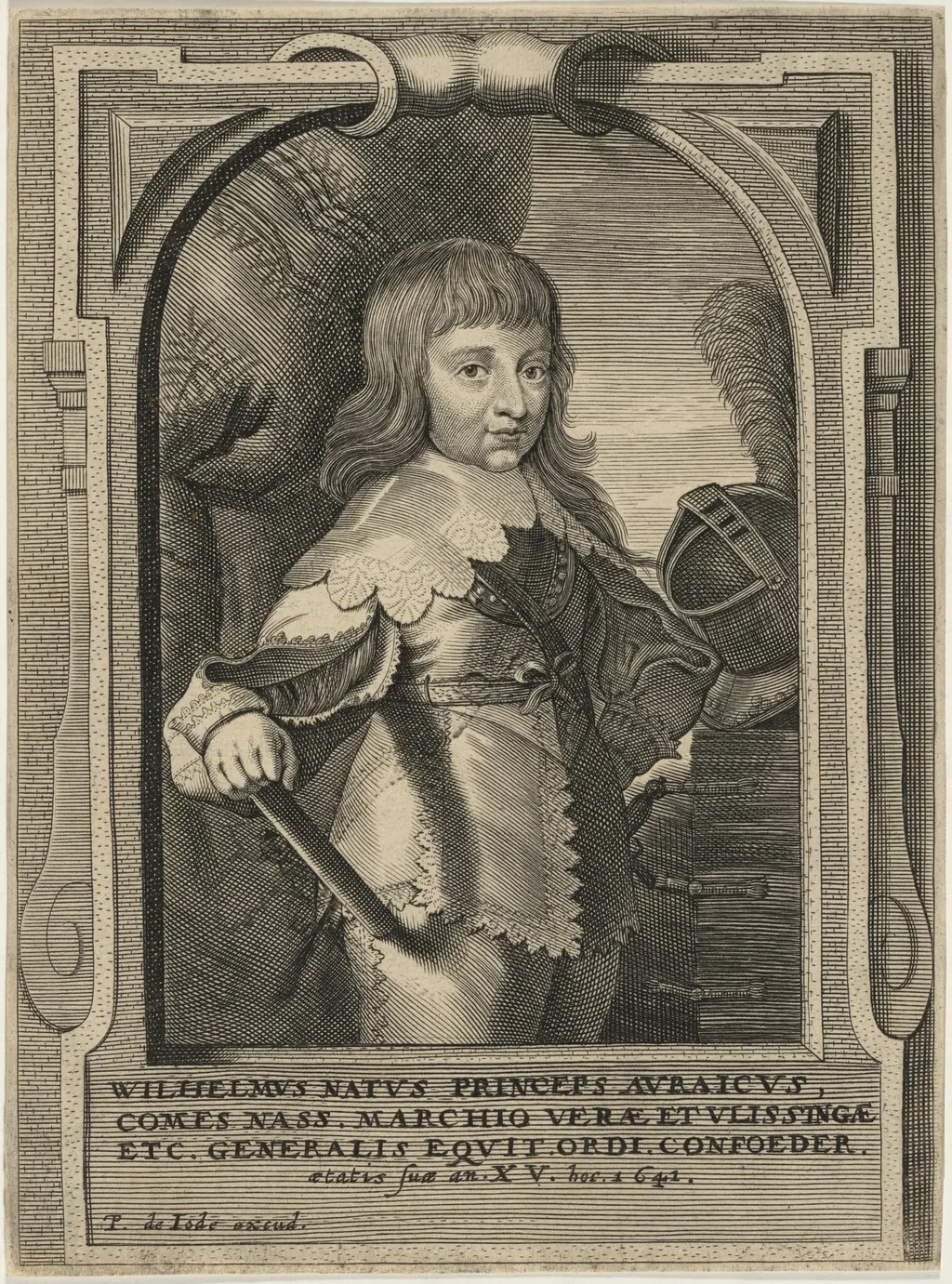
William II of Orange is an ink print by the Baroque artist Pieter de Jode II. It dates from 1641 and is held in the collection of the National Gallery of Art.
About this work
Overview
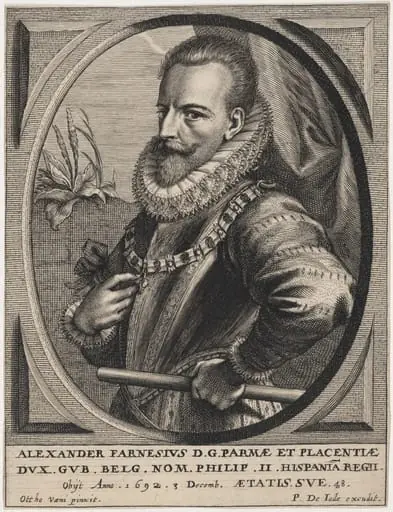
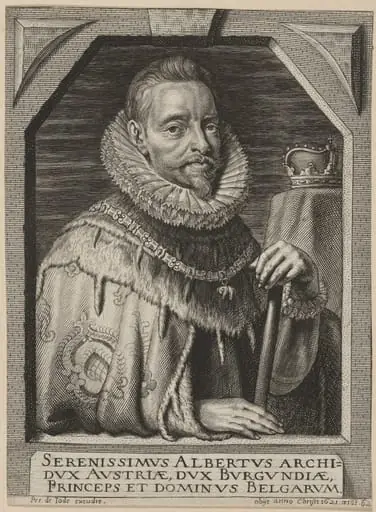
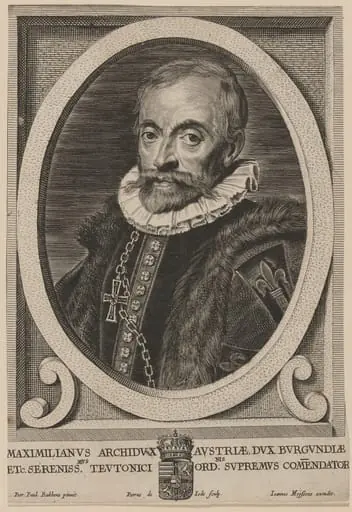
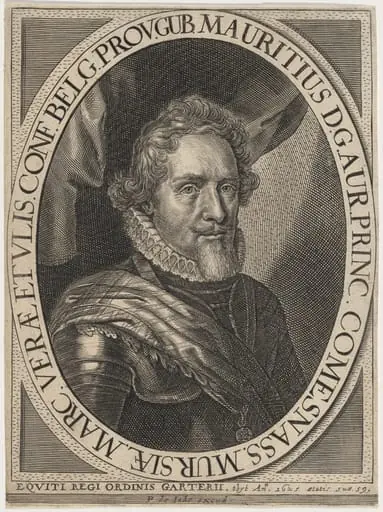
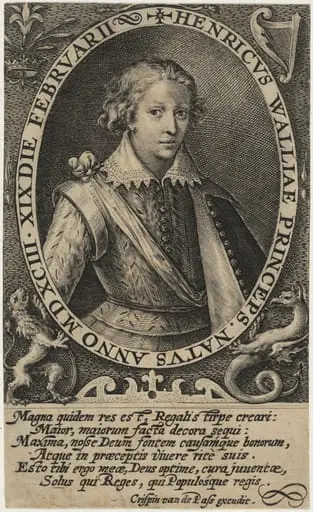
This 1641 copper engraving presents William II of Orange, rendered in stark black-and-white. The portrait shows the prince from the shoulders up, his hair curled around his forehead, a decorative collar framing his neck, and a cloak draped over one arm. He holds a rolled document in his right hand, while a wavy ornamental border encloses the image.
Subject & Meaning
William II, a key figure in the Dutch Republic’s mid‑17th‑century politics, is identified by a Latin inscription beneath the portrait that enumerates his titles. The inclusion of a scroll suggests his role in governance and diplomacy, emphasizing his authority and the administrative responsibilities he carried as stadtholder.
Technique & Style
Executed by Pieter de Jode II, the work exemplifies the meticulous line engraving process. The artist incised fine, intersecting lines into a metal plate, producing a range of tonal values from delicate hair curls to the richly textured fabric. The decorative border and precise lettering reflect the period’s emphasis on ornamental detail in portrait prints.
History & Provenance
Created in 1641, the print emerges from the flourishing print‑making workshop of Pieter de Jode II, a noted Flemish engraver active in Antwerp. While the original plate’s ownership history is not fully documented, copies of the image circulated among collectors of Dutch political portraiture, serving both commemorative and propagandistic purposes.
Artist & collection