Artwork
Ernest, Archduke of Austria
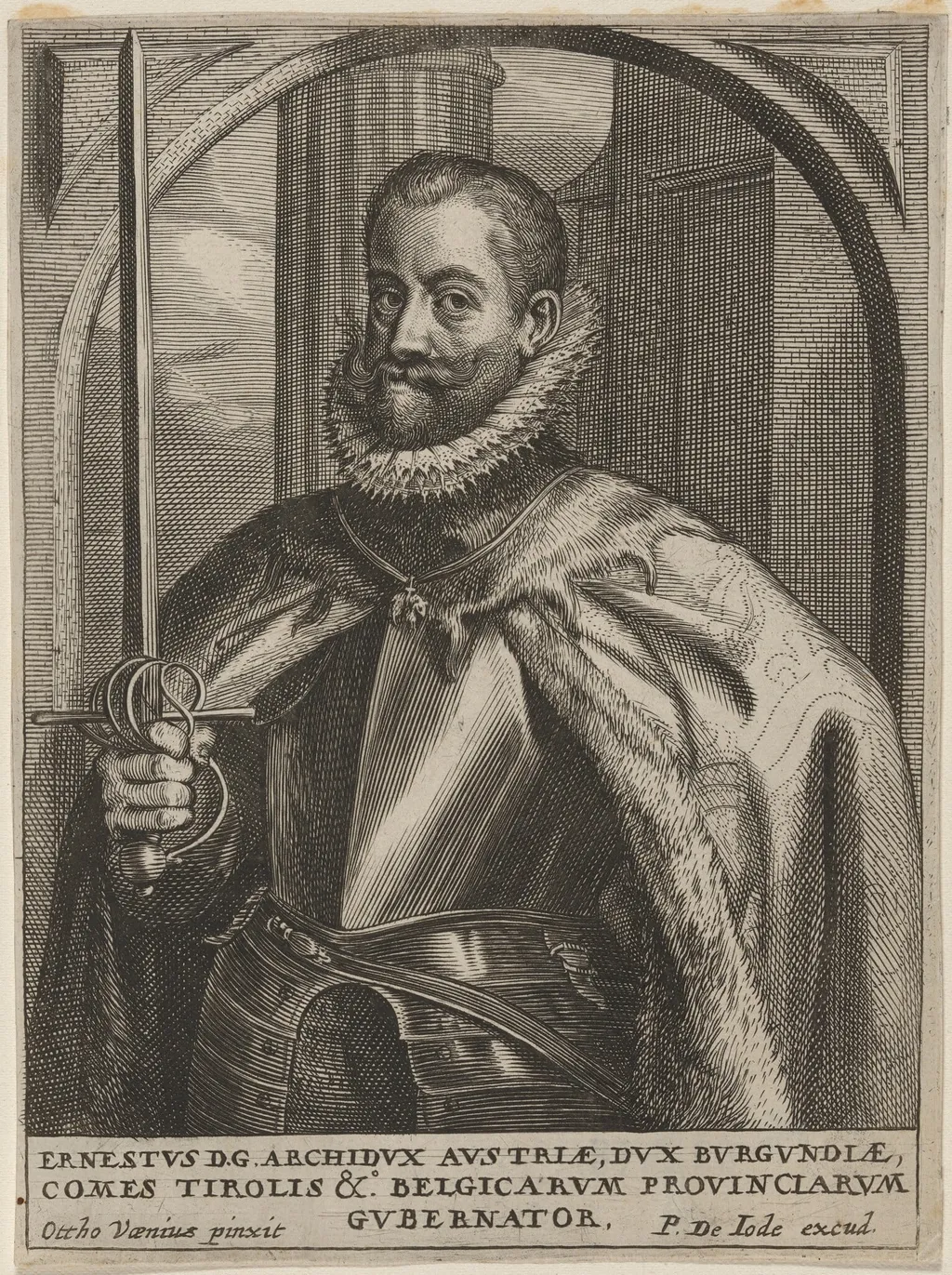
Ernest, Archduke of Austria is an ink print by the Baroque artist Pieter de Jode II. It dates from 1641 and is held in the collection of the National Gallery of Art.
About this work
Overview
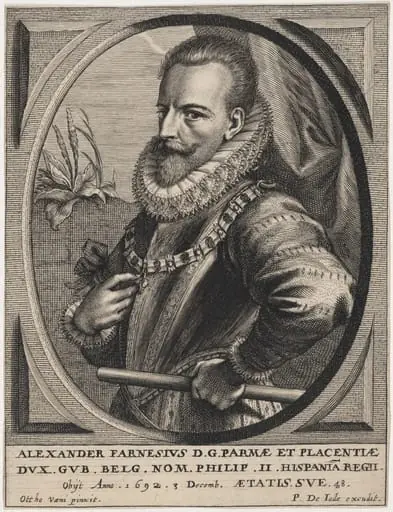
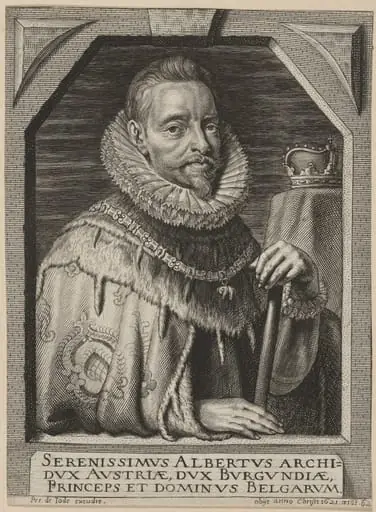
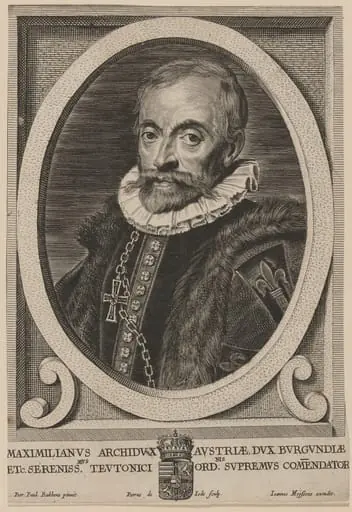
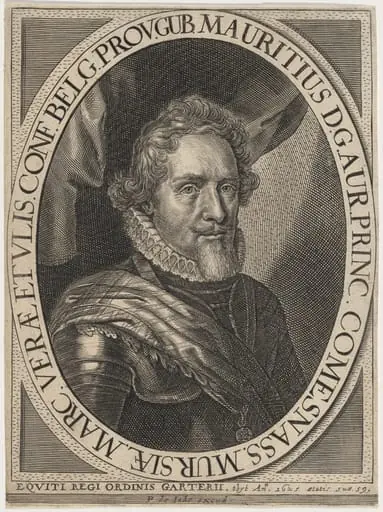
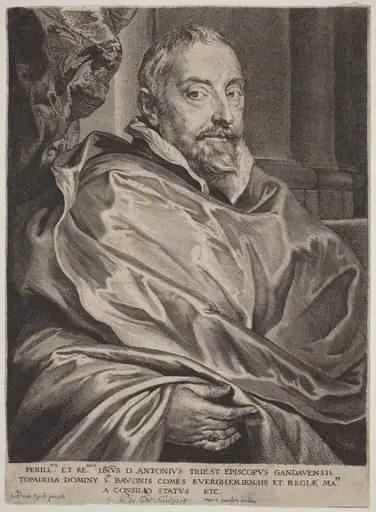
This 1641 engraving by Pieter de Jode II depicts Ernest, Archduke of Austria, a Habsburg nobleman and military leader. Executed in fine line work on paper, the portrait captures the subject in formal attire, emphasizing his status through precise detailing. The composition is tightly framed, focusing attention on the figure’s expression and attire against a simple architectural backdrop.
Subject & Meaning
The image functions as a formal portrait meant to project legitimacy and gravitas, typical of Habsburg visual propaganda during the Thirty Years’ War.
Ernest, Archduke of Austria, is portrayed as a dignified nobleman, his beard and ruffled collar signaling both age and aristocratic refinement. The sword in his right hand suggests military authority, while the fur-trimmed cape conveys wealth and rank. The image functions as a formal portrait meant to project legitimacy and gravitas, typical of Habsburg visual propaganda during the Thirty Years’ War.
Technique & Style
Pieter de Jode II employed fine, controlled engraving lines to render texture in fabric, fur, and skin. The contrast between light and shadow enhances the three-dimensionality of the face and clothing, a hallmark of Baroque portraiture. The brick wall and archway behind him provide depth without distraction, allowing the figure to dominate the composition through meticulous detail and tonal variation.
History & Provenance
Created in 1641, the engraving was likely produced for distribution among noble circles or as part of a series documenting Habsburg family members. Pieter de Jode II, a Flemish printmaker known for reproductive engravings, often worked from painted portraits. The print’s survival in institutional collections suggests its use as a historical record rather than a commercial product.
Context
During the mid-17th century, engraved portraits of royalty and nobility circulated widely across Europe as tools of political identity. Ernest, a governor of the Spanish Netherlands, was a key figure in Habsburg military efforts. This image aligns with broader trends in print culture, where visual representation reinforced dynastic authority amid religious and territorial conflict.
Legacy
The engraving remains a documented example of Baroque portraiture in print form, illustrating how elite identities were constructed through visual media. While not widely reproduced today, it contributes to scholarly understanding of Habsburg iconography and the role of printmakers in shaping public perception of aristocracy during the early modern period.
Artist & collection