Artwork
Albert VII, Archduke of Austria
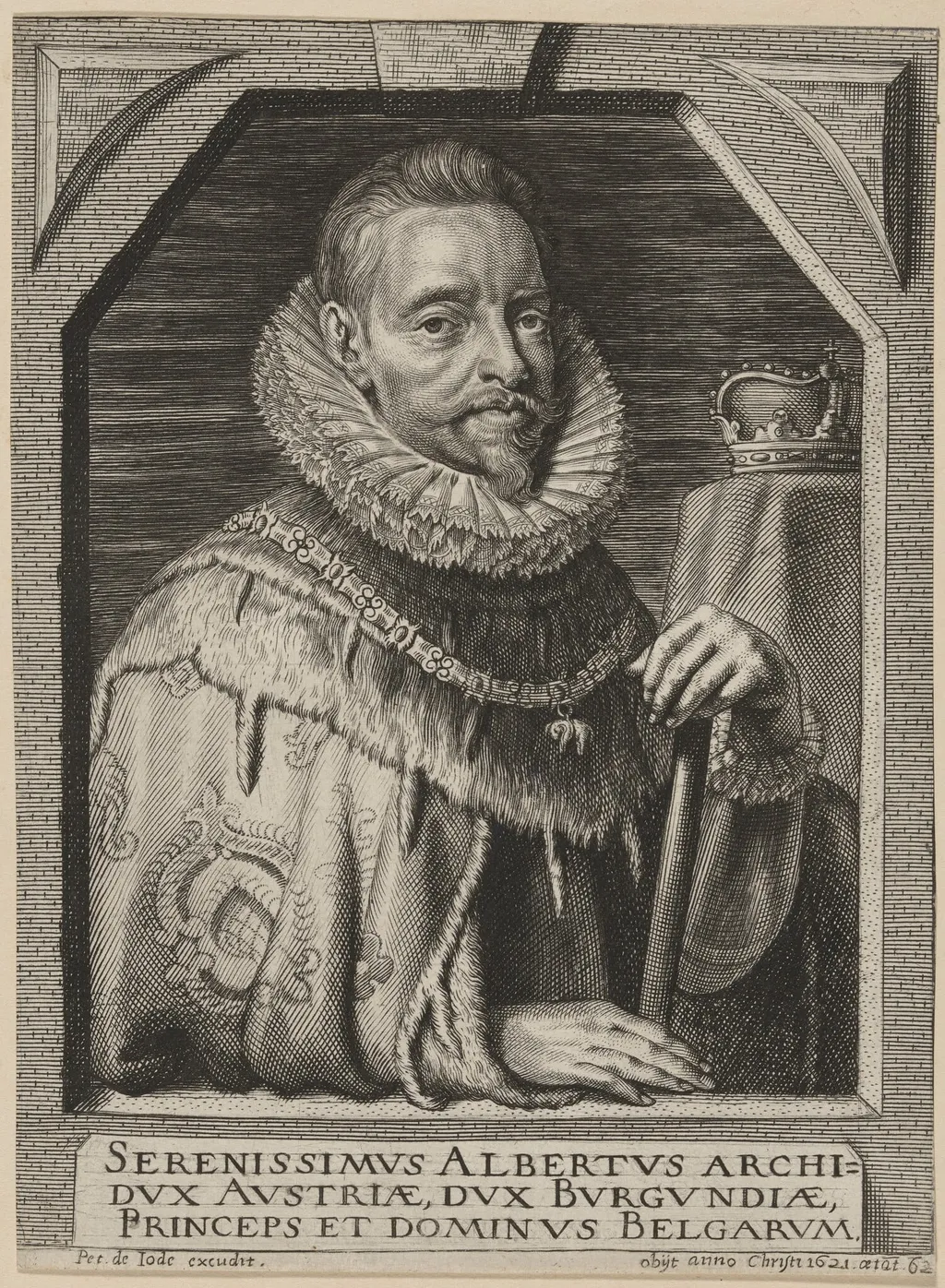
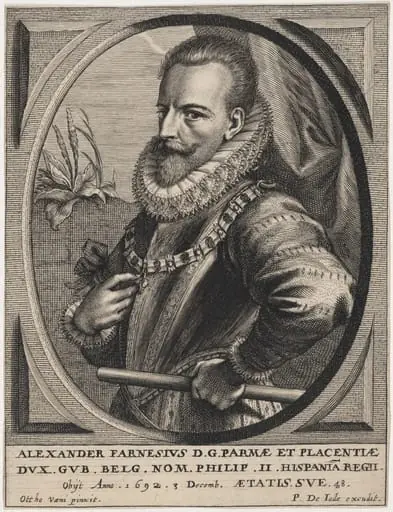
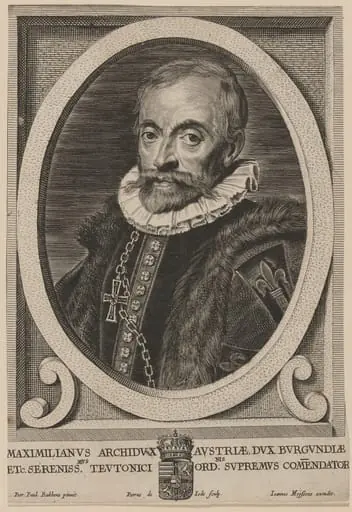
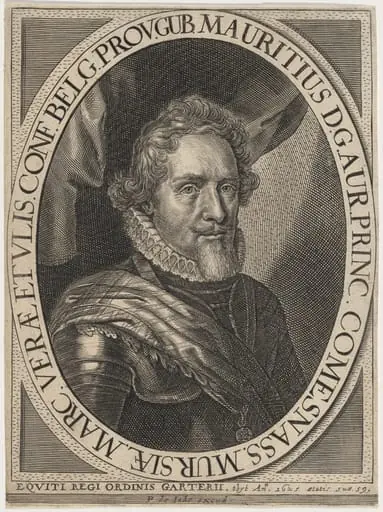
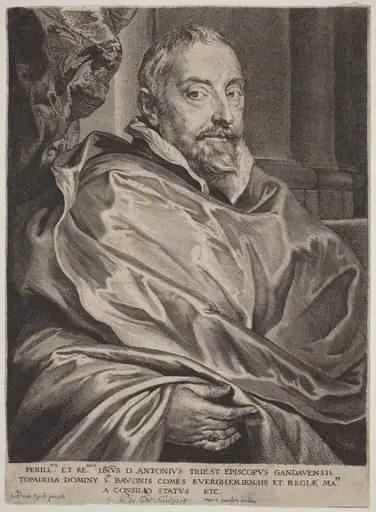
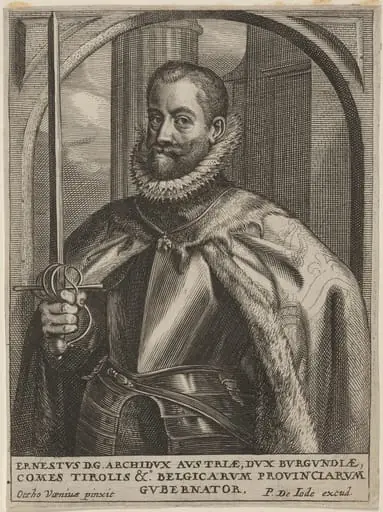
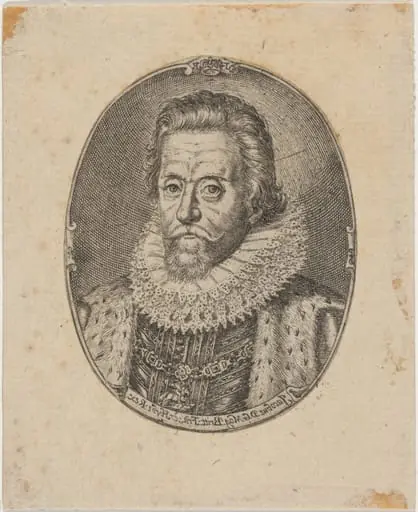
Albert VII, Archduke of Austria is an ink print by the Baroque artist Pieter de Jode II. It dates from 1641 and is held in the collection of the National Gallery of Art.
About this work
Overview
The medium of engraving allowed for the reproduction of authoritative likenesses across European courts, serving both documentary and ceremonial functions.
This 1641 engraving by Pieter de Jode II depicts Albert VII, Archduke of Austria, as a sovereign figure rendered in fine linear detail. Executed with precision, the work belongs to the tradition of early modern portraiture used to convey political presence. The medium of engraving allowed for the reproduction of authoritative likenesses across European courts, serving both documentary and ceremonial functions.
Subject & Meaning
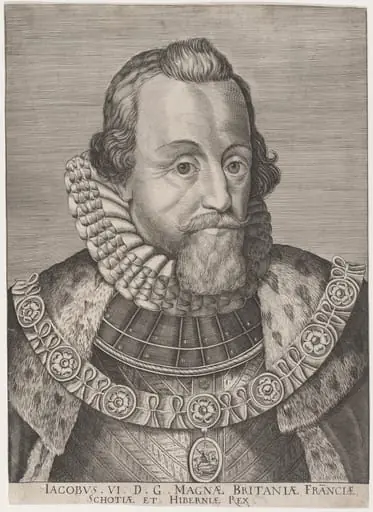
Albert VII is shown in full regalia, his formal attire including a fur-trimmed coat, a jeweled chain, and a scepter crowned with a royal emblem. The ruffled collar and solemn expression reinforce his status as a Habsburg ruler. The image does not depict action but rather static authority, aligning with the conventions of dynastic portraiture meant to project legitimacy and continuity in governance.
Technique & Style
De Jode employed fine cross-hatching to model volume and texture, particularly in the fabric of the coat and the folds of the collar. The lines are controlled and deliberate, creating subtle gradations of light and shadow without relying on tone. The precision of the engraving reflects the technical standards of Flemish printmaking, where clarity and detail were prioritized over expressive brushwork.
History & Provenance
Created in 1641, the engraving was likely produced for distribution among noble households or diplomatic circles, reinforcing Albert VII’s legacy after his death in 1621. As a reproductive print, it served to maintain the visual memory of a ruler whose influence extended through his role as Governor of the Spanish Netherlands. Its survival indicates continued interest in Habsburg iconography in the mid-seventeenth century.
Context
During the Thirty Years’ War, visual representations of rulers like Albert VII were tools of political memory. As a Habsburg archduke and former governor of the Low Countries, his image carried weight in regions contested by Protestant and Catholic powers. Engravings such as this helped sustain the perception of dynastic stability amid shifting alliances and religious conflict.
Legacy
Pieter de Jode II’s engraving exemplifies the role of print in preserving the likenesses of European nobility. His technique influenced later generations of engravers who specialized in portraiture. While not widely known today, the work remains a representative example of how print culture sustained the visual authority of rulers beyond their lifetimes.
Artist & collection