Artwork
Dakka Fort and Lalpura
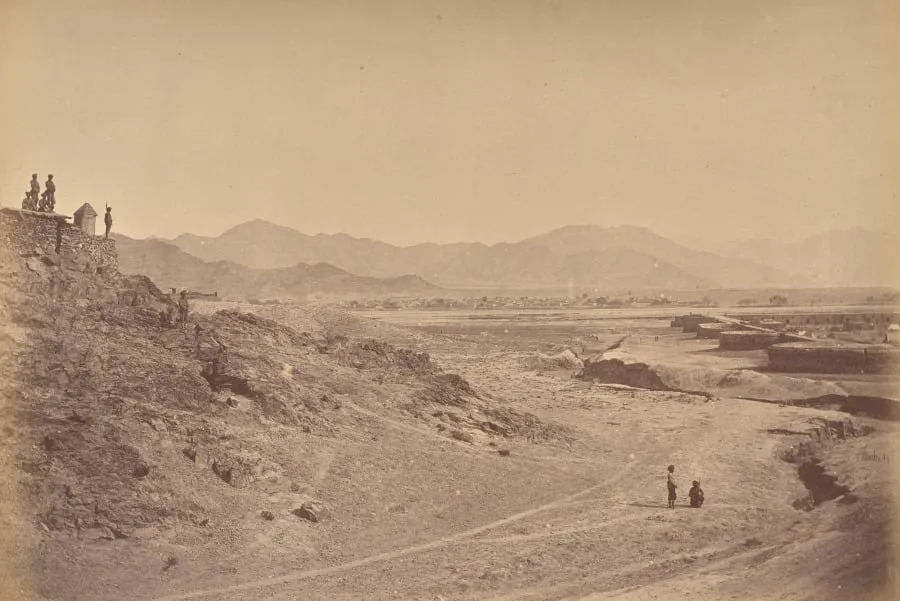
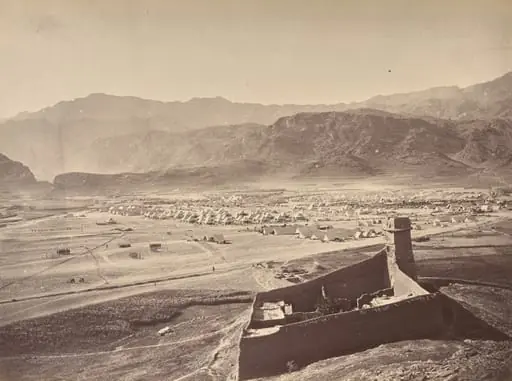
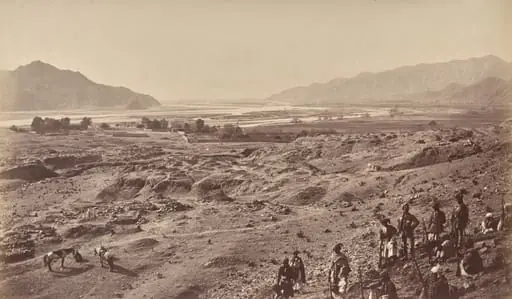
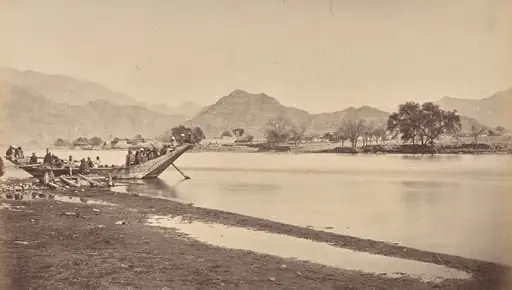
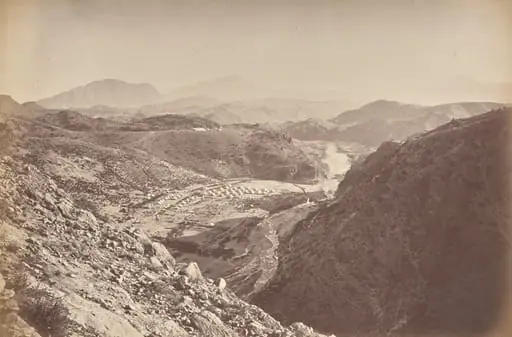
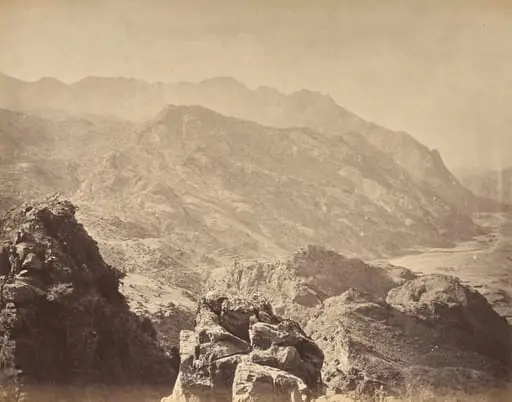
Dakka Fort and Lalpura is a photography by the Impressionist artist John Burke. It dates from 1879 and is held in the collection of the Cleveland Museum of Art. This photograph, taken during the Second Anglo-Afghan War (1878–1880), captures Dakka Fort and the nearby settlement of Lalpura.
About this work
This photo was taken during the Second Anglo-Afghan War, but there’s no battle here—just the calm before or after.
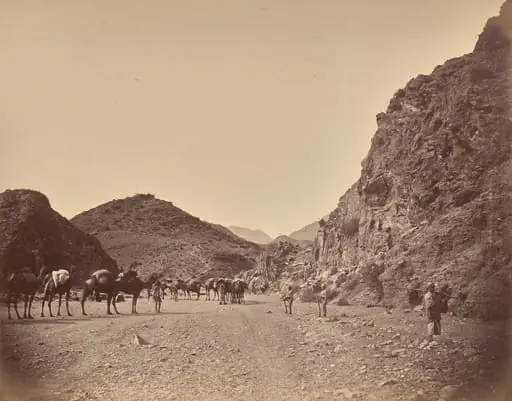
You see a quiet stone fort perched on a hill, with soldiers lounging in the shade and a few camels resting below.
This photo was taken during the Second Anglo-Afghan War, but there’s no battle here—just the calm before or after. Burke traveled with the British army, lugging heavy cameras and glass plates. He couldn’t shoot fast action, so he framed the places where history happened instead.
If you like this kind of early war photography, look up *John Burke (Irish, 1845–1915)*.
Overview
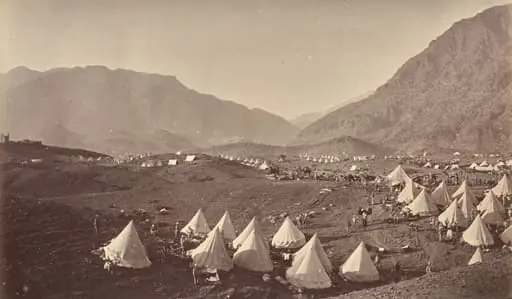
This photograph, taken during the Second Anglo-Afghan War (1878–1880), captures Dakka Fort and the nearby settlement of Lalpura. It is one of many images by John Burke, who accompanied British forces as their primary photographic documentarian. Due to the limitations of 19th-century equipment, Burke could not record combat; instead, he focused on the quiet aftermath and the infrastructure that supported military operations.
Subject & Meaning
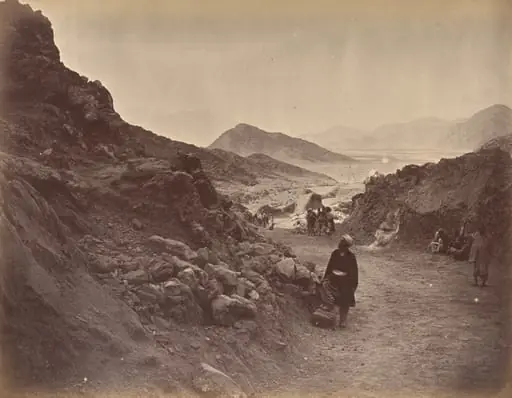
The image shows a stone fort perched on a hillside, with British soldiers resting in its shade and camels lounging below. There is no indication of conflict—only stillness. This calm scene serves as a record of occupation, not action. The fort, a strategic point, becomes a symbol of control rather than conquest, reflecting the war’s broader pattern of territorial assertion through presence rather than battle.
Technique & Style
Burke used large-format cameras and fragile glass plate negatives, requiring long exposures and cumbersome equipment. His compositions are deliberate and static, emphasizing architecture and terrain over movement. The lighting is natural, the framing balanced, and the subjects—soldiers, animals, stone walls—are arranged to convey scale and context. The absence of action is not a failure but a consequence of technological constraint.
History & Provenance
John Burke, an Irish photographer based in India, was commissioned to document the British campaign in Afghanistan. He carried his equipment across rugged terrain, often under difficult conditions. This photograph likely originated from his personal album, later acquired by British military or colonial archives. Its survival offers a rare visual record of the war’s logistical and spatial dimensions.
Context
The Second Anglo-Afghan War was part of Britain’s broader imperial strategy to counter Russian influence in Central Asia. Photography served both military and propagandistic aims, providing evidence of presence and control. Burke’s images, though not dramatic, were among the first to visually map Afghanistan for a British audience, shaping perceptions of a distant and contested land.
Legacy
Burke’s photographs established a visual archive of Afghanistan during a pivotal moment of foreign intervention. His work influenced later war documentation by demonstrating how stillness could convey the weight of occupation. Today, these images are studied not for their action, but for their quiet testimony to the rhythms of imperial logistics and the landscapes shaped by war.
Artist & collection