Artwork
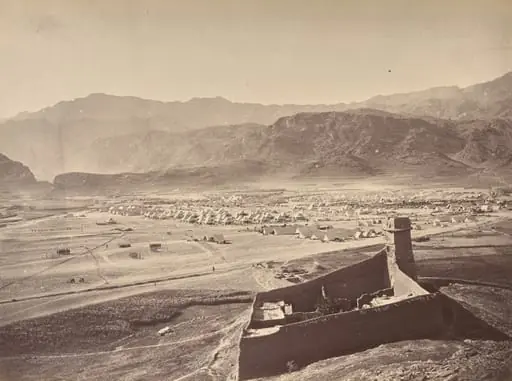
Ali Musjid and Camp
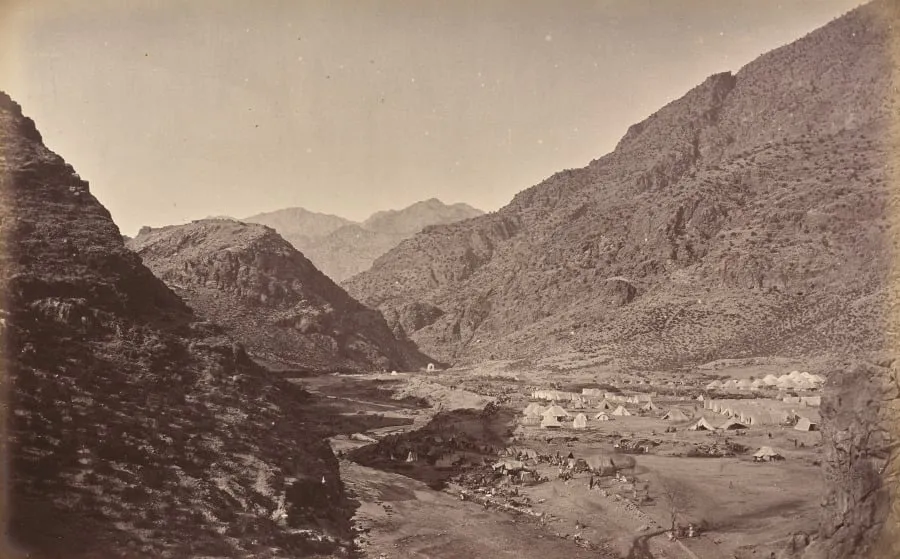
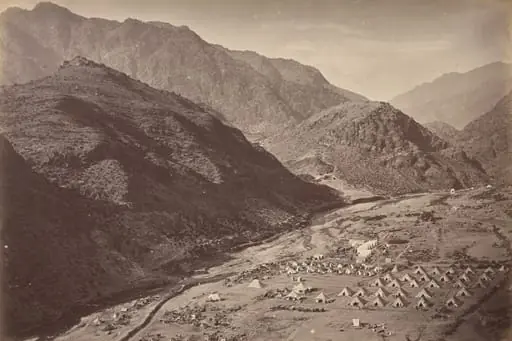
Ali Musjid and Camp is a photography by the Impressionist artist John Burke. It dates from 1879 and is held in the collection of the Cleveland Museum of Art. This photograph records a scene from the Second Anglo‑Afghan War (1878‑1880), a conflict between British forces and Afghan forces.
About this work
Burke traveled with the British army, but he couldn’t shoot battles—cameras were too slow.
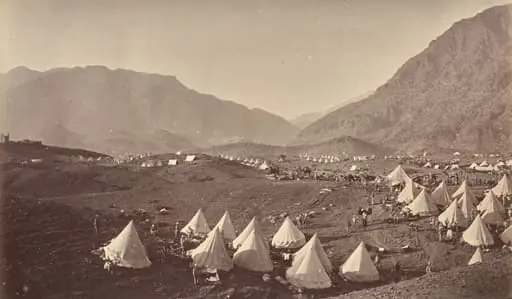
You see a quiet valley with a stone fort on a hill and rows of white tents below. Soldiers and pack animals dot the landscape.
This photo was taken during the Second Anglo-Afghan War. Burke traveled with the British army, but he couldn’t shoot battles—cameras were too slow. Instead, he documented the places where fighting happened, like this fort.
For more photos of war zones from the same time, look up *John Burke (Irish, 1845–1915)*.
Overview
This photograph records a scene from the Second Anglo‑Afghan War (1878‑1880), a conflict between British forces and Afghan forces. It was captured by John Burke, an Irish photographer who accompanied the British army and became the principal visual chronicler of the war.
Subject & Meaning
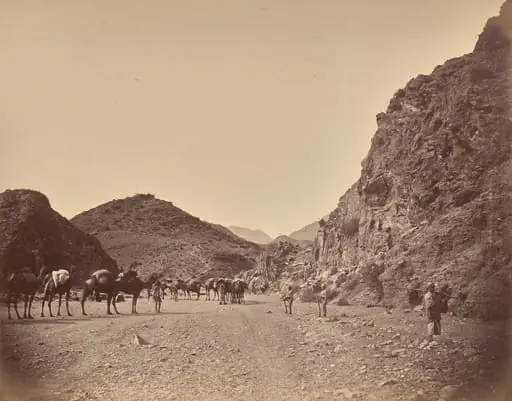
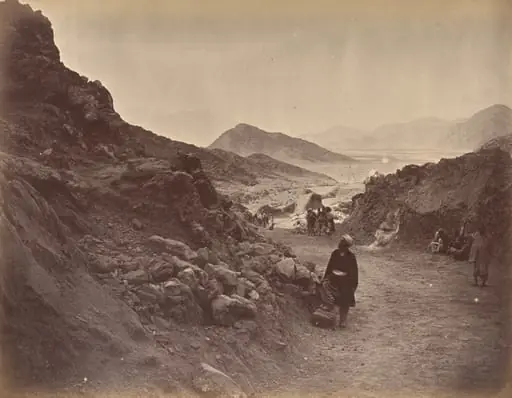
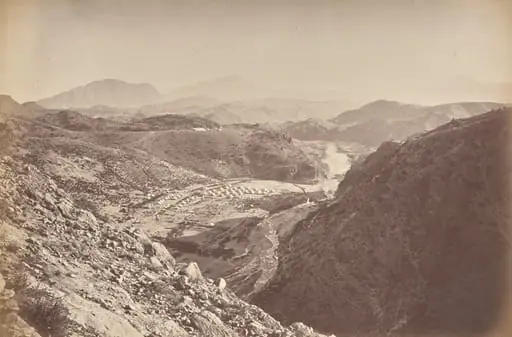
The image presents a tranquil valley dominated by a stone fort perched on a hill, with rows of white tents spread below. Soldiers and pack animals are scattered across the landscape, illustrating the logistical and defensive arrangements of a military encampment during the campaign.
Technique & Style
Taken with the slow‑acting wet‑plate collodion process of the era, the photograph lacks any depiction of combat. Instead, it emphasizes static elements—terrain, architecture, and the orderly placement of tents—reflecting the limitations of contemporary photographic technology for capturing movement.
History & Provenance
John Burke (1845‑1915) was the first photographer to work extensively in Afghanistan, documenting the war’s locations rather than its battles. His work provides a visual record of the sites of significant engagements, the infrastructure of the British army, and the personnel involved.
Context
Early war photography often focused on landscapes, camps, and portraits because cameras could not record rapid action. Burke’s images, including this one, therefore serve as historical evidence of the spatial and logistical aspects of the Anglo‑Afghan conflict rather than its battlefield dynamics.
Artist & collection