Artwork
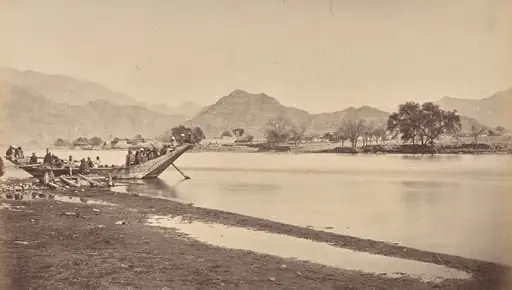
The Kabul River, Jellalabad, Scene of the Disaster
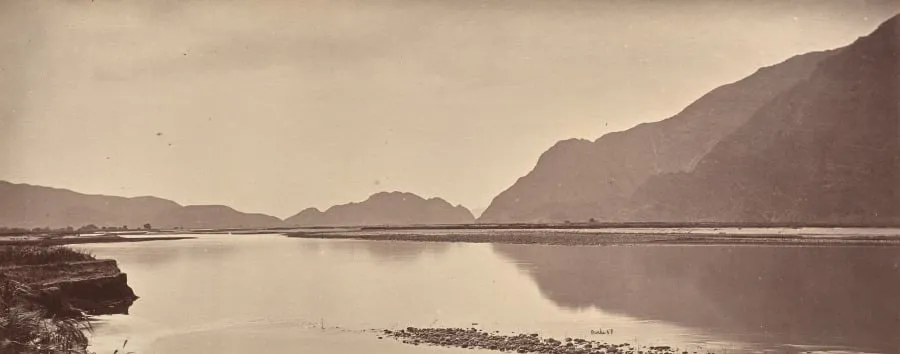
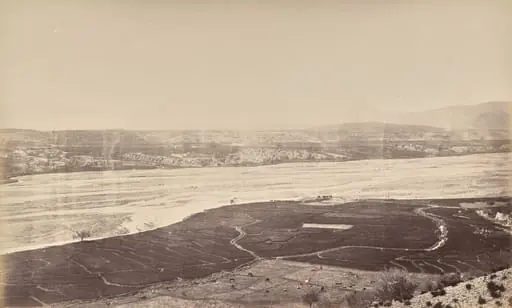
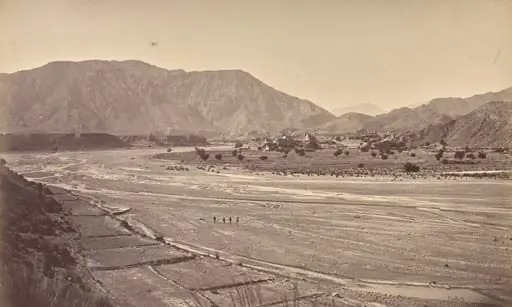
The Kabul River, Jellalabad, Scene of the Disaster is a photography by the Impressionist artist John Burke. It dates from 1879 and is held in the collection of the Cleveland Museum of Art. This photograph captures the Kabul River near Jellalabad, a site tied to the Second Anglo-Afghan War (1878–1880).
About this work
Early cameras couldn’t catch fast action, so photographers like Burke documented the places where battles happened.
You see a wide, shallow river cutting through rocky hills under a pale sky.
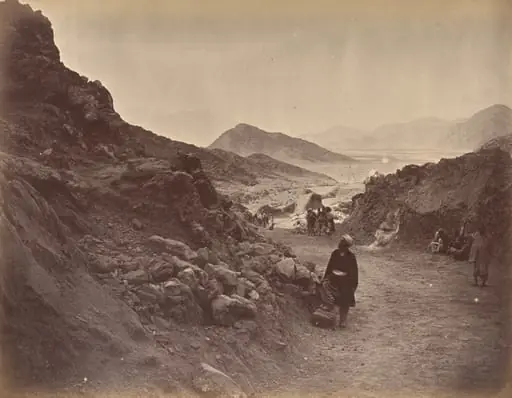
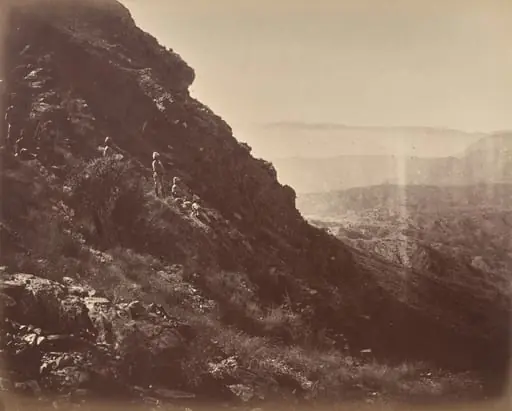
This photo was taken during the Second Anglo-Afghan War, but it doesn’t show fighting. Early cameras couldn’t catch fast action, so photographers like Burke documented the places where battles happened. The quiet landscape makes the past feel closer.
To see more war photography from this time, look up John Burke (Irish, 1845–1915).
Overview
This photograph captures the Kabul River near Jellalabad, a site tied to the Second Anglo-Afghan War (1878–1880). Taken by John Burke, it reflects the limitations of 19th-century photographic technology, which could not record fast-moving events. Instead, Burke focused on the terrain where significant military actions occurred, preserving the quiet aftermath rather than the violence itself.
Subject & Meaning
The image shows a broad, slow-moving river winding through arid hills under a muted sky. Though no combat is visible, the location is historically charged—it was near where British forces suffered heavy losses during their retreat in 1842 and again during the 1878–80 conflict. The stillness of the landscape invites reflection on the weight of past events embedded in the land.
Technique & Style
Burke used large-format glass plate negatives and portable darkrooms to produce detailed, tonally rich images in harsh field conditions. His compositions emphasize spatial depth and geological texture, with careful attention to light and horizon placement. The absence of human figures heightens the sense of solitude, aligning with the era’s documentary approach to war photography.
History & Provenance
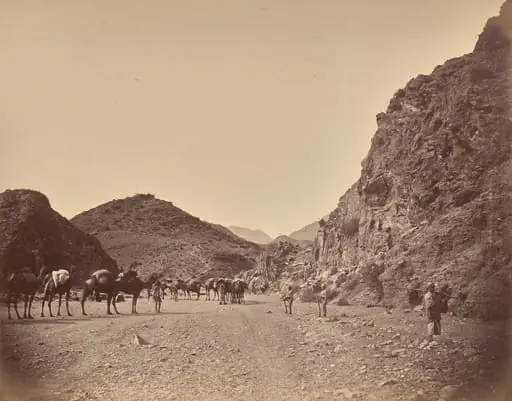
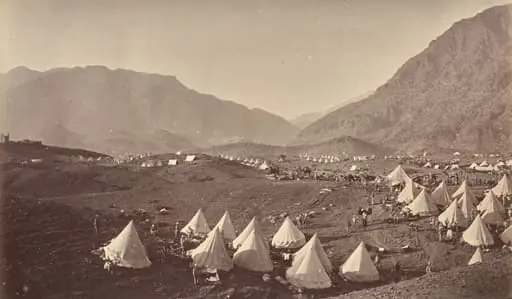
John Burke, an Irish photographer based in India, was among the first to systematically document the Second Anglo-Afghan War. He traveled with British troops, photographing key locations, personnel, and infrastructure. This image likely formed part of a larger album compiled for military or colonial audiences, preserving visual records of contested territories during imperial expansion.
Context
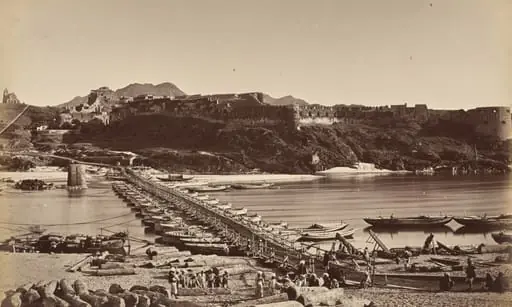
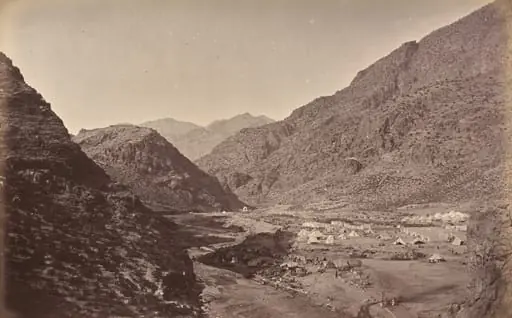
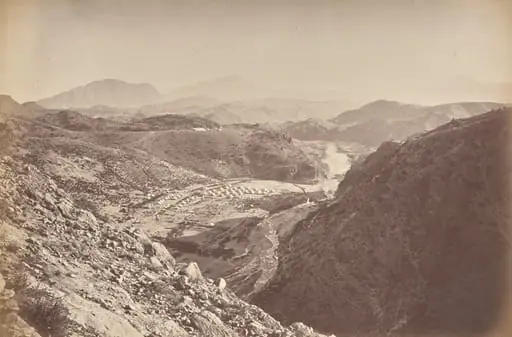
Photography during this period served as both record and propaganda. With no ability to capture motion, photographers relied on static scenes to imply narrative. Burke’s images of rivers, camps, and ruins functioned as evidence of presence and control, offering imperial audiences a tangible, if silent, connection to distant conflicts and their consequences.
Legacy
Burke’s photographs remain among the earliest visual archives of Afghanistan’s landscape during wartime. His work laid groundwork for later war documentation by prioritizing place over action, influencing how conflict is remembered through environment rather than spectacle. These images continue to be referenced in historical and anthropological studies of British colonial campaigns.
Artist & collection