Artwork
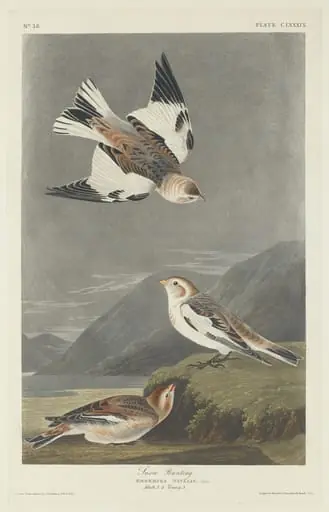
Plectrophanes Nivalis
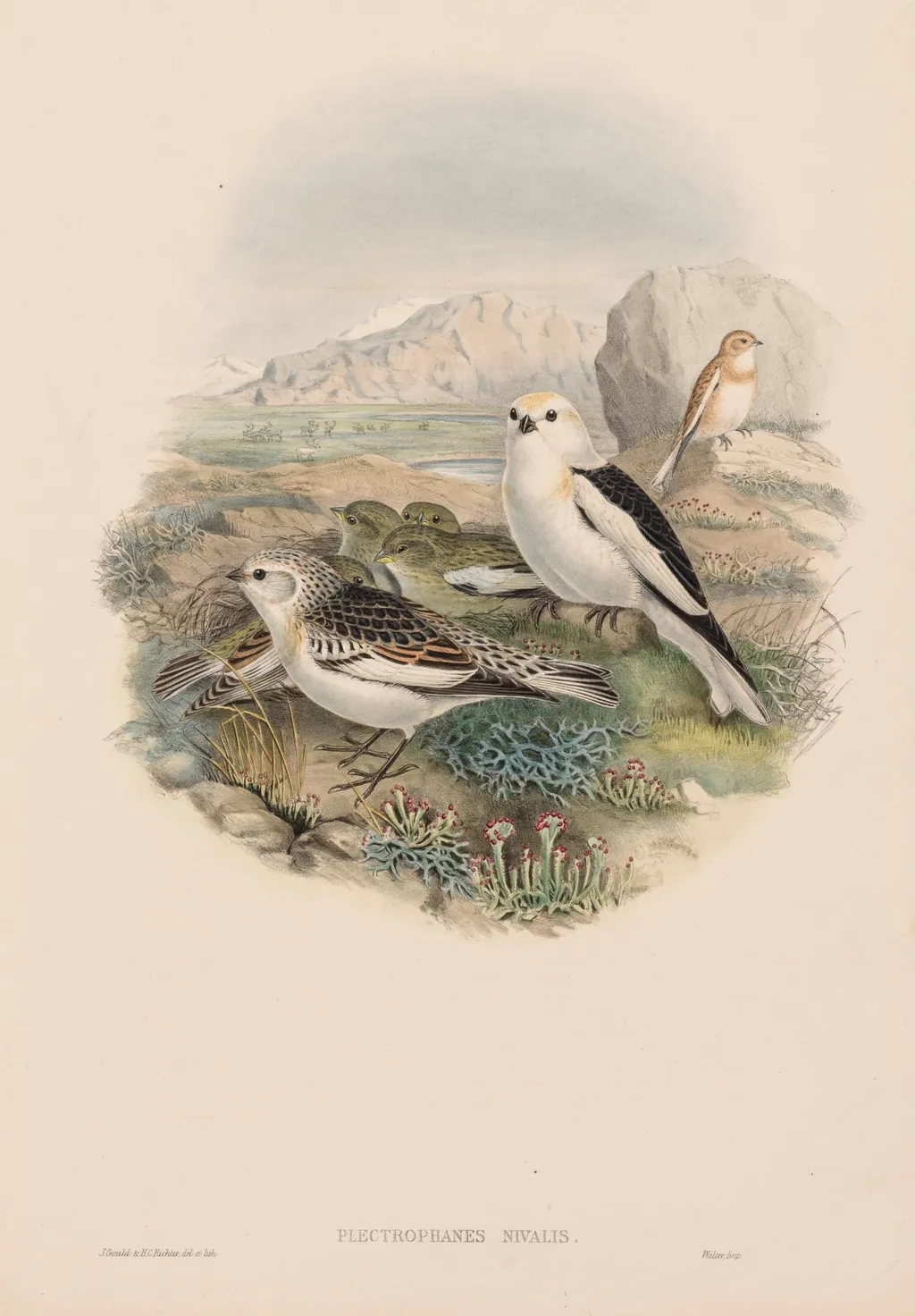
Plectrophanes Nivalis is a print by the Impressionist artist John Gould. It dates from 1873 and is held in the collection of the Cleveland Museum of Art.
About this work
Overview
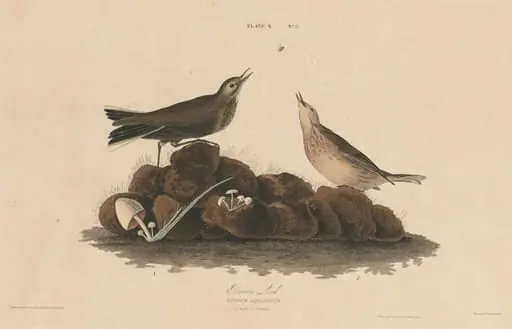
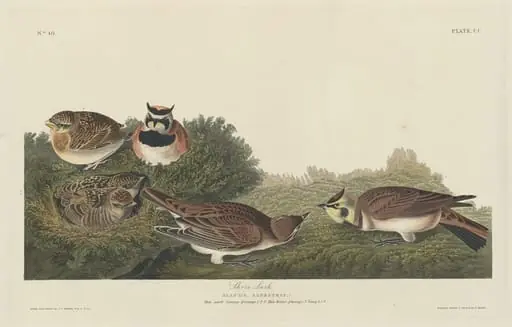
Created in 1873, this print is a scientific illustration of the snow bunting, scientifically named Plectrophanes nivalis.
Created in 1873, this print is a scientific illustration of the snow bunting, scientifically named Plectrophanes nivalis. It was produced by John Gould, a prominent English ornithologist known for his detailed ornithological publications. The work belongs to a series of plates intended to document bird species with accuracy, reflecting the 19th-century drive to classify and record natural history through visual means.
Subject & Meaning
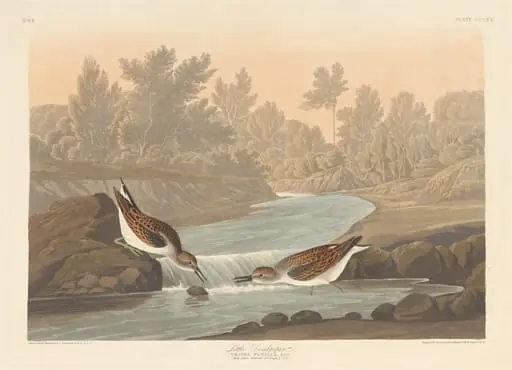
The image depicts four snow buntings in their natural alpine habitat, perched on rocky terrain amid sparse vegetation. The birds’ plumage—soft browns, whites, and blacks—is rendered with precision, emphasizing their adaptation to cold environments. The distant snow-capped mountains and winding river reinforce the species’ northern range, suggesting a narrative of resilience in harsh climates rather than mere aesthetic representation.
Technique & Style
The print employs fine line work and subtle tonal gradations to capture the texture of feathers and foliage. Details such as individual wing contours and blade-like grasses are rendered with meticulous care, typical of hand-colored lithographic techniques used in scientific publications of the era. The composition balances naturalism with compositional clarity, prioritizing taxonomic legibility over dramatic effect.
History & Provenance
This print originated from Gould’s broader ornithological projects, likely produced in collaboration with skilled engravers and colorists. It entered the collection of The Cleveland Museum of Art as part of a larger group of 19th-century natural history illustrations, valued for their documentation of avian biodiversity during a period of expanding scientific inquiry and colonial exploration.
Context
In the 1870s, ornithology was increasingly institutionalized, with illustrated monographs serving as essential tools for researchers and collectors. Gould’s publications, often produced with his wife Elizabeth and other artists, were among the most authoritative of their time. This print reflects a broader cultural moment when science and art converged to map the natural world for both academic and public audiences.
Legacy
Though no longer used for taxonomic identification due to advances in biology, Gould’s illustrations remain significant as historical records of species as they were understood and visually represented in the Victorian era. They continue to be studied for their craftsmanship and as artifacts of how natural science was communicated before photography became widespread.
Artist & collection
Artist
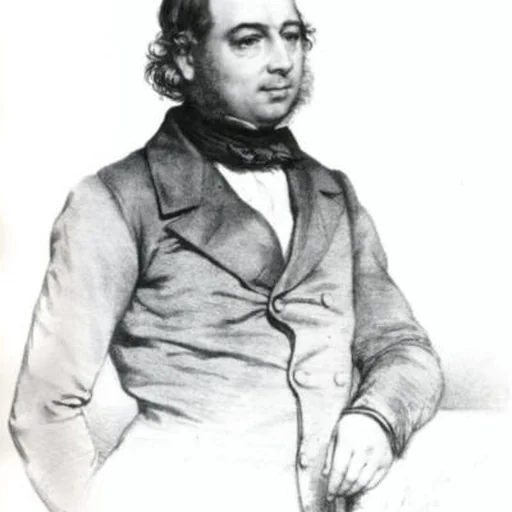
John Gould (; 14 September 1804 – 3 February 1881) was an English ornithologist who published monographs on birds, illustrated by plates produced by his wife, Elizabeth Gould, and several other artists, including Edward…

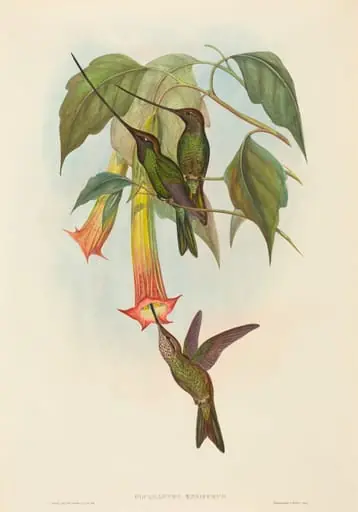 Docimastes ensiferus (Sword-billed Hummingbird)
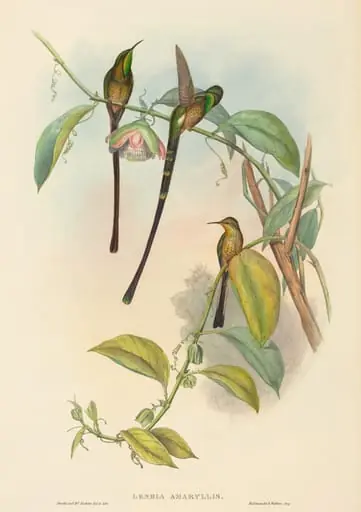 Lesbia Amaryllis
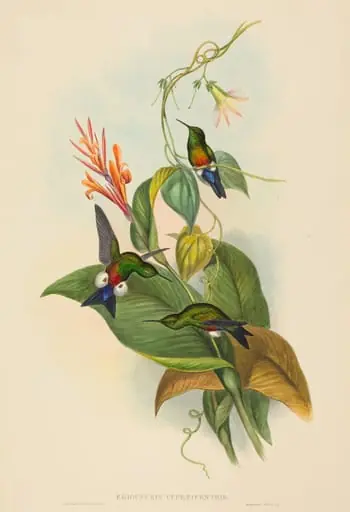 Eriocnemis cupreiventris (Coppery-vented Puff-Leg)
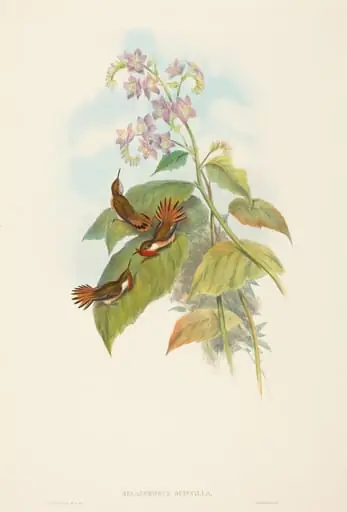 Selashorus scintilla (Scintillant Hummingbird)
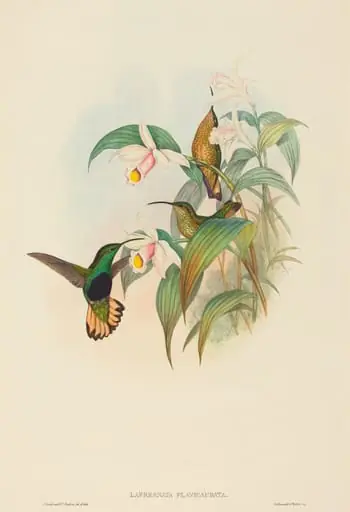 Lafresnaya flavicaudata (Buff-tailed Velvet-breast)
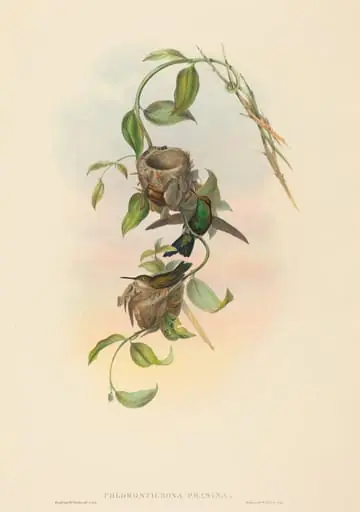 Chlorostilbona prasina (Puncheran's Emerald)
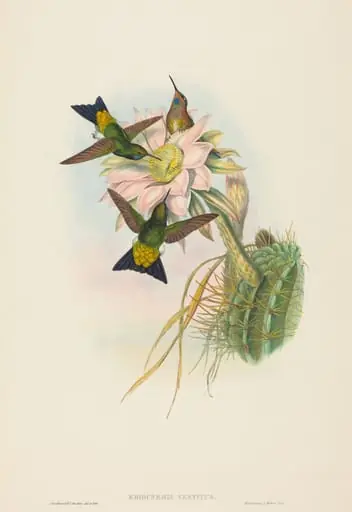 Eriocnemis vestitus (Glowing Puff-Leg)
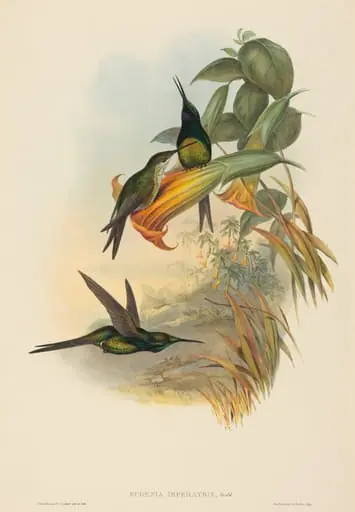 Eugenia imperatrix (Empress Hummingbird)