Artwork
A View from Zahlé
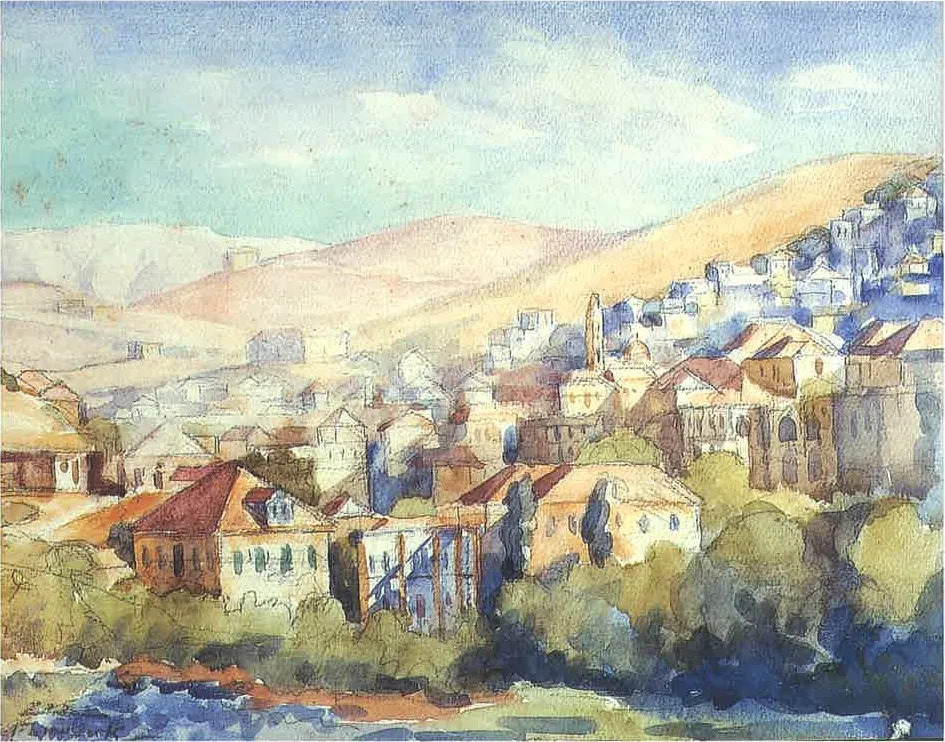
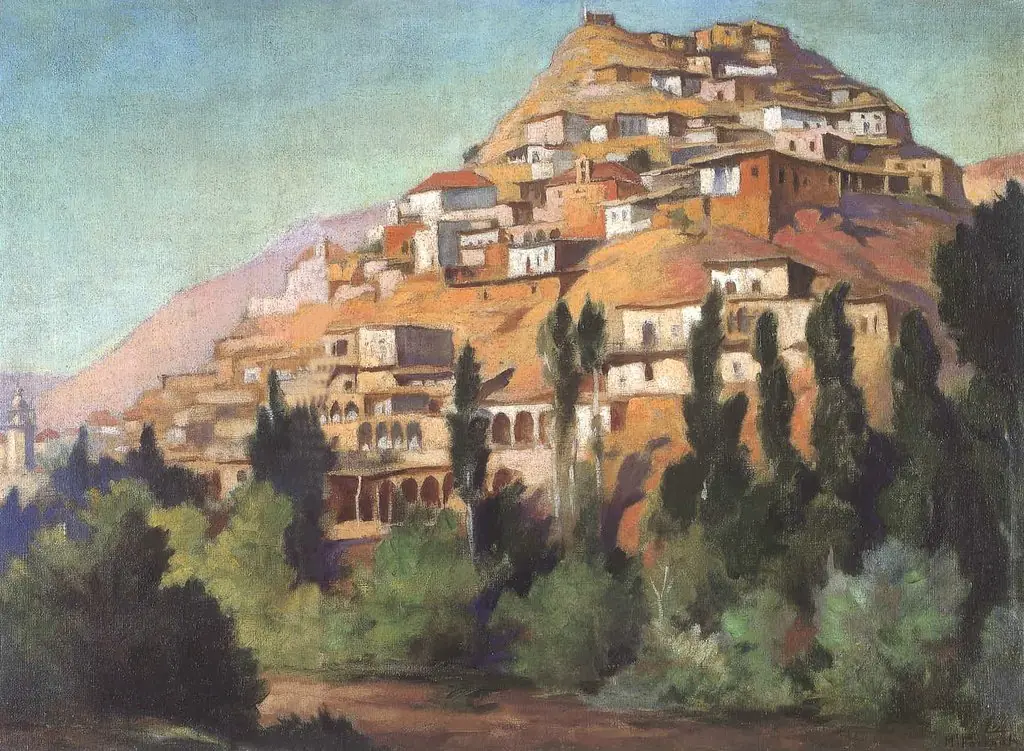
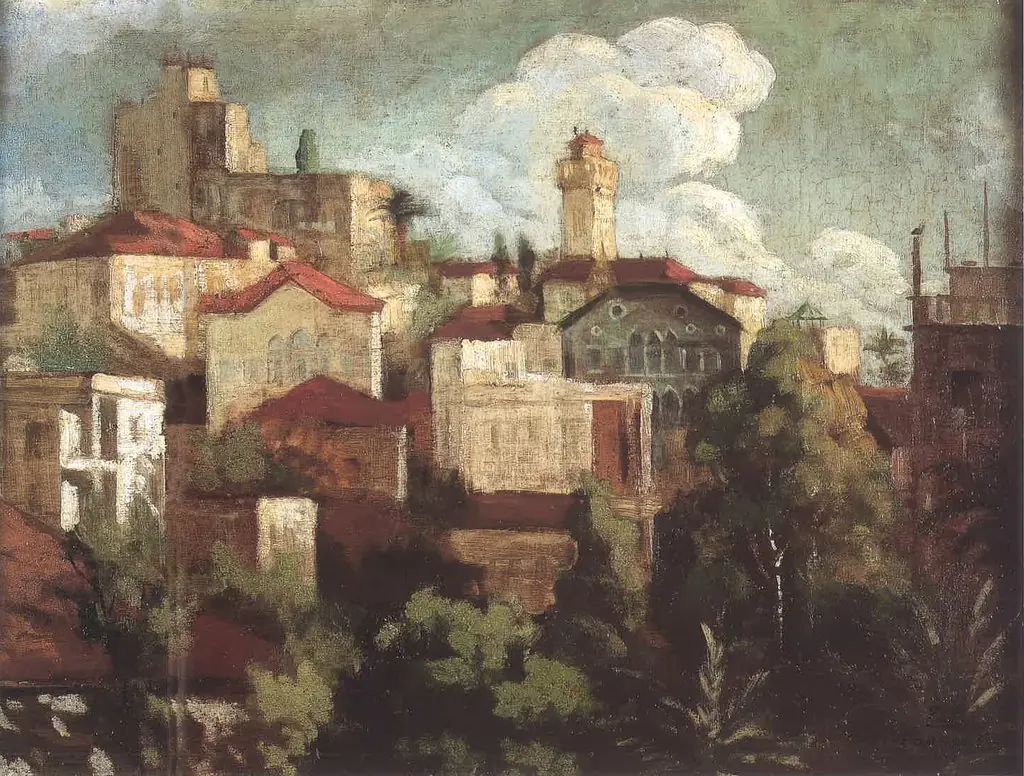
A View from Zahlé is a watercolor painting by Moustafa Farroukh. It dates from 1939 and is held in the collection of the Sursock Museum.
About this work
Overview
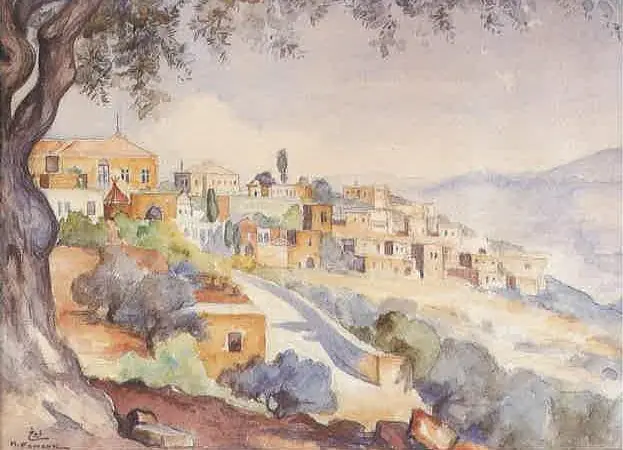
Created around 1939, *A View from Zahlé* is a watercolor painting by Moustafa Farroukh, a prominent Lebanese artist of the 20th century.
Created around 1939, *A View from Zahlé* is a watercolor painting by Moustafa Farroukh, a prominent Lebanese artist of the 20th century. The work captures the quiet topography of the town of Zahlé, situated in the Bekaa Valley. Farroukh, who produced over two thousand works during his career, favored intimate landscapes rendered in transparent washes. This piece resides in the Sursock Museum’s collection, reflecting its significance in Lebanon’s modern art heritage.
Subject & Meaning
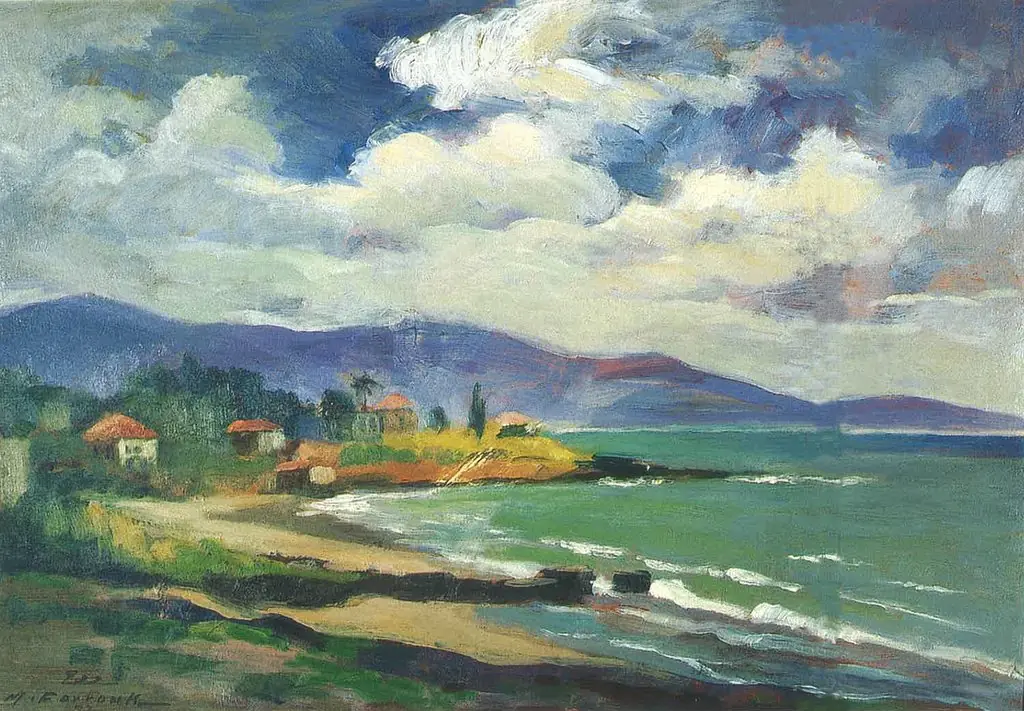
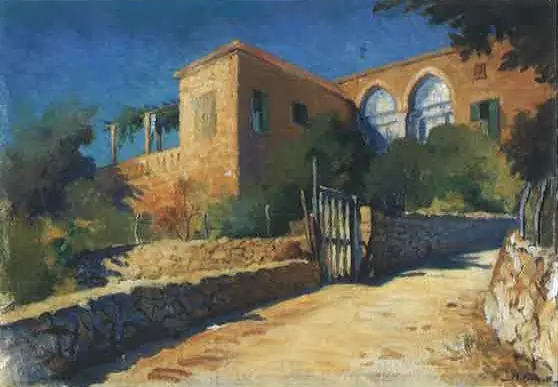
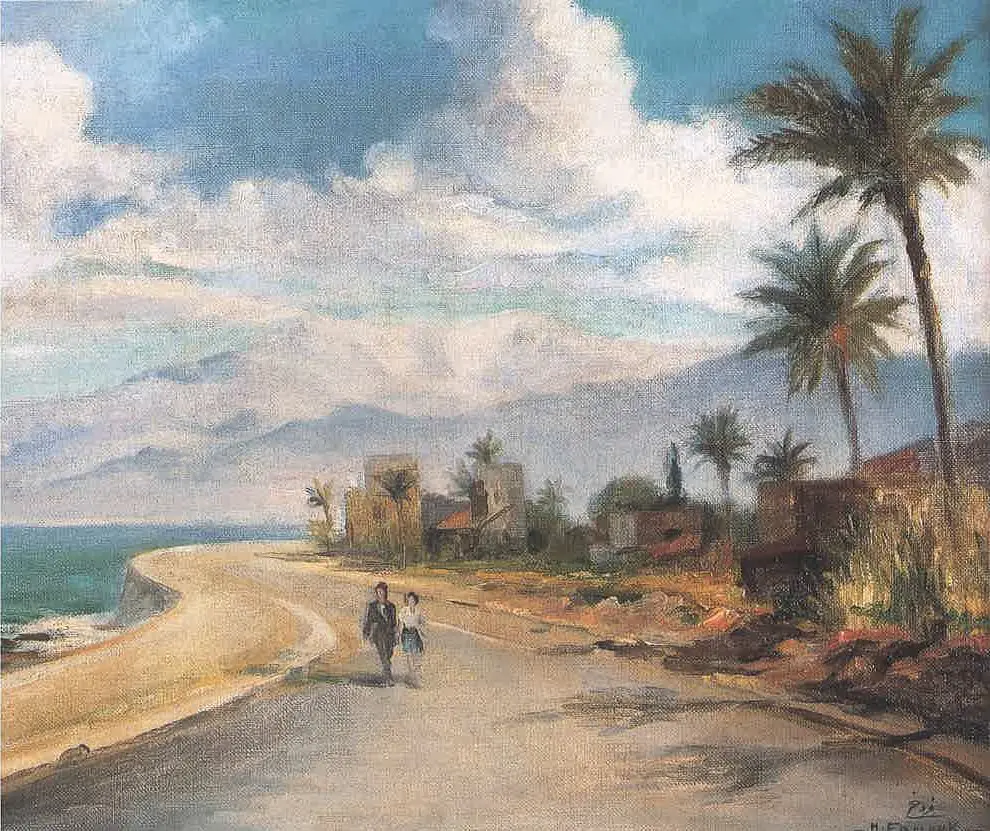
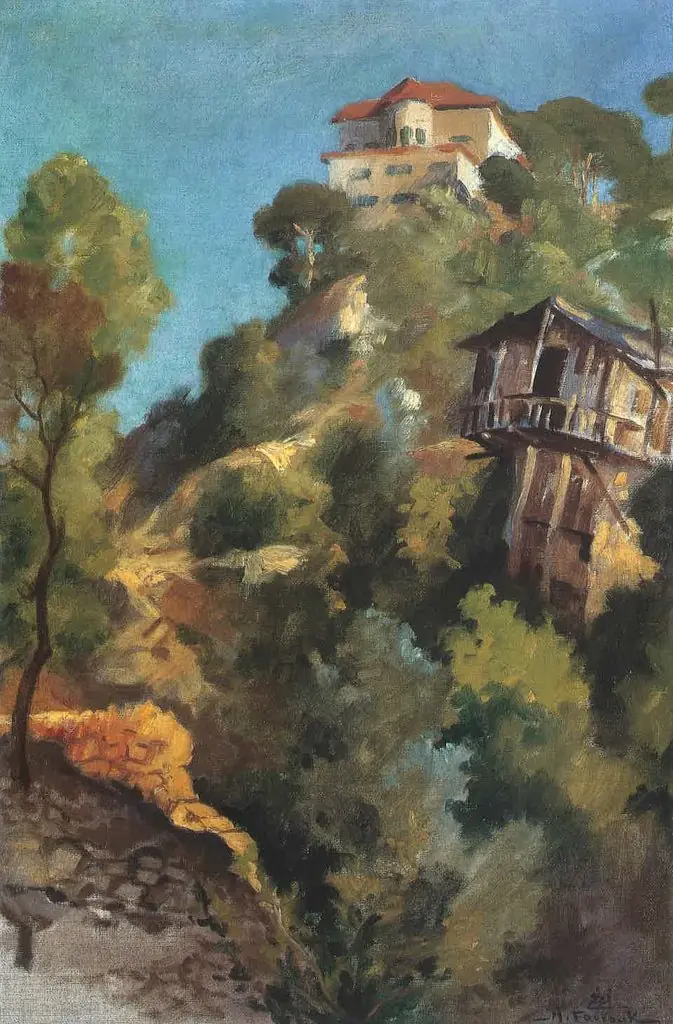
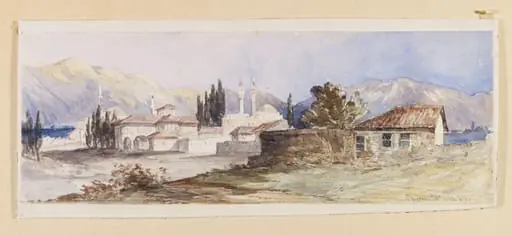
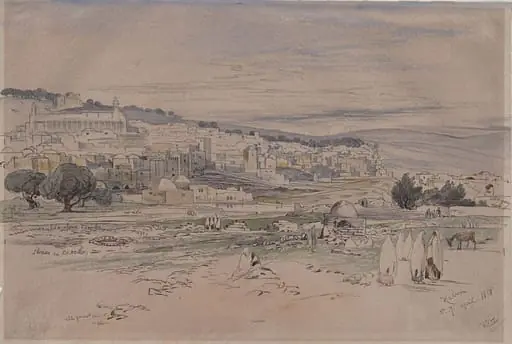
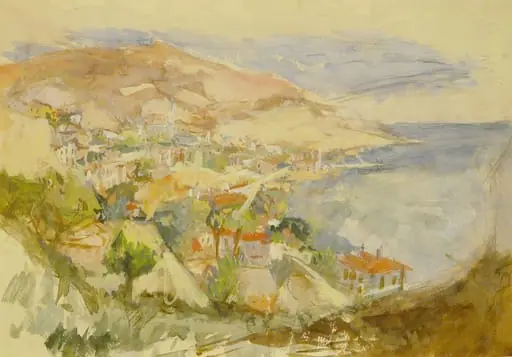
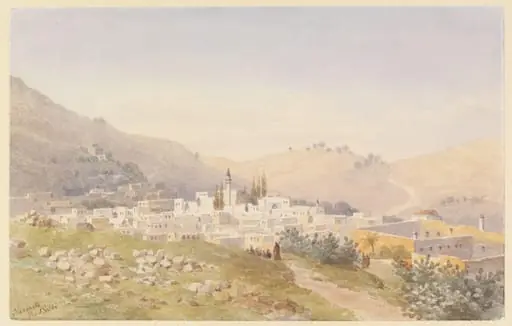
The painting presents a tranquil view of Zahlé, with its buildings nestled among gentle hills and framed by foreground trees. Rather than emphasizing architectural detail, Farroukh focuses on atmosphere—offering a contemplative sense of place. The scene lacks human figures or overt narrative, suggesting a quiet reverence for the land and its stillness. This approach aligns with a broader regional interest in landscape as a vessel for cultural identity and calm reflection.
Technique & Style
Farroukh employed watercolor to achieve a delicate, luminous effect, layering thin washes to build subtle tonal shifts. The sky transitions softly from pale blue to white, while the hills are rendered in muted earth tones. A vibrant green in the foreground trees provides a restrained contrast, drawing the eye without disrupting the harmony. His brushwork is loose yet deliberate, favoring suggestion over precision, characteristic of his lyrical approach to landscape.
History & Provenance
The painting has remained in the Sursock Museum’s collection since at least the mid-20th century, following its acquisition from the artist or his estate. Farroukh’s works were widely exhibited in Lebanon and the broader Arab world during his lifetime, and this piece was likely part of a series documenting regional scenes. Its preservation in a major cultural institution underscores its role in documenting Lebanon’s artistic development during the Mandate period.
Context
In the late 1930s, Lebanon was under French Mandate rule, and a growing cultural movement sought to define a national identity through art. Farroukh, alongside contemporaries, turned to local landscapes as subjects, moving away from European academic traditions. *A View from Zahlé* reflects this shift—its quiet realism and focus on indigenous terrain align with a broader effort to root modern art in the lived experience of the Lebanese countryside.
Legacy
Farroukh’s watercolors, including this work, helped establish landscape painting as a legitimate genre in modern Lebanese art. His emphasis on atmosphere over spectacle influenced later generations of artists who sought to capture the emotional texture of the land. While not widely reproduced, *A View from Zahlé* remains a quiet touchstone in institutional collections, valued for its restraint and sensitivity to place.
Artist & collection
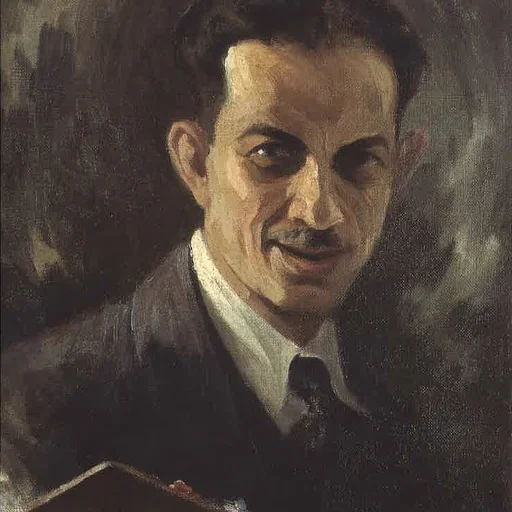
Artist
Moustafa Farroukh (Arabic: مصطفى فروخ; 1901 – 1957) was one of Lebanon's most prominent painters of the 20th century.