Artwork
Original drawing for 'The Grammar of Ornament'
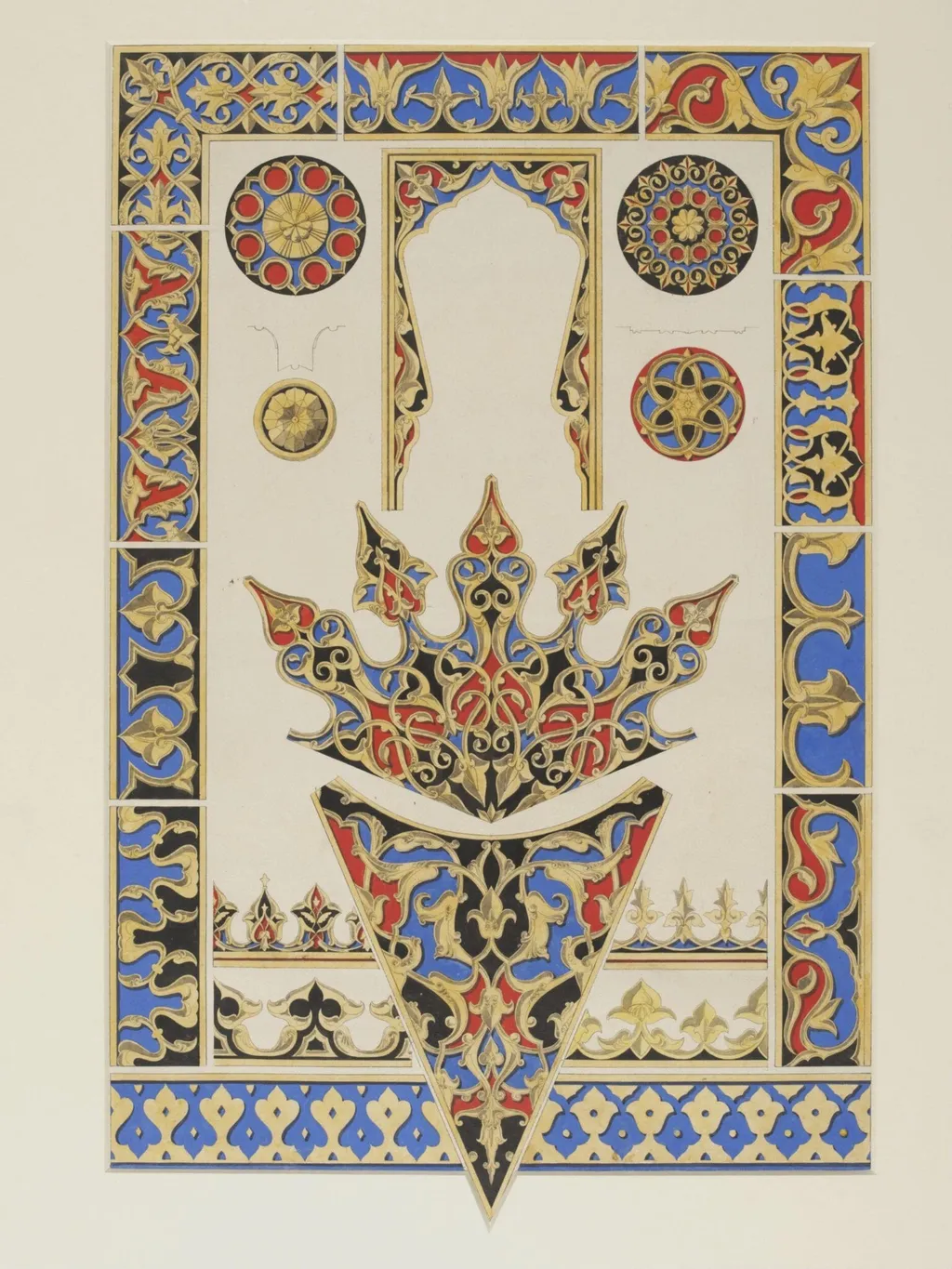
Original drawing for 'The Grammar of Ornament' is a drawing by the Impressionist artist Owen Jones. It dates from 1856 and is held in the collection of the Victoria and Albert Museum.
About this work
Overview
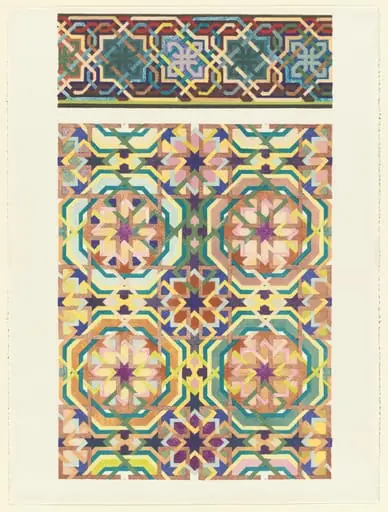
This drawing is one of ninety-six preparatory designs produced in 1856 for Owen Jones’s publication *The Grammar of Ornament*. Executed as a hand‑drawn illustration, it forms part of the museum’s collection that also includes the book’s title page and several photographic reproductions of the original plates.
Subject & Meaning
The composition consists of a dominant star‑shaped motif at its centre, encircled by an array of subsidiary elements that could be detached and applied to various decorative surfaces. The arrangement demonstrates Jones’s aim to provide a systematic visual vocabulary for ornamental design.
Technique & Style
Rendered on a white ground, the drawing combines fine, controlled lines with bold swirls of gold‑tone shading. Accents of red, blue and black appear in sharp points, circles and repeating geometric forms, creating a vivid contrast that highlights the interplay of floral, celestial and abstract patterns.
History & Provenance
Created as part of the original suite of designs for *The Grammar of Ornament*, the sheet remained in Jones’s possession before entering the museum’s holdings, where it is displayed alongside the title page and four photographic reproductions of the complete series.
Context
*The Grammar of Ornament* was intended as a reference work for architects, designers and craftsmen in the mid‑ninteenth century, offering a comprehensive catalogue of ornamental motifs drawn from diverse historical and cultural sources.
Legacy
The drawing exemplifies the systematic approach to decorative arts that influenced Victorian design education and continues to serve as a resource for scholars studying the transmission of ornamental motifs in the nineteenth century.
Artist & collection
Artist
English architect and designer Owen Jones spent the 1830s in Egypt and later sketched its temples in crisp watercolours.

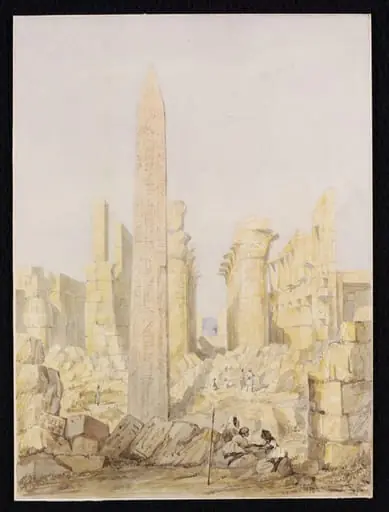 Great Temple. Karnac. Thebes
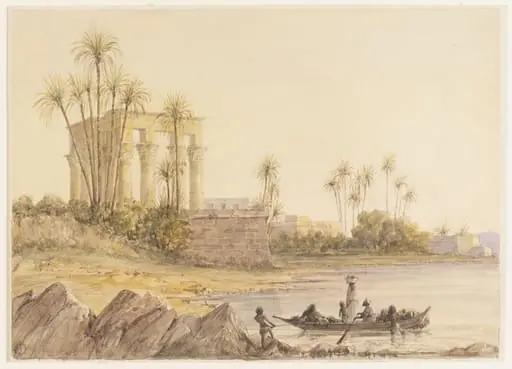 Landing Place. Philoe
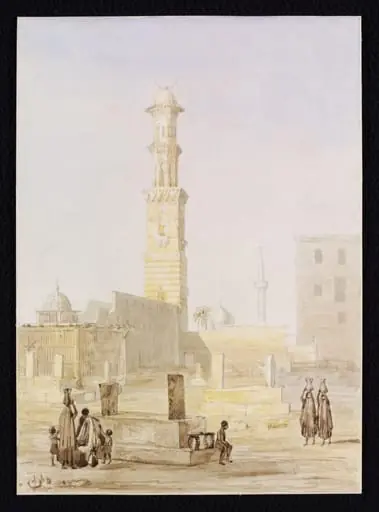 Tombs near Cairo
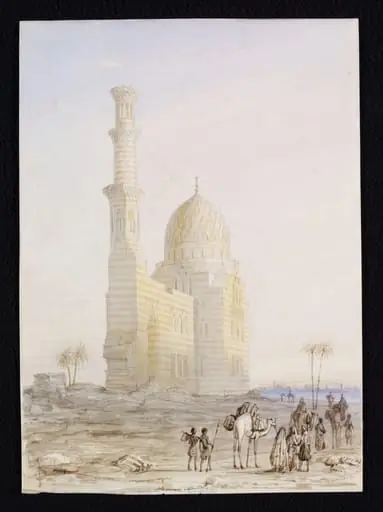 Tomb near Cairo
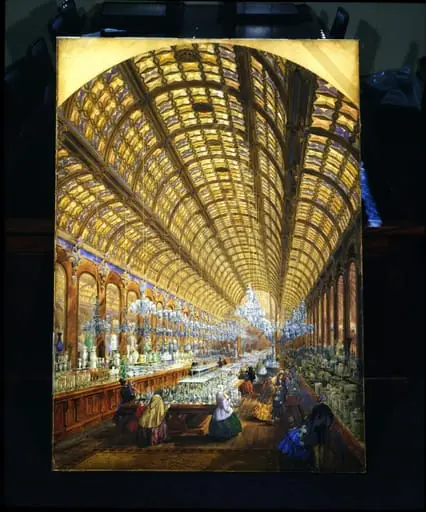 Osler's Gallery, Oxford Street, London
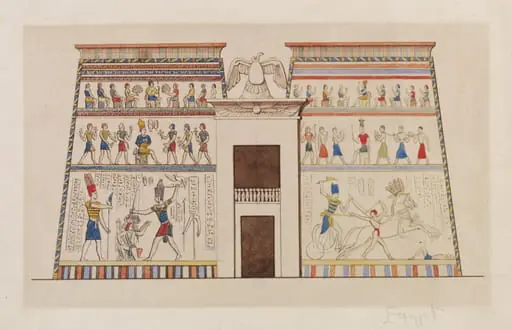 Architectural drawing of an entrance pylon to an Egyptian temple
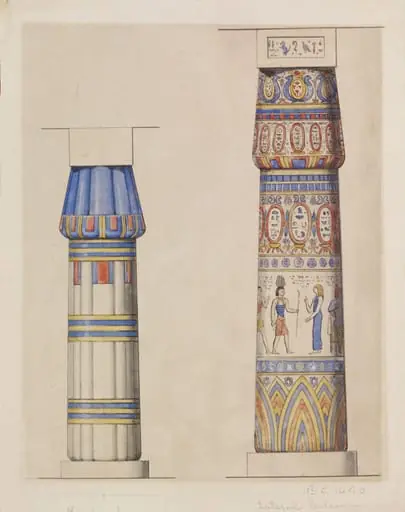 Temple of Luqsor B.C.1490 Lateral Column Temple of Karnak B.C.1490
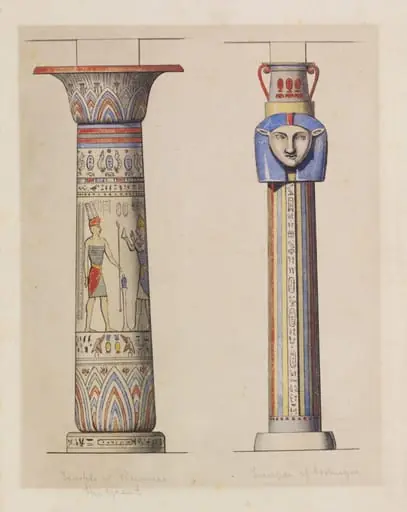 Temple of Ramses the Great B.C.1420. Temple of Sedingar B.C.1490
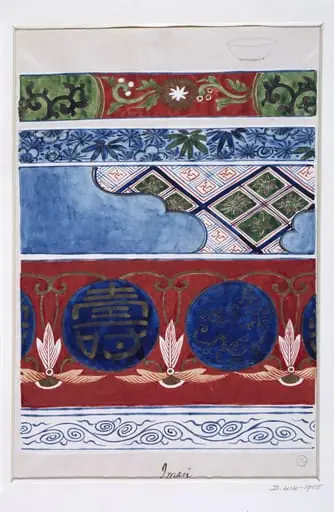 Imari
Imari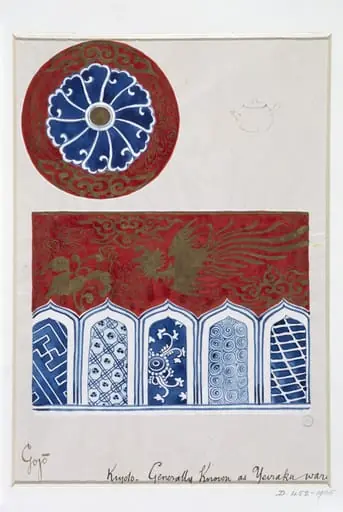 Kiyoto - Generally Known as Yeiraku ware
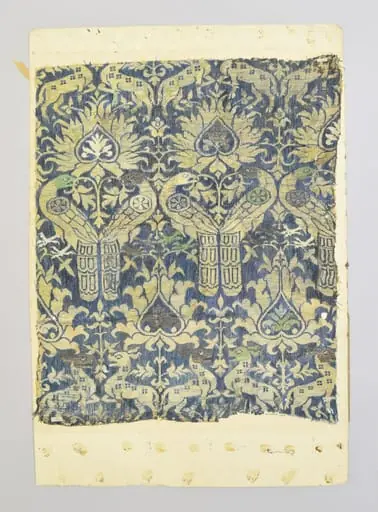 Untitled
 Untitled
 Untitled
 Untitled
 Untitled
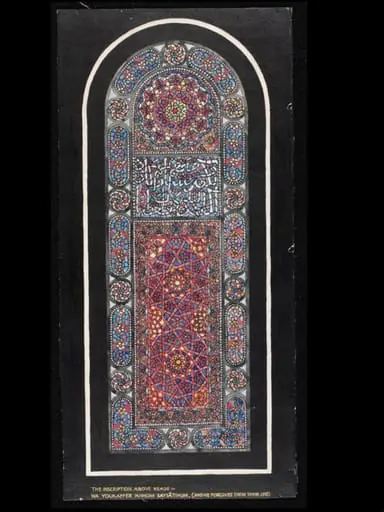 Drawing of the Dome of the Rock
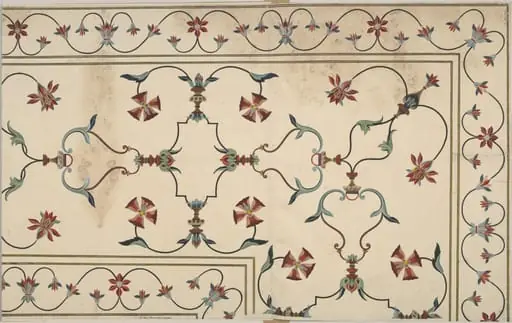 Pietra-dura work decoration on the top of the cenotaph of the Empress Arjumand Banu Begam, Taj Mahal, Agra
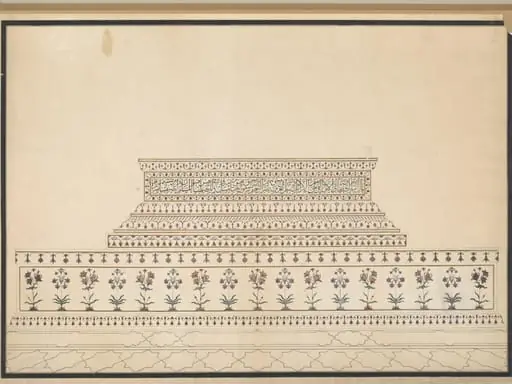 Cenotaph of Mumtaz Mahal, Taj Mahal, Agra
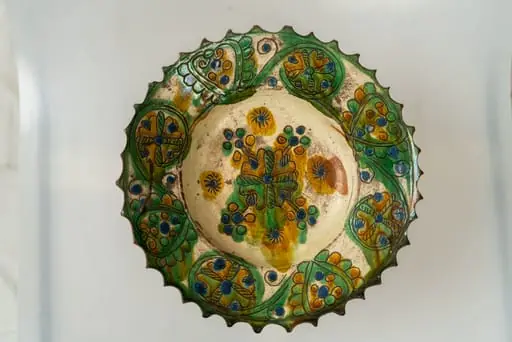 Farfurie mare, de formă semi-adâncă, cu buză răsfrântă, foarte lată, cu muchie ondulată (sub formă de colți rotunjiți). Piesa este modelată la roata olarului, angobată cu humă albă. Decorul este realizat prin sgrafitare în angoba crudă, peste care se aștern cu pensula culorile de smalț: verde, galben, albastru. Motivele decorative sunt florale și vegetale stilizate, dispuse pe toată suprafața farfuriei. Cromatica decorului: alb, galben, verde.
 Untitled