Artwork
De dood van Phocio
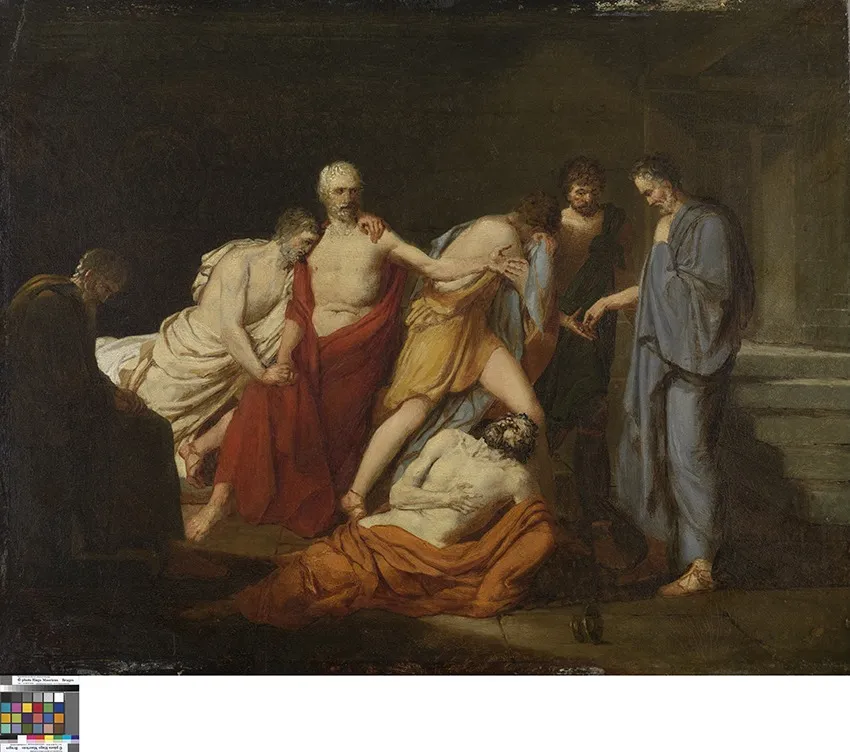
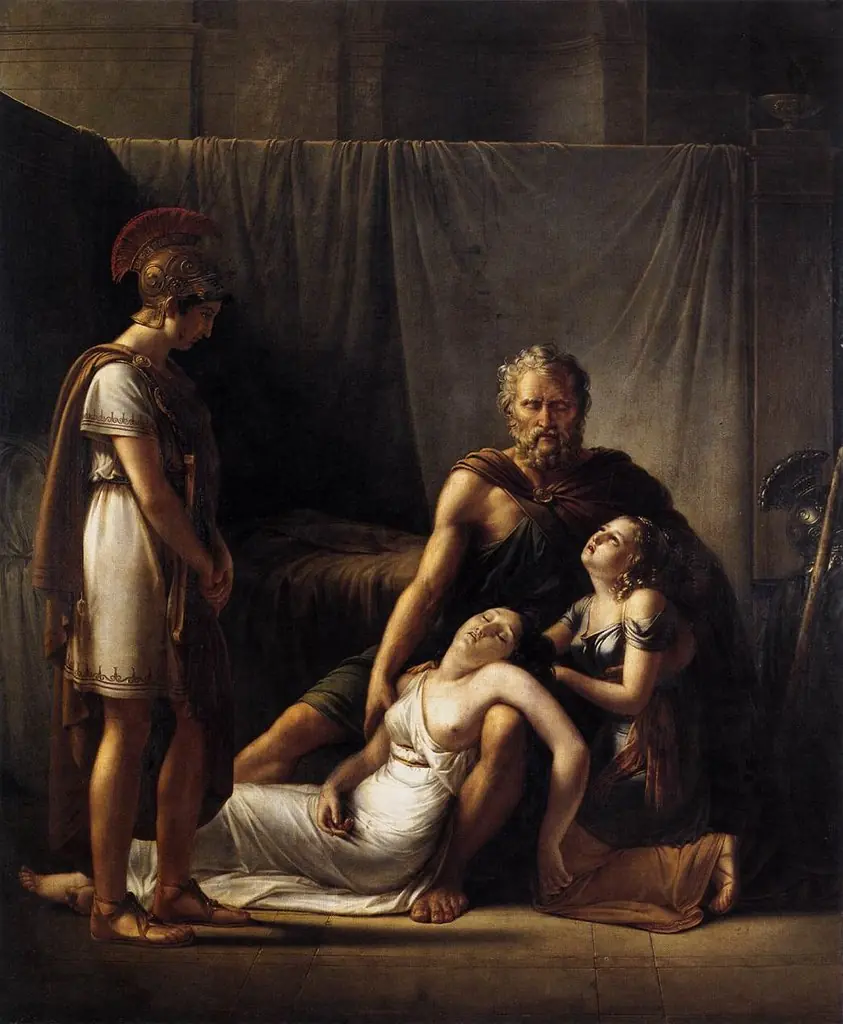
De dood van Phocio is an oil painting by the Neoclassicist artist Joseph-Denis Odevaere. It dates from 1804 and is held in the collection of the Groeningemuseum.
About this work
Overview
It is part of the permanent collection at the Groeningemuseum in Bruges, where it remains a key example of early 19th-century historical painting in the region.
Joseph-Denis Odevaere, a painter from the Southern Netherlands, completed *De dood van Phocio* in 1804 in oil on canvas. The work reflects the ideals of Neoclassicism, drawing from ancient history to explore themes of virtue and sacrifice. It is part of the permanent collection at the Groeningemuseum in Bruges, where it remains a key example of early 19th-century historical painting in the region.
Subject & Meaning
The painting illustrates the death of Phocion, an Athenian statesman condemned to drink hemlock for treason. Surrounded by grieving companions, his final moments are rendered with solemn dignity. The central figures — one offering comfort, another leaning on him — emphasize loyalty and stoic acceptance. The scene avoids theatricality, instead focusing on quiet resignation, aligning with Neoclassical values of moral clarity and emotional restraint.
Technique & Style
Odevaere employs chiaroscuro to model forms with sharp contrasts between light and shadow, enhancing the three-dimensionality of the figures and the weight of the moment. The palette is restrained, dominated by muted earth tones and the occasional vivid red and yellow of garments to guide the viewer’s focus. Brushwork is precise, with careful attention to drapery and anatomical accuracy, reflecting the influence of classical sculpture and academic training.
History & Provenance
Commissioned during Odevaere’s early career, the painting predates his appointment as court painter to King William I of the Netherlands. It remained in private or institutional hands before entering the Groeningemuseum’s collection, where it has been preserved as a representative work of Flemish Neoclassicism. Its provenance reflects its significance within regional artistic circles of the early 1800s.
Context
Created in the aftermath of the French Revolution and during the Napoleonic era, the painting resonated with contemporary ideals of civic virtue and tragic sacrifice. Neoclassicism offered a visual language to reconcile political upheaval with moral order, and Odevaere’s choice of Phocion — a figure who chose death over compromise — aligned with broader European interest in republican ethics and stoic leadership.
Legacy
Though less widely known than major French or Italian Neoclassical works, *De dood van Phocio* stands as a significant regional contribution to the movement. It illustrates how Northern European artists adapted classical themes to local artistic traditions. The painting continues to inform scholarly understanding of how historical narrative was visualized in the Low Countries during the transition from the 18th to the 19th century.
Artist & collection
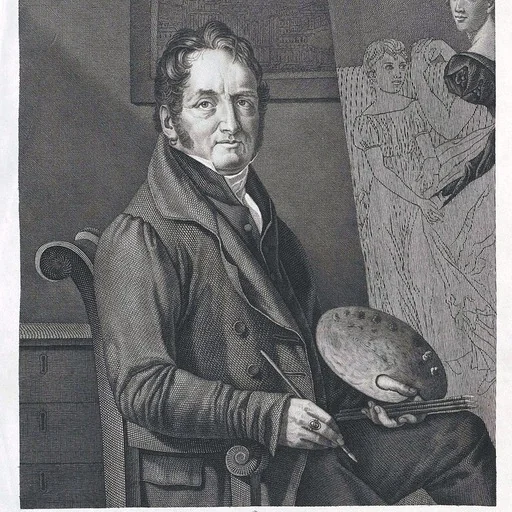
Artist
Joseph Denis Odevaere, or Joseph-Désiré Odevaere (2 December 1775, in Bruges – 26 February 1830, in Brussels), was a Neo-Classical painter from the Southern Netherlands (now Belgium). He served as court painter to King William I.

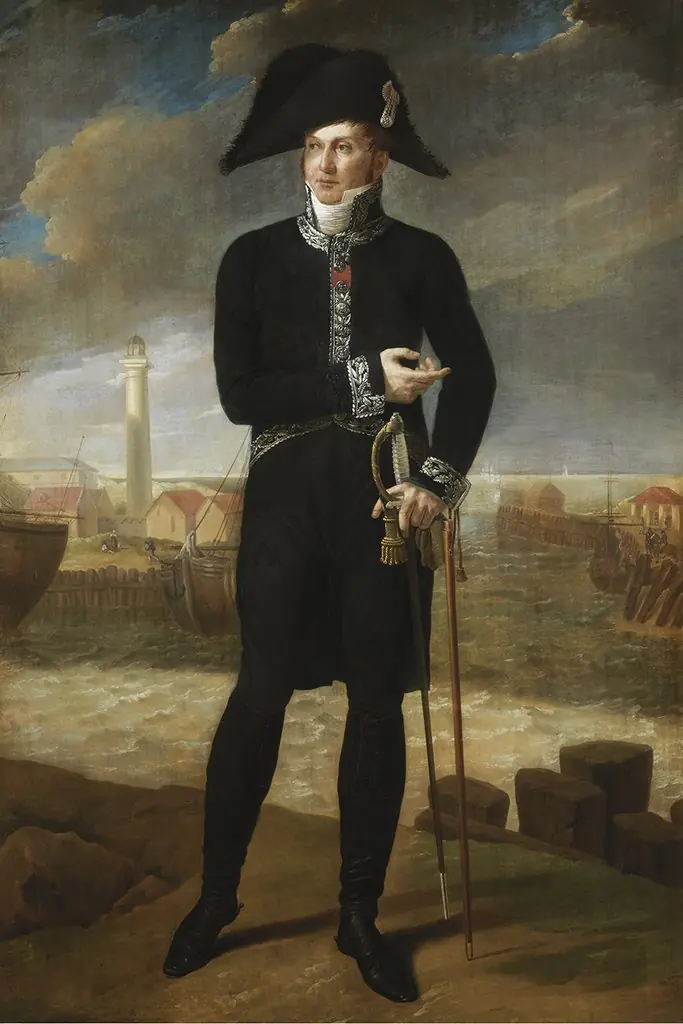 Portrait of Marquis Bernard-François de Chauvelin
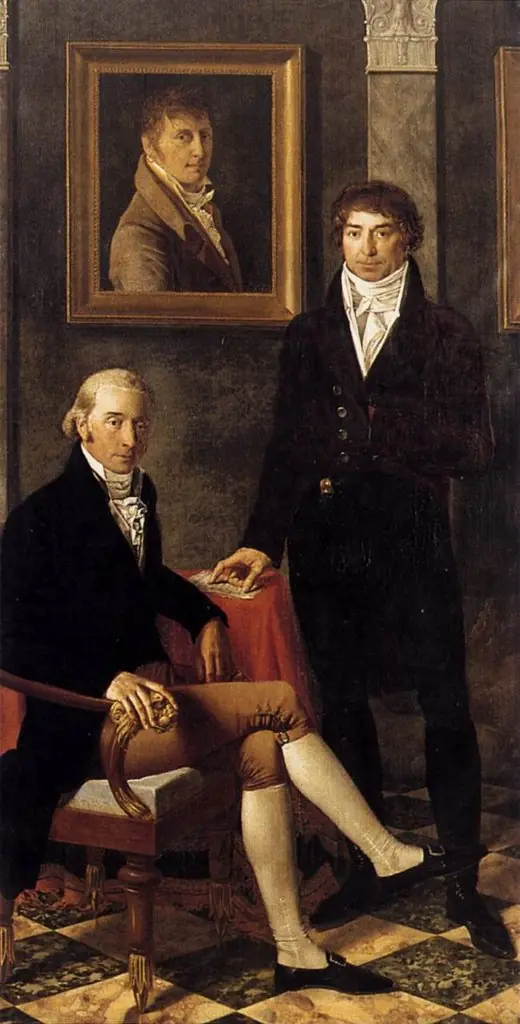 Friendship portrait of the artists François Wynckelman, François van der Donckt and Joseph Odevaere
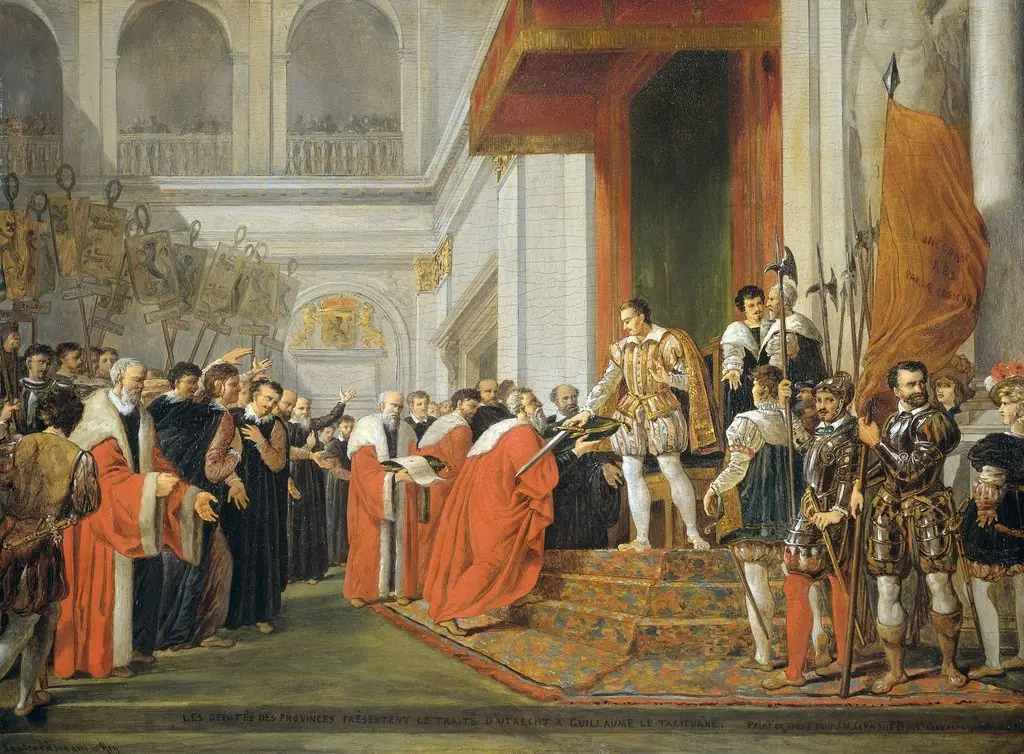 The Union of Utrecht
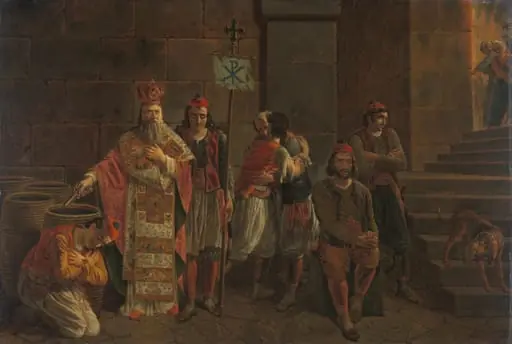 The Last Defenders of Missolonghi, 22 April 1826: an episode from the Greek War of Independence
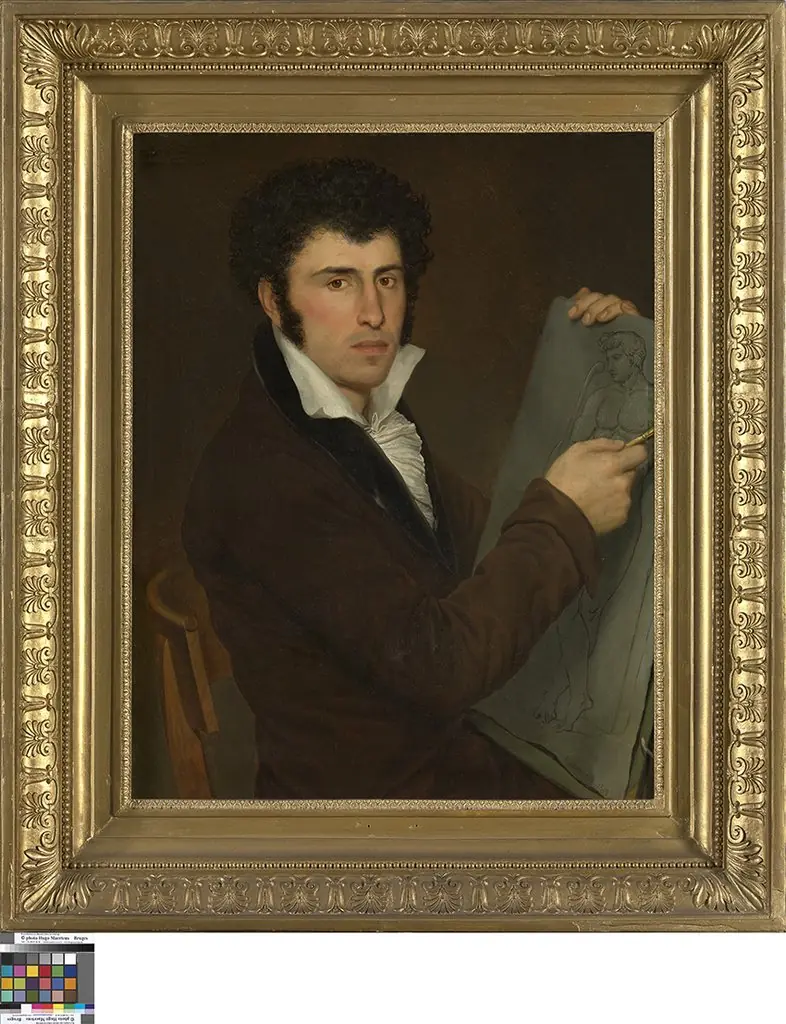 Portret van Filips Jacob Van Houtte
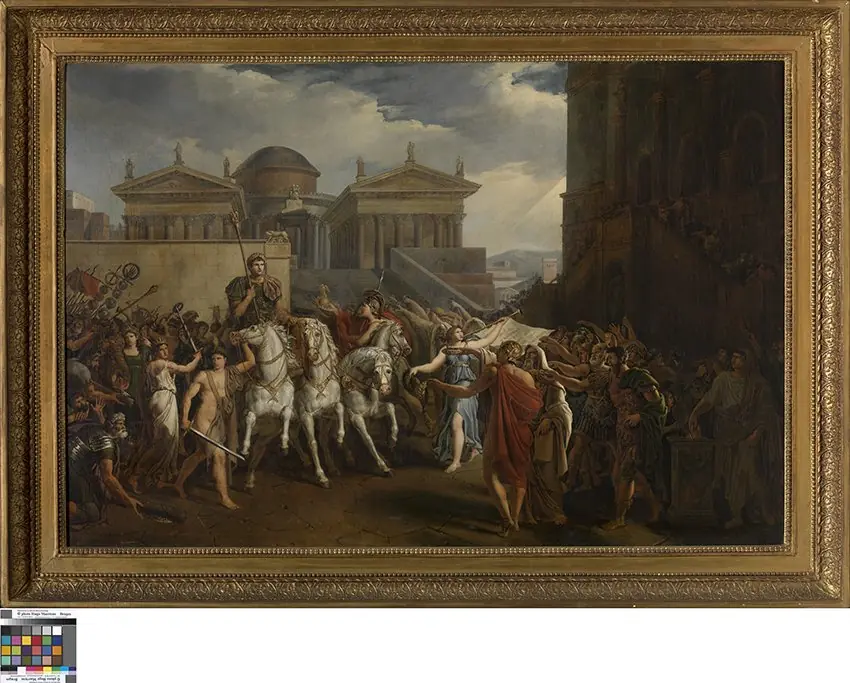 Triomftocht van keizer Trajanus
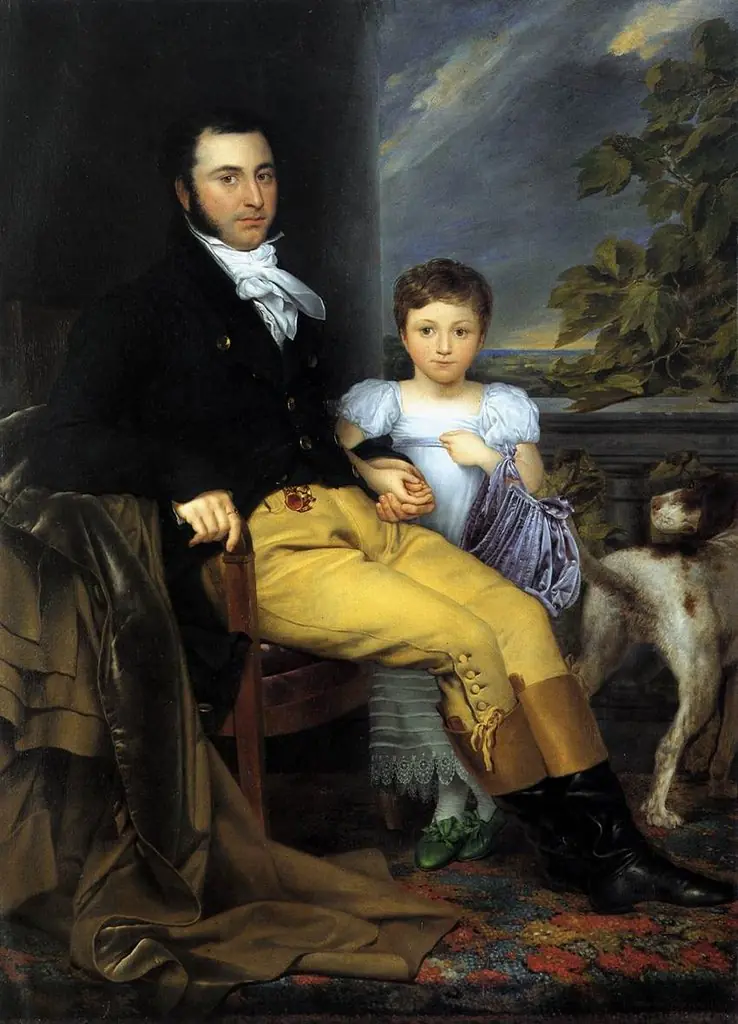 Portret van een voornaam man met zijn dochter en een jachthond
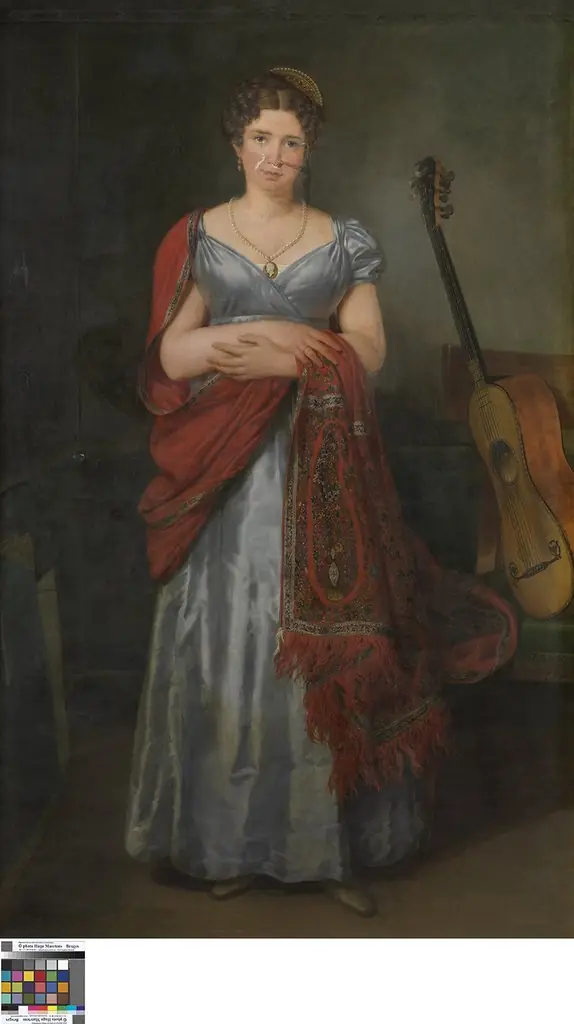 Portret van Sylvie de la Rue
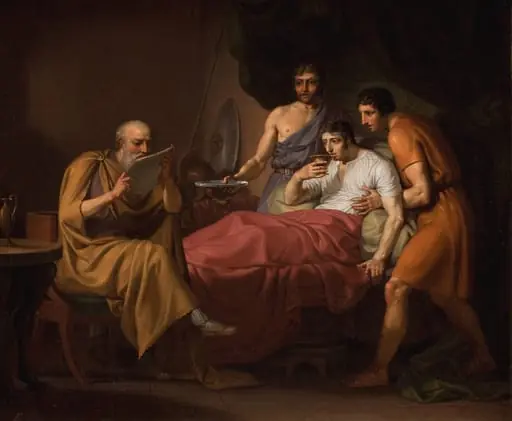 Alexander the Great on his Sickbed
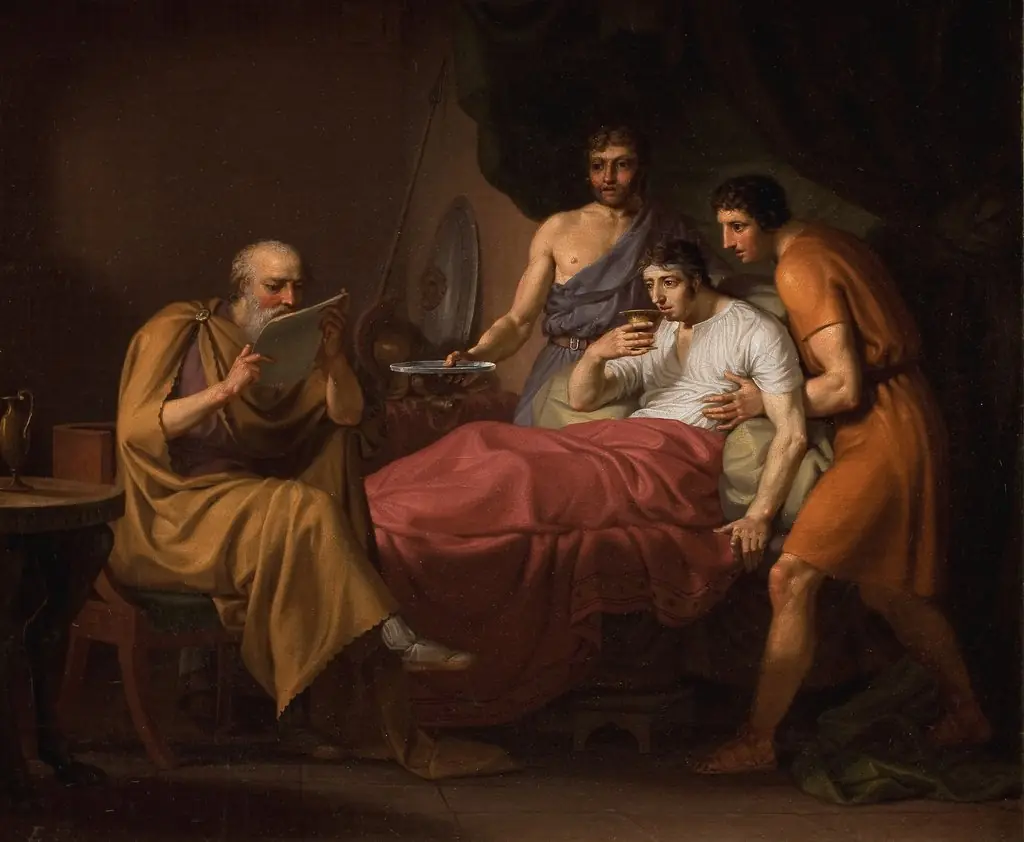 Alexander den Store på sygelejet
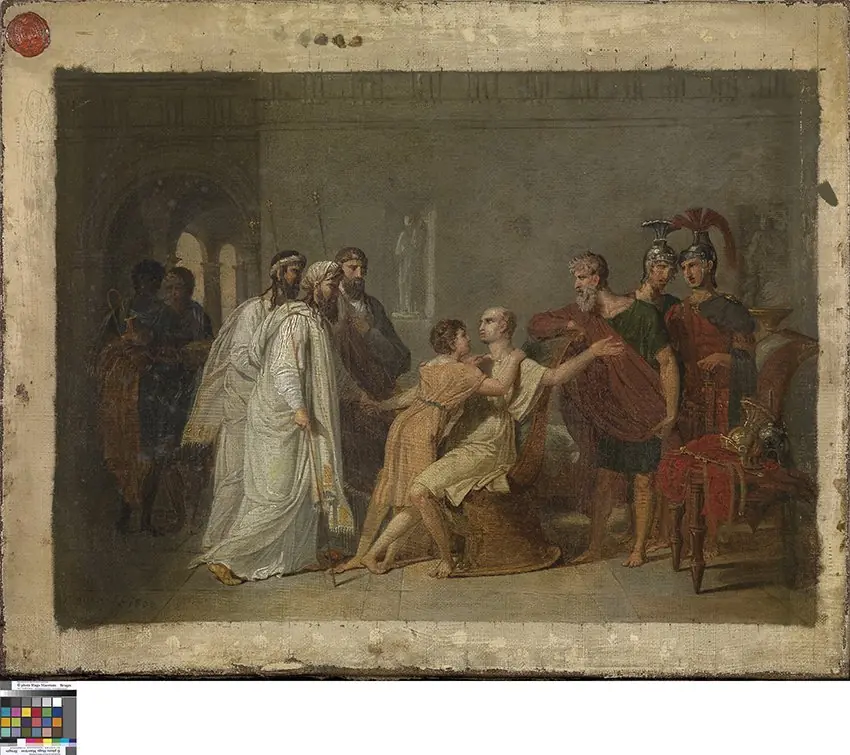 Terugkeer van Scipio's zoon
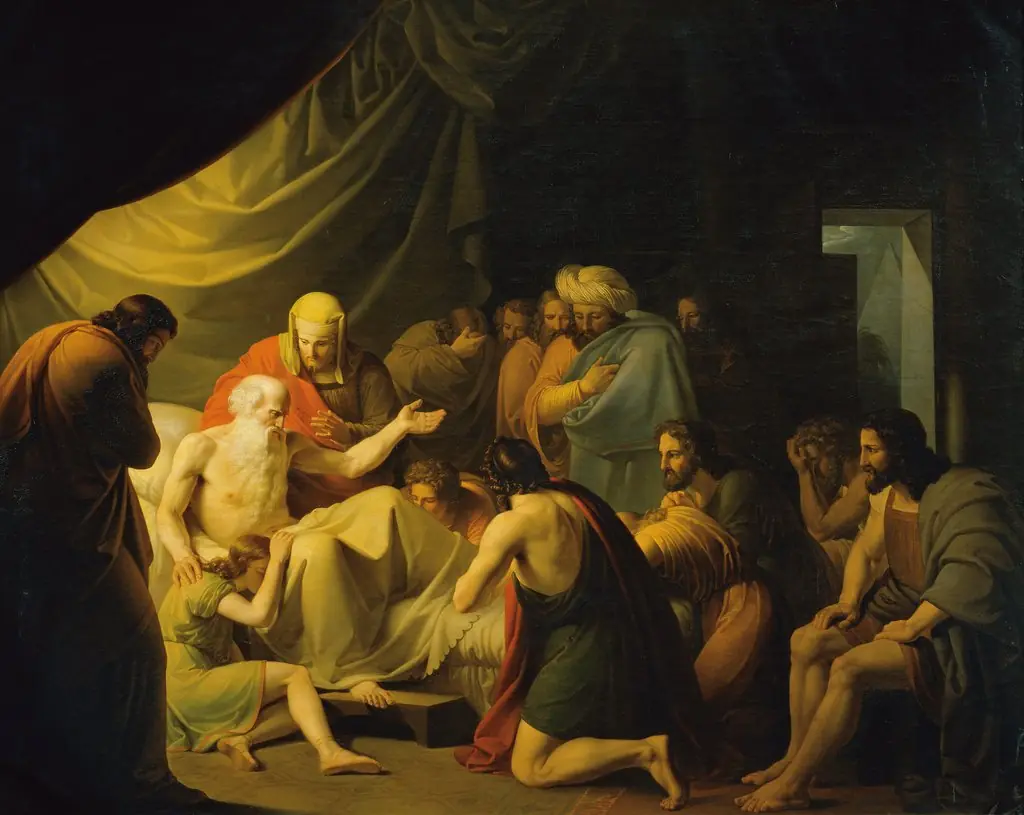 Jacob blesses the sons of Joseph
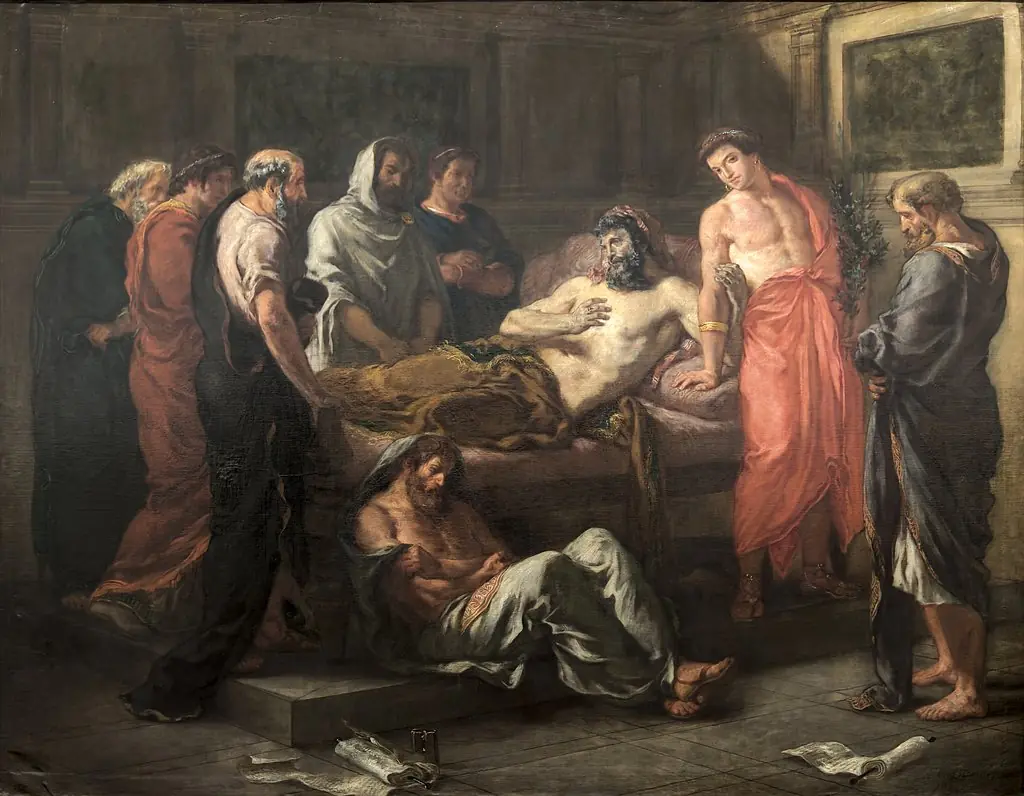 Last Words of the Emperor Marcus Aurelius
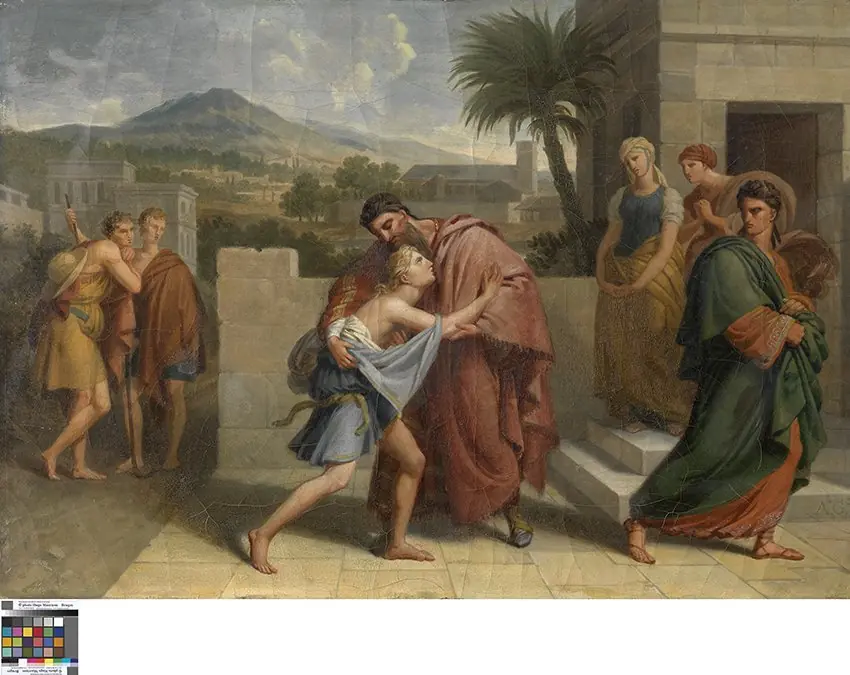 De thuiskomst van de verloren zoon
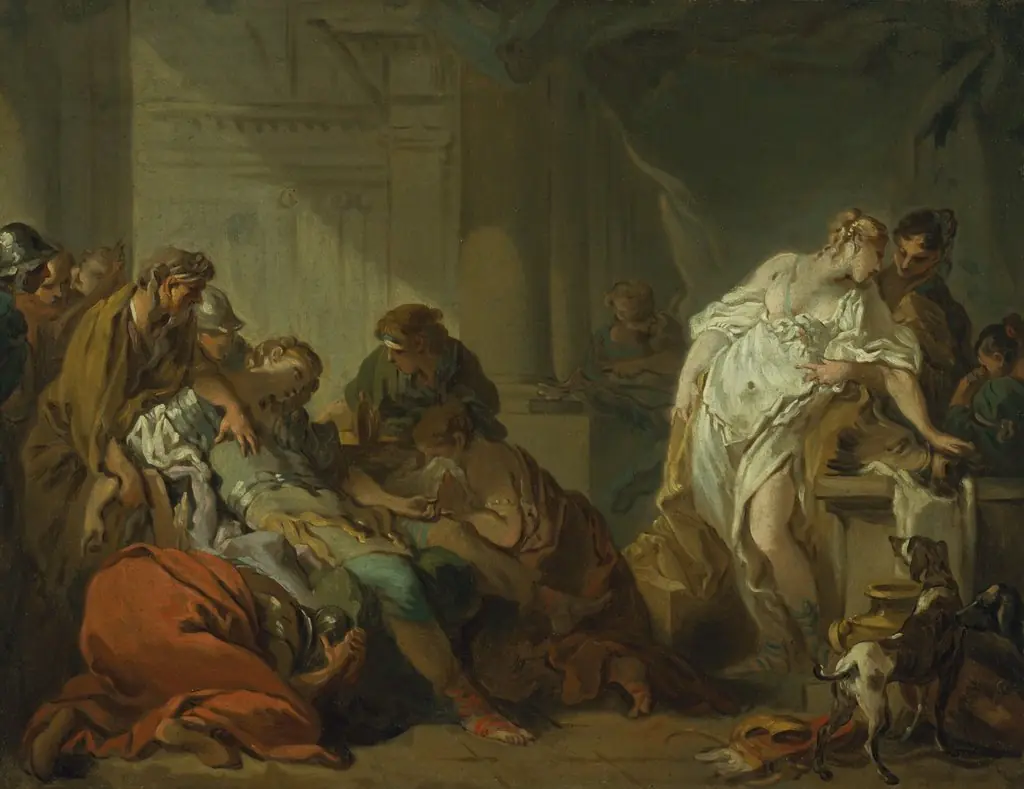 Death of Meleager
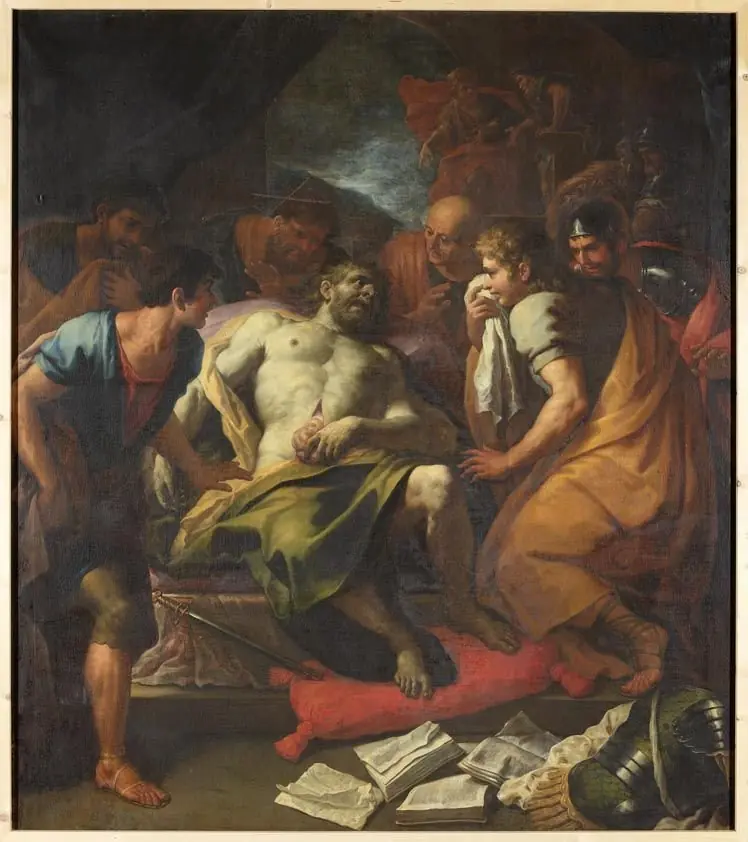 Tod des Cato von Uttica
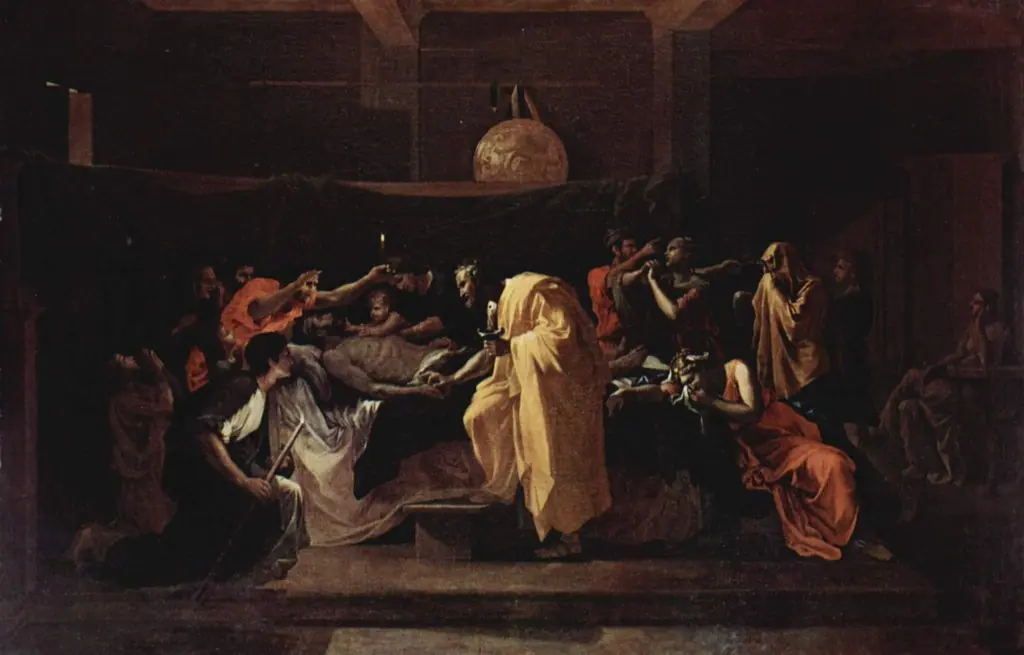 The Sacrament of Extreme Unction
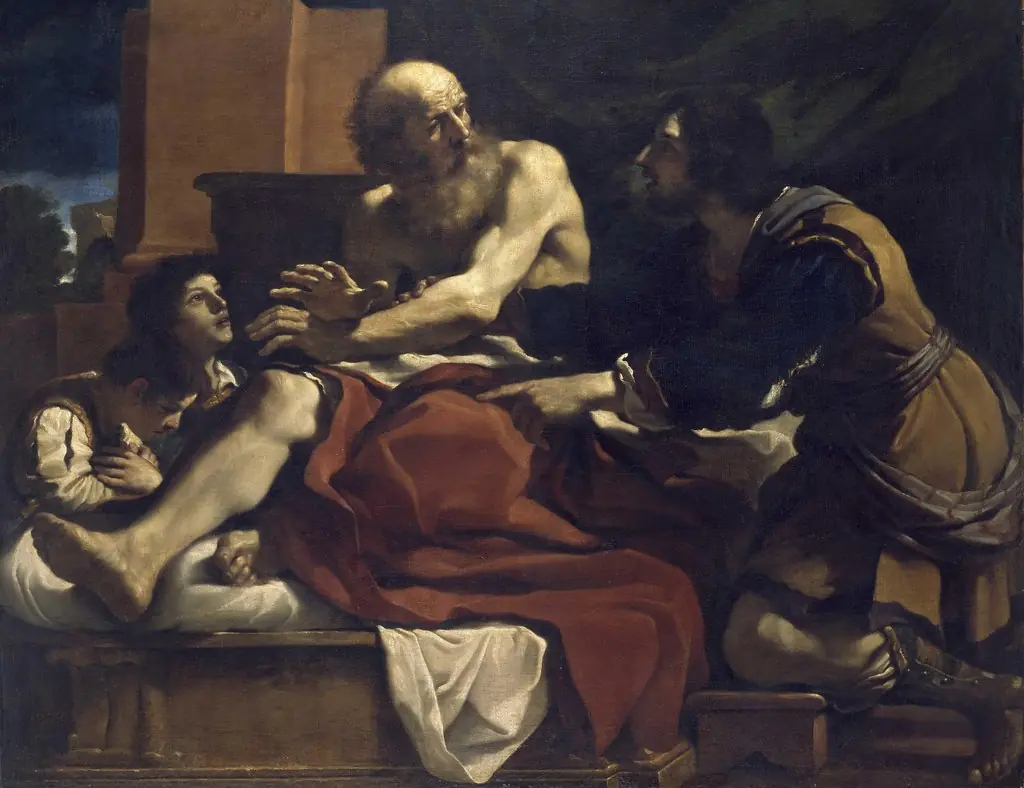 Jacob Blessing the Sons of Joseph
 The Death of Belisarius' Wife
 The Death of Cleopatra