Artwork
Lamentación ante Cristo muerto
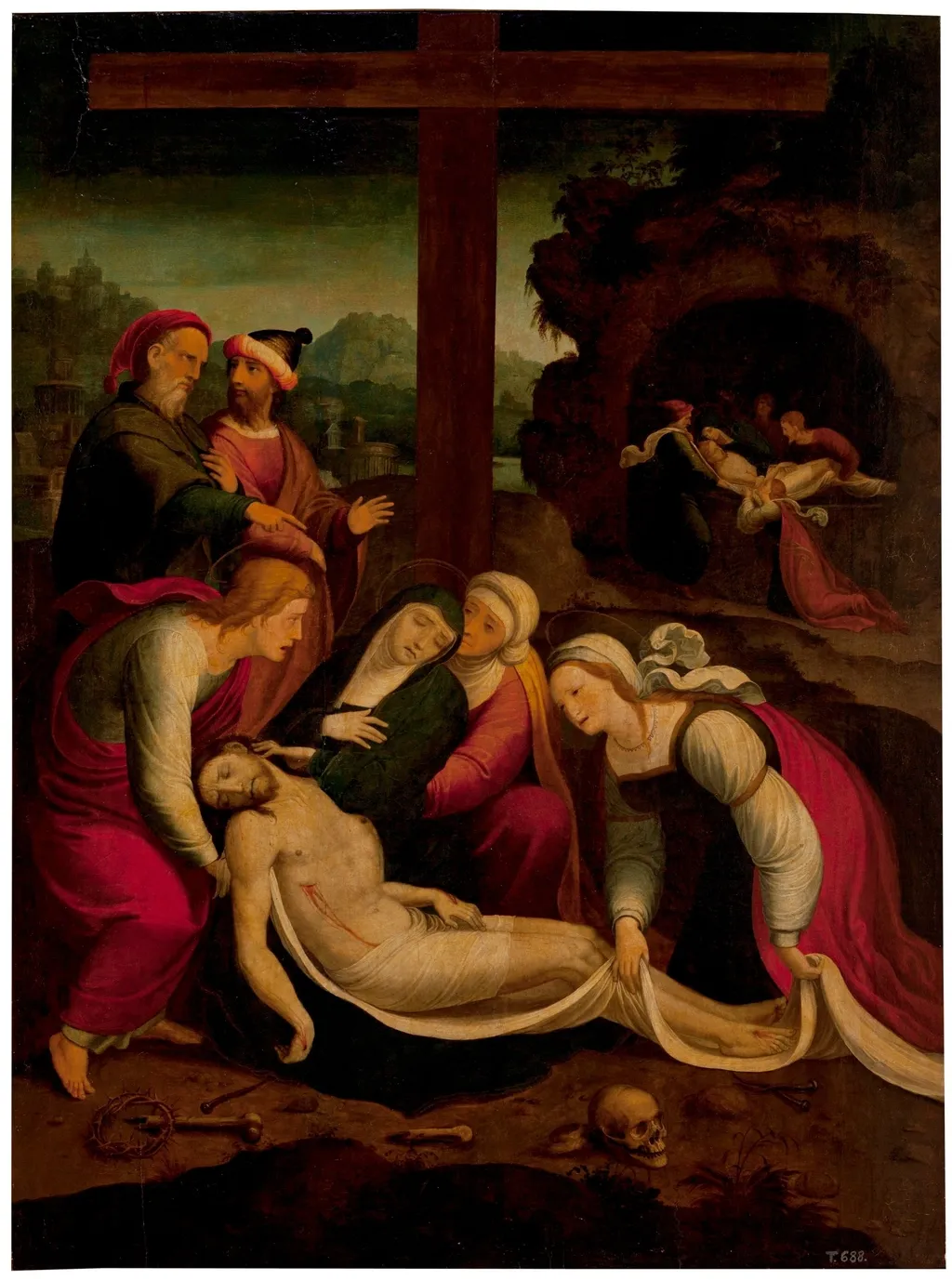
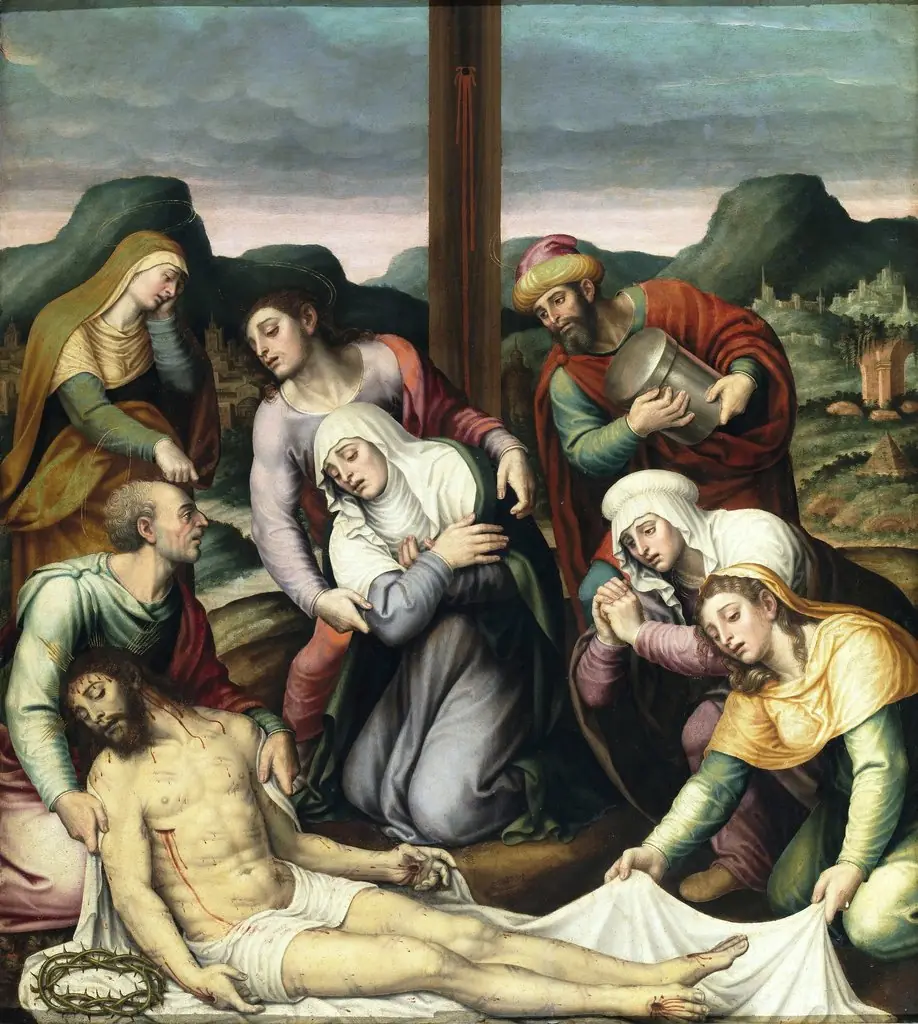
Lamentación ante Cristo muerto is an oil painting by the Mannerist artist Juan Correa de Vivar. It dates from 1540 and is held in the collection of the Museo del Prado.
About this work
Overview
This work exemplifies Correa de Vivar's adherence to Italianate Mannerist influences while maintaining a distinct Spanish devotional intensity.
Painted in 1540, Lamentación ante Cristo muerto is a significant religious work by the Spanish Mannerist painter Juan Correa de Vivar. The composition centers on the entombed body of Christ, depicted nude on the ground, surrounded by grieving figures who express profound sorrow through their gestures and expressions. The figures are clad in rich, dark reds and earthy tones, creating a somber palette that emphasizes the gravity of the scene. A central figure holds a cloth to the body's face, highlighting the intimacy of the moment. In the background, a rocky hillside features additional figures, some carrying crosses, which contextualizes the event within the broader narrative of the Passion. A skull lies near Christ's feet, a traditional memento mori symbol referencing Golgotha. This work exemplifies Correa de Vivar's adherence to Italianate Mannerist influences while maintaining a distinct Spanish devotional intensity. Created during the early phase of his mature career, the painting demonstrates his skill in rendering emotional depth and complex group compositions, contributing to the development of religious art in 16th-century Spain.
Subject & Meaning
The painting visualizes the moment after the crucifixion when followers gather to mourn the dead Christ. The presence of a skull at the foot underscores the theme of mortality, while the gestures of the surrounding figures—one shielding the face with a cloth, others in contemplative poses—convey grief and reverence within the Christian narrative of sacrifice.
Technique & Style
Correa de Vivar employs a pronounced chiaroscuro, contrasting deep shadows with illuminated highlights to model the bodies in three dimensions. The rich, dark reds and earthy tones of the garments are rendered with careful gradations of light, creating a tactile sense of volume and emphasizing the emotional intensity of the scene.
History & Provenance
Created in the mid‑16th century, the work entered the Spanish royal collections before being transferred to the Museo del Prado, where it remains on public display. Its provenance reflects the typical path of religious commissions of the period, moving from ecclesiastical patronage to national museum holdings.
Context
The painting belongs to the Spanish Renaissance, a period marked by the integration of Italian chiaroscuro techniques with local devotional subjects. Correa de Vivar’s treatment of the Lamentation aligns with contemporary Counter‑Reformation aims, using dramatic lighting and emotive figures to inspire piety among viewers.
Own this work as a print
Artist & collection