Artwork
Saint Dominic of Guzmán
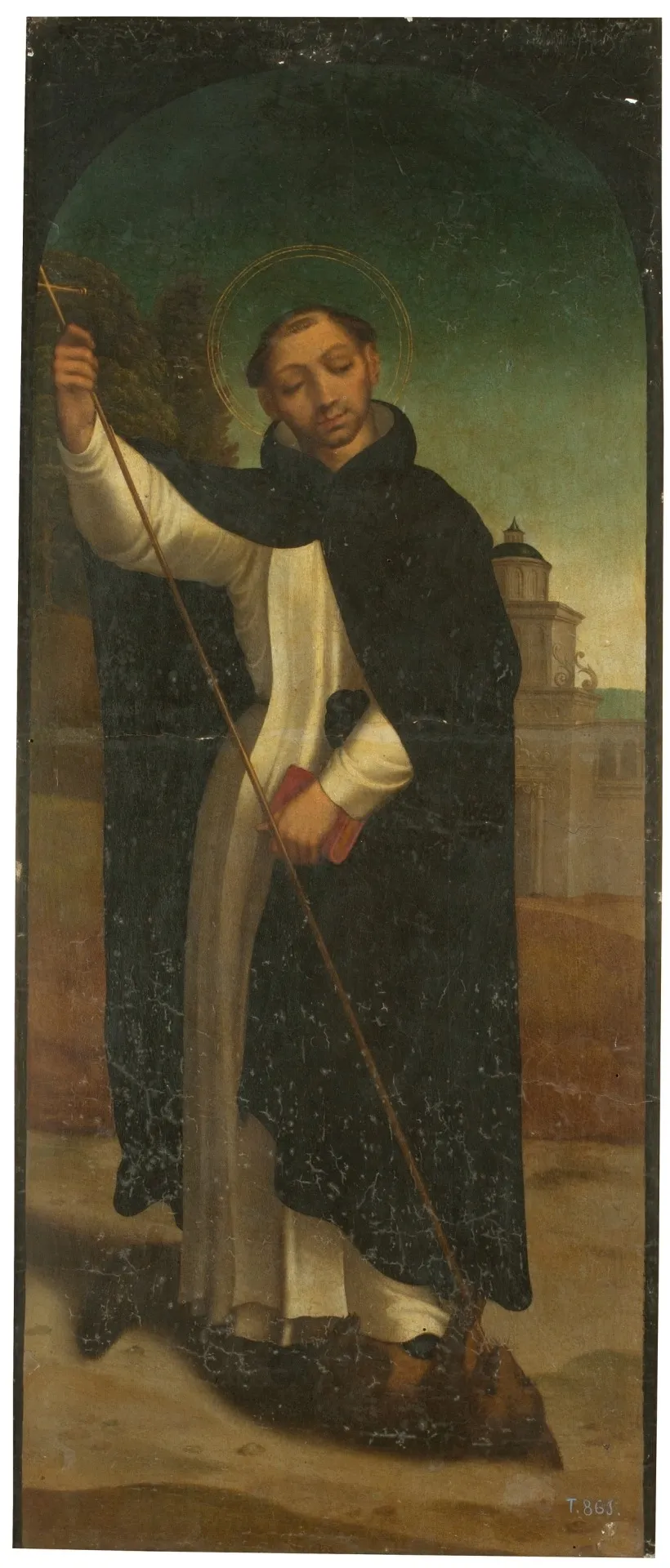
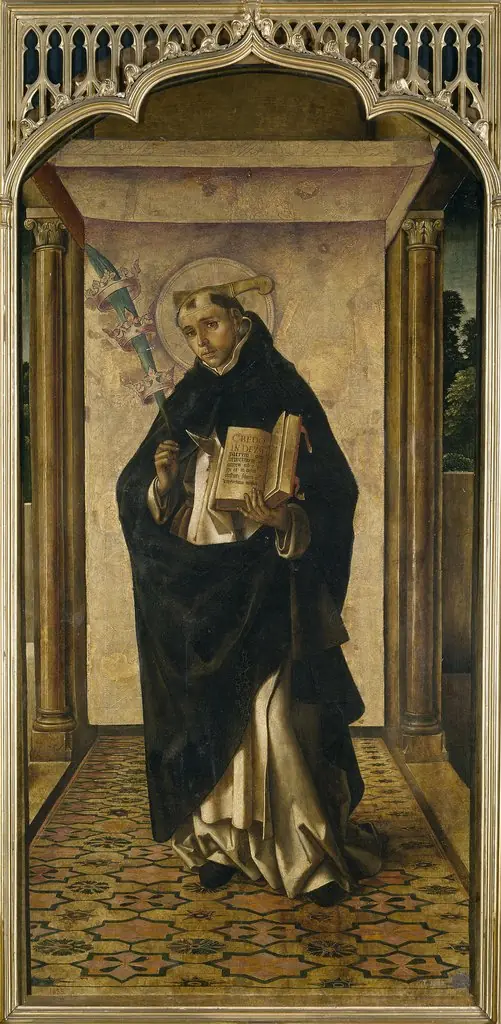
Saint Dominic of Guzmán is an oil painting by the Early Baroque Italian artist Juan Correa de Vivar. It is held in the collection of the Museo del Prado.
About this work
Overview
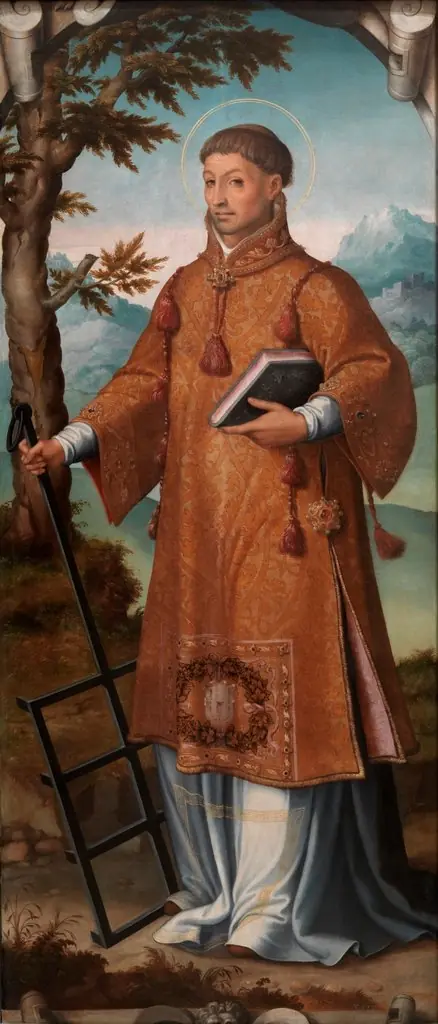
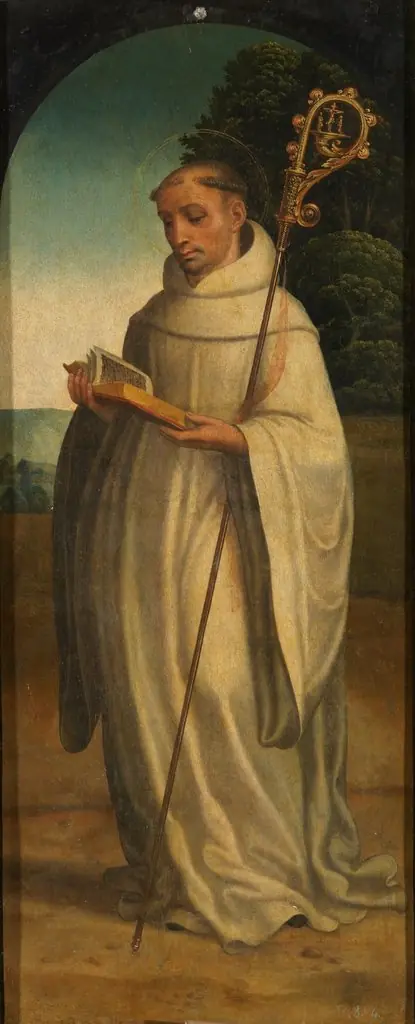
Created around 1600, this oil on canvas portrays Saint Dominic of Guzmán, the founder of the Dominican Order. The work is attributed to Spanish painter Juan Correa de Vivar and is part of the collection of the Museo del Prado in Madrid.
Subject & Meaning
The saint is shown standing on a rocky outcrop, clutching a book in his left hand and a staff in his right, symbols of his scholarly and missionary duties. A luminous golden halo crowns his head, indicating his sanctified status, while the distant cityscape suggests the spread of his influence beyond the immediate scene.
Technique & Style
The composition employs a strong contrast of light and shadow, a chiaroscuro effect that highlights the figure’s face and garments against a dimming background. The black cloak and white shirt are rendered with crisp delineation, and the soft blues and greens of the distant architecture recede into atmospheric perspective.
History & Provenance
Documented as a work of Correa de Vivar from the early seventeenth century, the painting entered the Prado’s holdings through the museum’s acquisition program in the nineteenth century. Its provenance prior to that remains sparsely recorded.
Context
The depiction aligns with Counter‑Reformation iconography that emphasized the virtues of learning and piety. Saint Dominic, often represented with a book, served as a model of doctrinal purity for the Dominican Order during a period of renewed Catholic emphasis on education and missionary work.
Legacy
While not among the most frequently reproduced images of the saint, the painting exemplifies the Spanish Baroque’s use of dramatic lighting and serves as a reference point for scholars studying Correa de Vivar’s modest yet competent oeuvre.
Artist & collection