Artwork
Saint Judas Thaddaeus
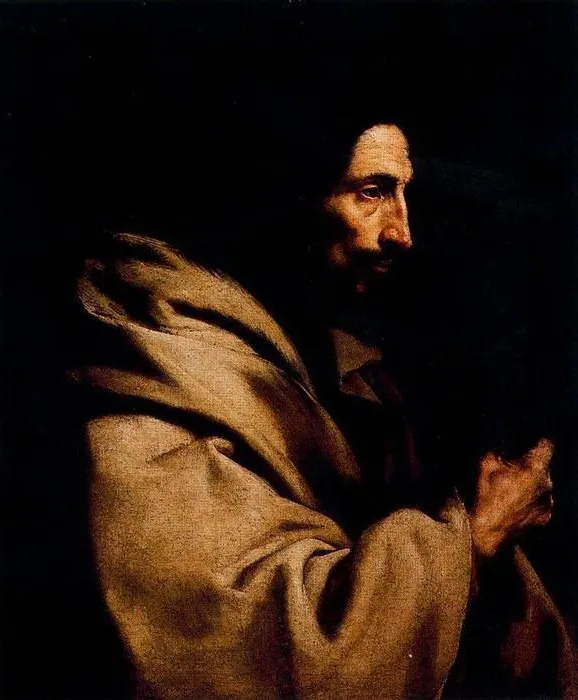
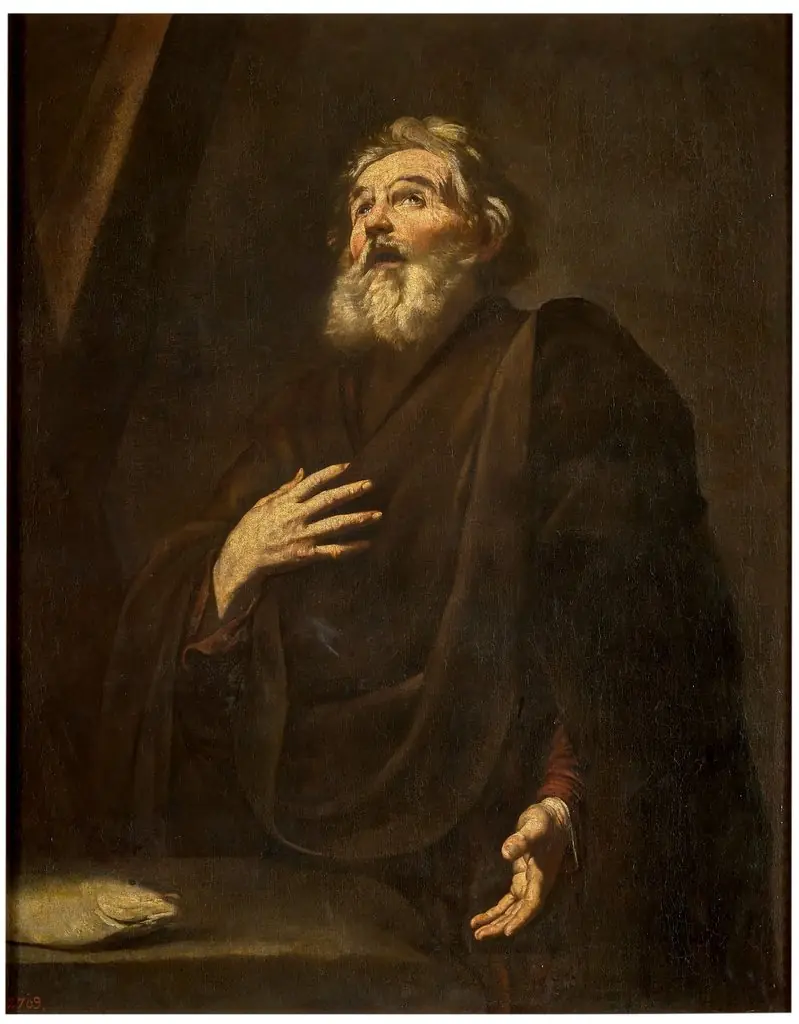
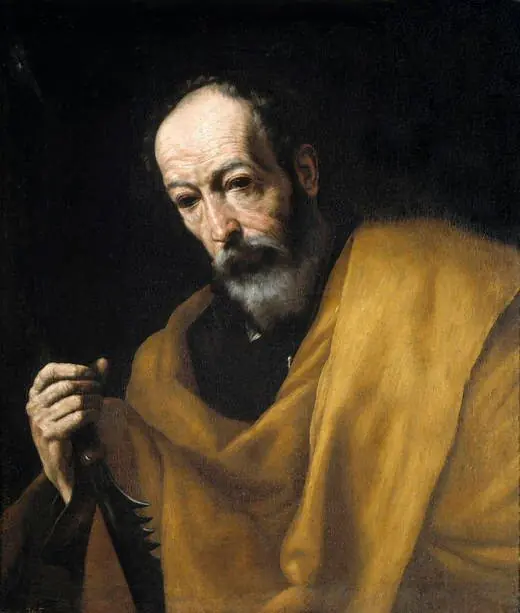
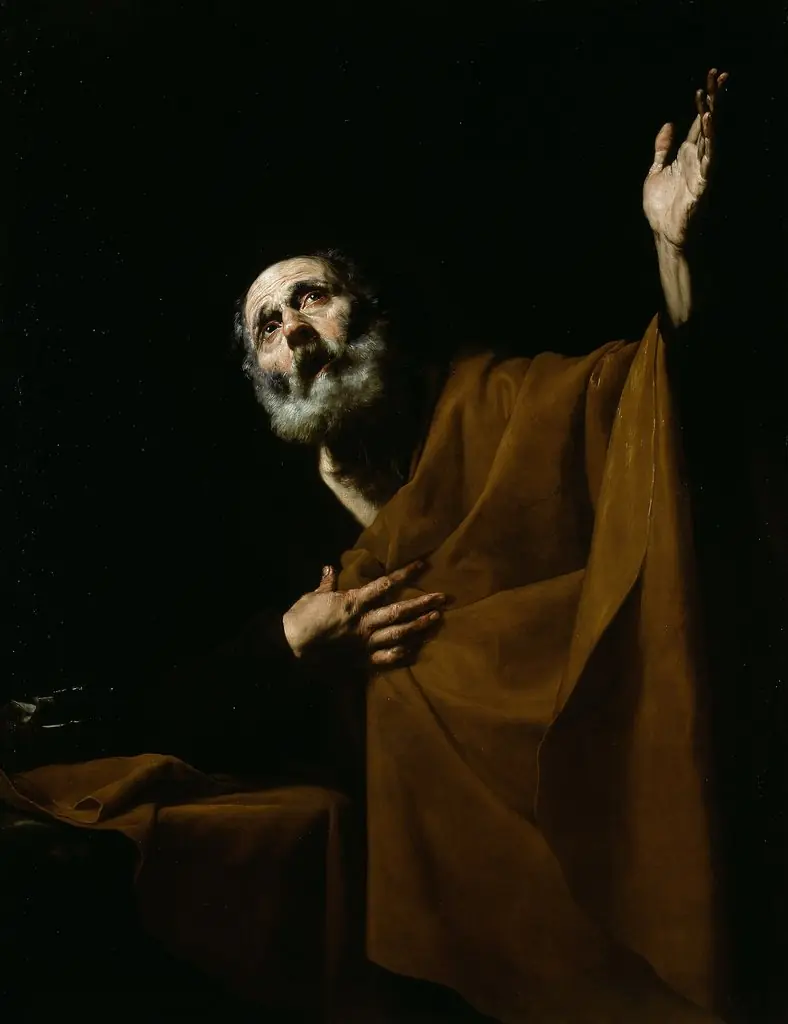
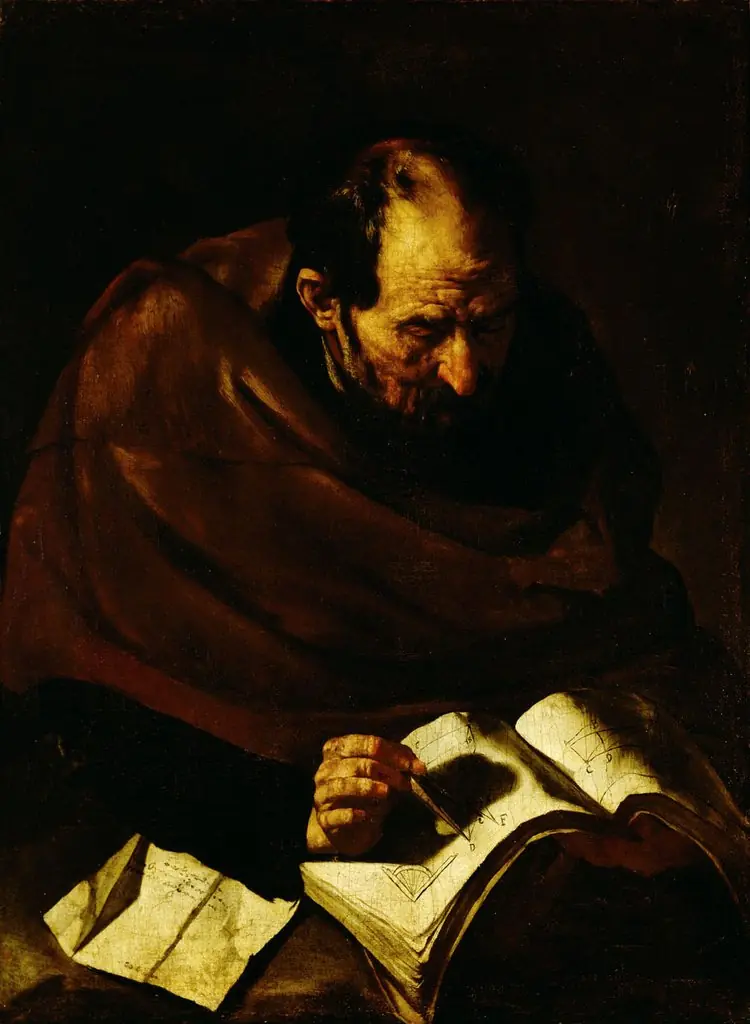
Saint Judas Thaddaeus is an oil painting by the Early Baroque Italian artist Jusepe de Ribera. It dates from 1630 and is held in the collection of the Museo del Prado.
About this work
Overview
Created during Ribera’s time in Naples, the work exemplifies the Spanish Baroque tradition’s emphasis on spiritual intensity and physical realism.
Painted in 1630 by Jusepe de Ribera, this oil on canvas portrait depicts Saint Judas Thaddaeus, one of the twelve apostles. Created during Ribera’s time in Naples, the work exemplifies the Spanish Baroque tradition’s emphasis on spiritual intensity and physical realism. It is now part of the Museo del Prado’s collection, where it remains a quiet but powerful example of early 17th-century religious portraiture.
Subject & Meaning
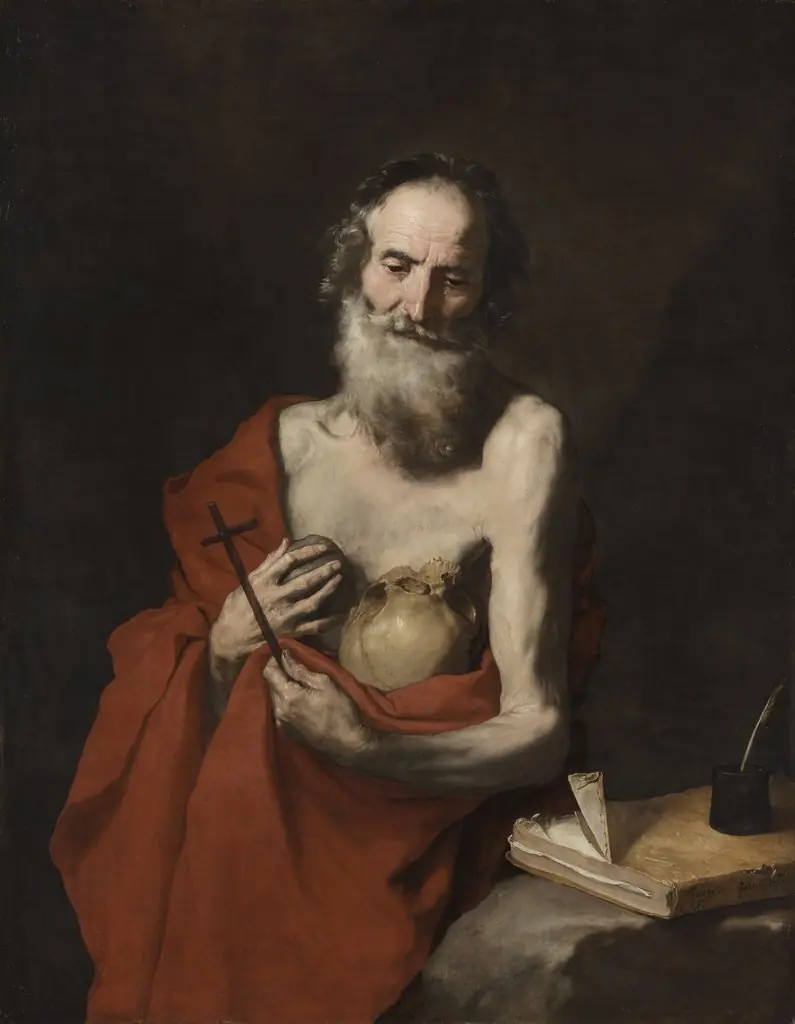
The painting portrays Saint Judas Thaddaeus as a contemplative figure, his folded hands and downward gaze suggesting humility and inner devotion. Though his martyrdom is implied through traditional iconography, no overt symbols are displayed. The absence of elaborate attributes shifts focus to his humanity, reinforcing the saint’s role as a model of quiet faith rather than dramatic spectacle.
Technique & Style
Ribera employs chiaroscuro with restraint, using deep shadows to isolate the saint’s face and hands against a near-black background. The robe is rendered in coarse, earth-toned brushwork, emphasizing simplicity over grandeur. Light falls subtly across the skin and fabric, modeling form without theatricality. This controlled use of contrast enhances the psychological weight of the figure without distracting from its solemnity.
History & Provenance
Commissioned during Ribera’s mature period in Naples, the painting entered the Spanish royal collection before being transferred to the Museo del Prado. Its survival in near-original condition reflects its early recognition as a significant work by a leading Spanish artist working abroad. No major alterations or restorations are recorded, preserving the artist’s intended tonal harmony and emotional tone.
Context
In early 17th-century Naples, religious imagery was shaped by Counter-Reformation ideals favoring emotional immediacy and accessible piety. Ribera’s approach aligned with this movement, rejecting ornate idealism in favor of raw, unadorned realism. His depictions of saints resonated with audiences seeking spiritual authenticity, distinguishing him from more decorative contemporaries in Italy and Spain.
Legacy
This work contributes to the broader understanding of Spanish Baroque painting’s influence beyond its national borders. Ribera’s fusion of Caravaggesque naturalism with Spanish devotional sensibility helped define a visual language adopted by later artists. Though less celebrated than his more dramatic compositions, this portrait endures as a refined expression of introspective sanctity.
Artist & collection
Artist
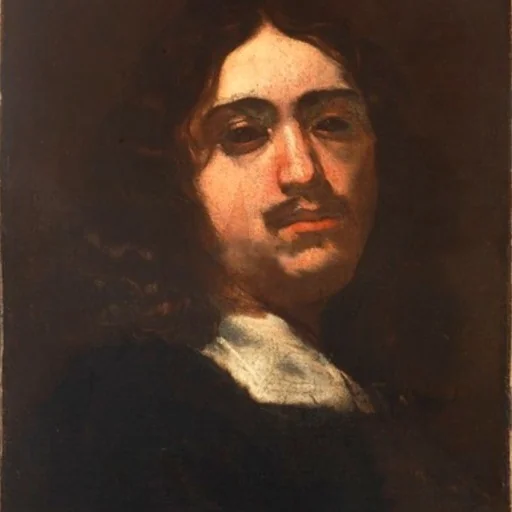
Jusepe de Ribera (Valencian: ; baptised 17 February 1591 – 3 November 1652) was a Spanish painter and printmaker.