Artwork
Saint Philip

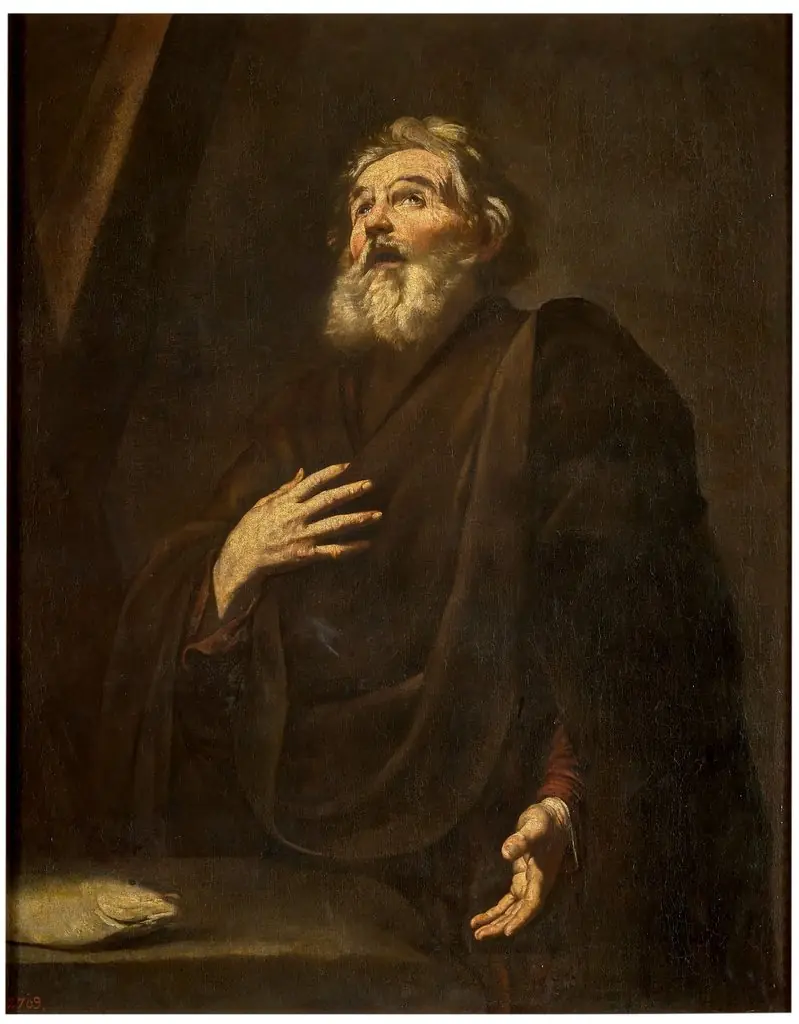
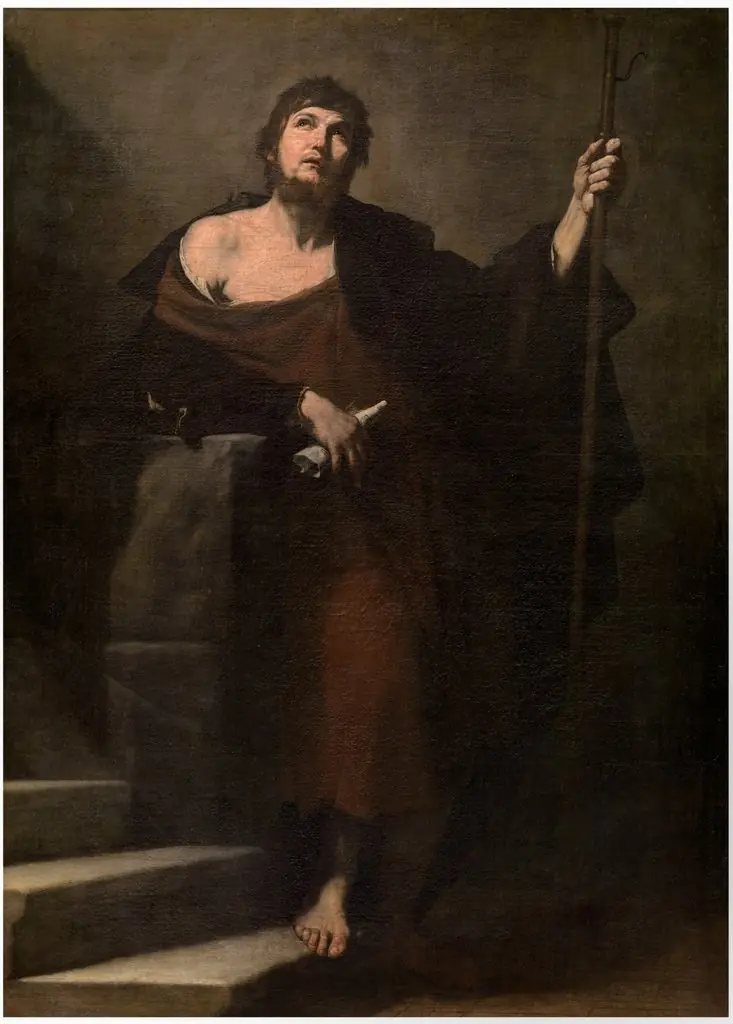
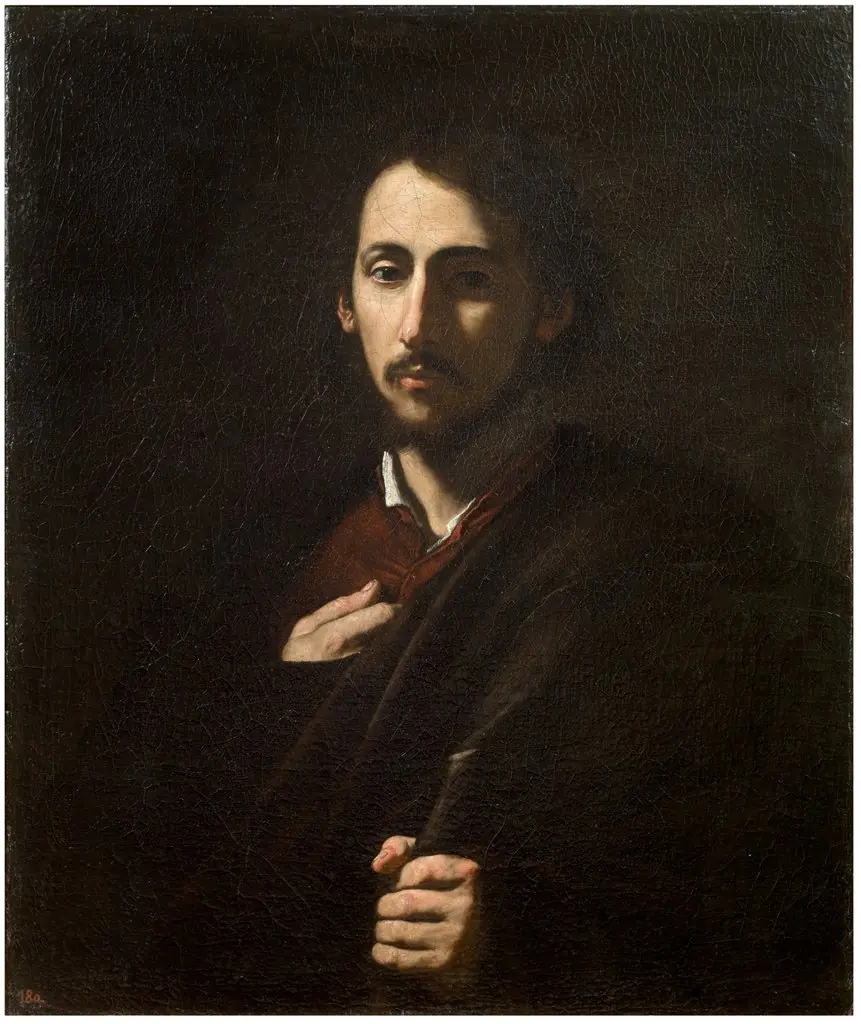
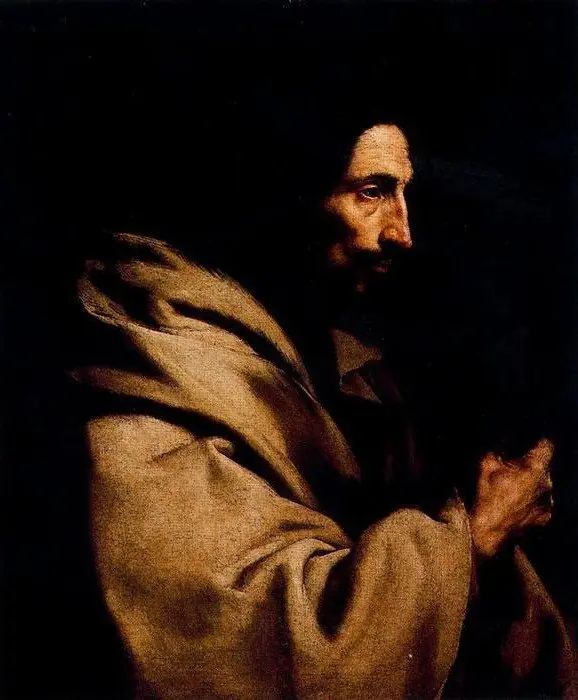
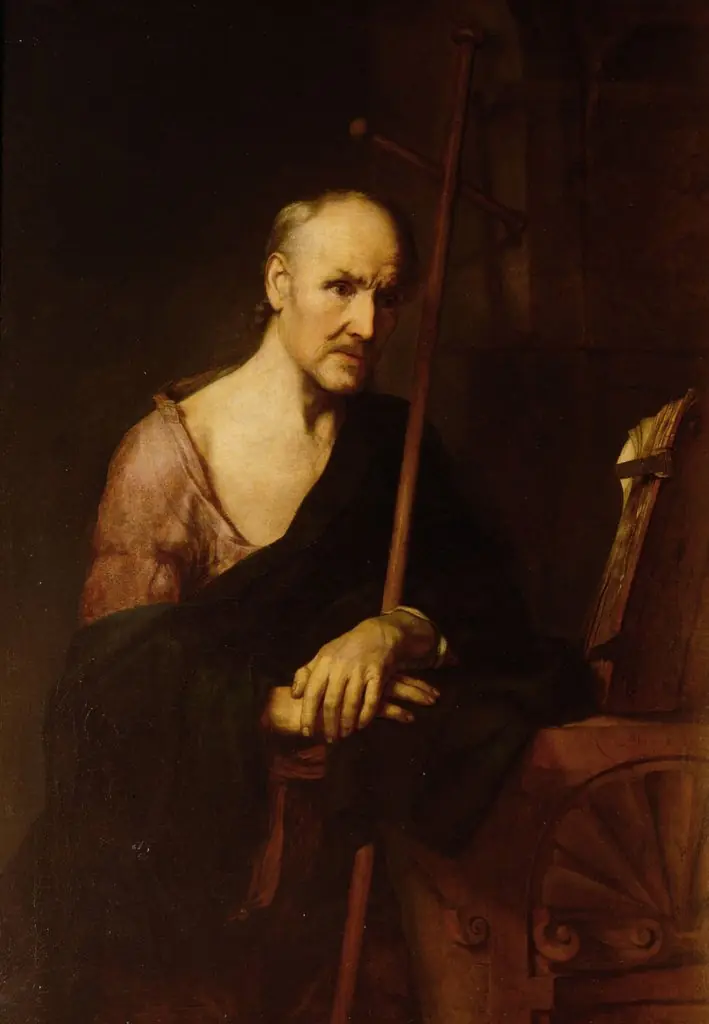
Saint Philip is an oil painting by the Early Baroque Italian artist Jusepe de Ribera. It dates from 1630 and is held in the collection of the Museo del Prado.
About this work
Overview
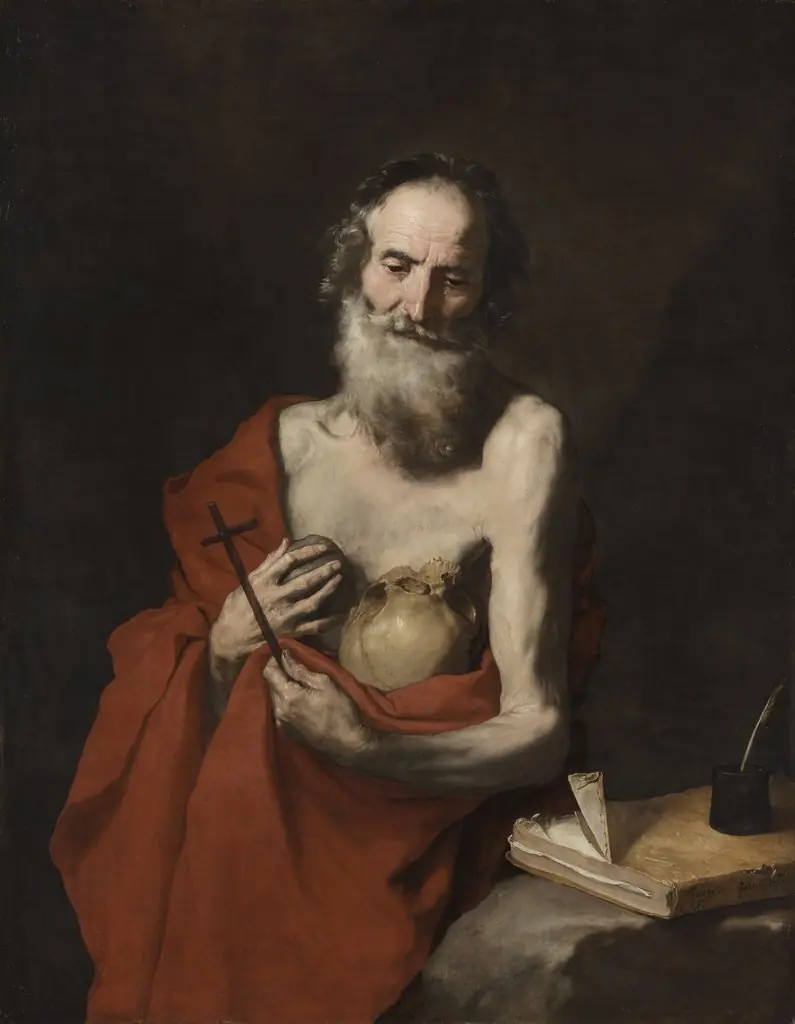
Jusepe de Ribera painted Saint Philip in 1630, employing oil on canvas. The work belongs to the Prado Museum in Madrid and exemplifies the early Baroque style that Ribera developed while active in Naples. It presents a solitary figure of the apostle, rendered with the dramatic realism characteristic of 17th‑century Spanish painting.
Subject & Meaning
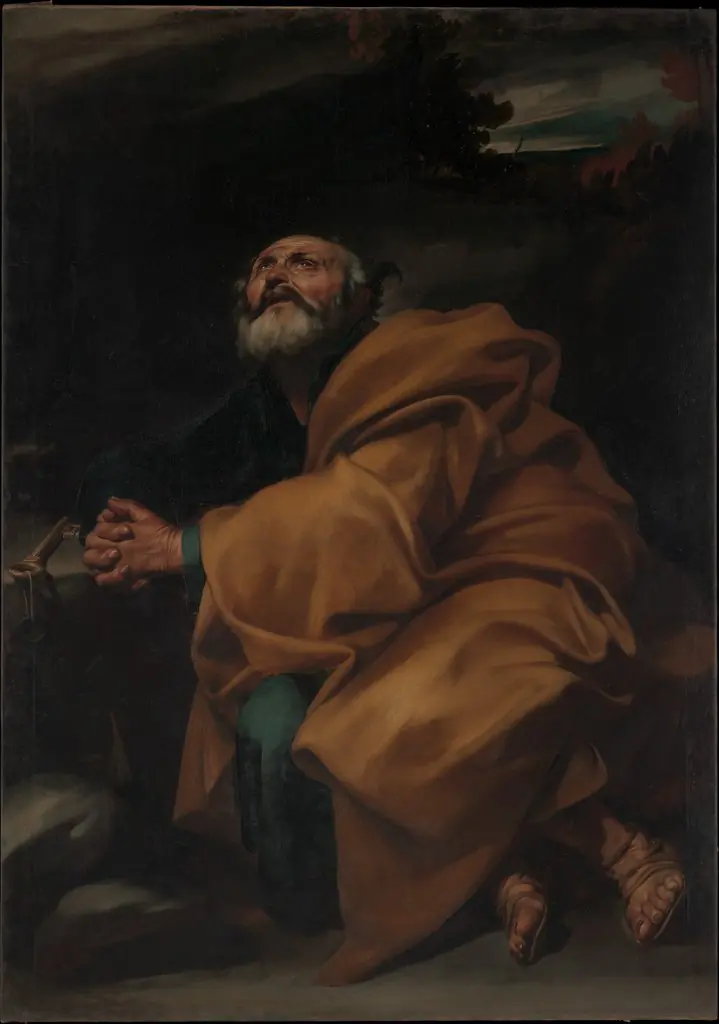
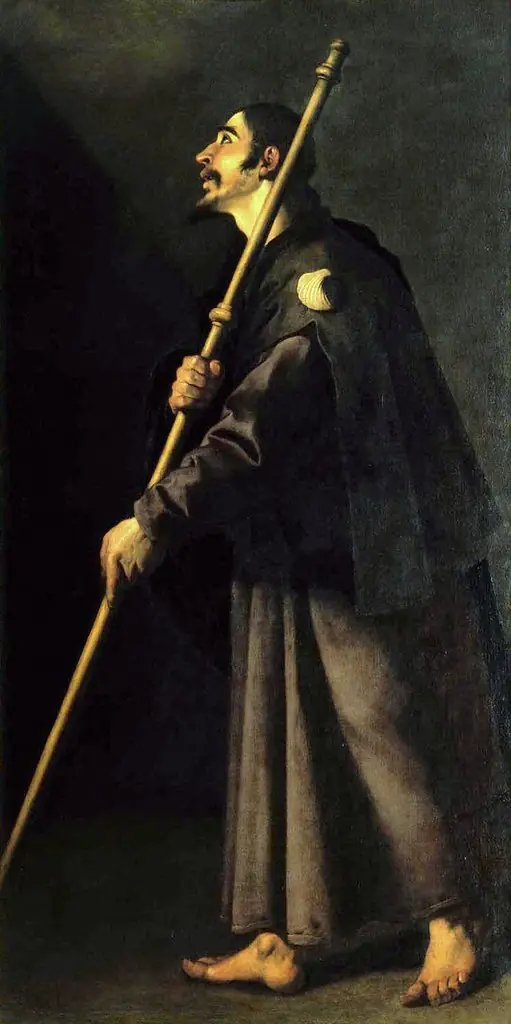
The composition portrays Saint Philip, identifiable by his solemn expression and the staff he grasps, a traditional attribute of the apostle. The figure’s contemplative demeanor and austere setting underscore the spiritual gravity associated with his biblical role, inviting viewers to reflect on his devotion.
Technique & Style
Ribera utilizes chiaroscuro, contrasting a dark, unadorned background with a luminous, pale flesh tone. The deep shadows on the black cloak and the subtle green of the tunic beneath enhance the three‑dimensionality of the face and hands, creating a striking interplay of light and shade typical of Baroque realism.
History & Provenance
Created during Ribera’s mature period in Naples, the painting entered the Spanish royal collection before being transferred to the Museo del Prado. Its presence in the Prado situates it among works by contemporaries such as Diego Velázquez and Francisco de Zurbarán, highlighting Ribera’s role in the development of Spanish Baroque art.
Context
Ribera’s Saint Philip reflects the broader 17th‑century emphasis on intense, emotionally resonant religious imagery. The work aligns with Counter‑Reformation goals, using vivid realism to engage the faithful and convey the sanctity of apostolic figures through direct, unembellished representation.
Artist & collection
Artist
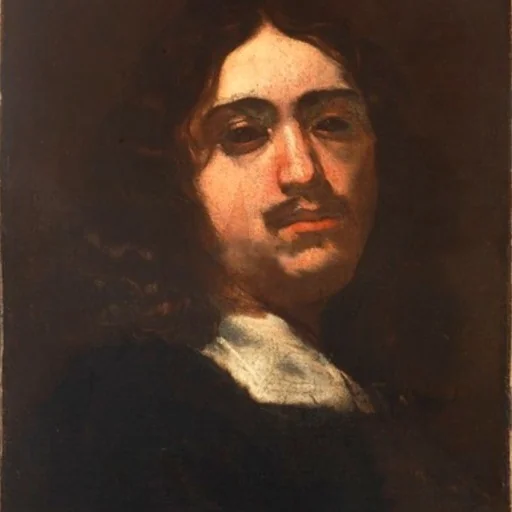
Jusepe de Ribera (Valencian: ; baptised 17 February 1591 – 3 November 1652) was a Spanish painter and printmaker.