Artwork
The Seconda Macchina for the Chinea of 1774: A Villa with Ancient Monuments and a Game of "Giostra"
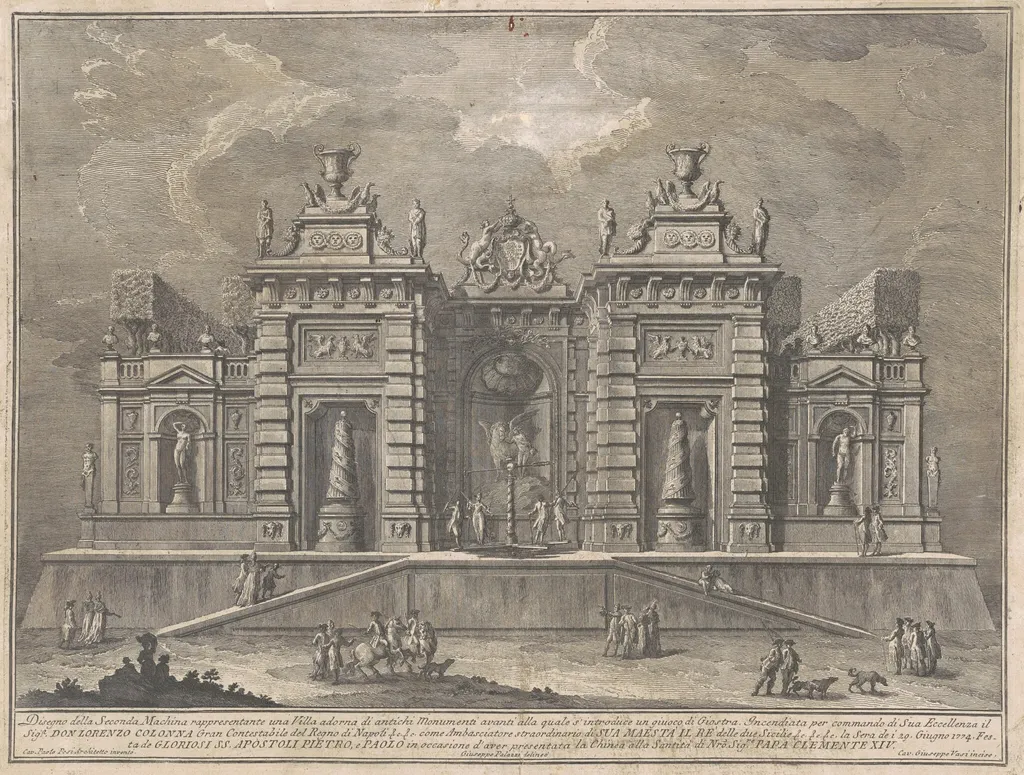
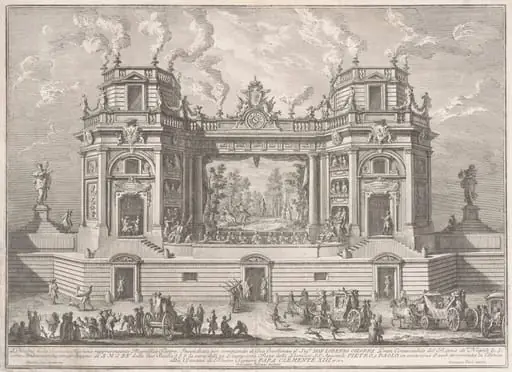
The Seconda Macchina for the Chinea of 1774: A Villa with Ancient Monuments and a Game of "Giostra" is an ink print by the Romanticist artist Giuseppe Vasi. It dates from 1774 and is held in the collection of the National Gallery of Art.
About this work
Overview
The composition is dominated by a central arch flanked by a series of smaller arches and columns, all crowded with numerous statues and sculptural details.
Giuseppe Vasi’s 1774 etching titled *The Seconda Macchina for the Chinea of 1774: A Villa with Ancient Monuments and a Game of “Giostra*” presents a sprawling, elaborately decorated villa. The composition is dominated by a central arch flanked by a series of smaller arches and columns, all crowded with numerous statues and sculptural details. Figures on foot and on horseback populate the scene, suggesting a festive procession linked to the Chinea ceremony.
Subject & Meaning
The print captures a staged celebration known as the Chinea, a diplomatic tribute involving a horse‑drawn carriage presented to the Pope. Within the architectural setting, Vasi includes a mock‑medieval jousting tournament, or “giostra,” emphasizing the pageantry and martial spectacle that accompanied the event. The juxtaposition of ancient monuments with contemporary festivity underscores the period’s fascination with classical heritage as a backdrop for public ceremony.
Technique & Style
Executed as an etching, Vasi employed fine line work to render the intricate architectural elements and the delicate carving of statues. The medium allows for precise detailing of arches, columns, and the textures of stone, while the contrast of dense hatching conveys the crowd’s movement and the horses’ musculature. The overall visual language reflects the late Baroque interest in theatricality and elaborate composition.
History & Provenance
Created in 1774, the print was part of Vasi’s series documenting the annual Chinea festivities in Rome. Original impressions were likely issued as prints for collectors interested in contemporary Roman events. Copies of the etching are now held in several European print collections, including the Biblioteca Nazionale in Rome and the British Museum, where they serve as documentary evidence of 18th‑century civic rituals.
Context
The Chinea tribute, a yearly presentation of a horse‑laden carriage from the Kingdom of Naples to the Papal States, was a significant diplomatic and cultural occasion in 18th‑century Rome. Vasi’s depiction aligns with a broader trend among artists to record public spectacles, providing visual records that complement written accounts of the period’s social and political life.
Legacy
Vasi’s etchings, including this depiction of the Seconda Macchina, remain valuable for scholars studying the visual culture of papal Rome. The work offers insight into the interplay between architecture, ceremony, and popular entertainment, and it continues to inform exhibitions and research on the representation of public festivals in pre‑modern Italy.
Artist & collection

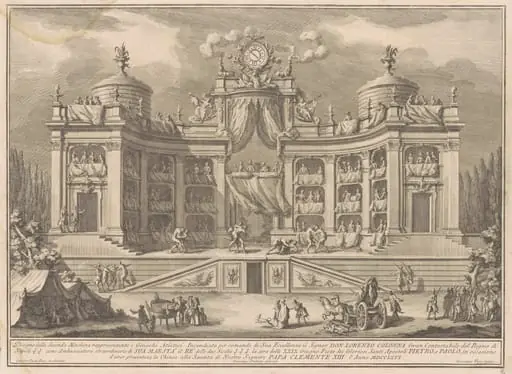 The Seconda Macchina for the Chinea of 1766: A Theater for Athletic Games
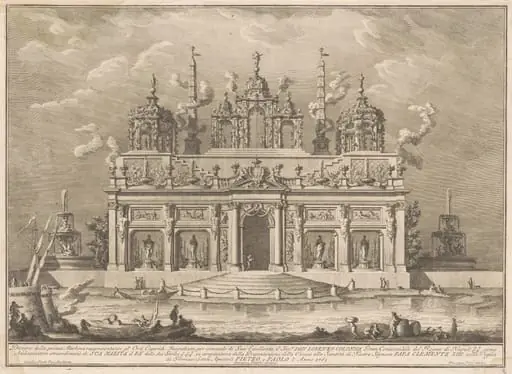 The Prima Macchina for the Chinea of 1765: The Garden of the Hesperides
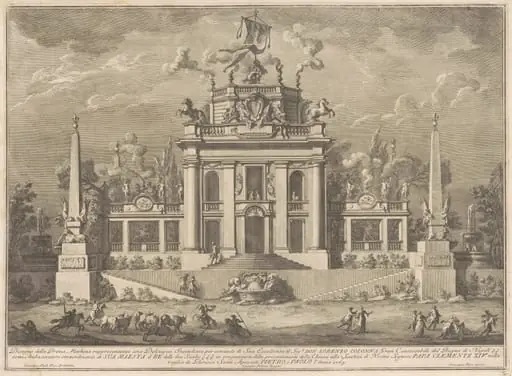 The Prima Macchina for the Chinea of 1769: A "Deliziosa"
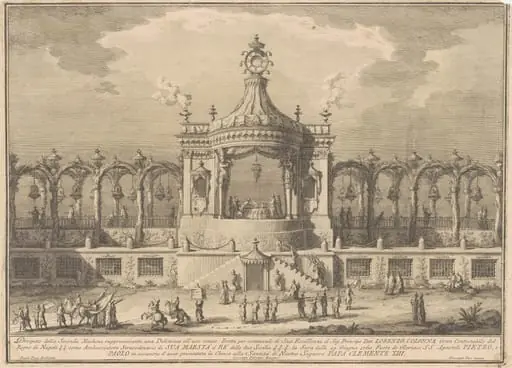 The Seconda Macchina for the Chinea of 1760: A Chinoiserie Pavilion
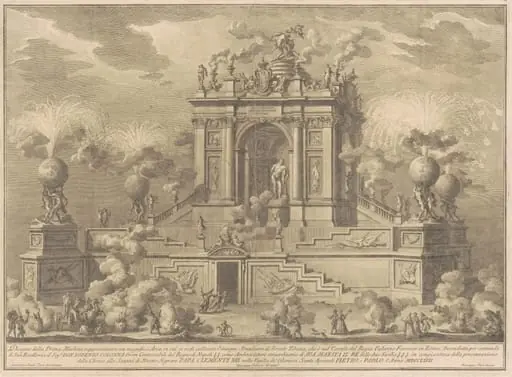 The Prima Macchina for the Chinea of 1767: A Triumphal Arch with the Farnese Hercules
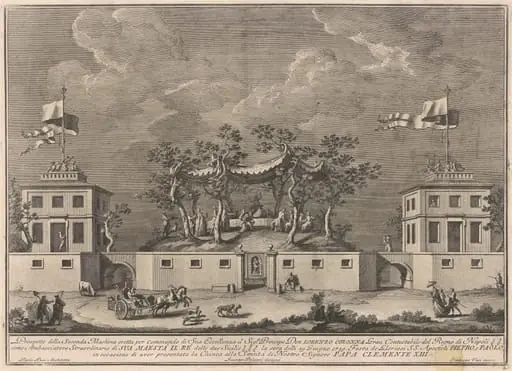 The Seconda Macchina for the Chinea of 1759: A "Deliziosa" with a Bacchanal
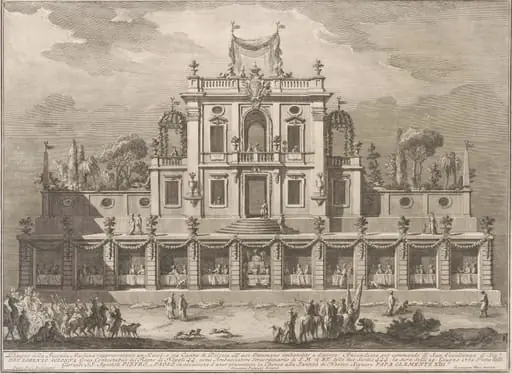 The Seconda Macchina for the Chinea of 1762: A Kiosk, or Pleasure-House in Ottoman Style
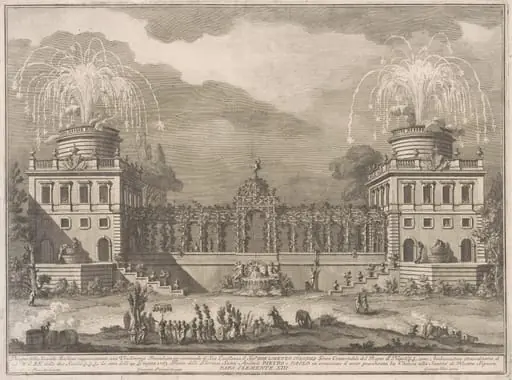 The Seconda Macchina for the Chinea of 1763: The Grape Harvest
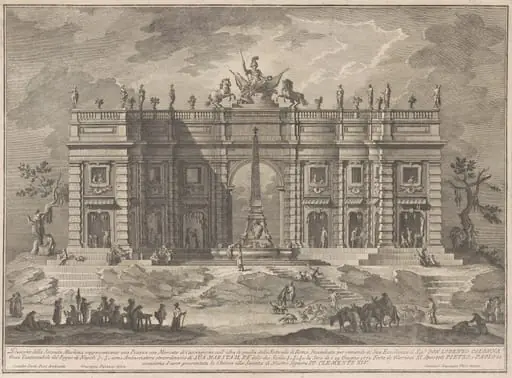 The Seconda Macchina for the Chinea of 1772: A Square with a Game Market and the Pantheon Fountain
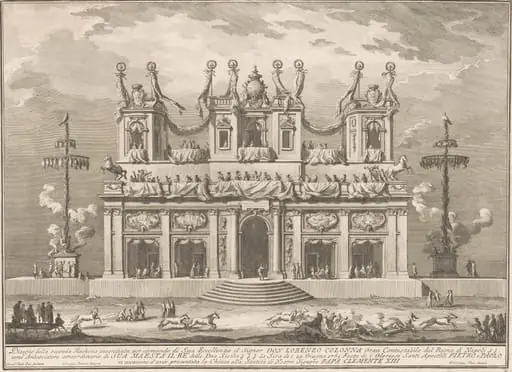 The Seconda Macchina for the Chinea of 1765: A Decorated Building with Cockaigne Poles
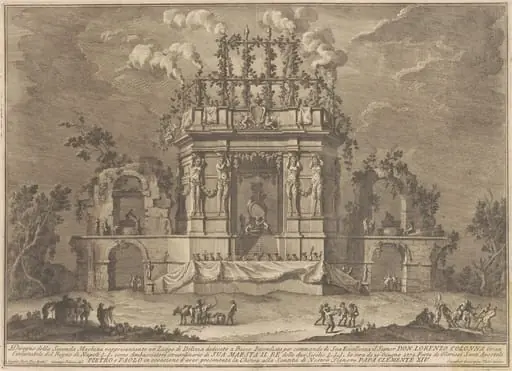 The Seconda Macchina for the Chinea of 1771: A Pleasure Palace Dedicated to Bacchus
 The Prima Macchina for the Chinea of 1771: The Temple of Asclepius
 The Prima Macchina for the Chinea of 1770: An Roman Building for Commerce
 The Seconda Macchina for the Chinea of 1775: A Bull-fight
 The Seconda Macchina for the Chinea of 1773: The Preparation of Theriac in Venice
 The Seconda Macchina for the Chinea of 1761: A Magnificent Theater